homepage
Asia (June 2006 - Aug 2007)
 Australia
Indonesia
Singapore
Malaysia
Brunei
SouthThailand
Japan
Korea
China 1
China 2
Vietnam
Cambodia
NorthThailand
Laos
China 3
Tibet
Nepal
India
Africa
Australia
Indonesia
Singapore
Malaysia
Brunei
SouthThailand
Japan
Korea
China 1
China 2
Vietnam
Cambodia
NorthThailand
Laos
China 3
Tibet
Nepal
India
Africa
Asia 2007



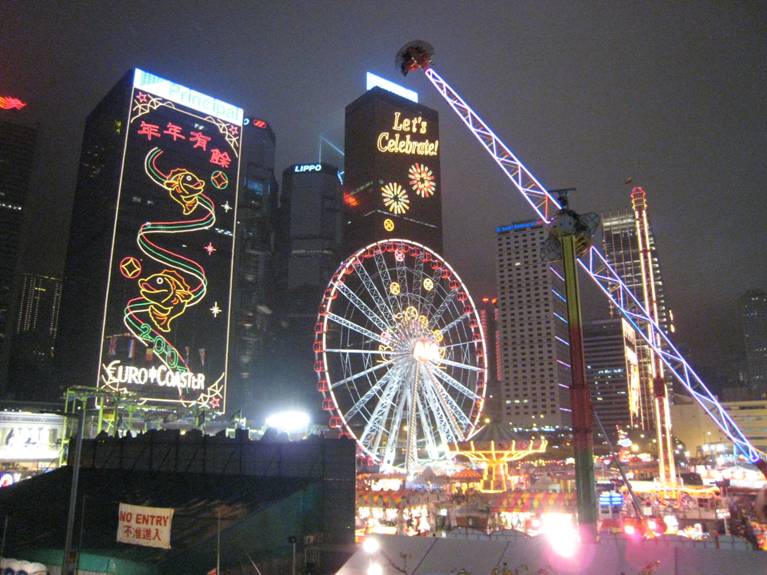
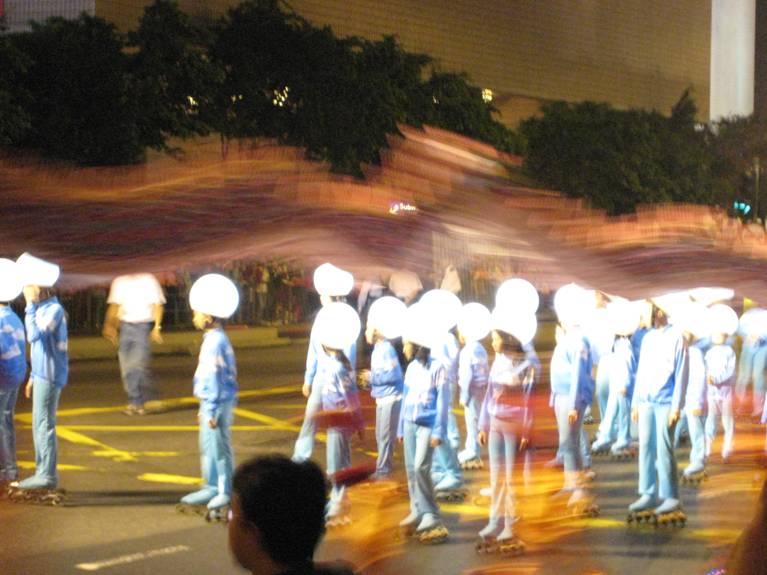
Back in Hong Kong. By accident I booked a plane ticket exactly on the Chinese New Year, so I was just in time to see the New Years parade and the fireworks.


Guangzhou. Another Chinese modern big ugly city (aka Canton), notorious for its dog hot pot and for being the origin of the SARS disease.
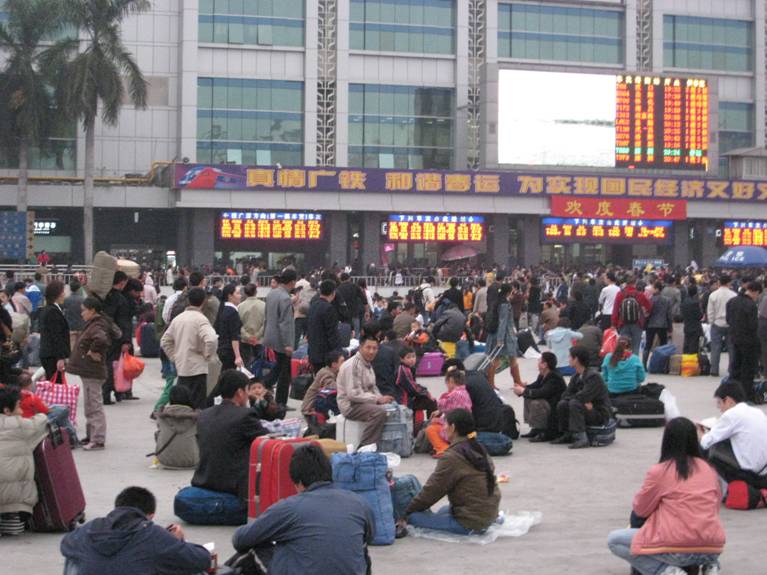
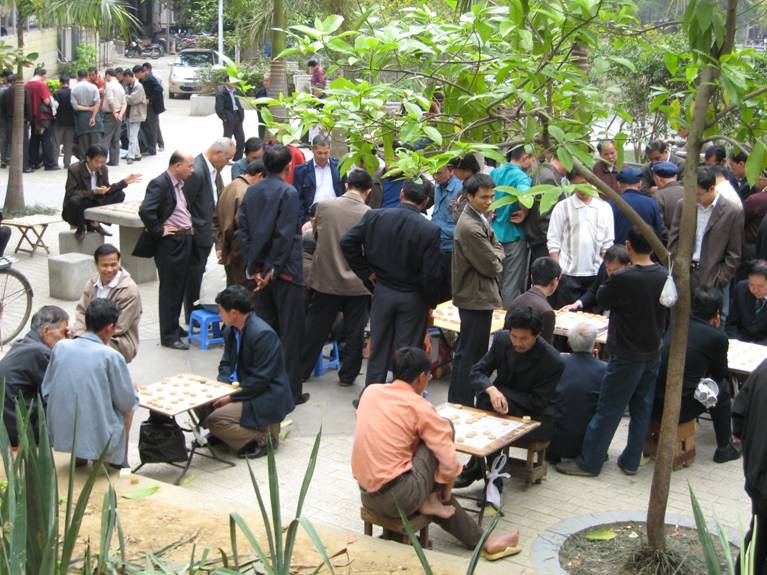
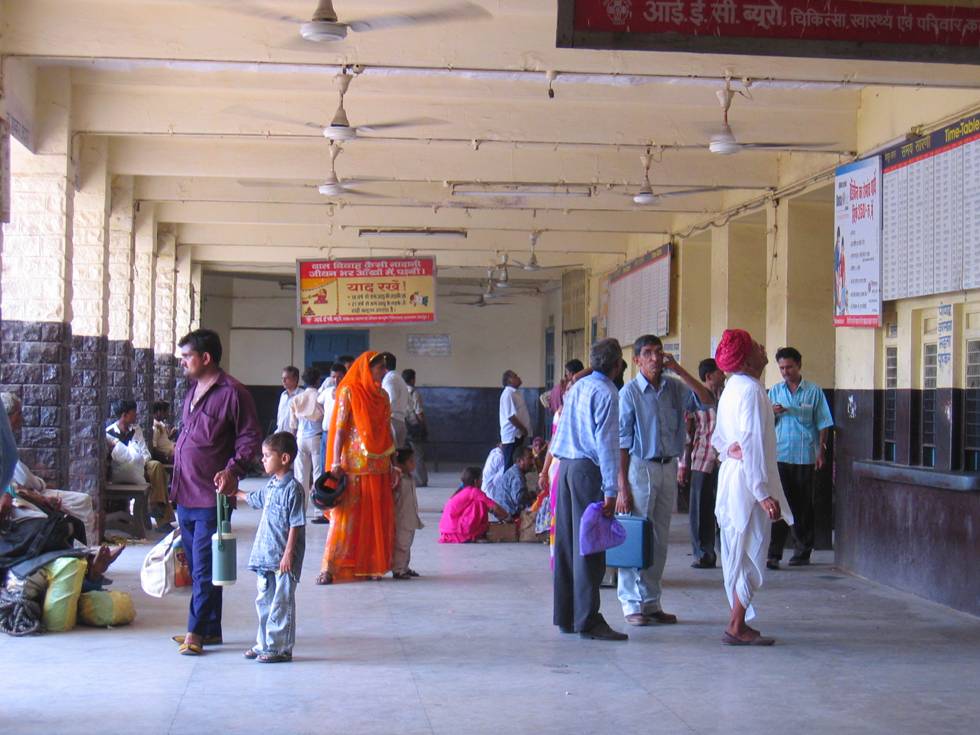
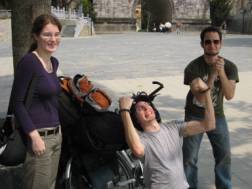
I just found out that around the Chinese New Year all Chinese have their big holiday, a quarter of a billion is travelling to visit their family, and over a 1000 get killed this week in traffic. When I saw the crowds on the Gangzhou train station (see picture), I got claustrofobic and decided to change my travelling plans: in stead of visiting the ethnic minorities in the south west around Kunming and Dali, supposedly the best part of China, I decided to skip the tourist crowds and the rest of China altogether, and go pick up my bicycle in Guilin and then straight on to Vietnam. Sometimes the best preparation is no prepration.



Nanning to border. In the middle of the night I biked into the city of Nanning on a wide boulevard lined with palm trees and flashy skycrapers, while people were litting the remains of their fireworks. A very pleasant city, clean and green, nice people and nice climate, almost un-Chinese...
Feb 18, 19: Hong Kong; 20, 21: Guangzhou; 22: Guilin; 23,24: Nanning

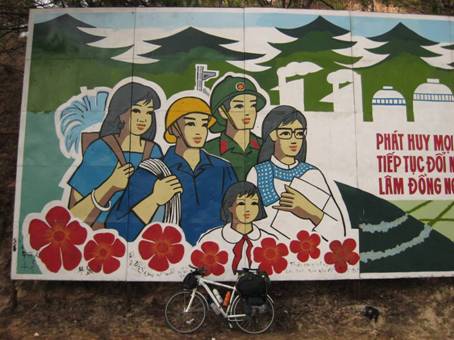
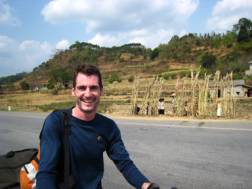

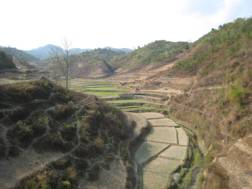


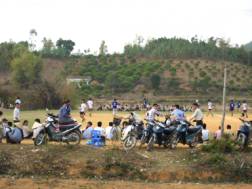

A good start. My nightmares of being stuck in China wihthout transport or waiting for a visa turned into smooth dreams:
- At the Vietnamese consulate in Nanning, I got a visa on the same day in stead of waiting 5 days as the books say.
- In the train from Nanning to the border I was talking to an attractive Enlish teacher.
- At the border it appeared I had overtaken some desperate friends from Guangzhou who had to wait another day at the border.
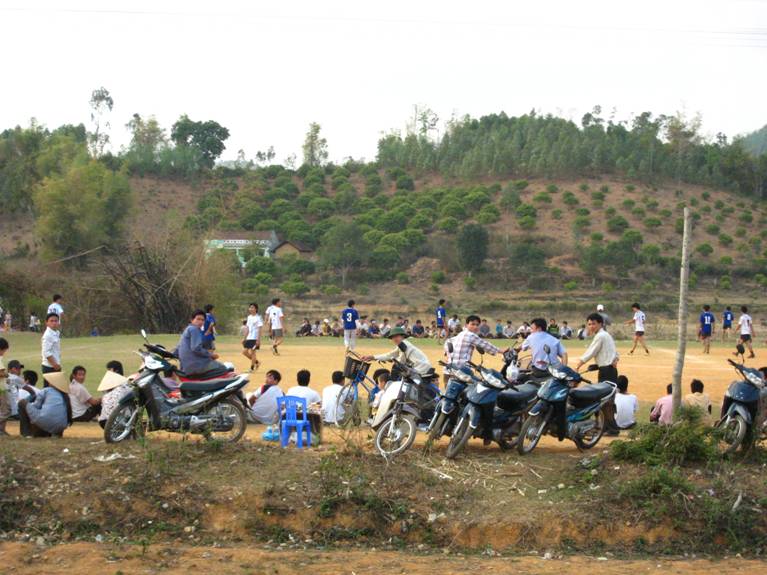
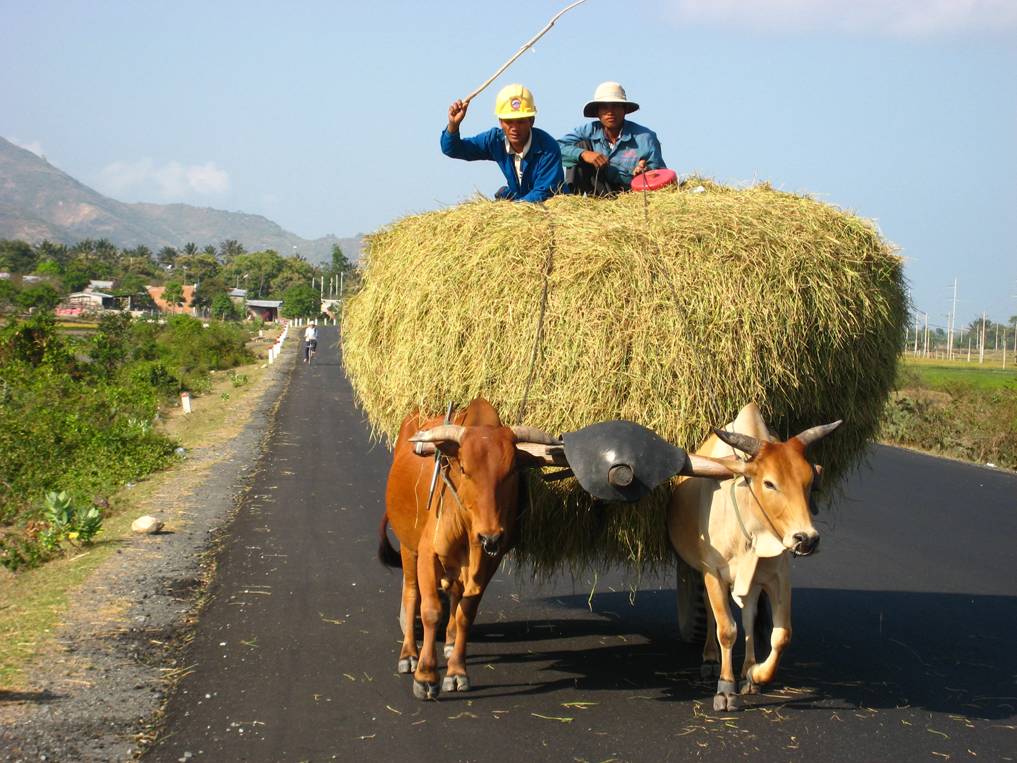
- Biking from the border to the next big town, about a hundred Vietnames waved at me and said hello, and a guy biked with me all along. Douze points pour Vietnam.
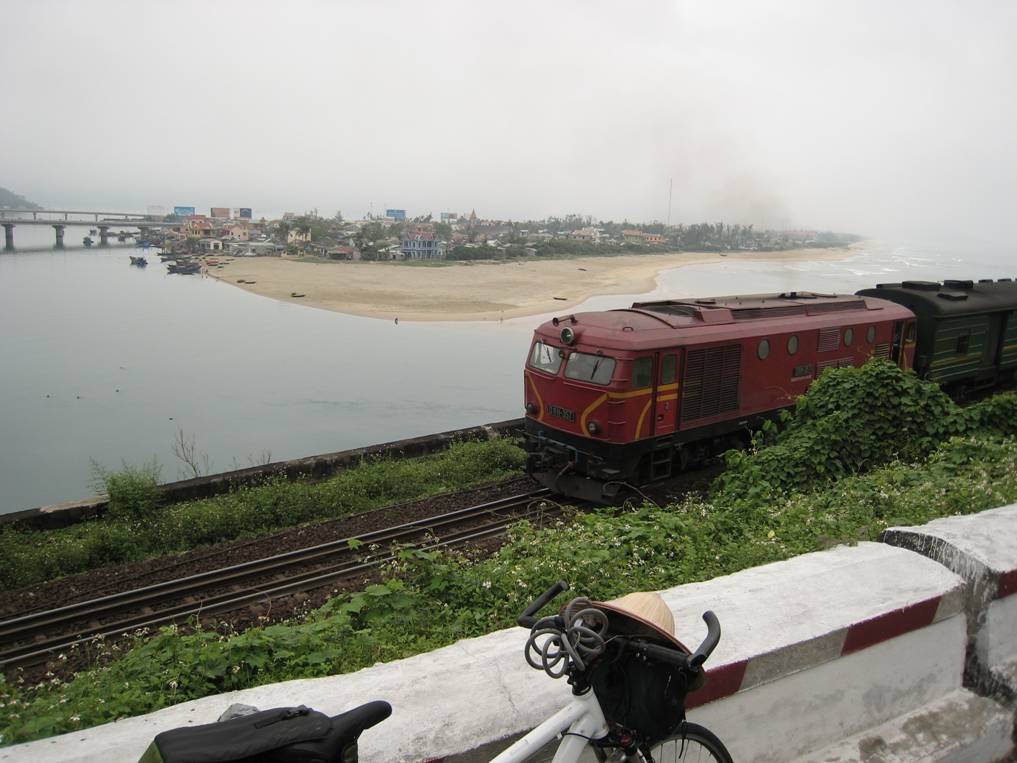
- Biking along the railroad track, I couldn't figure out were the train station was, despite asking in my best Vietnamese. Then I saw a train coming by and slowing down, so I took a sprint and crisscrossed through town, found the station, ran up the stairs with my bike, and they actually held the train, threw in my bike while I was buying a ticket. Onlu later I realized that they didn't even ask my destination but assumed Hanoi, and it was the only train that day. Autre fois douze points pour Vietnam.
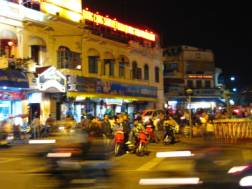
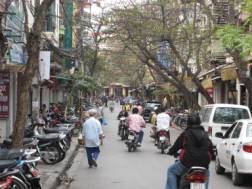


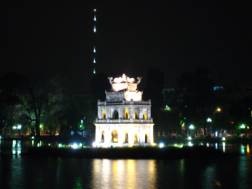
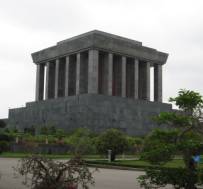
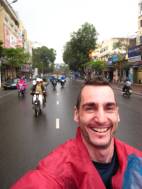

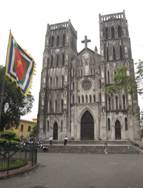

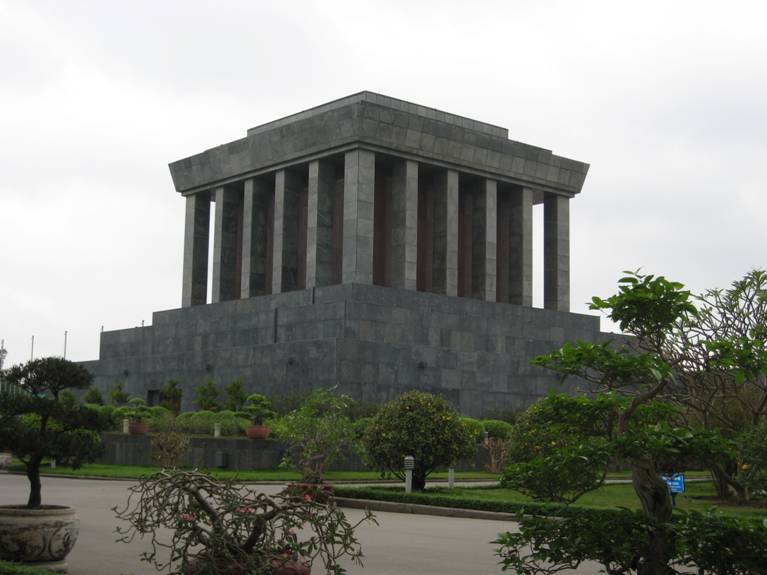
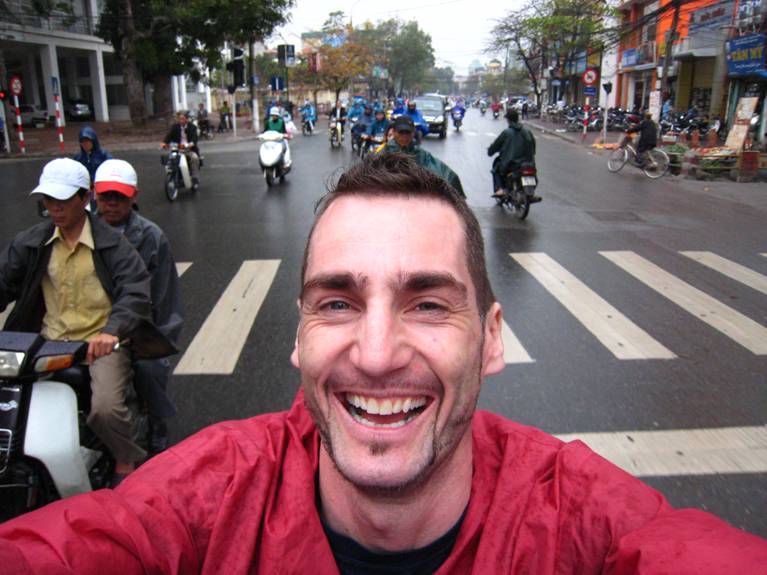
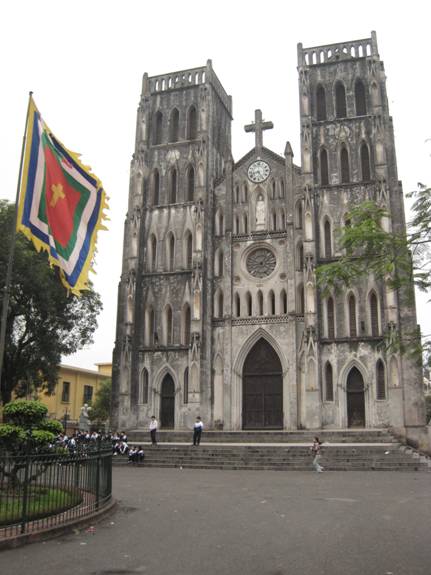
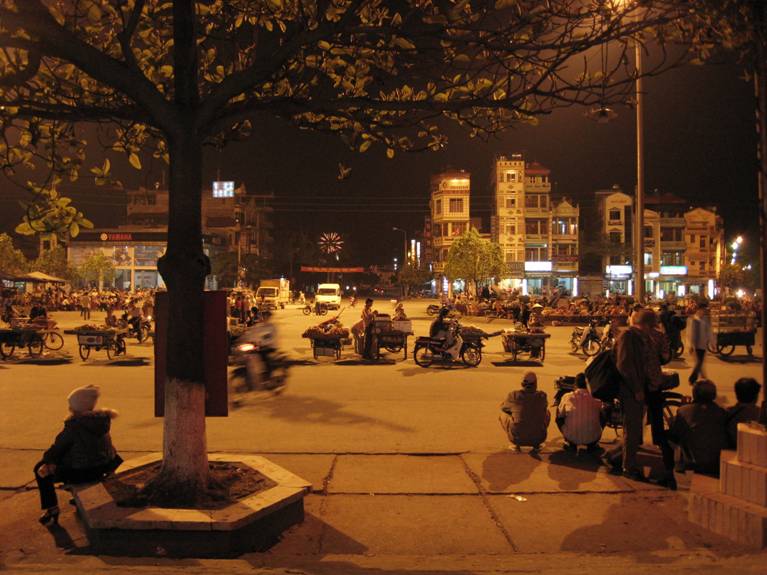
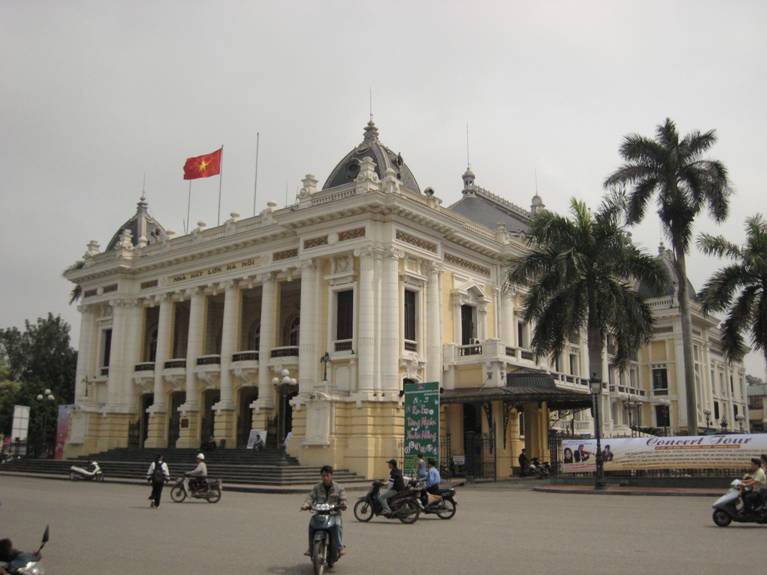
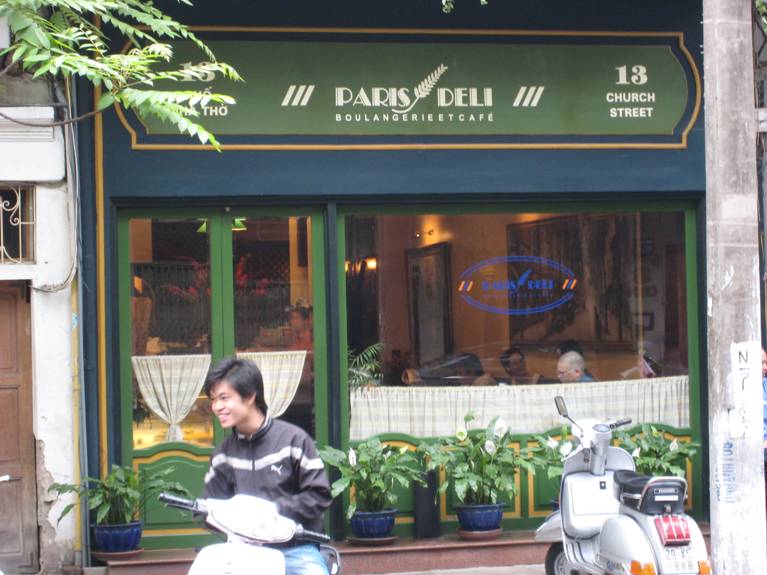
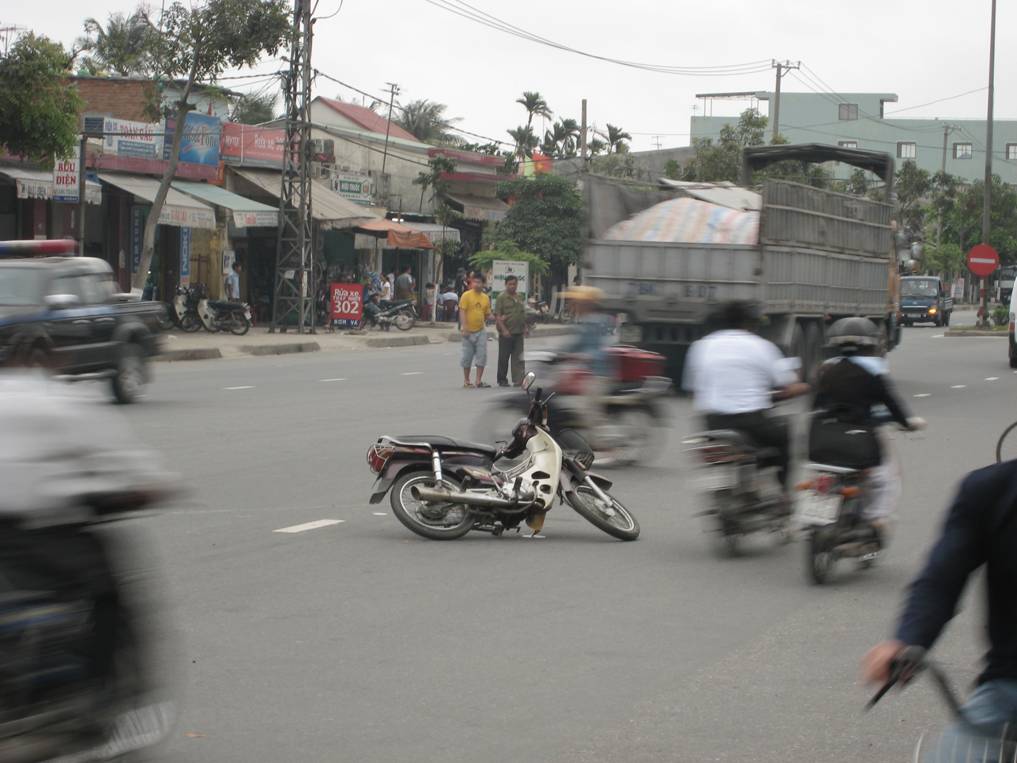
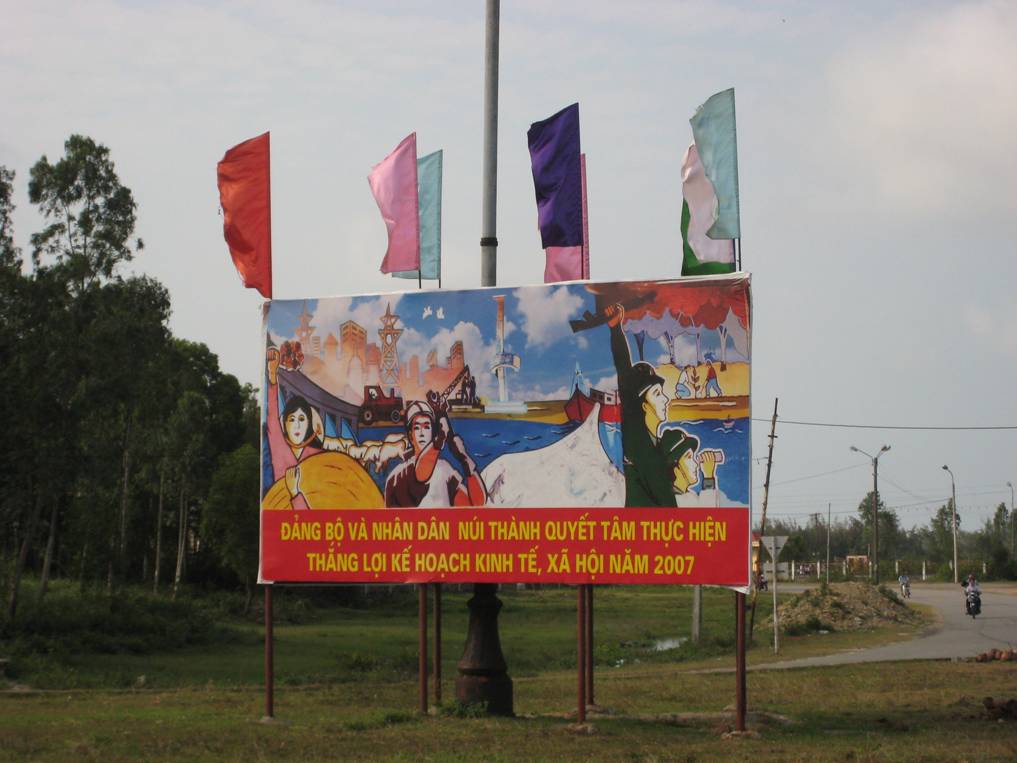
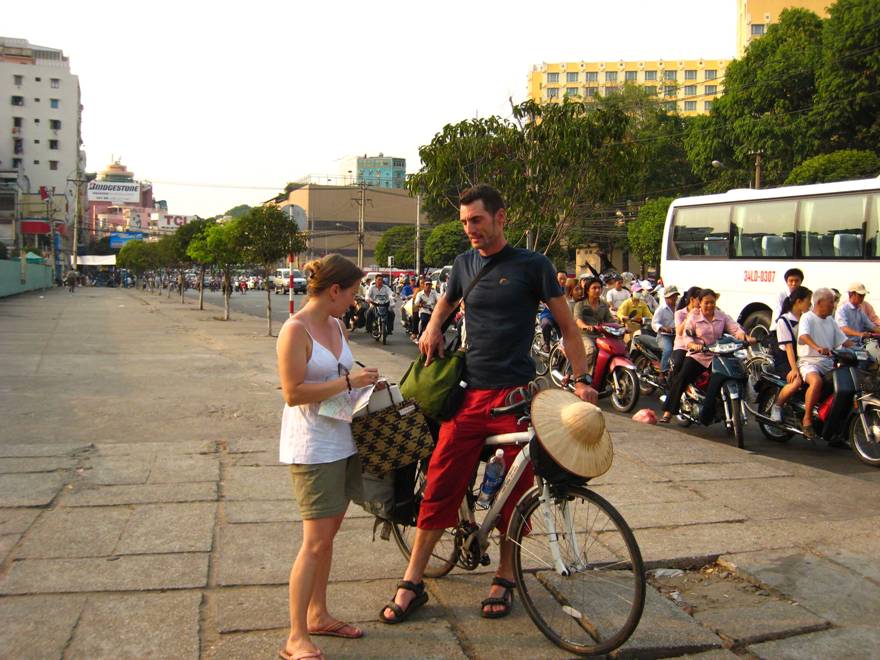
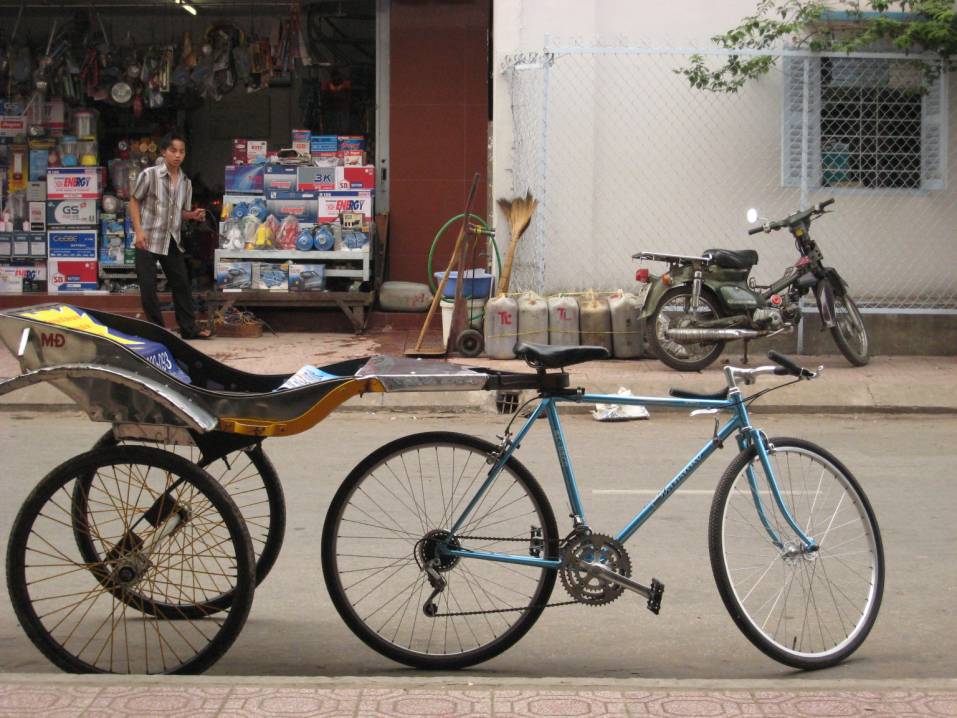
Ha Noi. I must have the only bicycle in Ha Noi because the rest is just mopeds, mopeds and more mopeds, flashing through eachother like mosquitos.


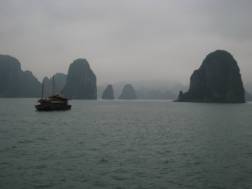
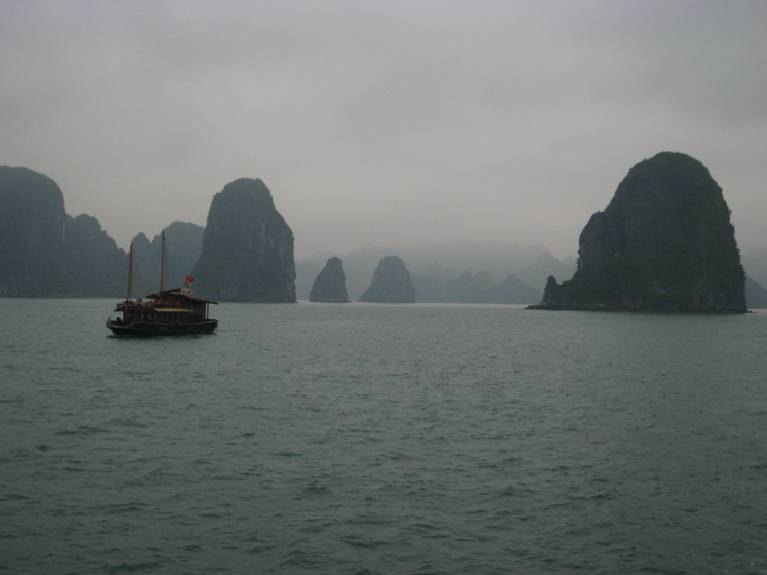
Ha Long Bay. Thousands of limestone peaks in the sea, and thousands of tourists.


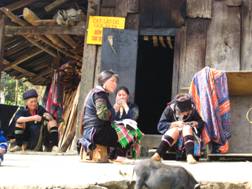


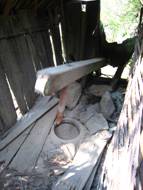


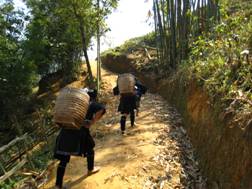
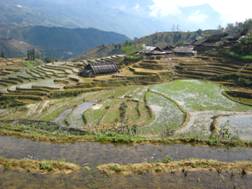


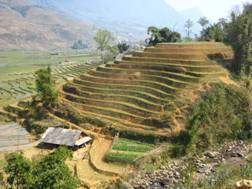

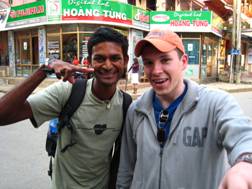


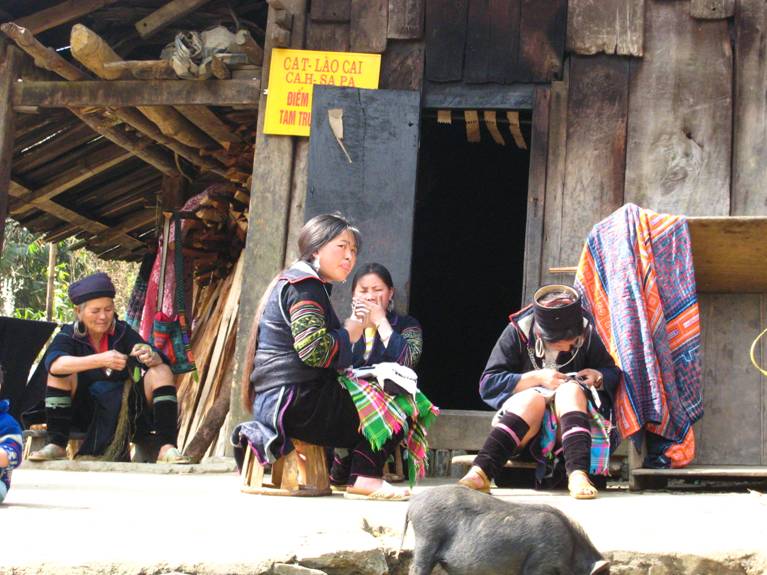
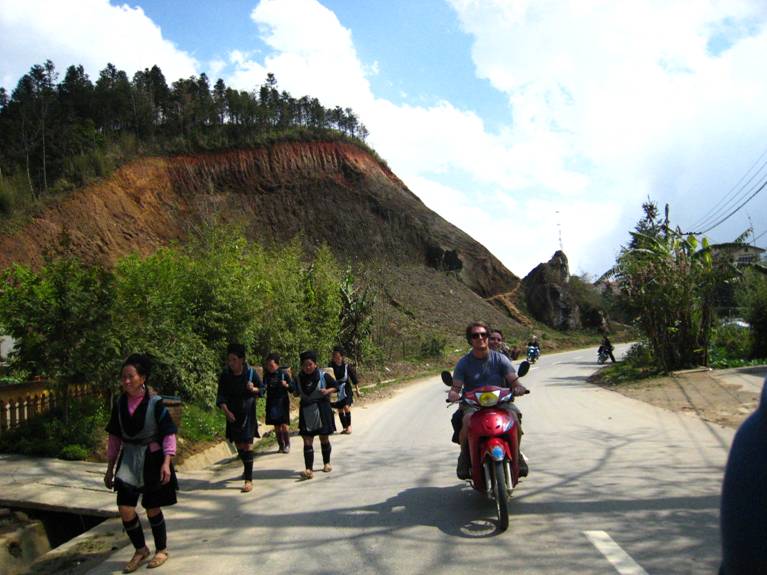
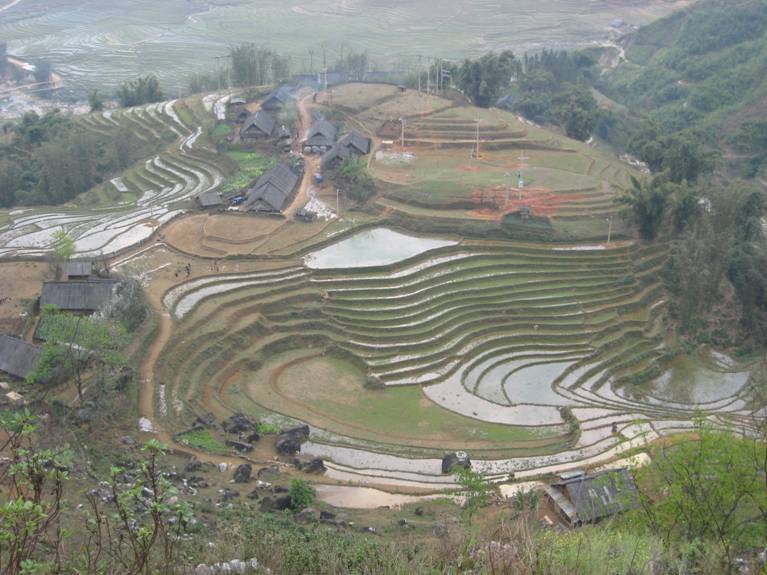
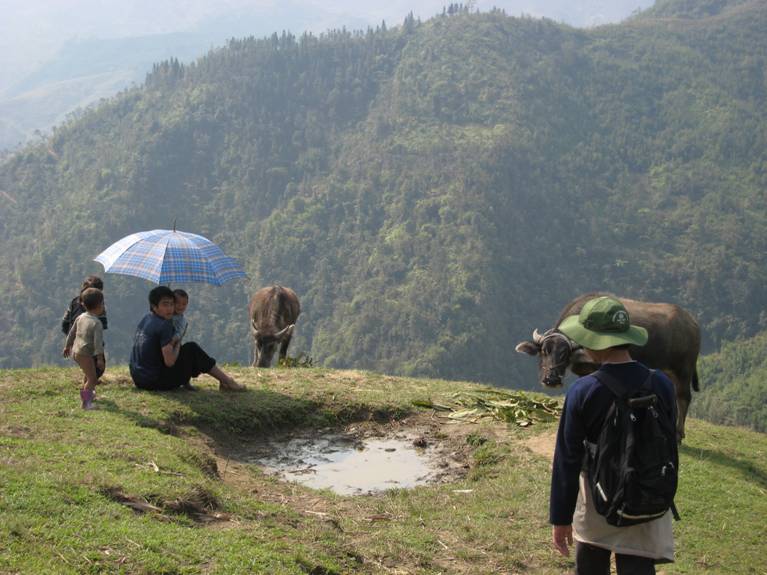
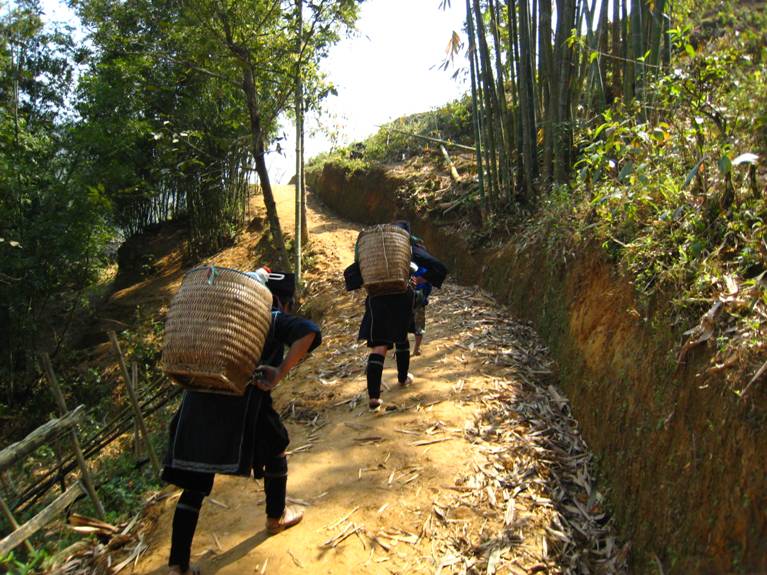
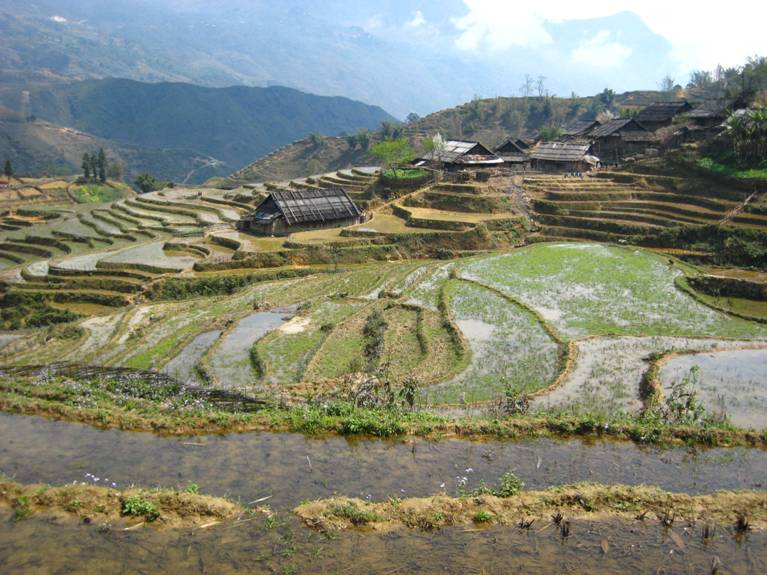
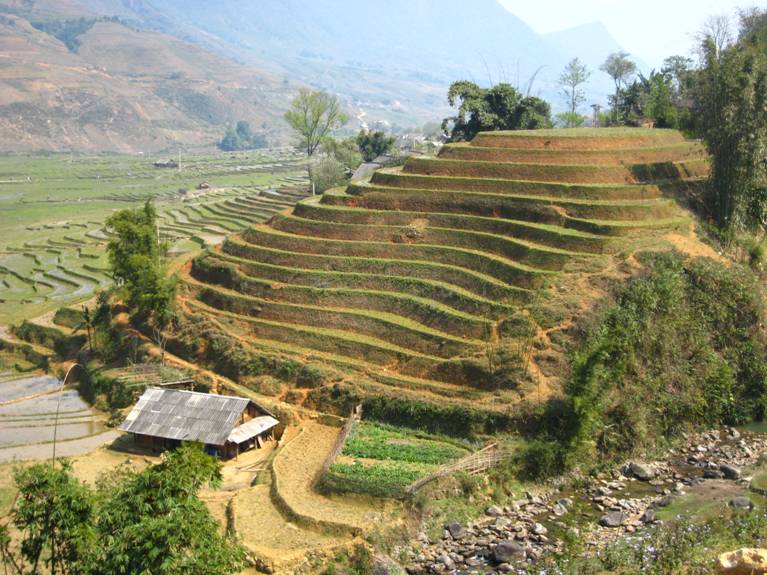
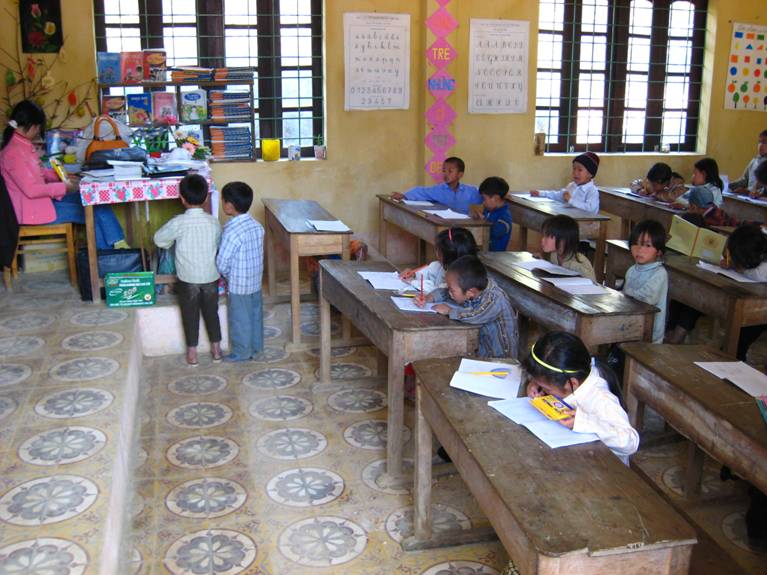
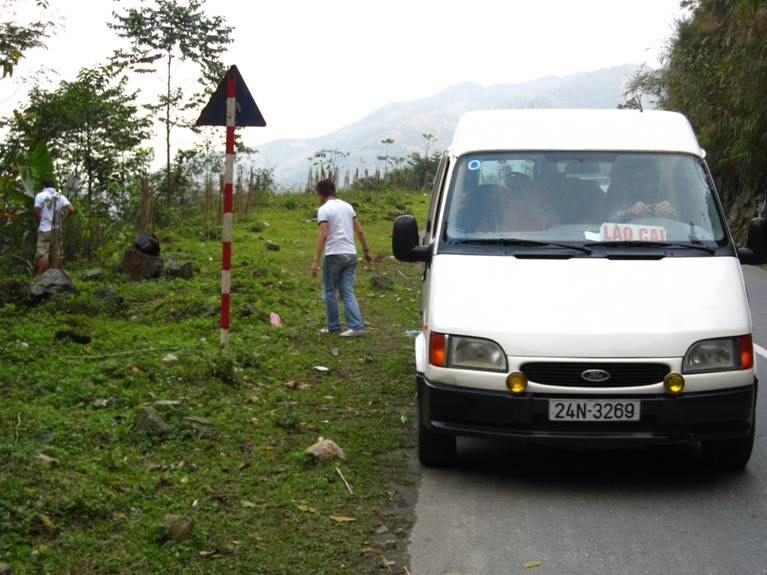
Sa Pa. A tourist village in the mountains in the north near the Chinese border, surrounded by villages of different ethnic minorities (hill tribe people), very interesting. The forelast picture shows two people puking during a downhill Formula 1 ride with sqeaking tires at every corner, a free bonus on the package tour...


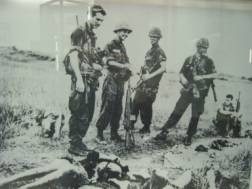
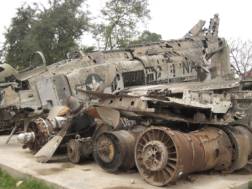

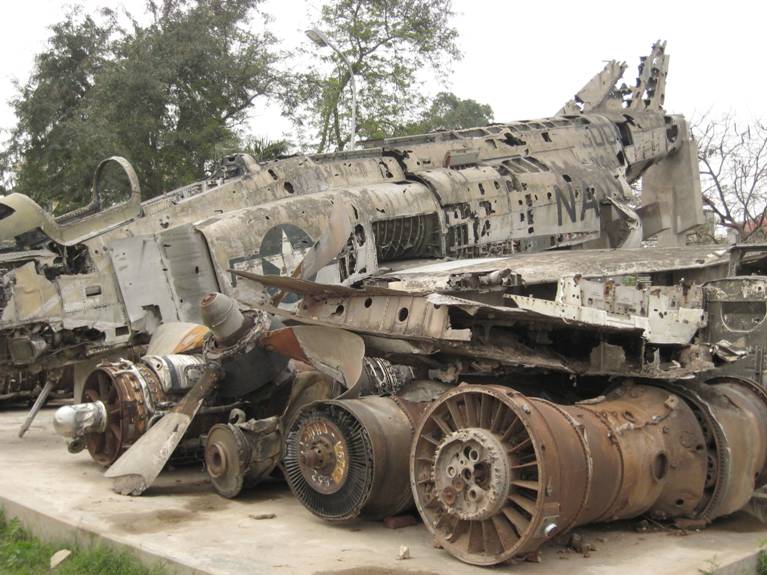
Ha Noi wars. Back to Hanoi, where I visited some war museums and even had a little war myself. Normally Vietnamese are very friendly, I never had so many people wave at me and say hello as I biked by. But as with all asians (at least the males), when they loose face they loose every bit of inhibition. And I have got a special talent to make people loose their face without even knowing it myself, ha ha. Here is the story:
When I got into an argument with a guy from a booking office because he didn't keep his promise, he shouted:
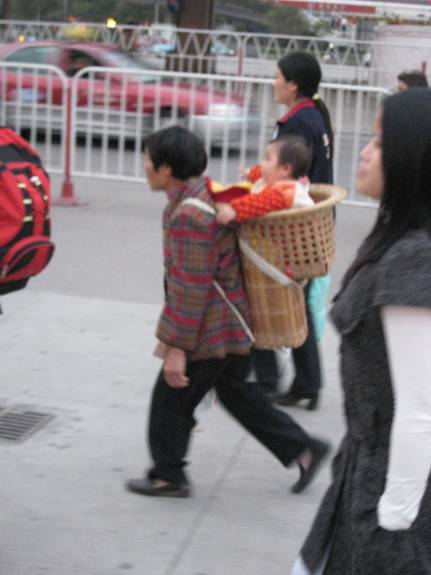
I WILL KILL YOU! YOU WILL SURELY DIE IN VIETNAM! etc etc. This 'gentlemen' however was poorly informed about statistics, telling us the far more likely opposite: Vietnamese regularly die in Vietnam, and Dutchies regularly die in Dutchyland. Besides that, the little man was about half my size and approached the weight of my rucksack. I strongly felt like teaching this dwarf a personal lesson about the square relation between length and force, and the power of three relation between length and mass. However I was surrounded by a mob of his neighbours who were probably not on my side, neither would the police be. Hmm, keep cool Rodge, and try to fit in with the statistics, ha ha. This was an excellent moment to bring in the female touch: I asked for his wife to come. In normal situations women only cause trouble, but in aggressive situations they are a lot smarter than men, since they don't suffer from testosteron and they don't have to compensate a small dong with a big mouth. This female was even more suited for playing intermediar, since she was carrying his(?) baby. Excellent! So finally she cooled him down and I could go catch my train, pfioew.
Conclusion: it's all about the proportional relation between body height and dong size...
P.S. By the way, did you know that Dutchies are the tallest in the world? True fact: en.wikipedia.org/wiki/Dutch_people


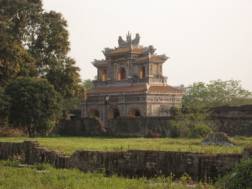

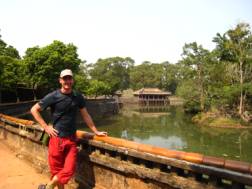

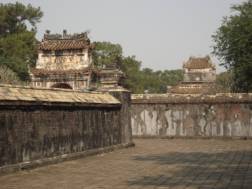

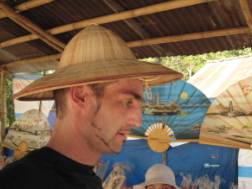
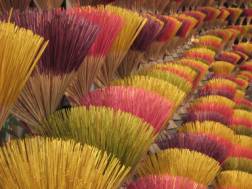

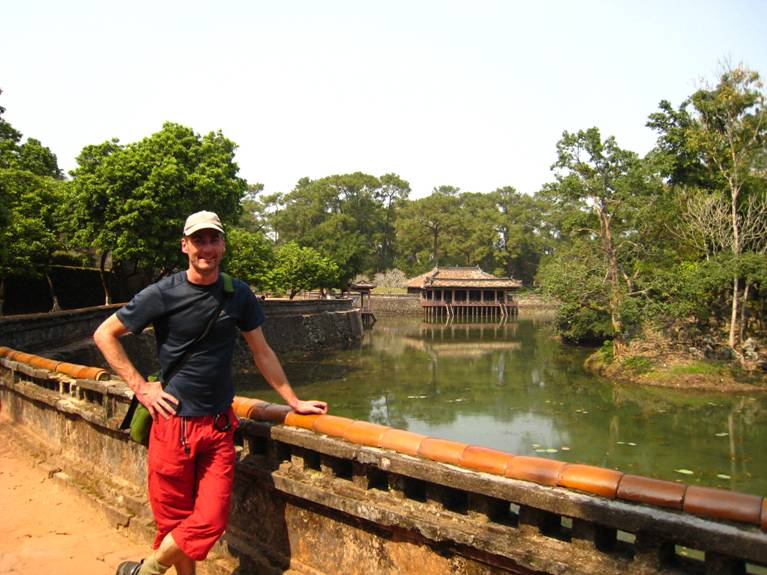
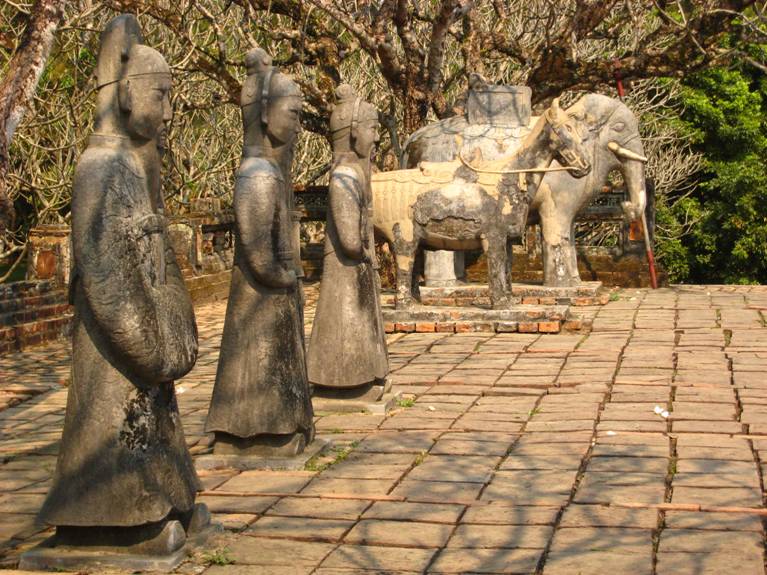
Hue. Formal capital of Vietnam, so lots of pallaces, temples, pagodes and royal tombs.
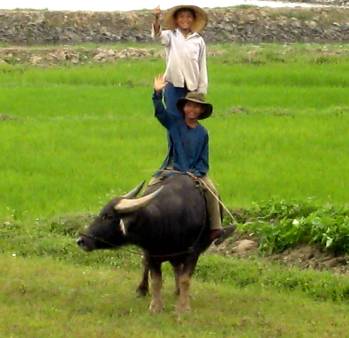

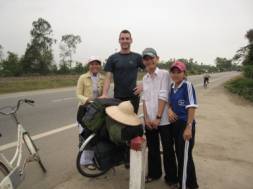


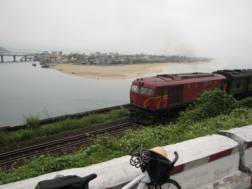


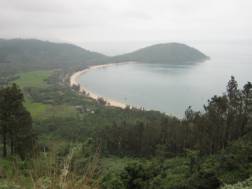
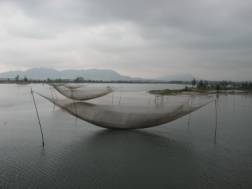

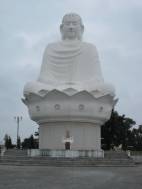


Back in the saddle. When I took a test ride around Hue to check out my bike and legs, the heat was awful and I was seriously doubting the rest of my tropical trip. I'r rather prefer high mountains or icy colds than humid heat because there is nothing you can do about it.
Fortunately, when I left Hue the next day, it was cloudy and in the mountain pass it was even foggy and raining, the first time I actually enjoyed biking in the cool rain, haha. In the end it even turned out a great day since I made it all the way to Hoi An, a nice 150 km, not bad for a first day, ay?
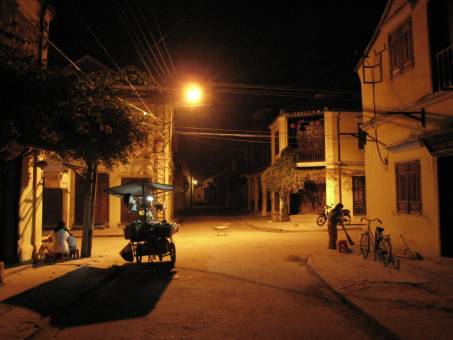
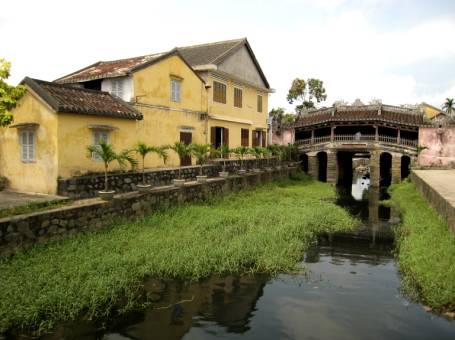
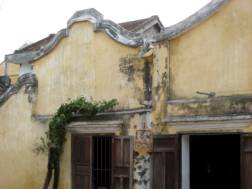


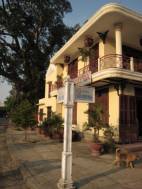

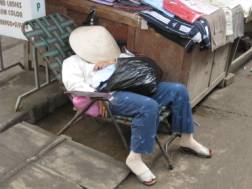


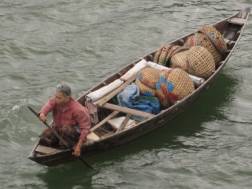
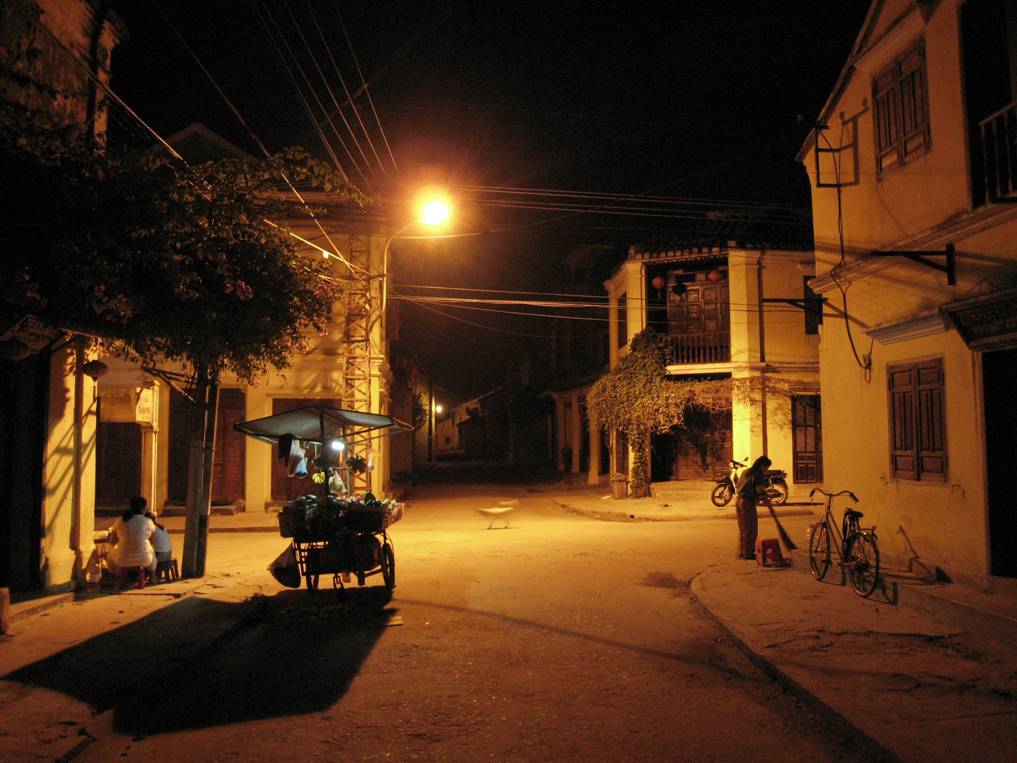
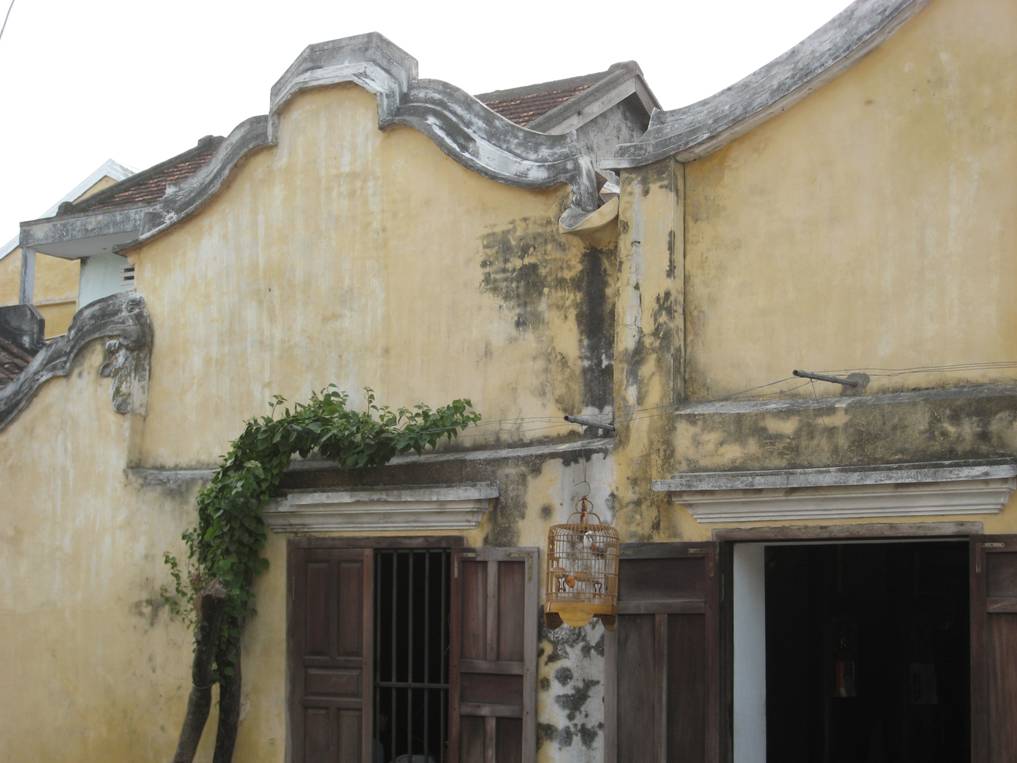
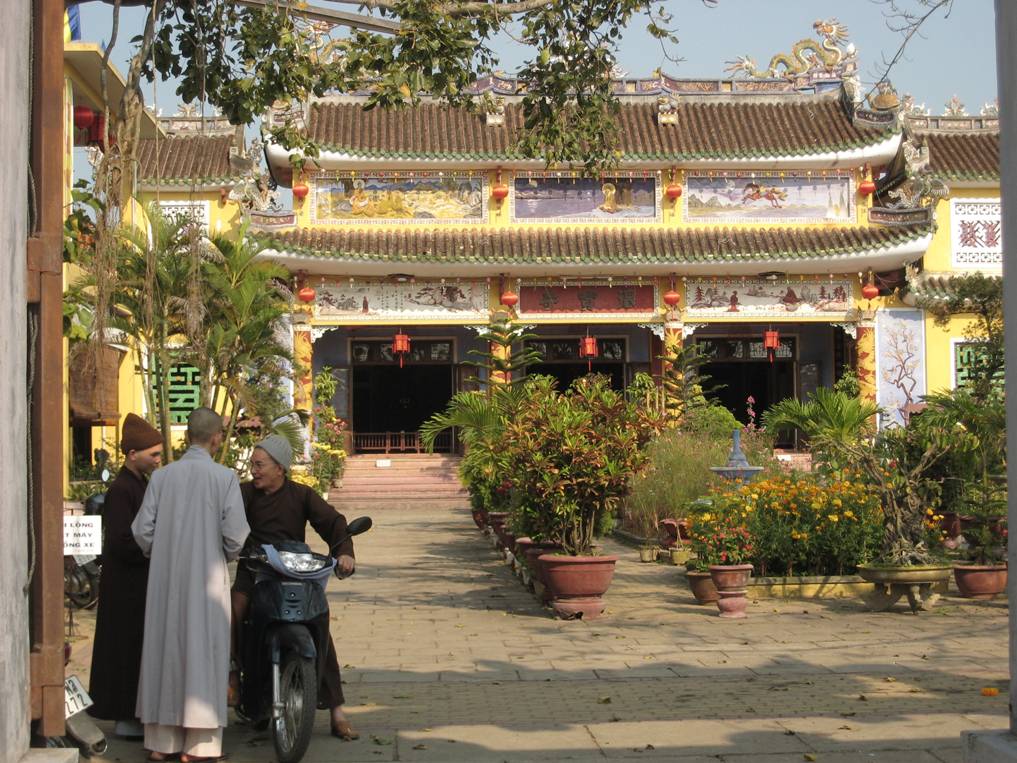
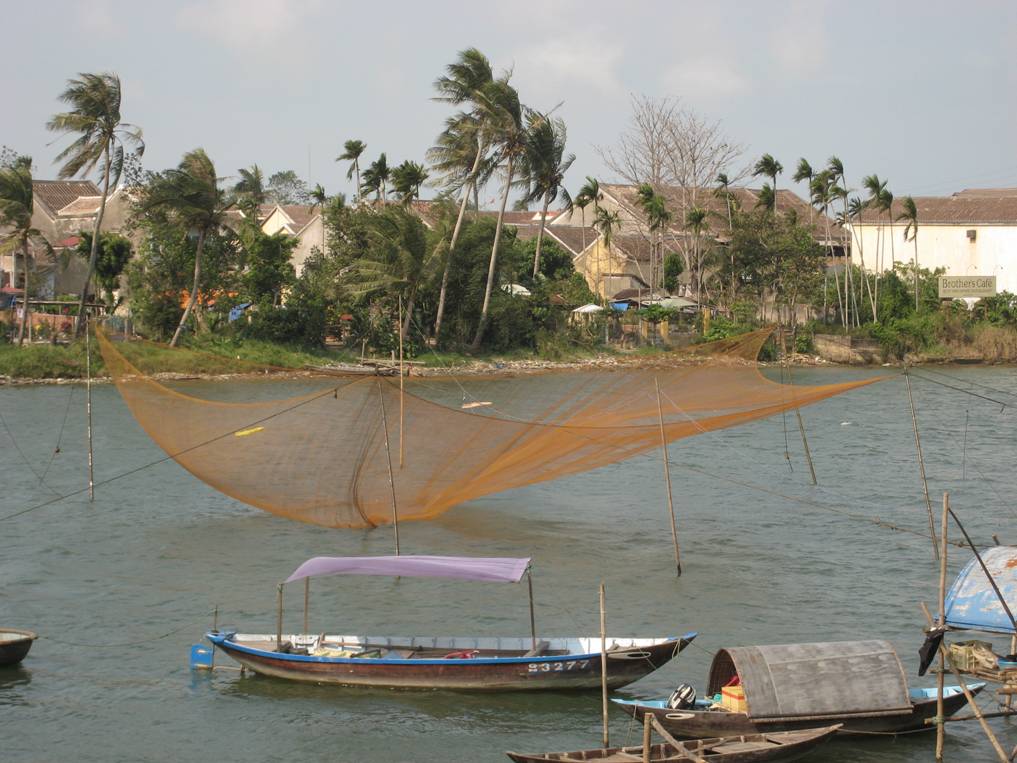
Hoi An. An old harbour town with lots of Chinese and colonial reminders, one of the most pittoresque places in Vietnam.


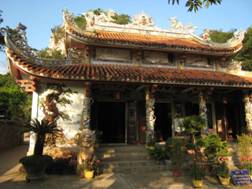


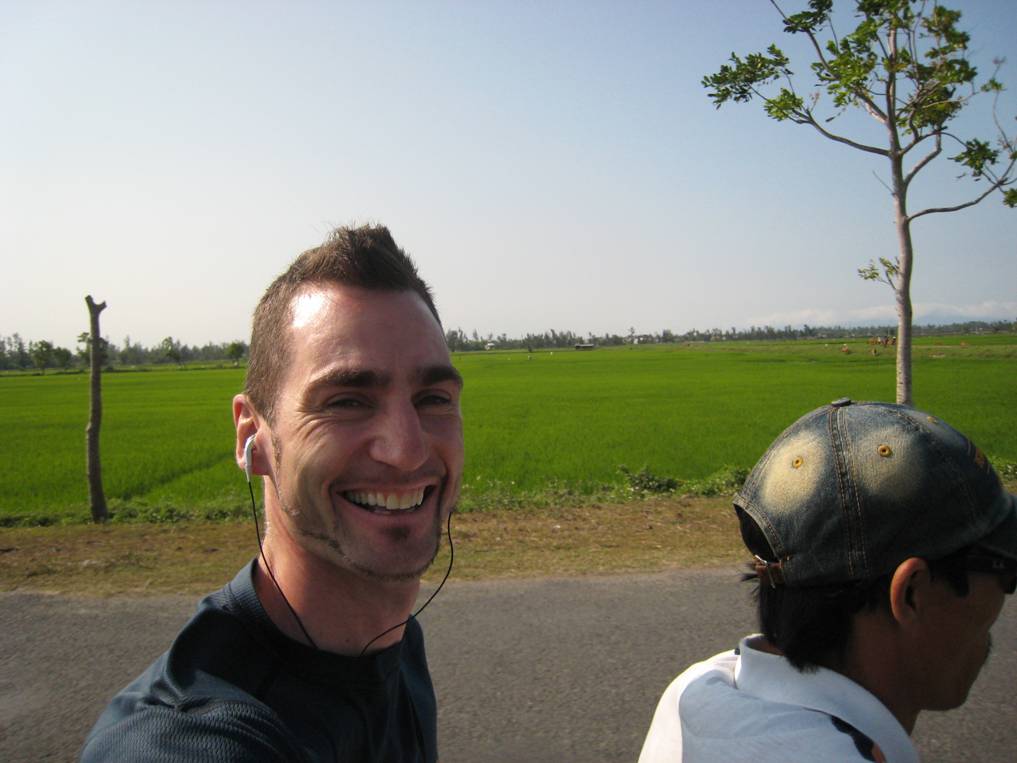
Around Hoi An. If you want to see some sites in and around a city and you don't feel like cycling or trying to find the way, you can use the very flexible 'private' Vietnam transport: just walk on the street and stop saying 'no thank you' to guys offering you a ride on their moped.

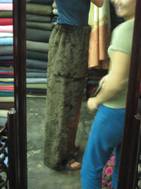
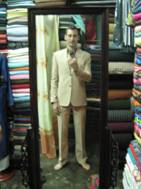

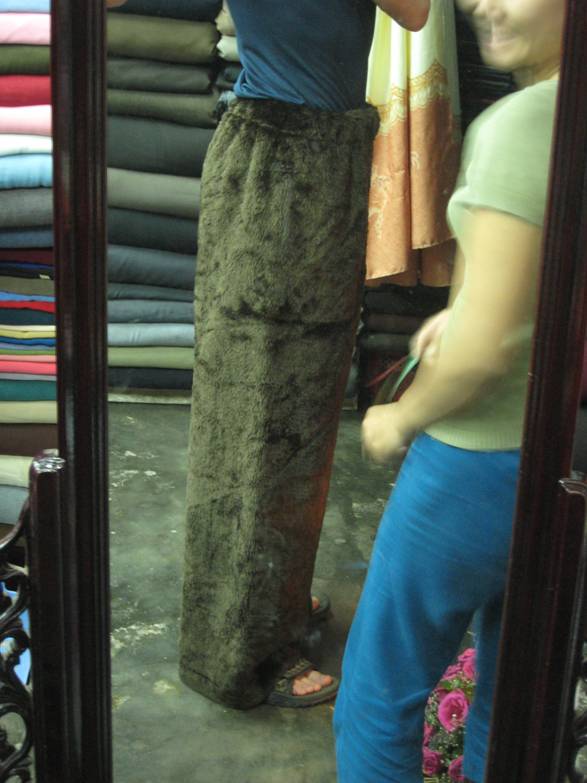
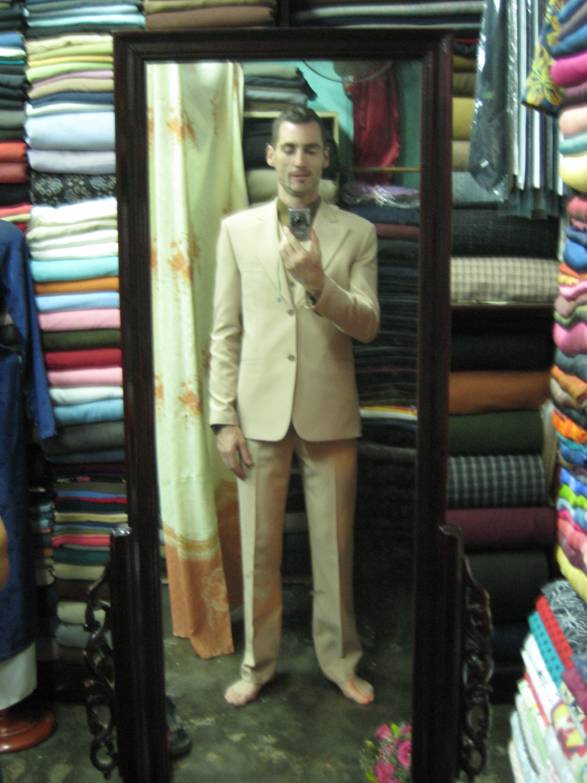
Hoi An tailors. Hoi AN is famous (and cheap) for its tailors, so I stocked up on some fine 'business' suits.
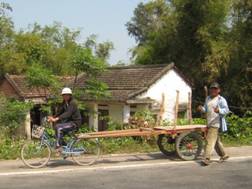
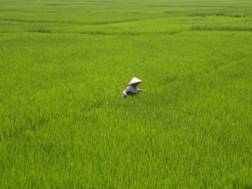
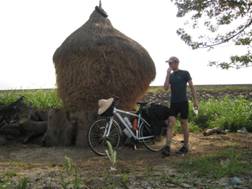

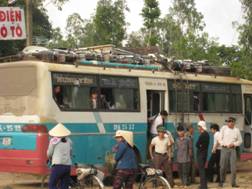

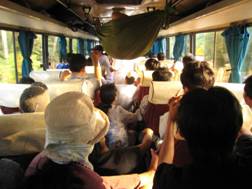
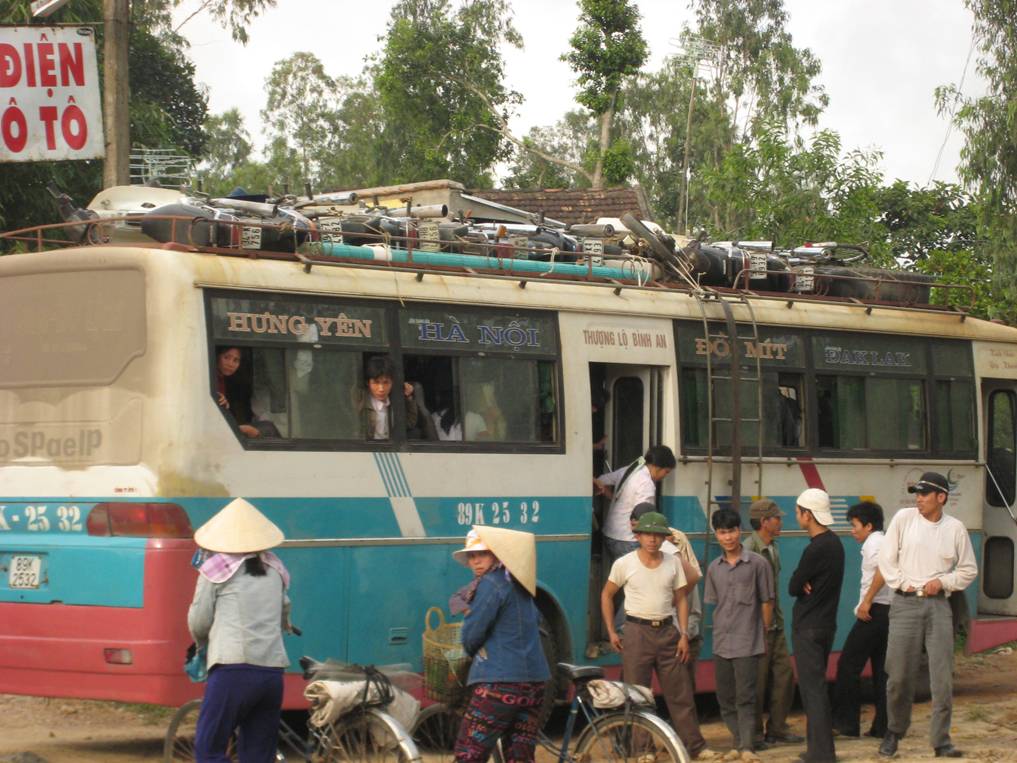
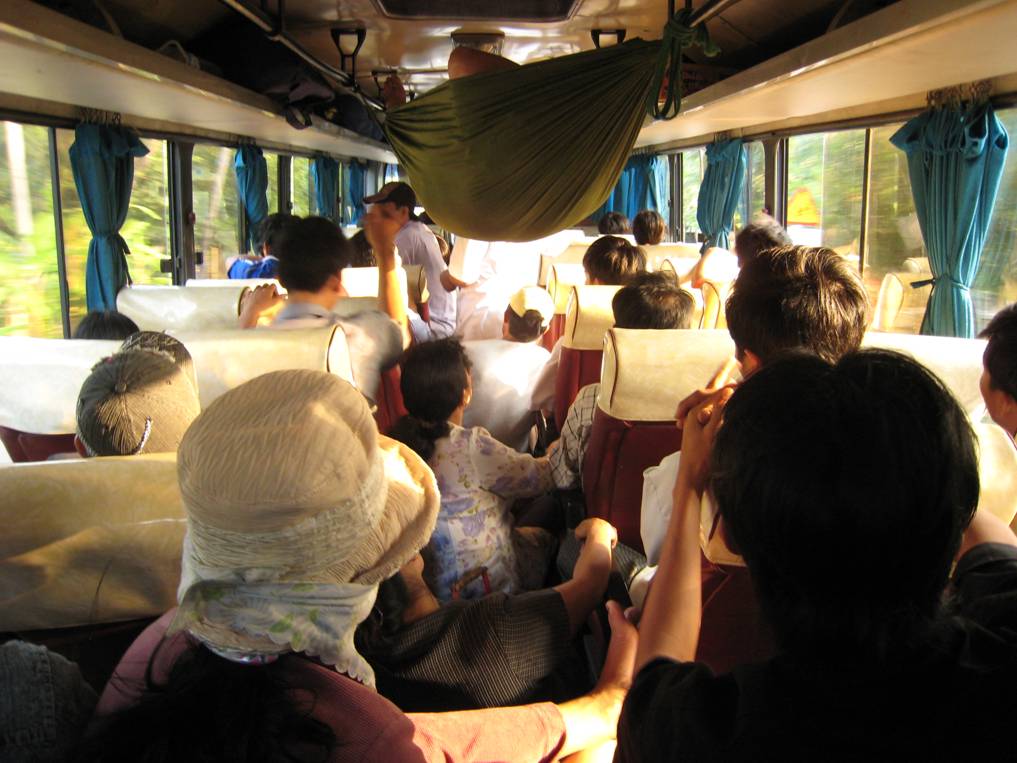
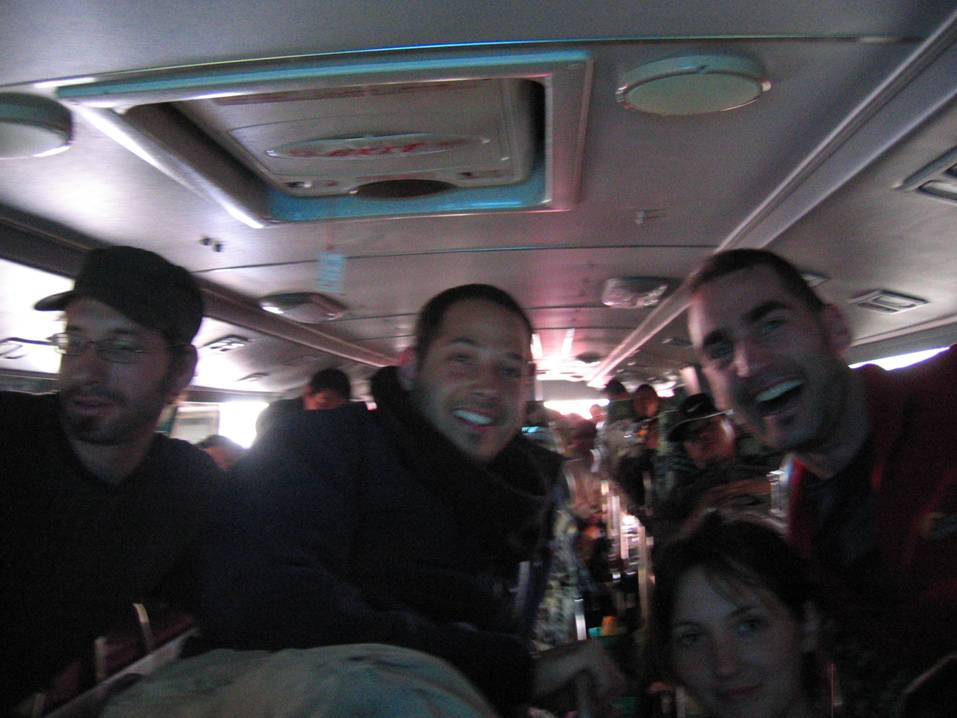
Burning road. After a few days of being grilled alive on the sunny road, I decided to cheat a bit between Quang Ngai to Nha Trang. I took the bus, which is more like a Guiness Book of Records try yo stuff as many people in a bus as possible, they even had some people in hammocks on the ceiling, haha.

No pictures. At some of the best moments, one just forgets to take pictures: boys in trees offering me fruits; about 15 Quang Ngai kids spending two hours watching closely how I repair my bicyle; a Na trang french teacher alongside in the night for 10 km to find me a hotel and a meal; etc.


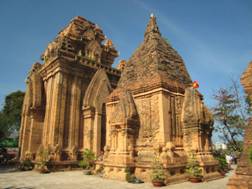
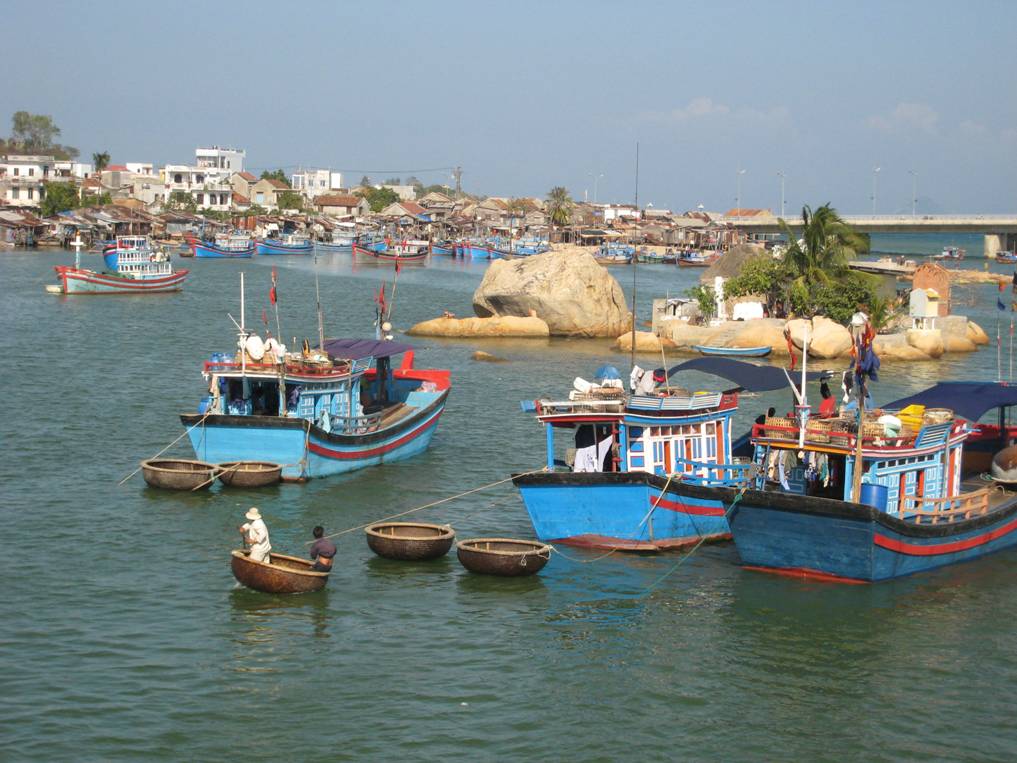
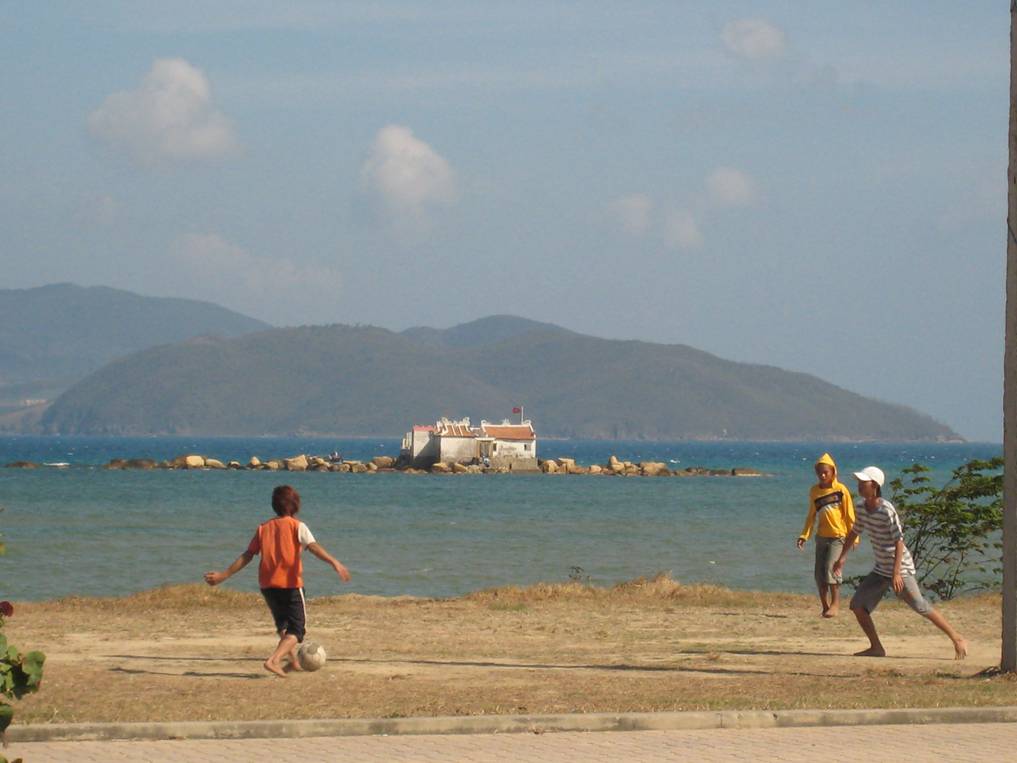
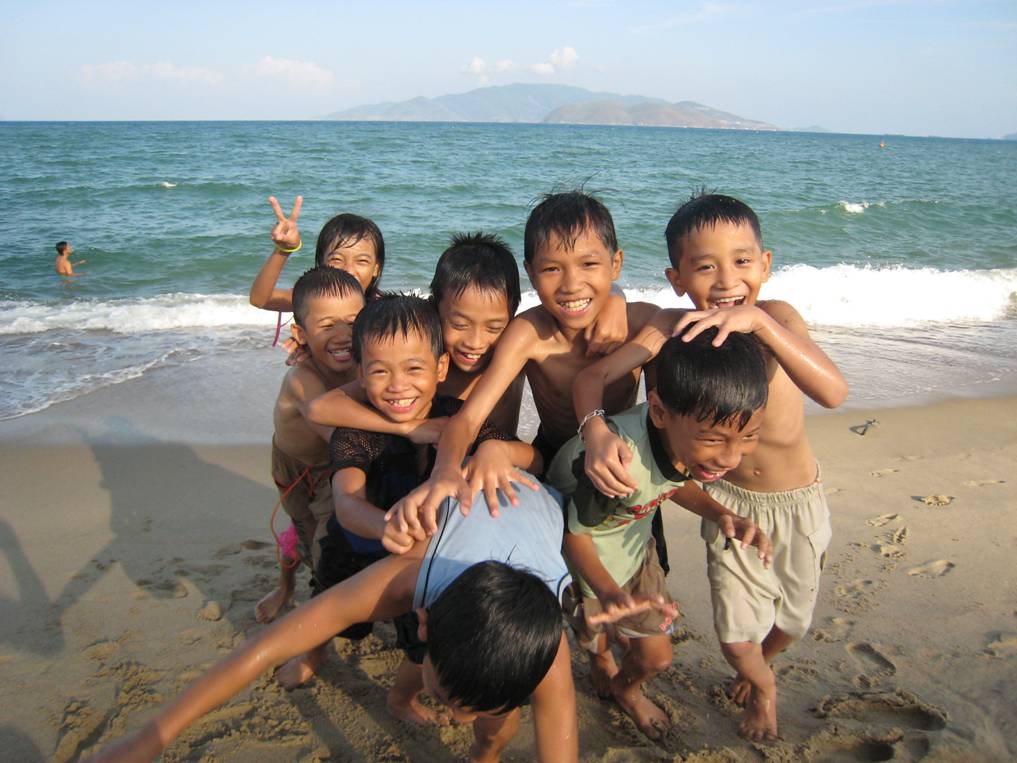
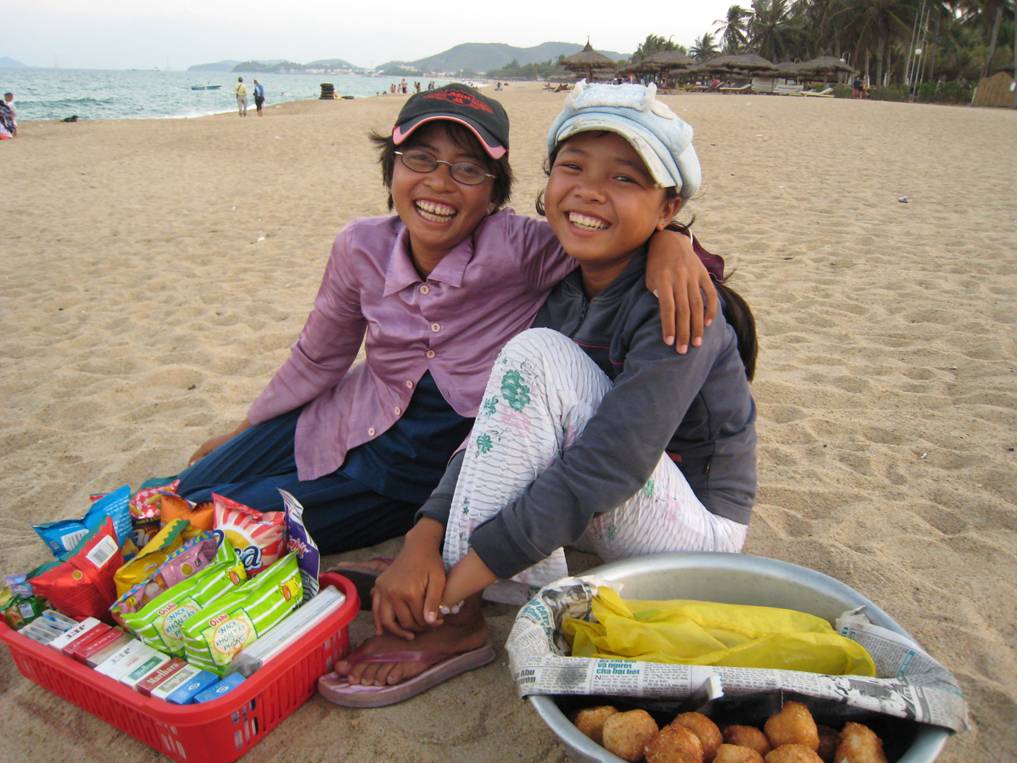
Nha Trang. Once a nice fishing village, now a beach resort. Last picture shows a Cham ruine.

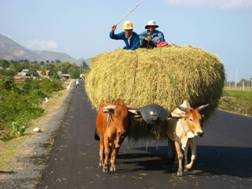
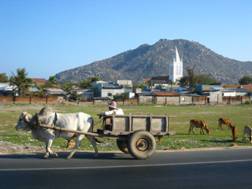
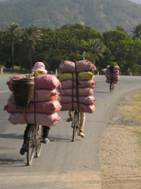
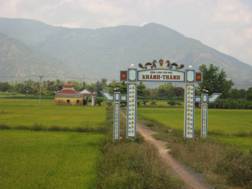


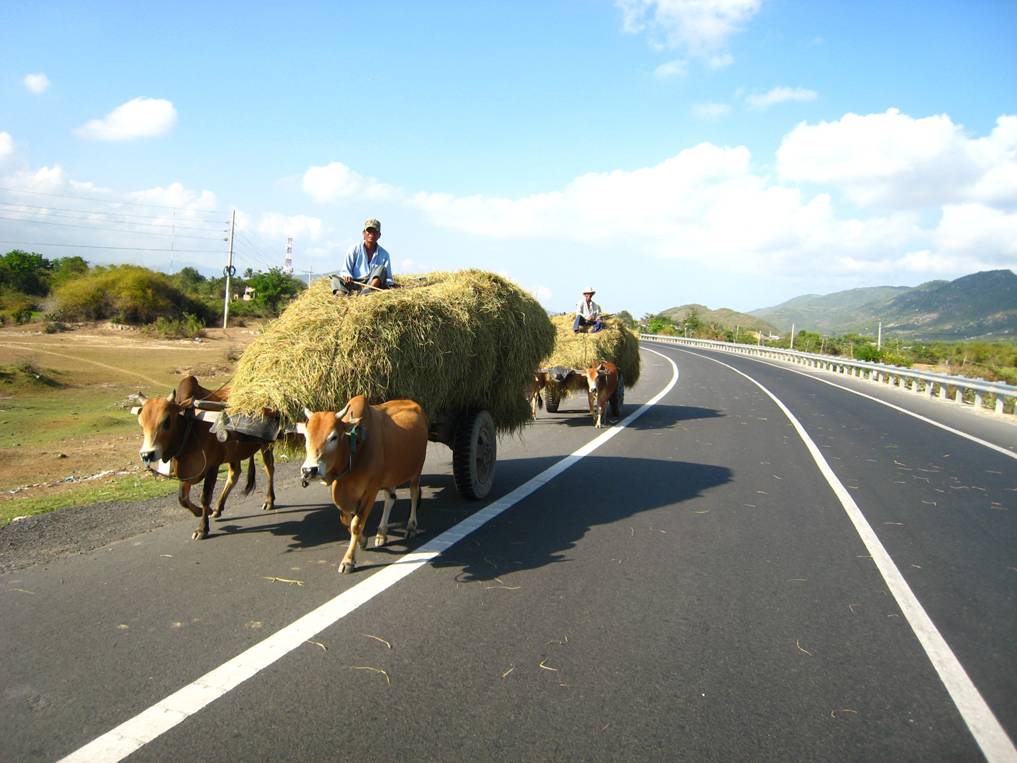
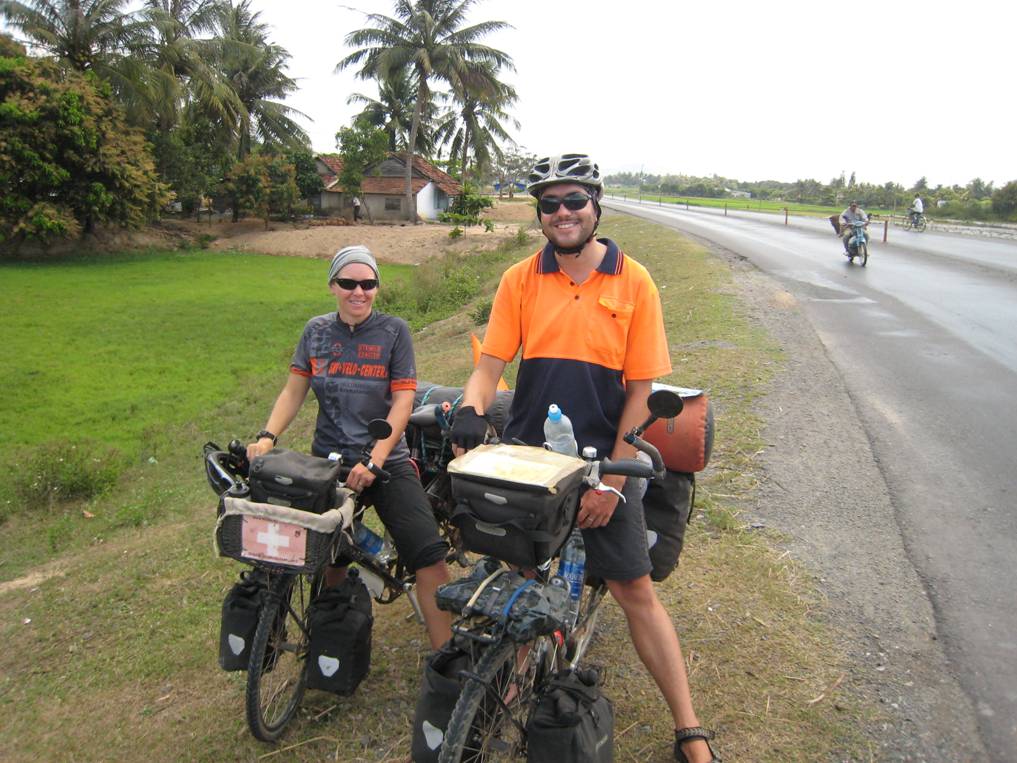
Last part of Highway 1. The further I go south, the hotter amd drier it gets, and poorer too. On the road I met these two Swiss bicyclists on a 3-year yourney around the world, see www.mundial.ch.vu .
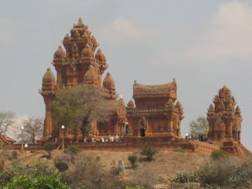

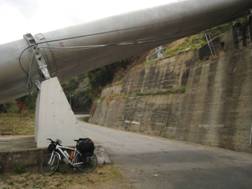


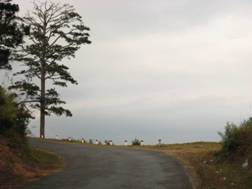
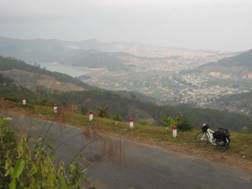

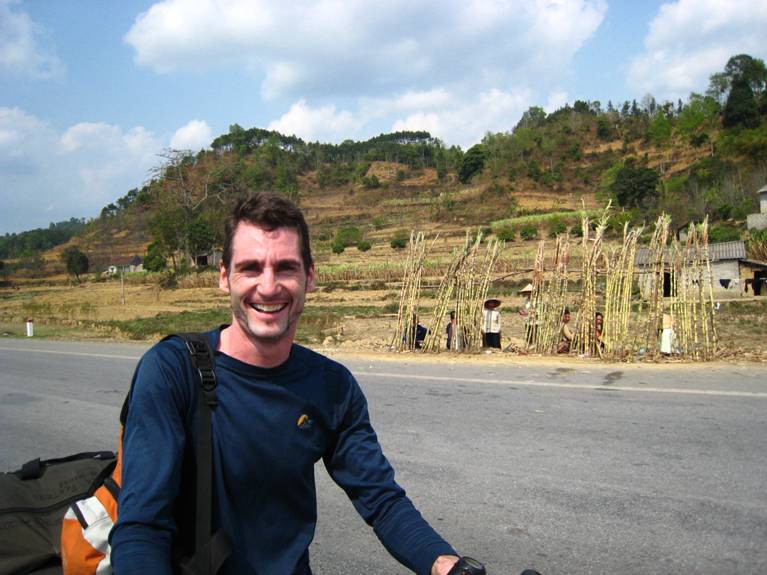
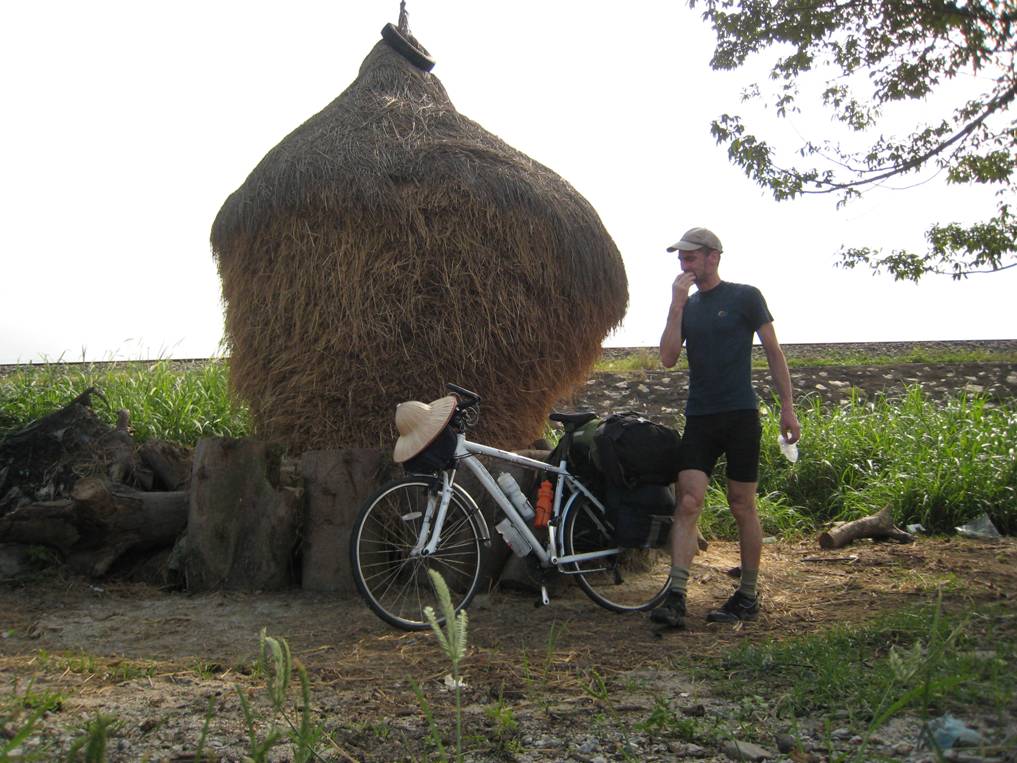
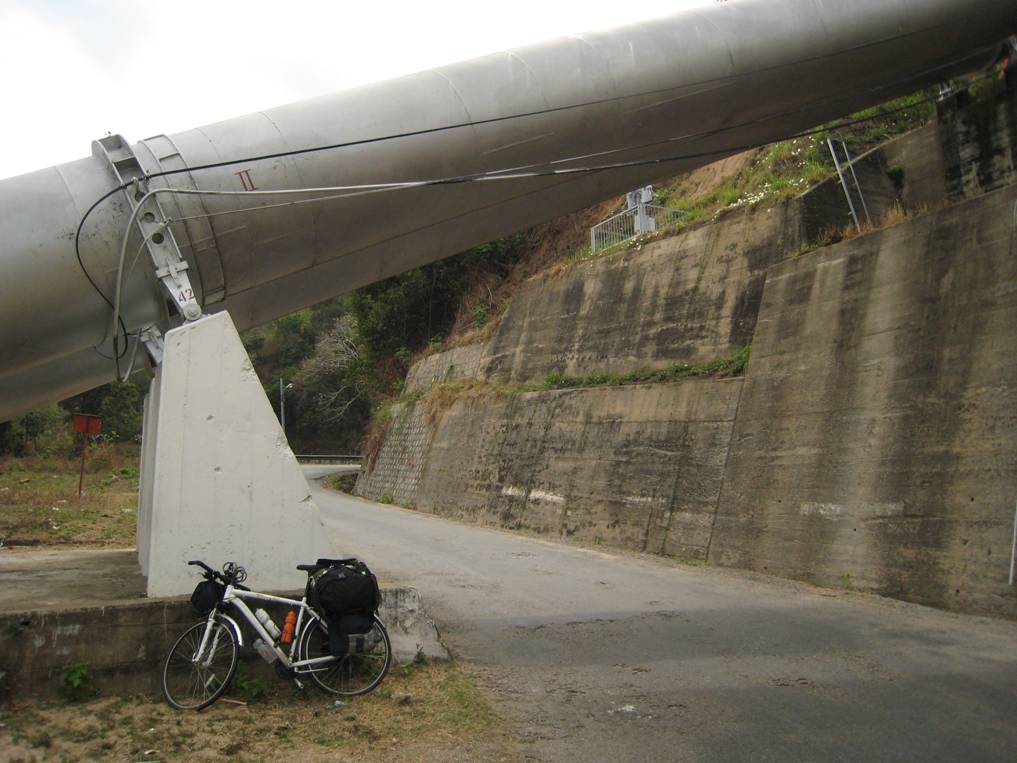
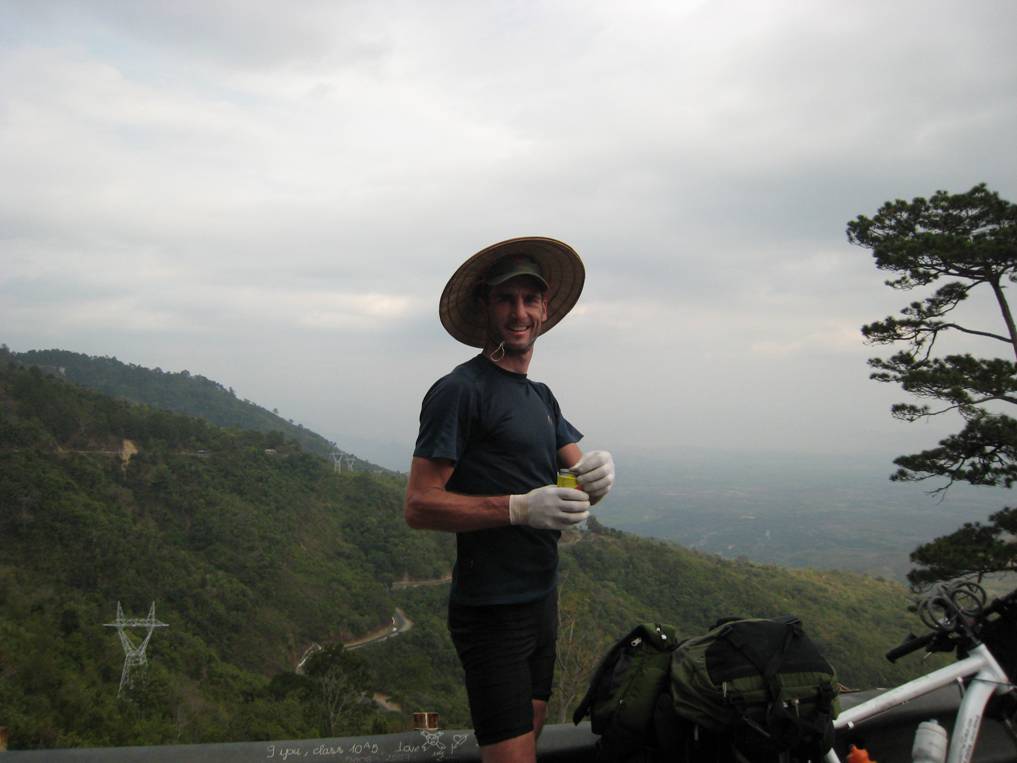
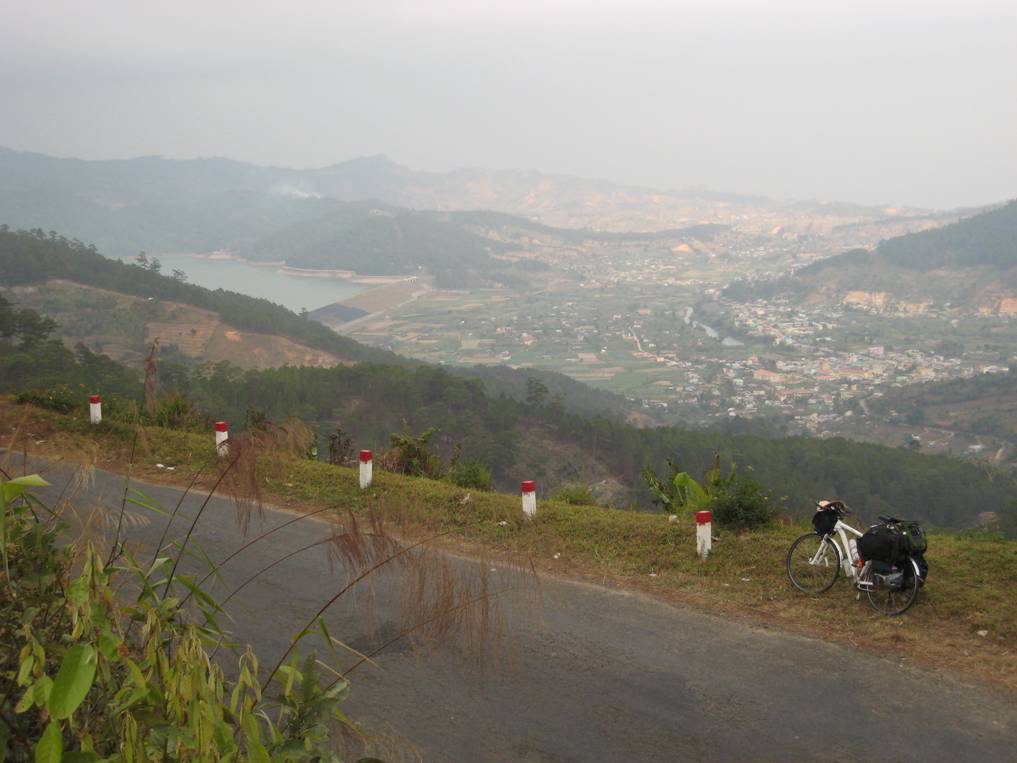
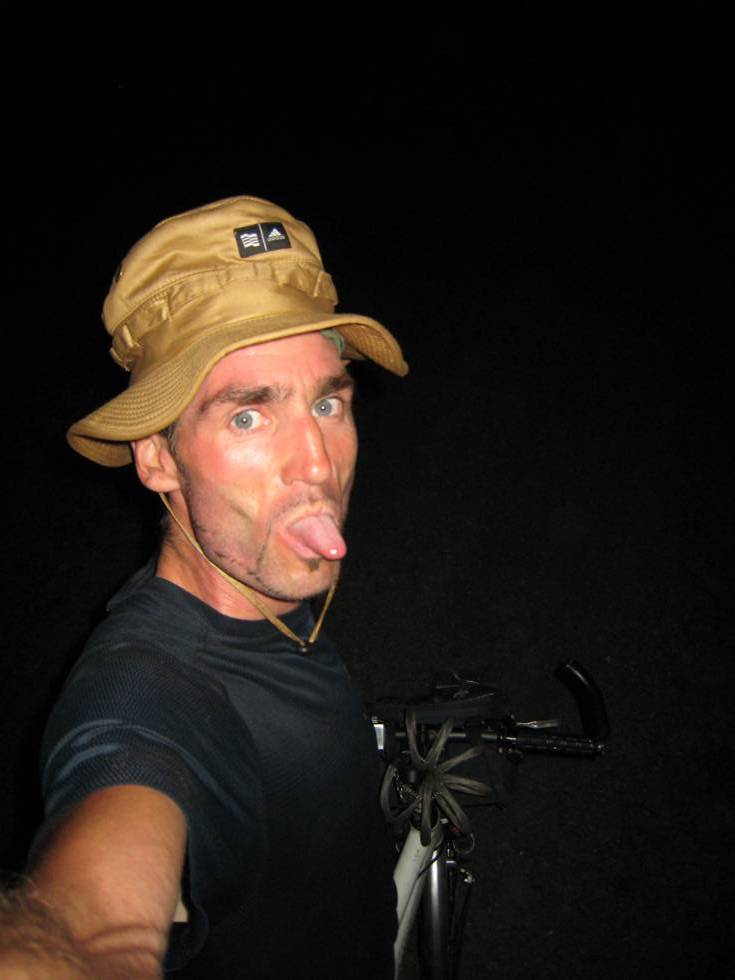
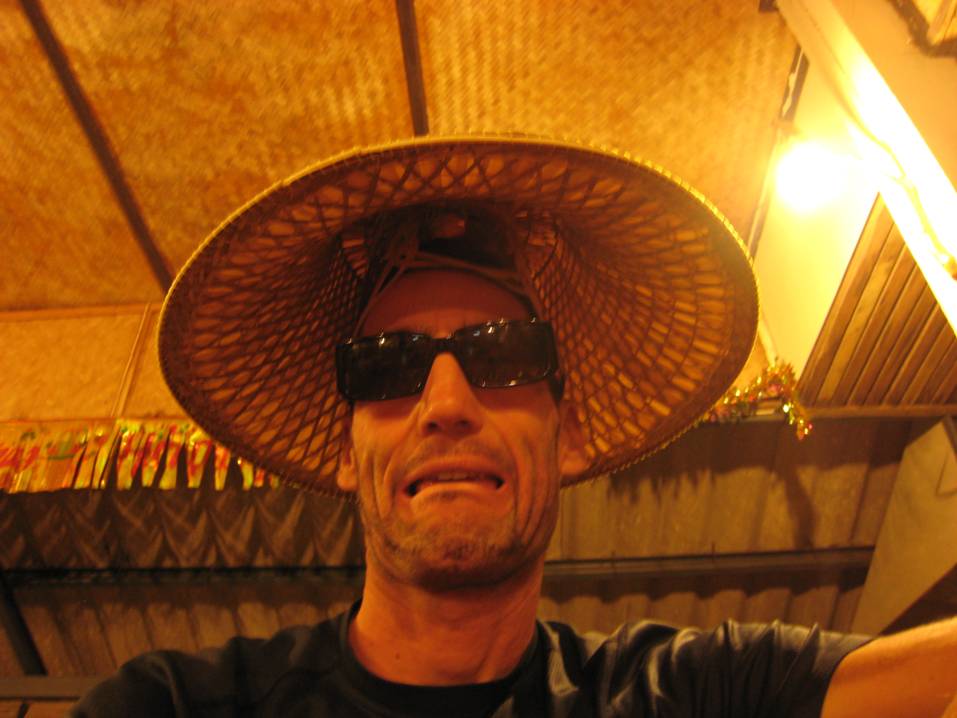
Pan Rang uphill to Da Lat. When the going gets tough... A 115 km in Vietnam is not so hard because along the coast it is flat, but on this day I had to climb almost 2 km altitude in the burning heat, a very long and tough day. And yes, I look like Goofy with my hat and gloves to prevent sunburning my head and hands.

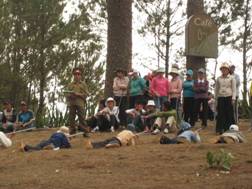
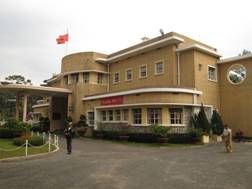
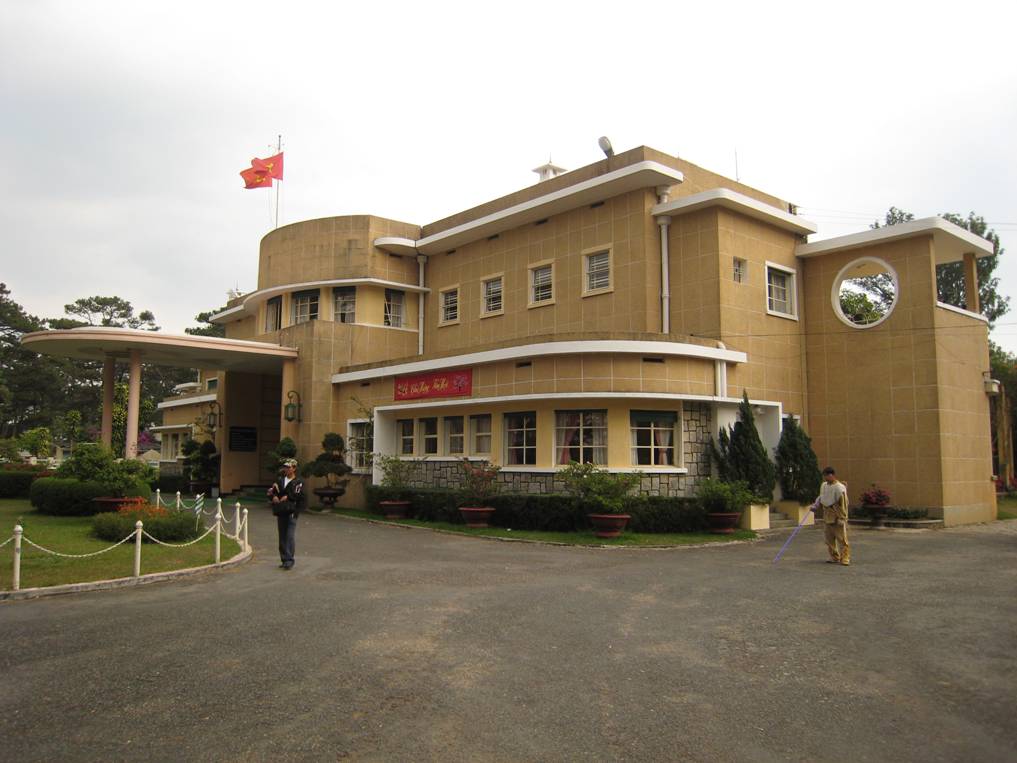
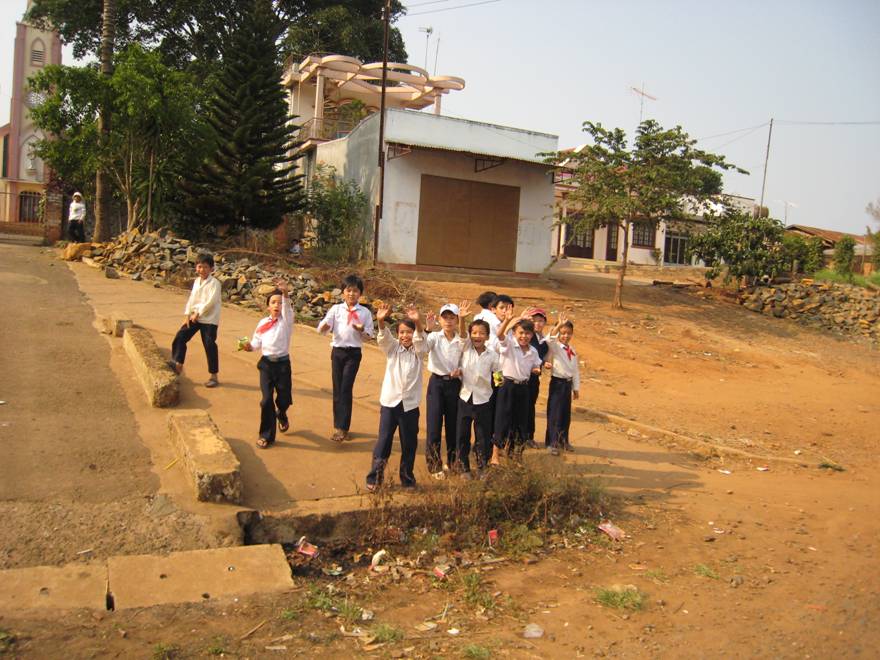
Dalat. A clean and green city up, and relatively cool, I needed that! Forelast picture show school kids doing some army practice with a plastic pipe for a gun. Last picture show a former palace in Art Deco style.
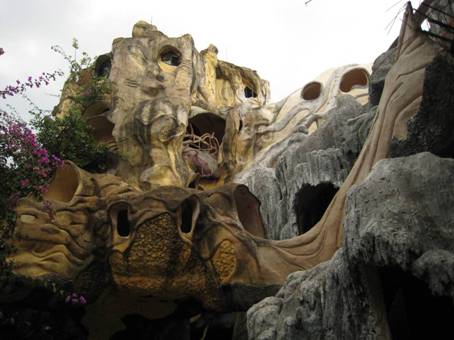


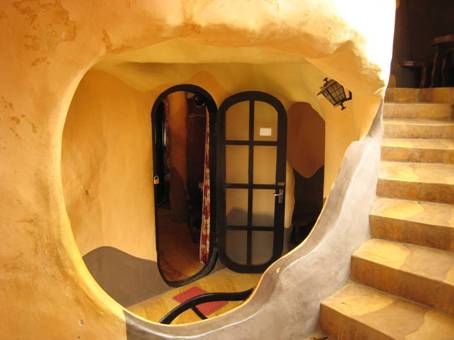

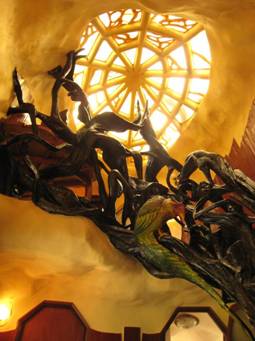


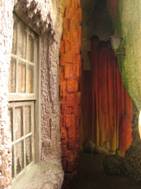
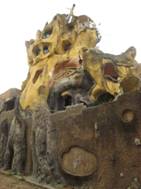

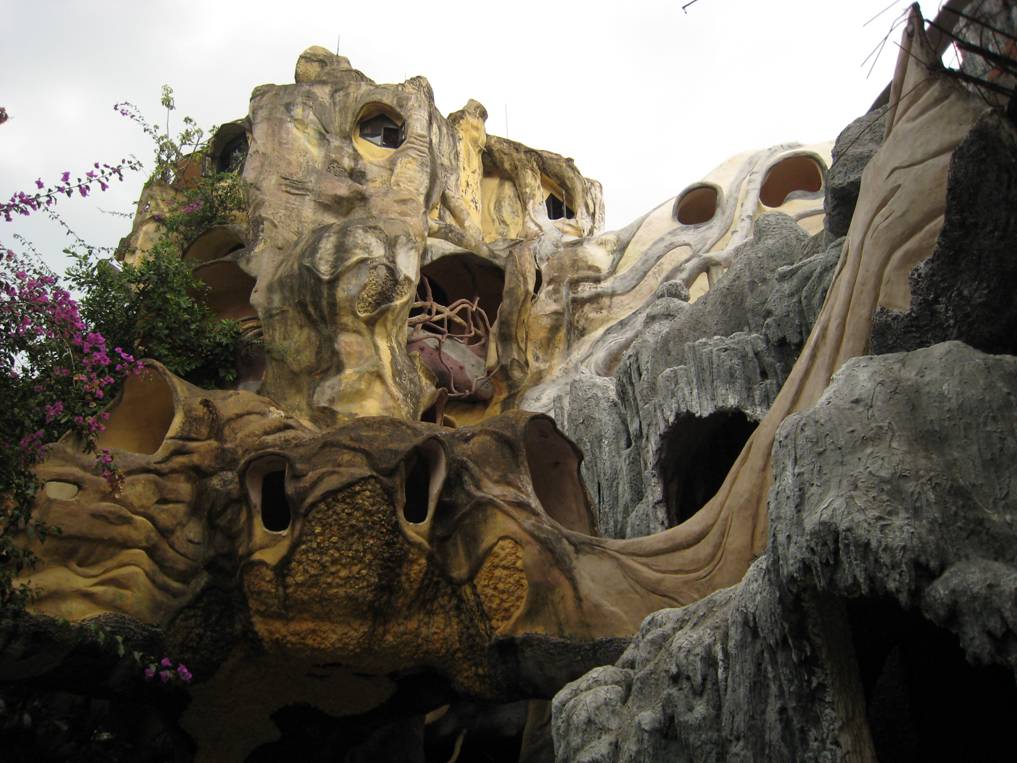
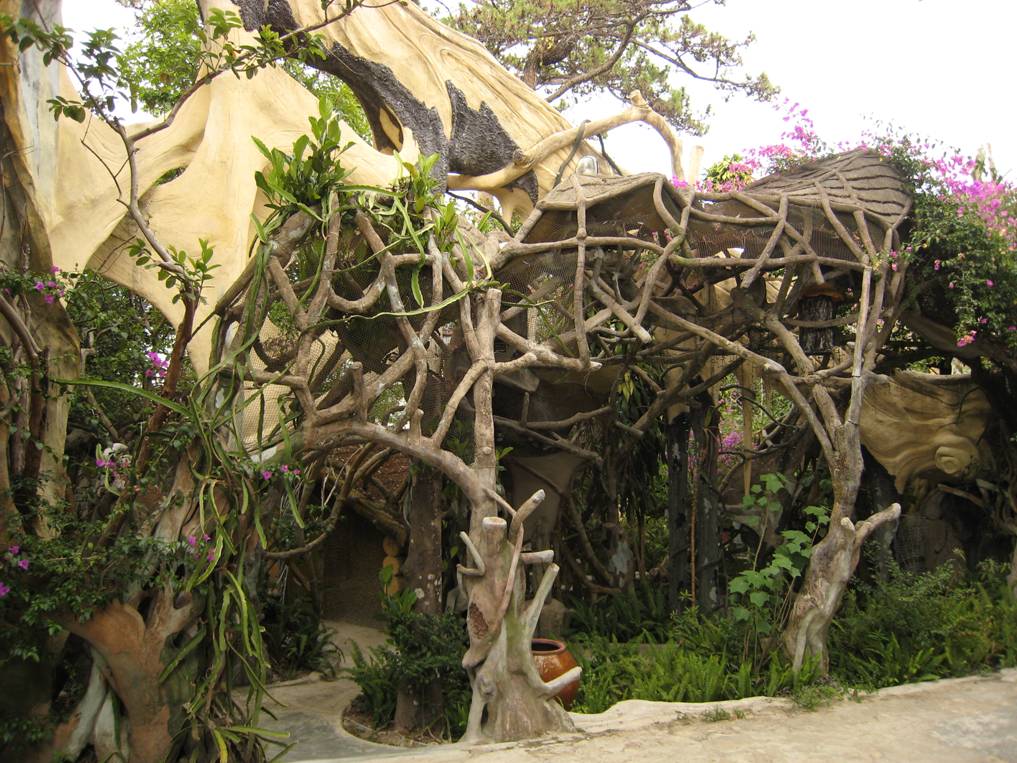
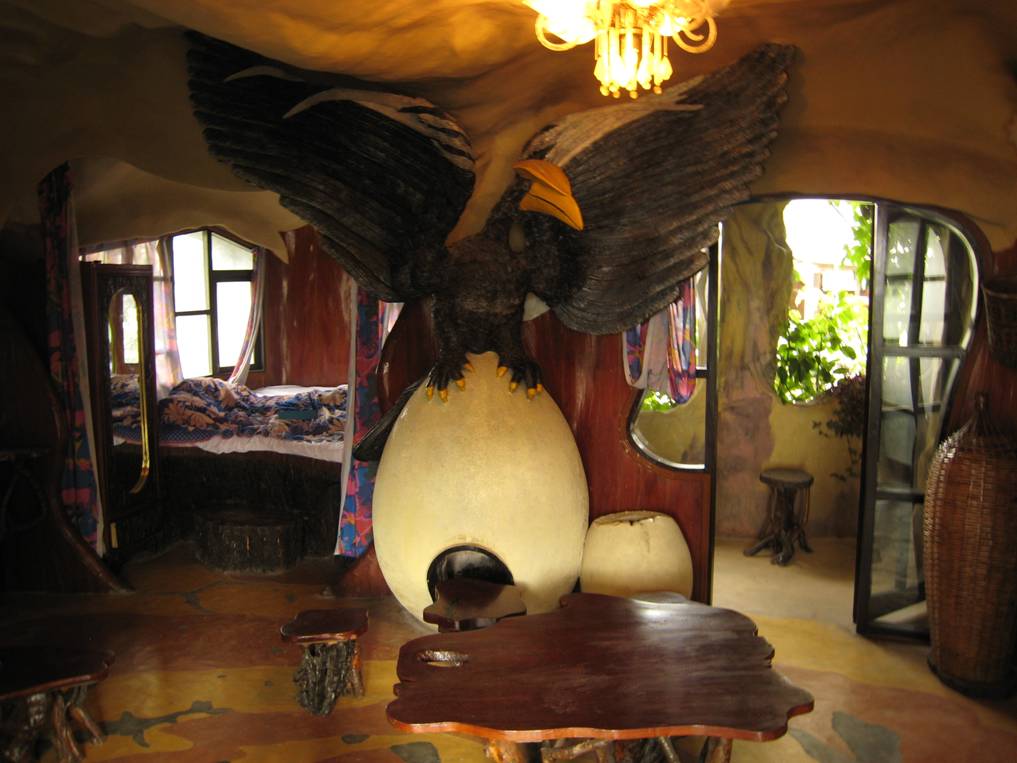
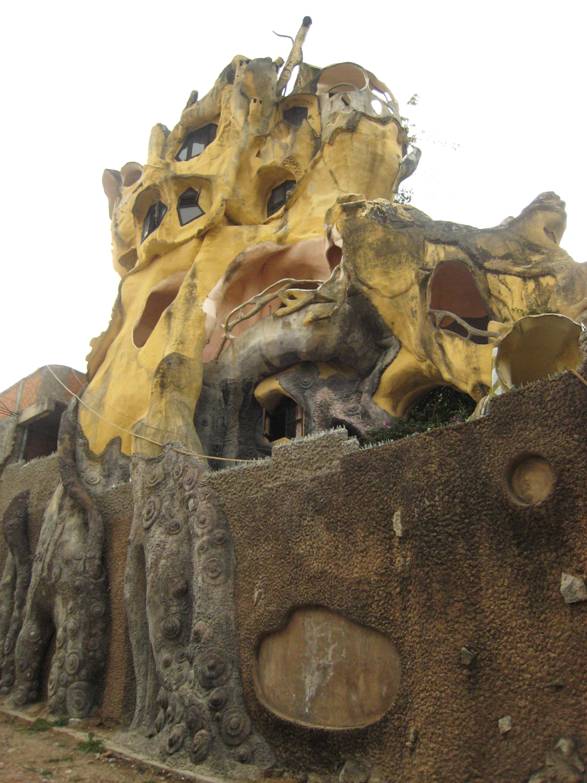
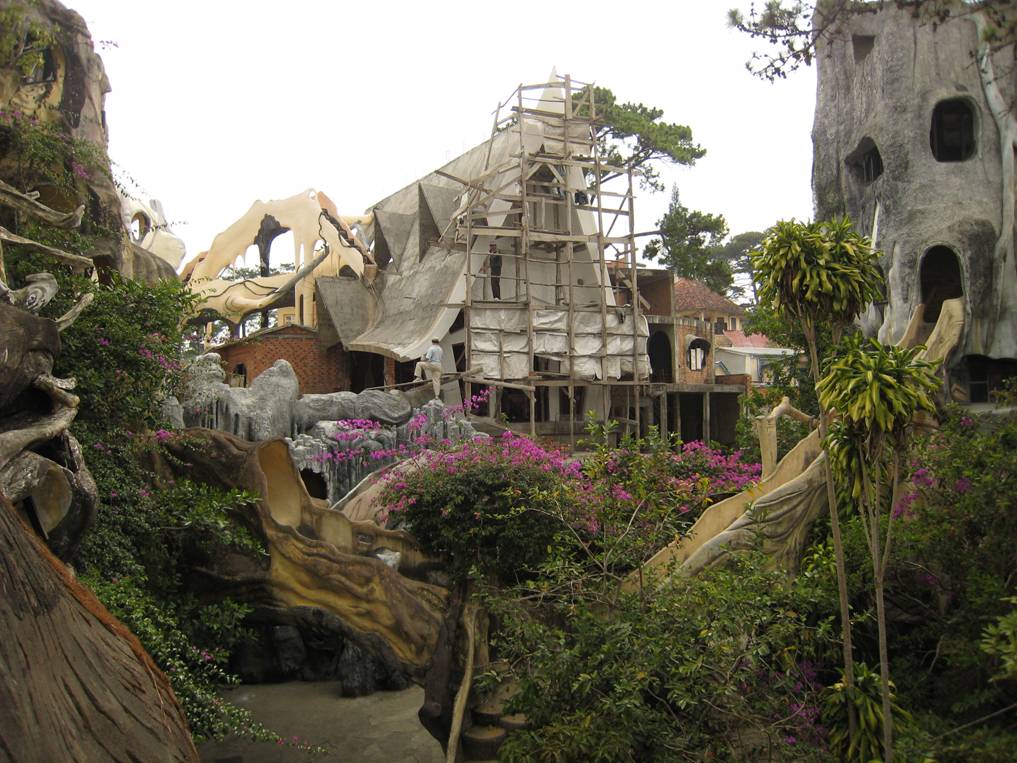
Organic architecture. To my humble opinion, the most beautiful man-made object is Gaudi's cathedral Sagrada Familia in Barcelone. After having seen most of his other buildings, seeing the cathedral still was a true emotional shock because of its beaty and ingenuity. I immediately fell in love with organic architecture, a style of architecture inspired by the forms of nature, like early 20th century Art Nouveau. One of my dreams is to built my own house with some features in it of organic architecture.
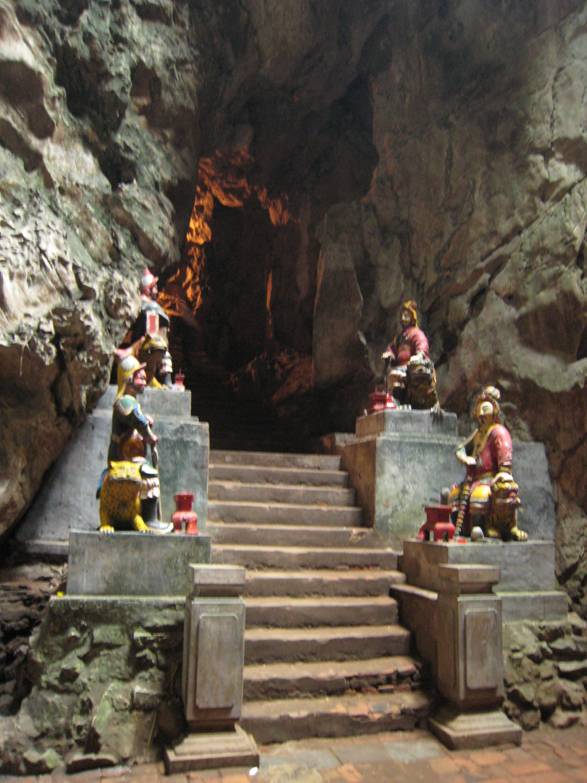
However, a Vietnamese architect took 'organic architecture' very litteral and made this crazy guest-house: by far not as stylisch and elegant as Gaudi and most of the times even very kitsch, but nevertheless inspiring.


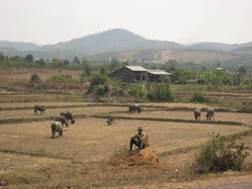
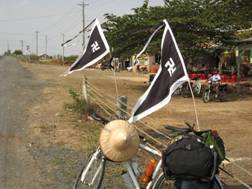


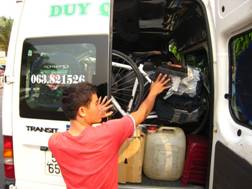
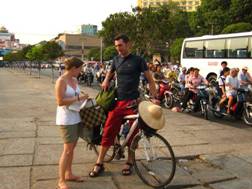
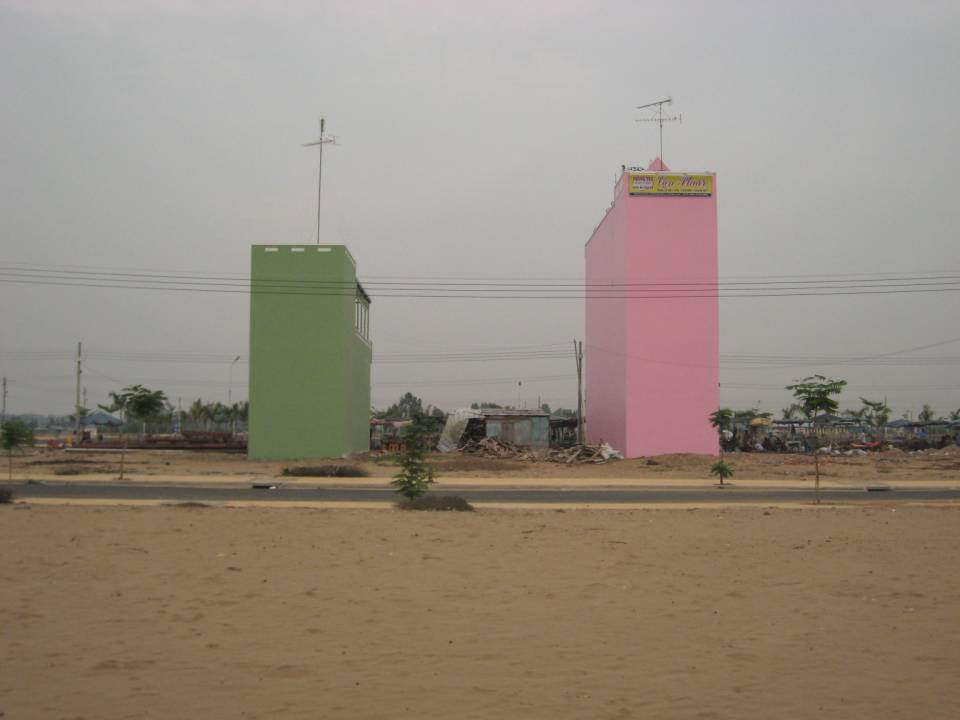
Dalat to Ho Chi Minh City. Descending again on a steadily busier road which culminates in the crazy traffic mess of Ho Chi Minh City, the former Saigon.


Ho Chi Minh City. Like most capitals, a boring place with many tourists and few places of interest.
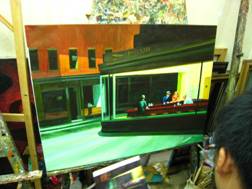


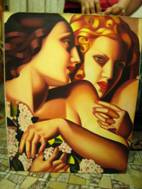
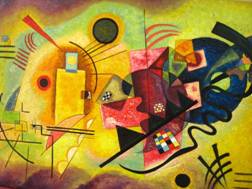


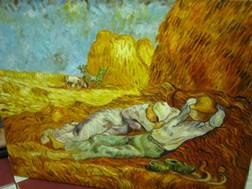
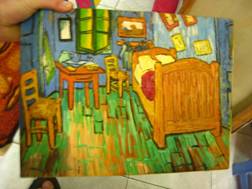
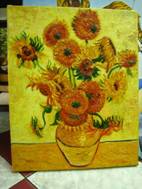


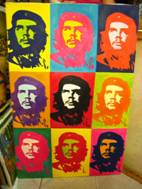

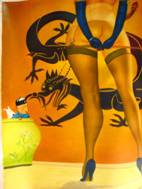
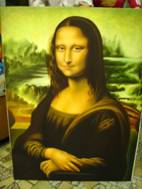

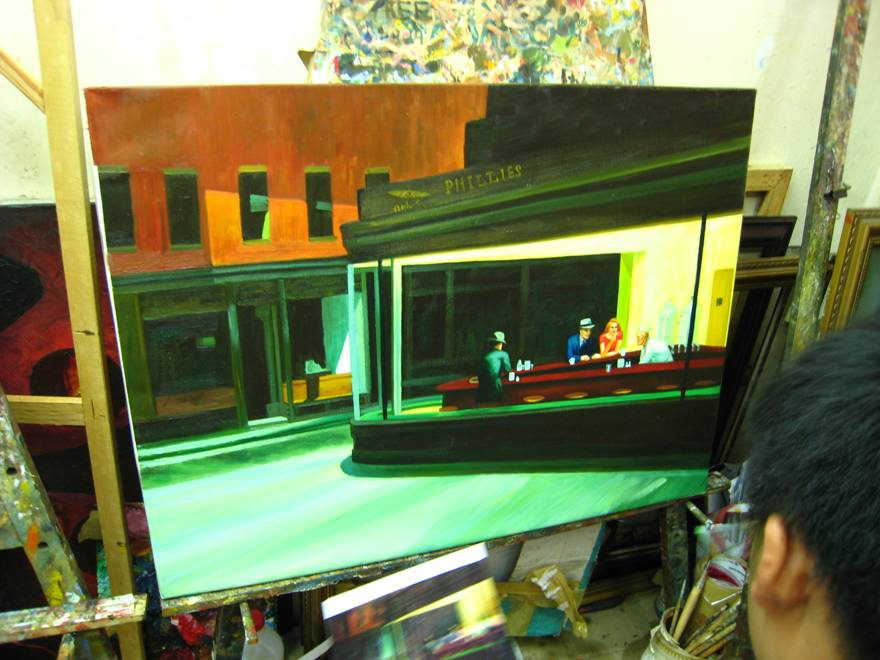
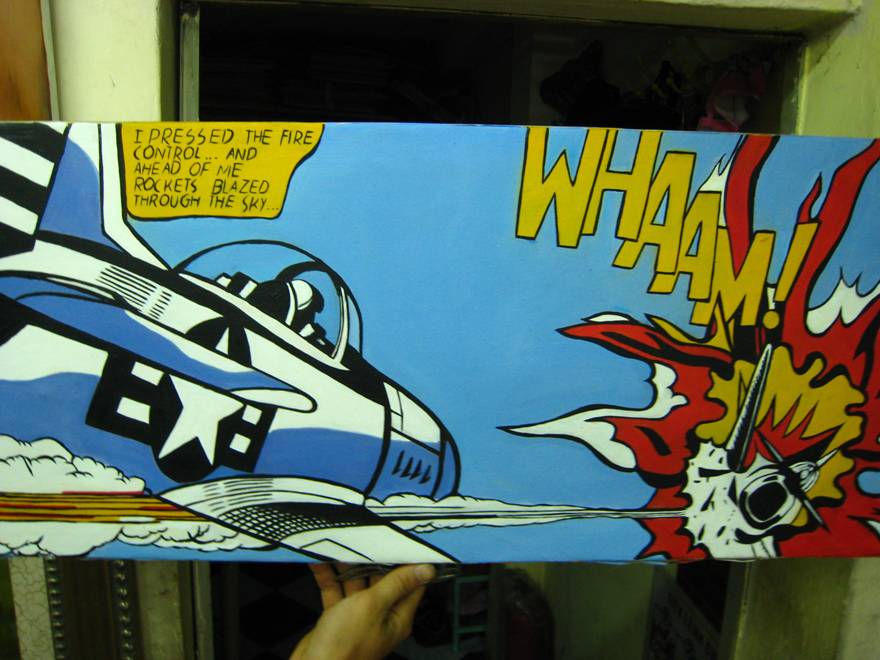
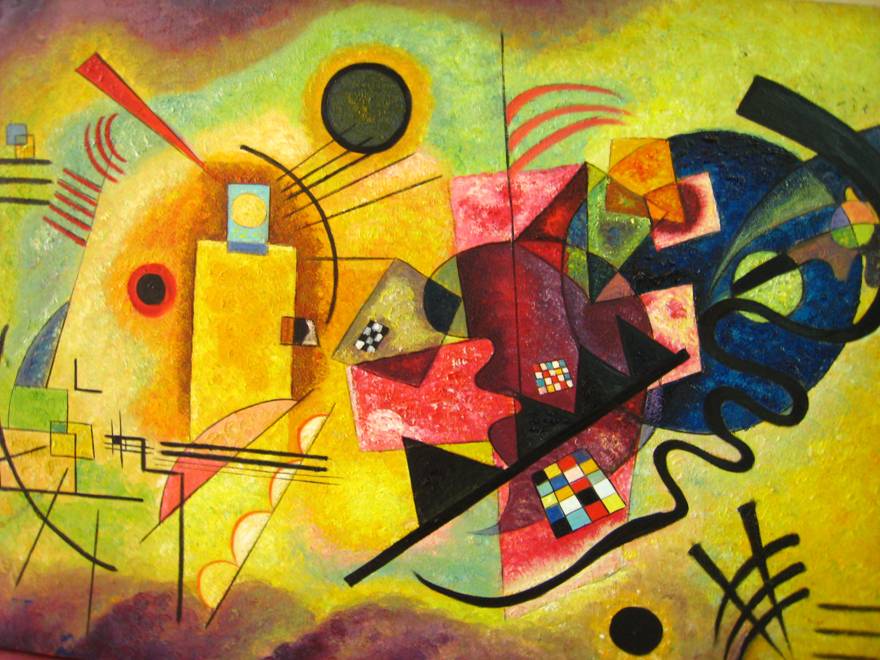
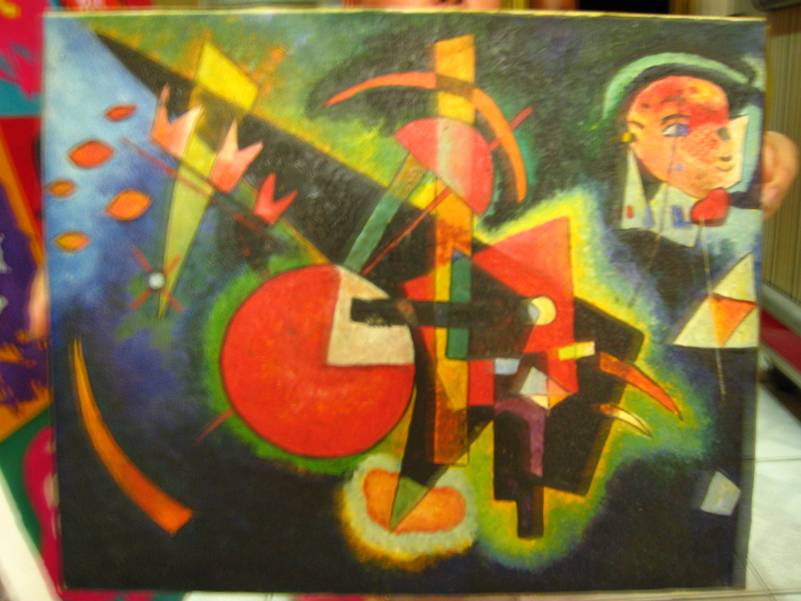
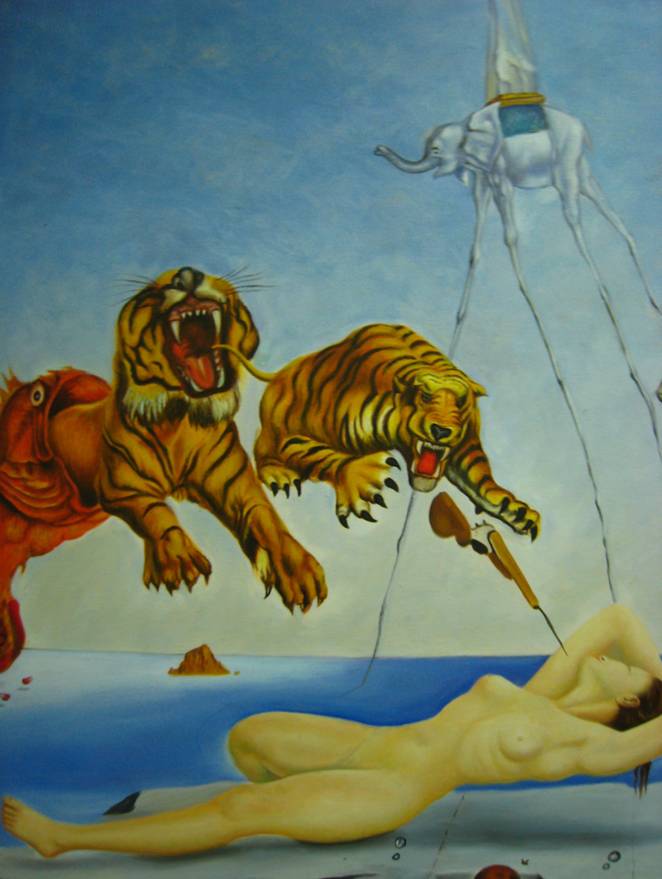
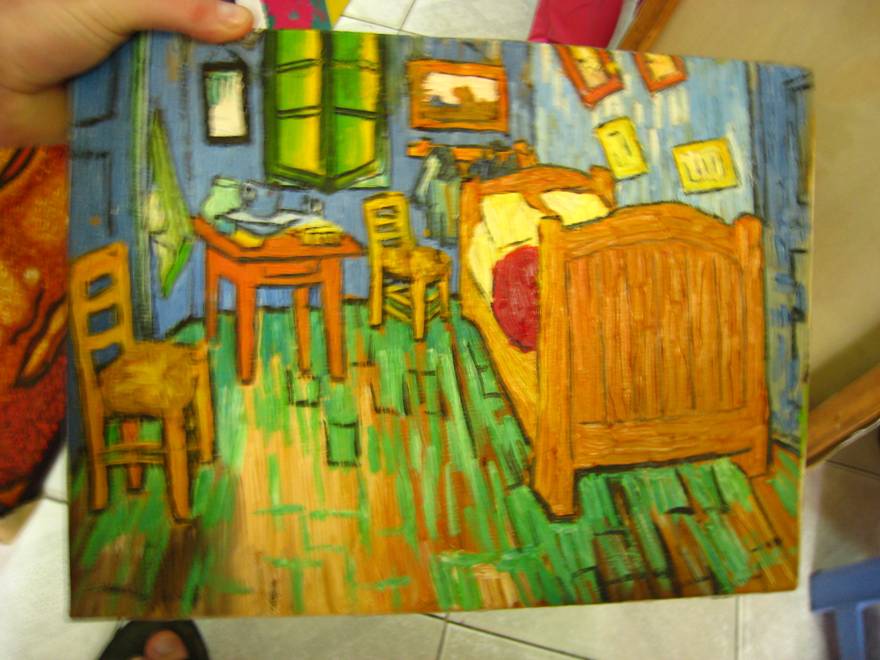
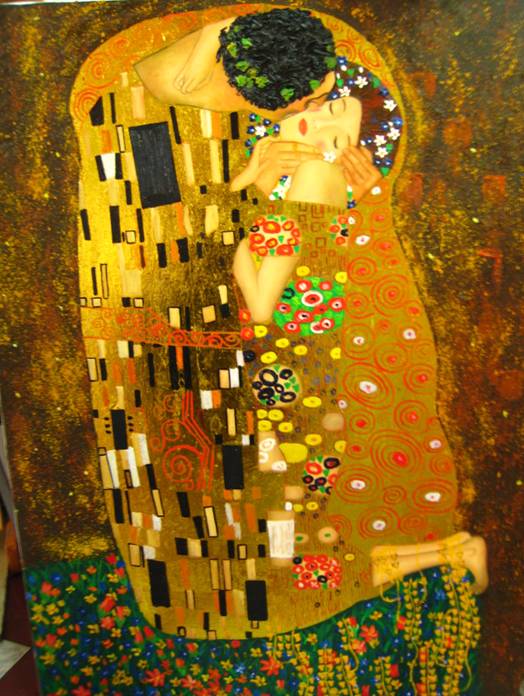
Made in Europe, copied in Asia. So what do you do when you get bored? Exactly, you go shopping. While Hoi An was a good place to start my own little fashion collection, I picked Ho Chi Min City as the start of my private art collection. In order of appearance:
my favorite Hopper, a Vettriano, a Lichtenstein, a Lempicka, two Kandinsky's, two Dali's, three Van Gogh's, a Botero, a Klimt, a Warhol-like Che, A Labanda, a very naughty Herge, and finally...euh...some middle-aged Italian dude.

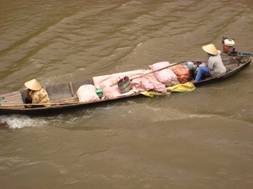


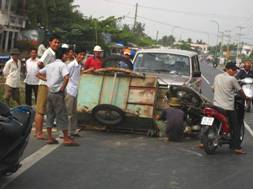

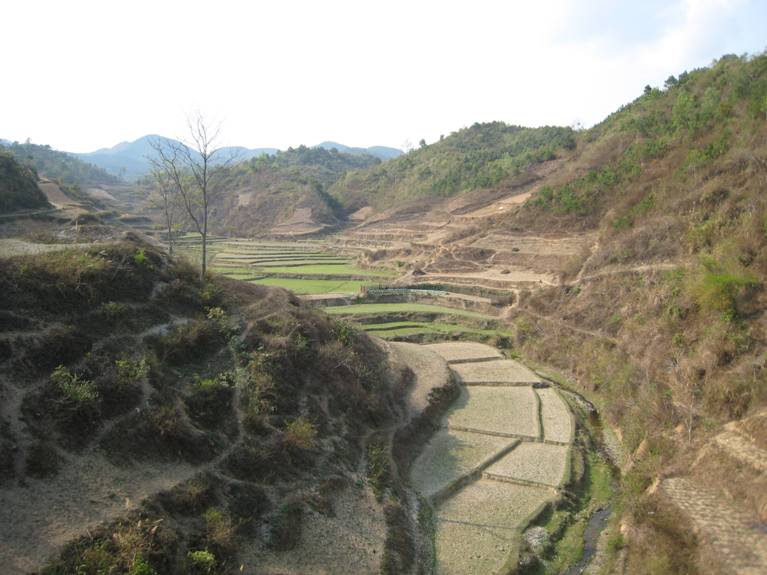
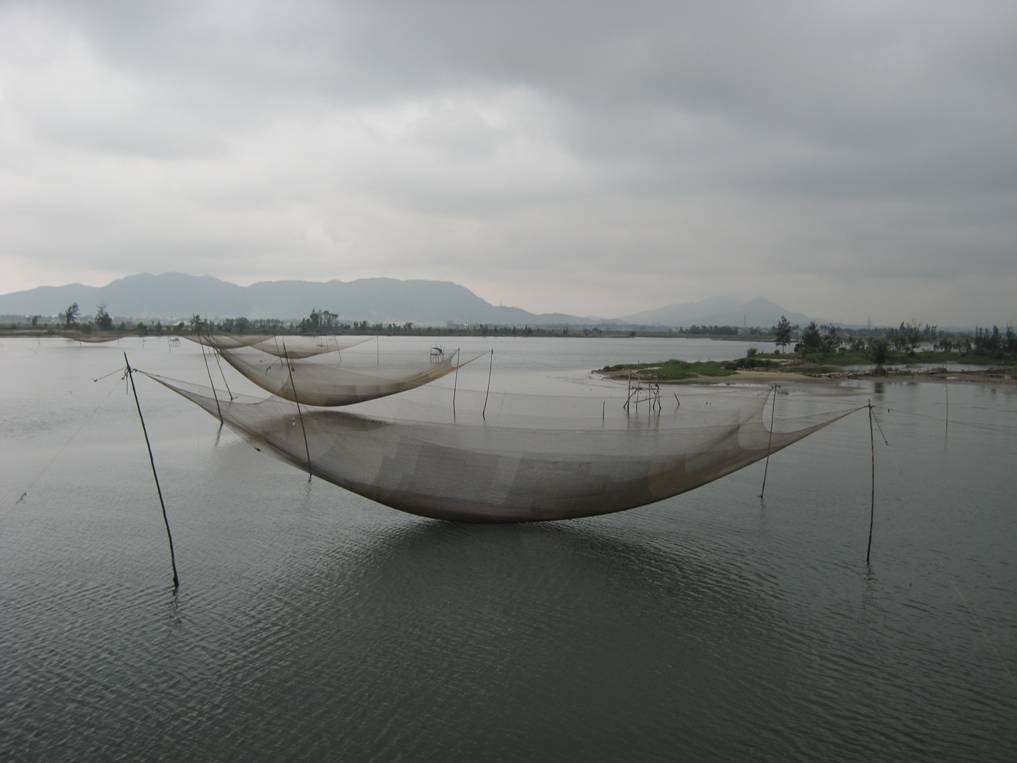
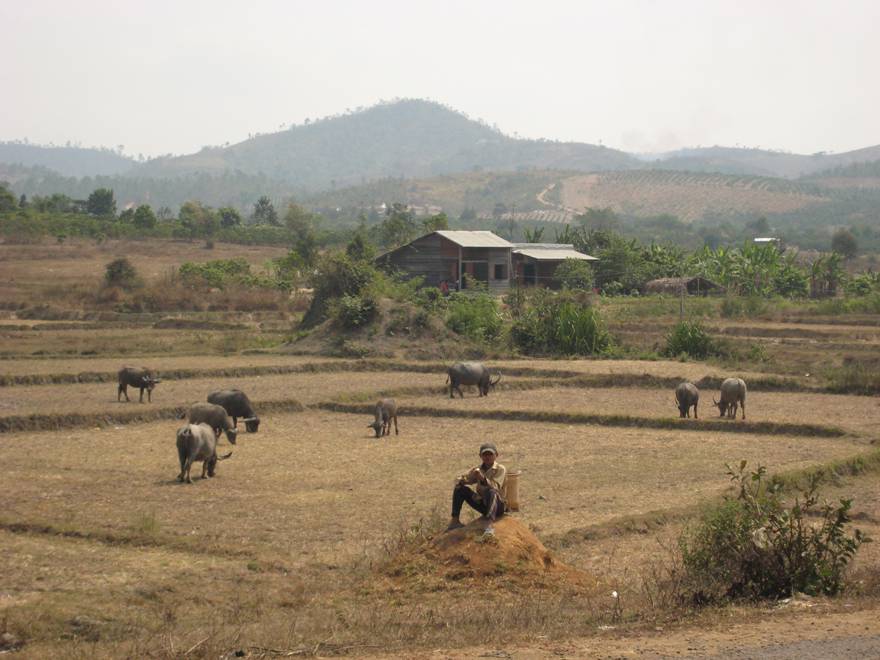
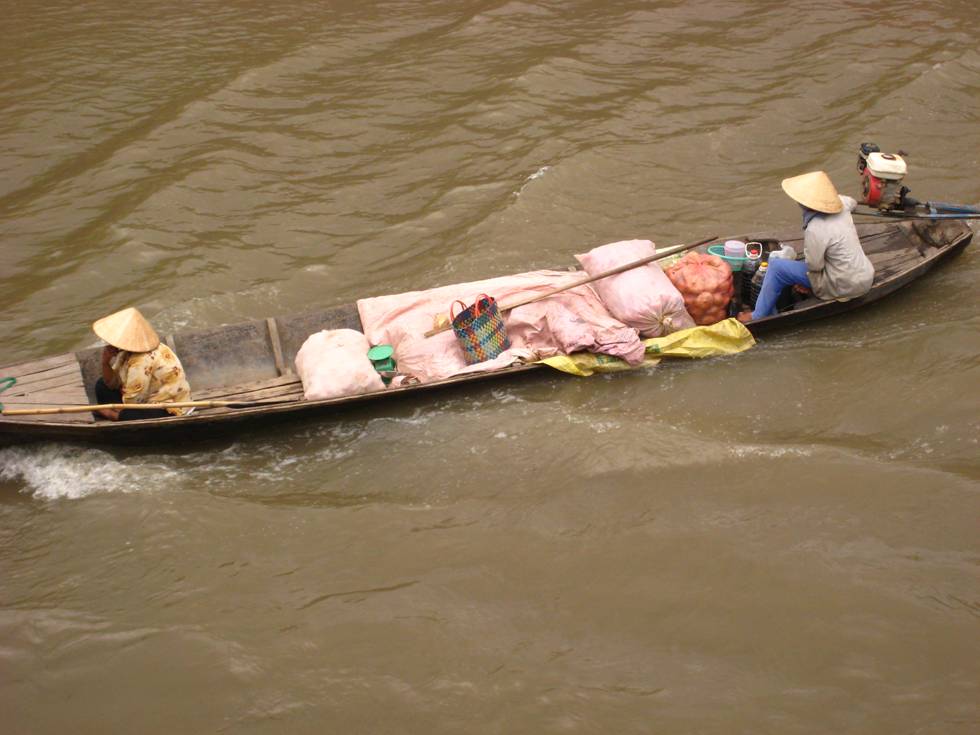
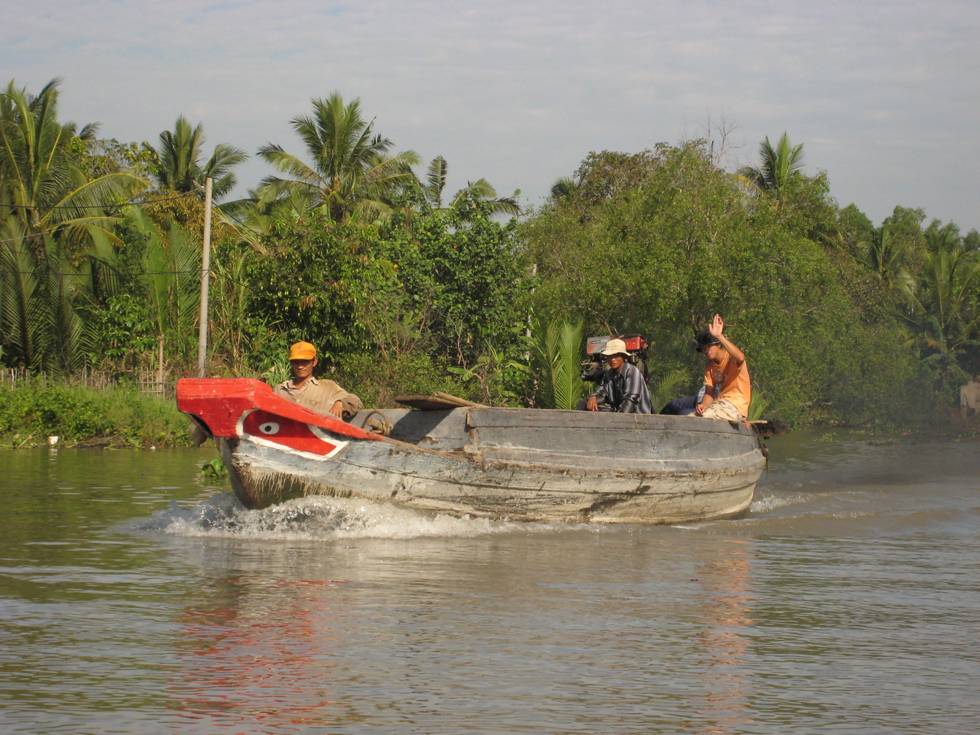
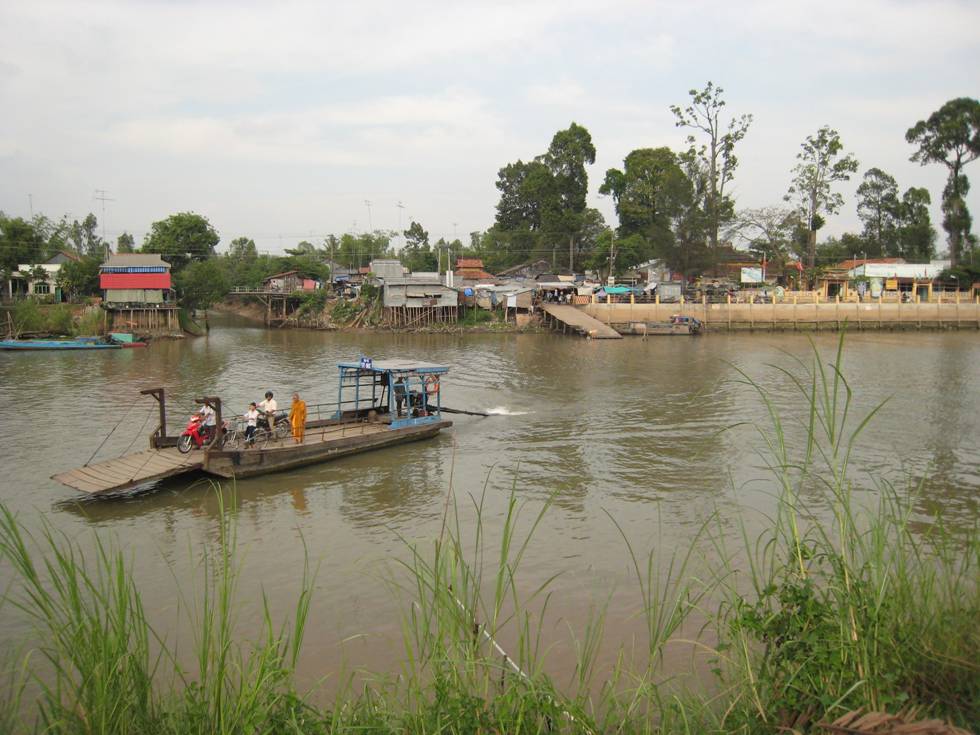
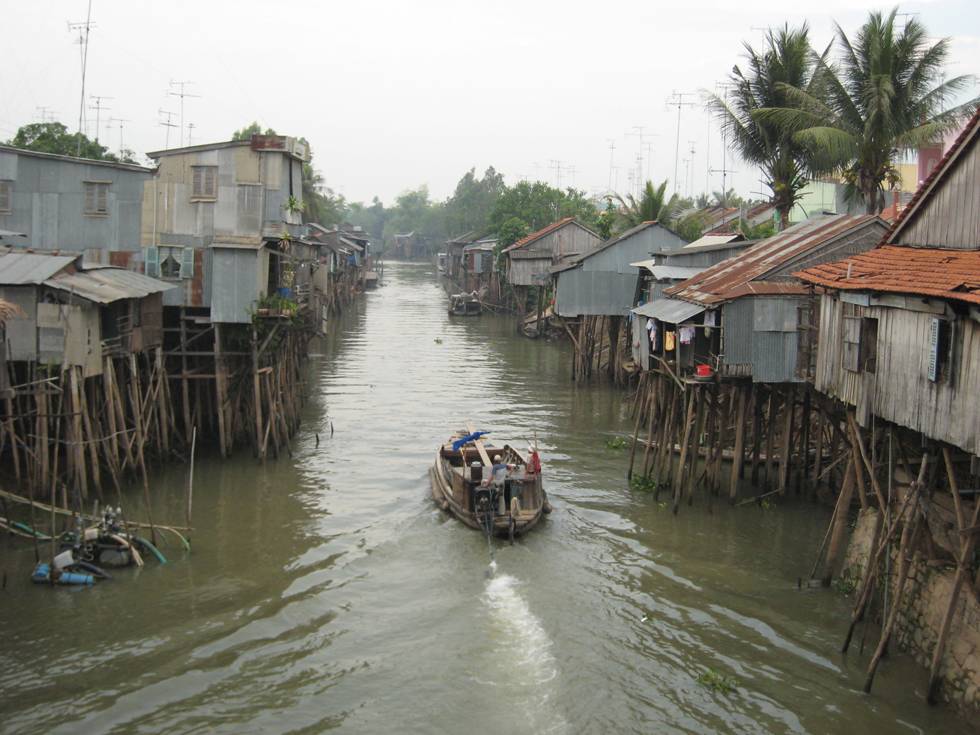
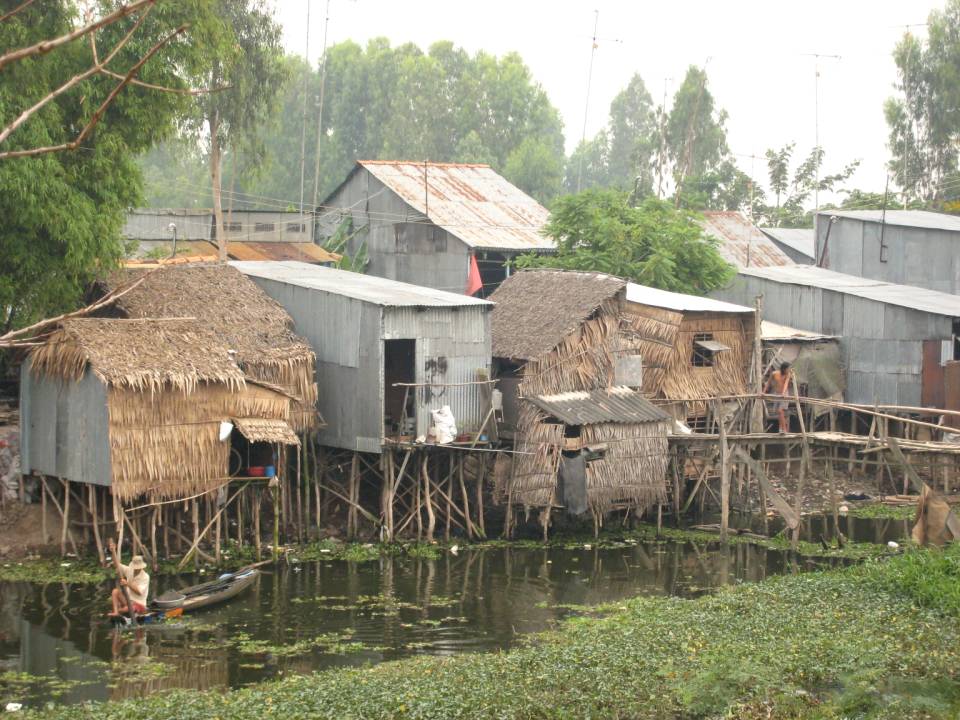
Mekong Delta. The mighty Mekong river starts in Tibet and flows all the way down to the south of Vietnam, in which the fertile delta yields a lot of rice and fish.


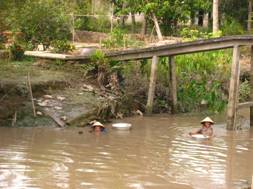

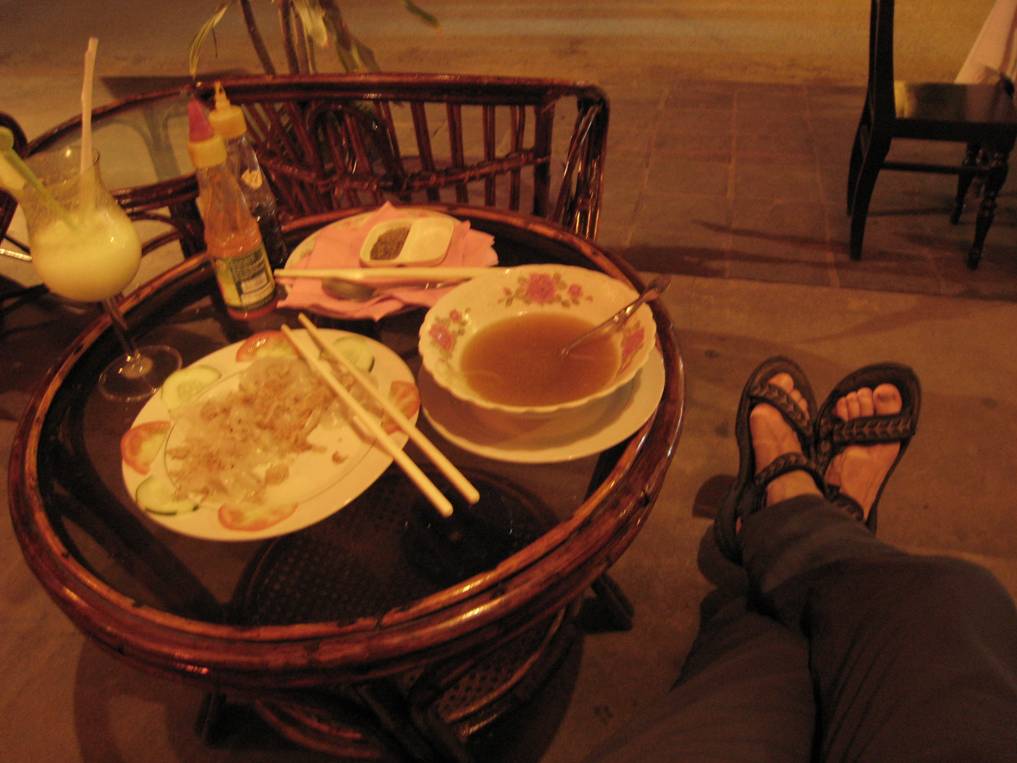
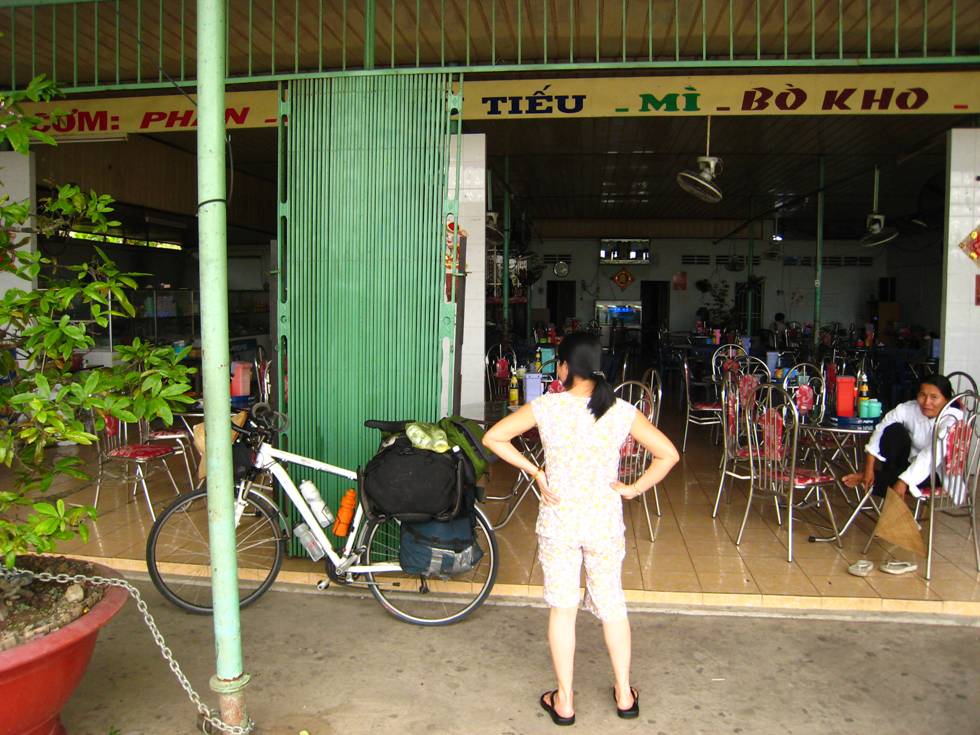
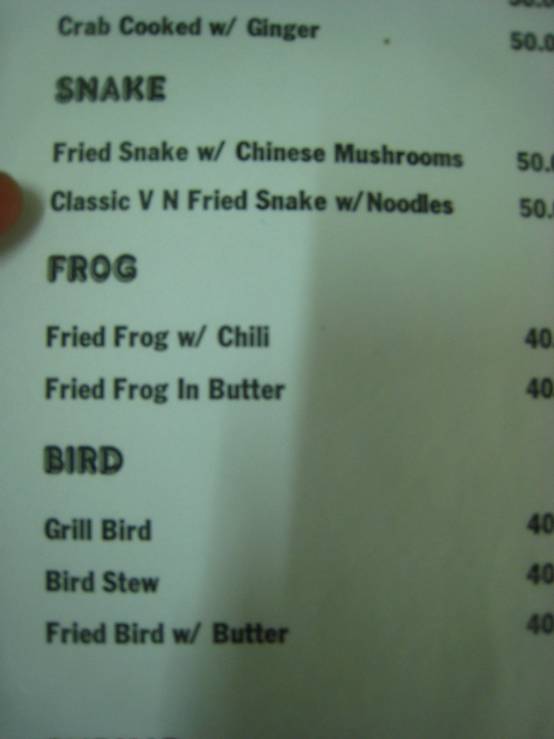
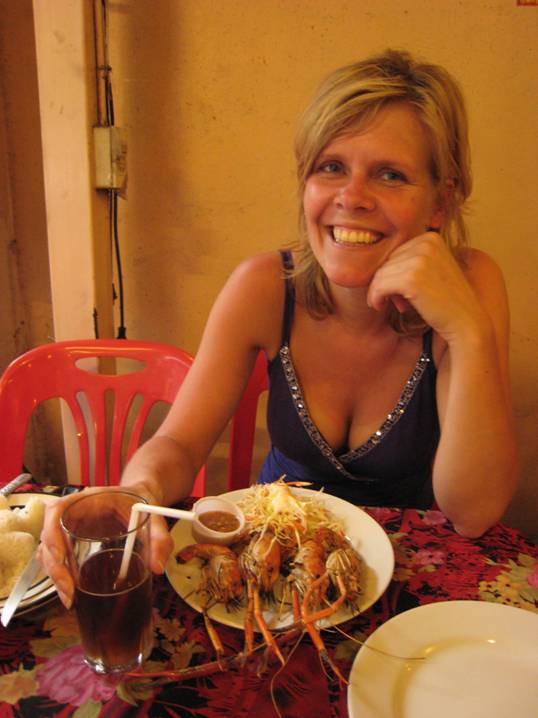
Vietnamese cuisine. What you see is what you get: the rice, the pork, the fish, and ....Excellent food, I love it!
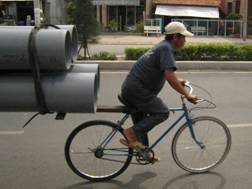
3.0 MB MOVIE: vietnam biker.avi
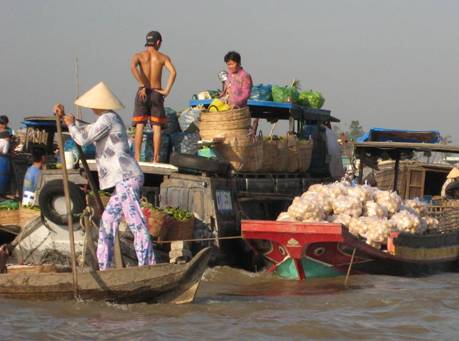
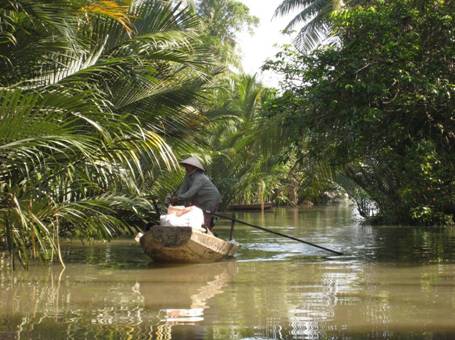

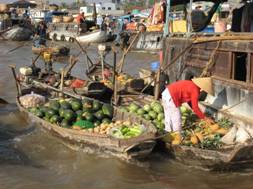

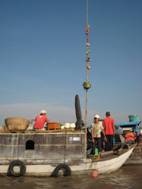
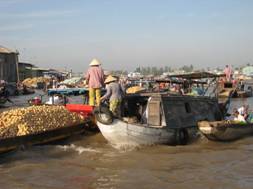


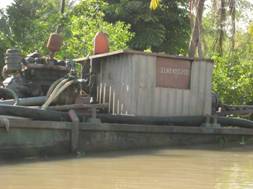

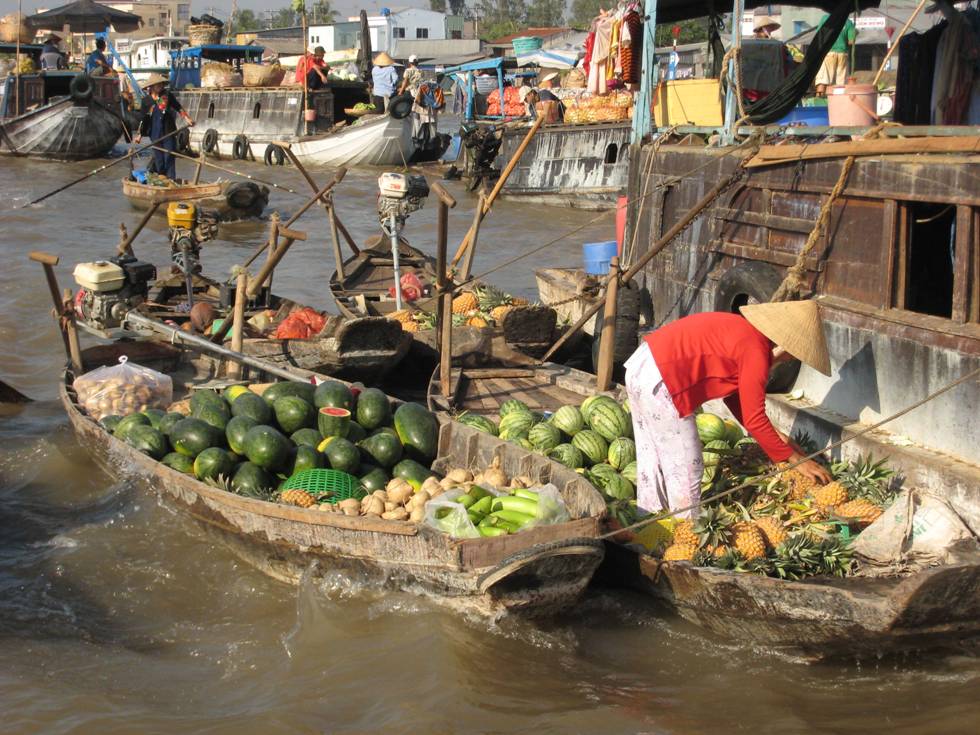
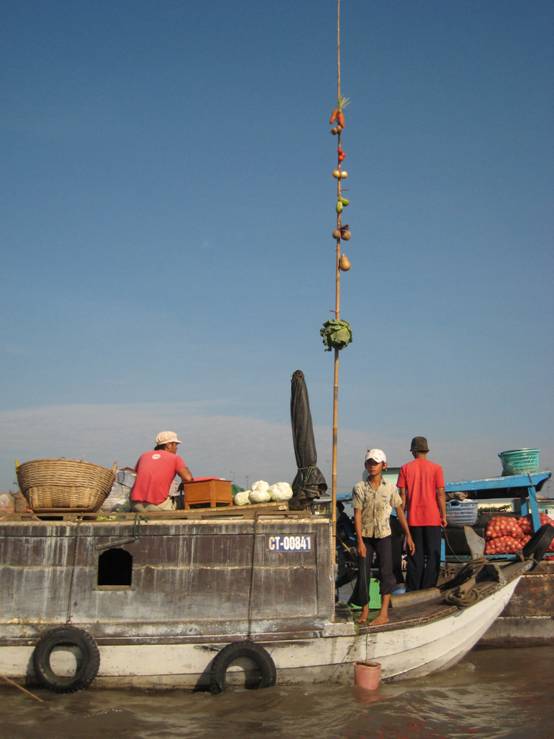
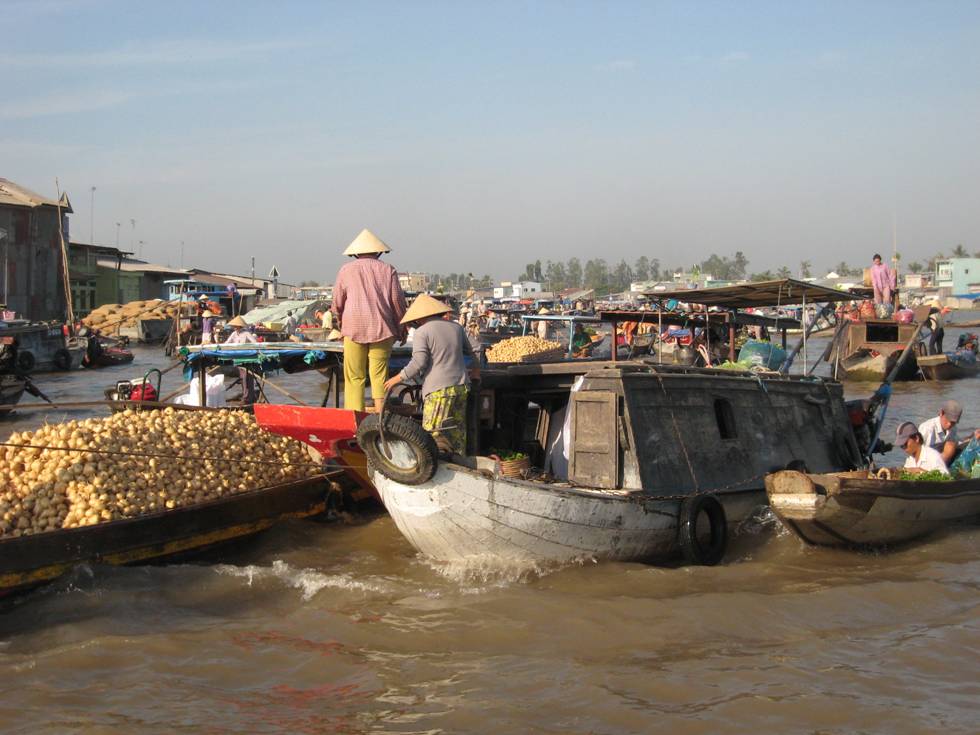
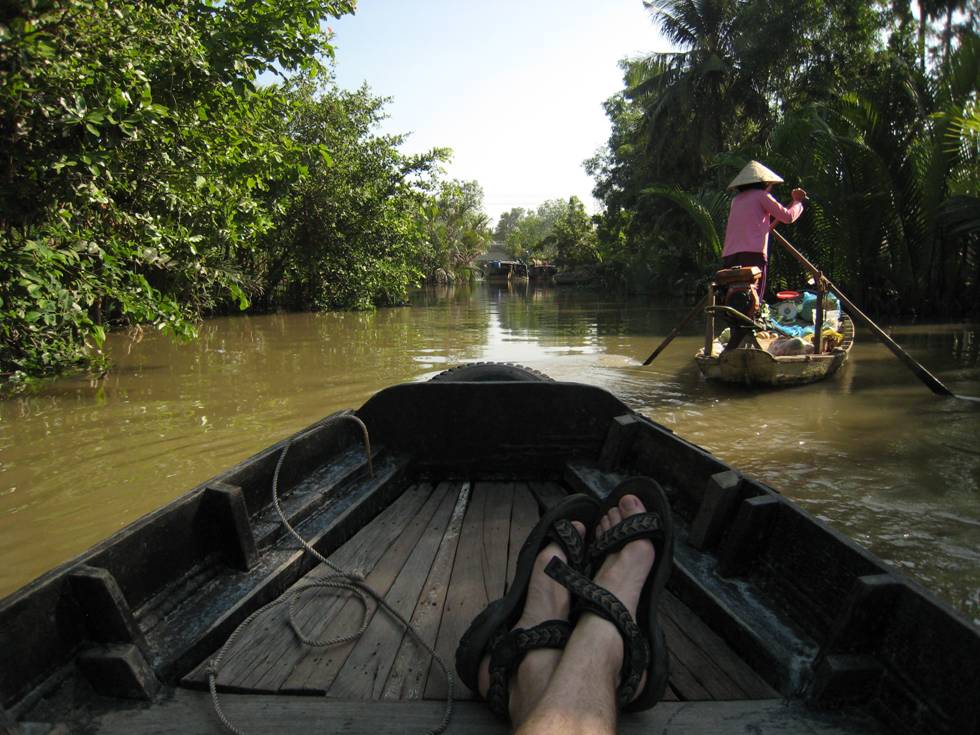
Floating markets. From Can Tho I took an early morning boat trip to the floating market of Cia Rang, and went back through a beautiful narrow channel.
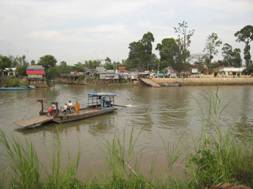

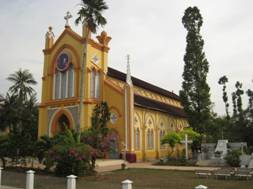
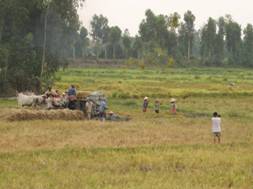

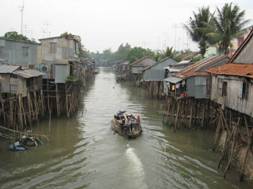
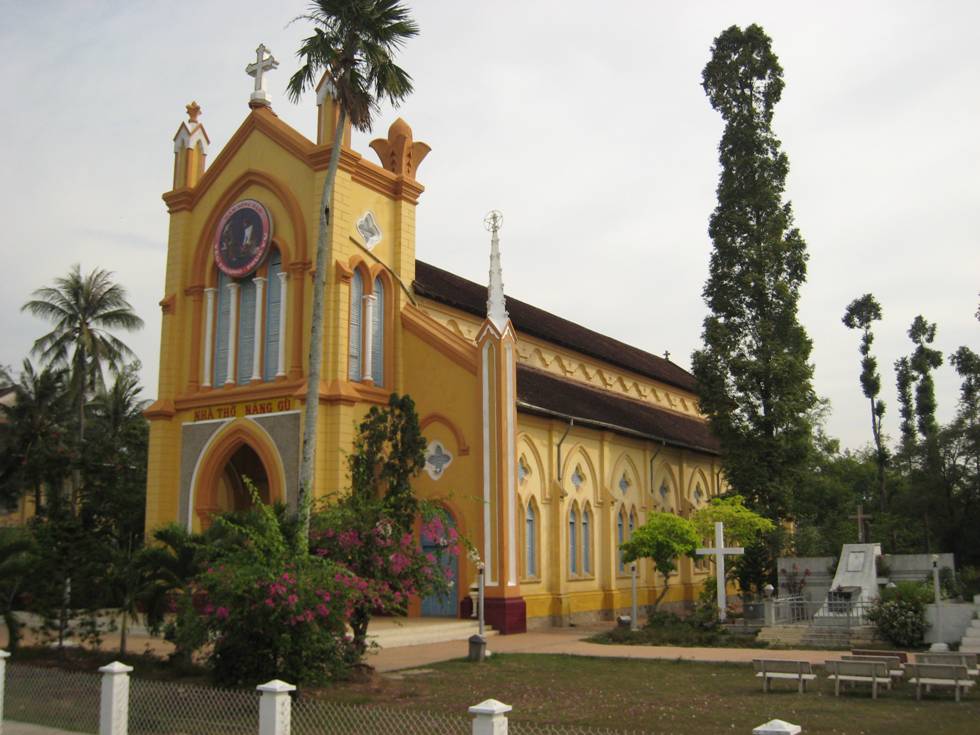
More Mekong Delta. I bicycled all through the Mekong Delta up to Chau Doc near the Cambodian border.
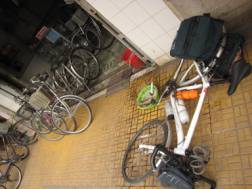


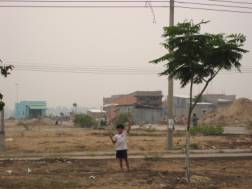
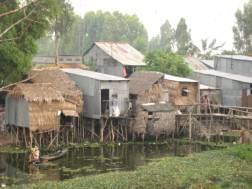
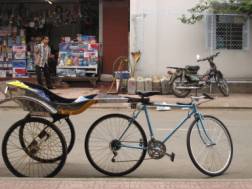
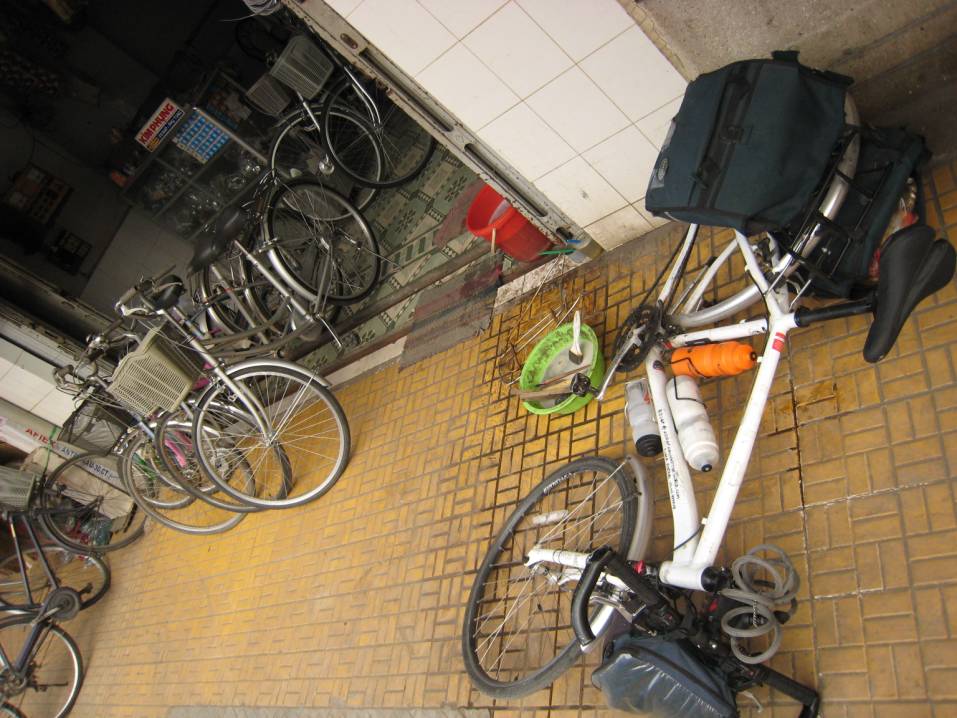
Chau Doc repairs. I missed the boat to cambodia, so I spent another day in Chau Doc to look around and have my bike fixed.
About once a week I break a spoke because the rim and spokes are to thin and weak for the big load, most of the spokes I can fix myself but if one breaks on the chain side of the rear wheel, I lack the tools and have to go see the bike doctor.
With my first bike (in Canada) I had no spoke problems because I bought a cheap bike but could pay extra to have the rear wheel replaced by a better one (sturdier rim and spokes).
My second bike (in New Zealand) was hired and was a quality long distance bike, so no problems.
My third (in AUstralia) and fourth bikes (Japan) however caused me lots of problems. After about a 1000 km the first spoke broke, and once I had gone to a bike shop to repair it, I used to break a spoke about once a day.
This made me crazy of course, I had to adjust or repair the spokes sometimes several times a day. In stead of having the whole wheel respoked with thikker spokes or replacing the whole rear wheel with a better one,
I started thinking about the cause of the problem, and I found it. When a bike shop replaces a broken spoke, they start adjusting the tension of a lot of other spokes too straighten out the rim, but then the thread of the spokes/nipples looses its resistance and easily "unscrews" again becaue of the alternating load (push/pull) on the spoke.
The solution therefore was not so complicated. In Korea I simply SUPERGLUED THE SPOKES AND THEIR NIPPLES, and to my own surprise it actually works. So forget about those expensive fancy and heavy long-distance bicyles, just buy a cheap hybrid bike and bring some superglue, haha!
Simple is not always the best, but the best is always simple.
Feb 25-27: Ha Noi; 28: Sa Pa
March 1: Sa Pa; 2: Ha Noi; 3,4: Hue; 5-8: Hoi An; 9: Quang Ngai; 10, 11: Nha Trang; 12: Phan Rang; 13, 14: Dalat; 15: Bau Loc; 16-19: Ho Chi Minh City; 20: My Tho; 21: Can Tho; 22, 23: Chau Doc
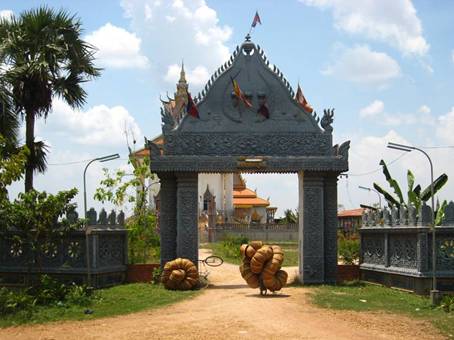


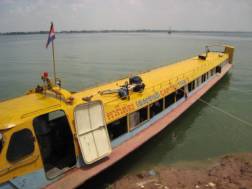
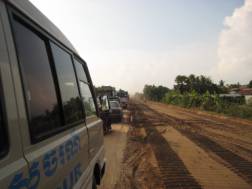
Boat and bus trip from Vietnam to Cambodia.


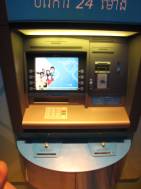
Phnom Penh. The capital of Cambodia, and a lot more attractive than I thought. Allthough everyone said that there was no ATM in Cambodia and you have to bring cash, I actually ran into one, which makes Cuba the only country so far without ATM's.


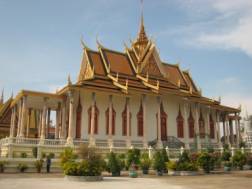
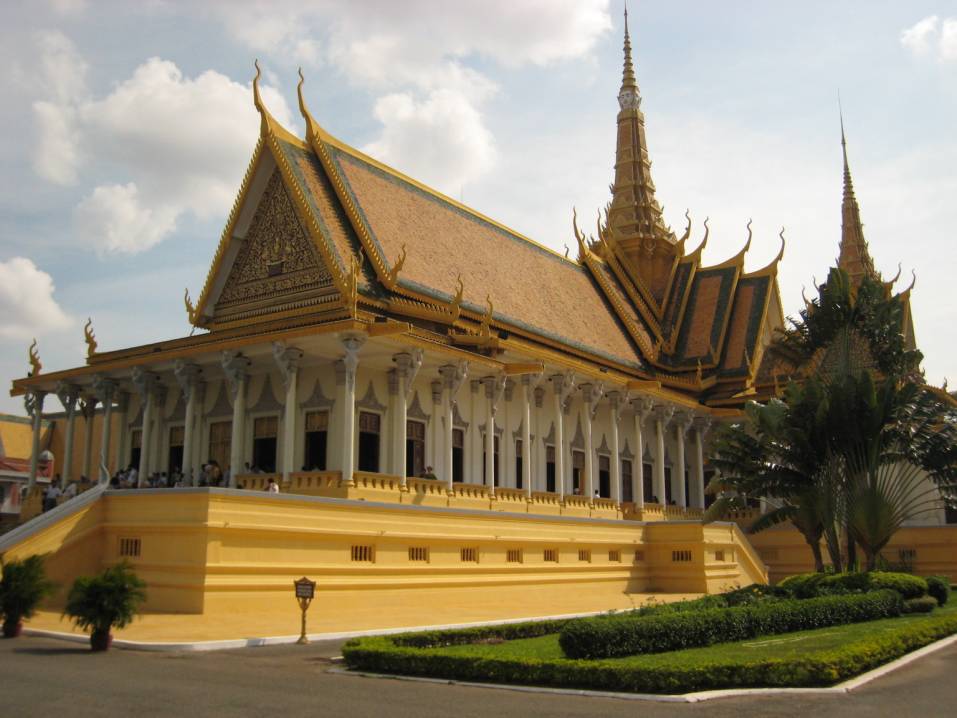
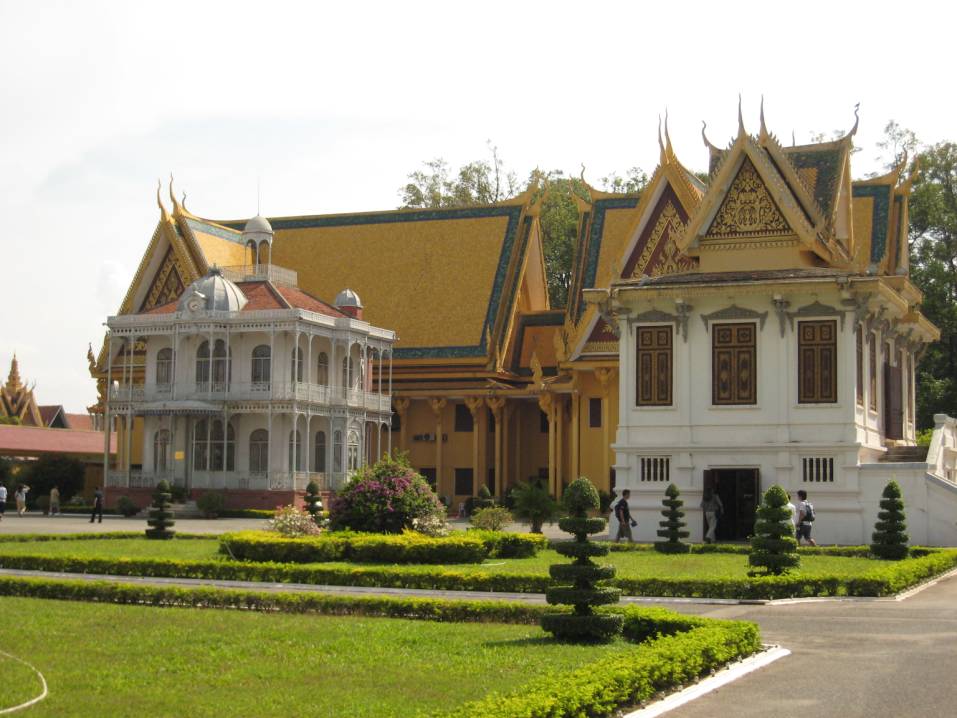
Royal Palace. All that glitters is gold, stunning!
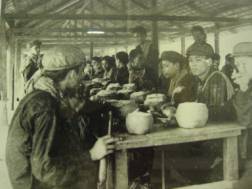
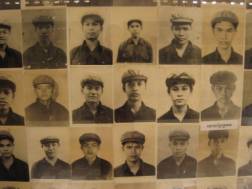

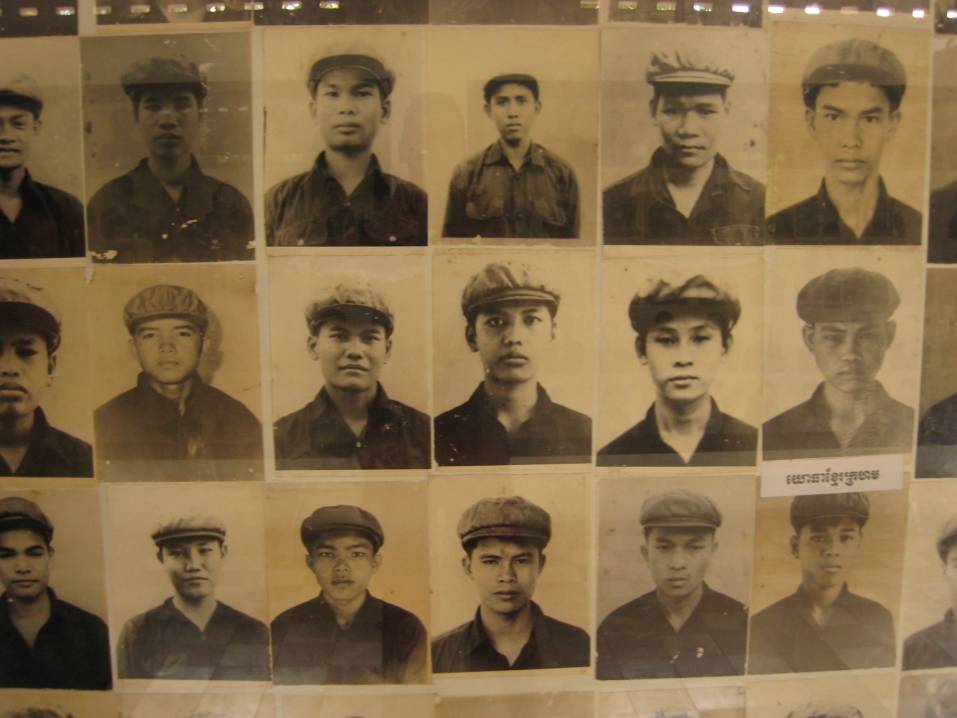
Red Khmer regime '75-'79. After Cambodia had been dragged into the Vietnam war, it was liberated in 1975 by the Red Khmer, but they turned out to be an even bigger disaster. The leader, Pol Pot, wanted to built a new society from scratch. Everyone had to work on the countryside, Phnom Penh and other cities were evacuated and became a ghost towns. The intelligentsia (politicians, teachers, doctors, engineers) were suspected to be antirevolutionary (just like in the Cultural Revolution of Mao in China) and most were killed. When in 1979 the Vietnamese army liberated the country, people starting looking for their surviving relatives and stopped producing food, so a big famine made even more casualties. Alltogether a staggering 2 million Cambodians died on a population of 7. The Red Khmer retreated into the jungle and continued a guerilla war into the 90's, when Pol Pot died, he never got captured.
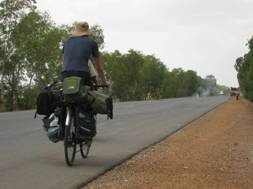

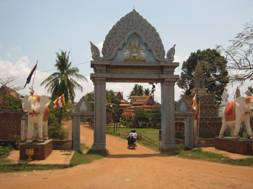


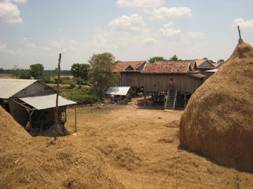


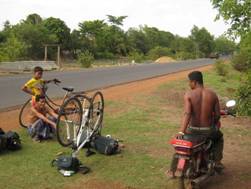
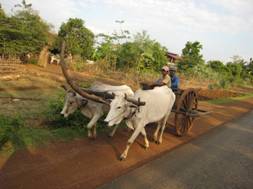

Phnom Penh to Kampong Thom: my toughest biking day ever.
When you have been shitting 'cola' for several days,
when you have hardly slept because your itching allergy kept you awake all night,
when you have to bicycle 170 km to the next hotel with a 50 kg bike,
when it feels like the hottest day of your life,
when the sun is roasting your skin,
when you have to say hello every 100 m to all the enthousiastic Cambodians,
when you haven't eaten a single thing all day because your stomach still says no and all you want is to drink drink drink,
when you break a spoke but the new spare ones turn out to be wrong,
when the starting dehydration makes you dizzy and nautious,
when you are so tired that your eyes want to close while biking,
when it gets dark and you can't see much because of all the bugs flying into your face,
when the paved road turns into gravel and holes,
when you get of your bicycle and you have your first upper leg cramps ever,
but you still make it to the hotel...
then you smile and think "My toughest biking day ever. Never again.


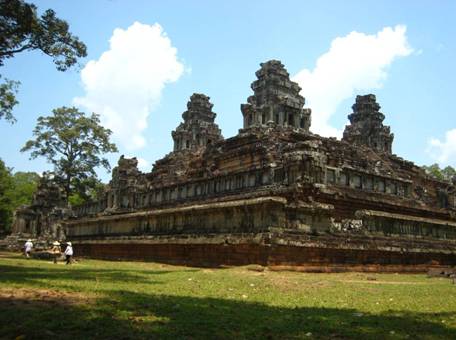

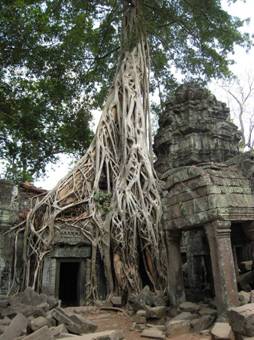


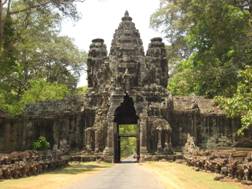
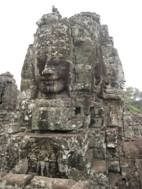
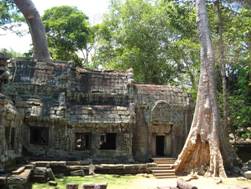


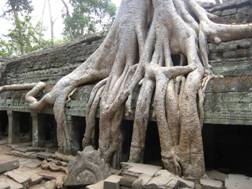
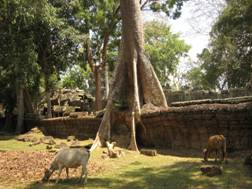

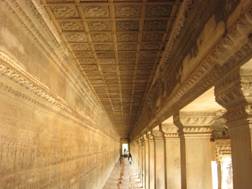
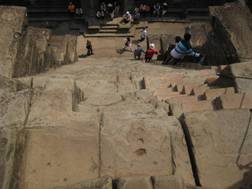
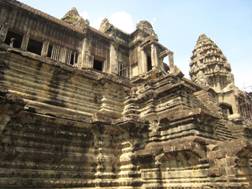

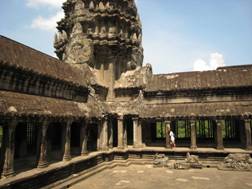
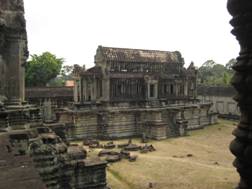
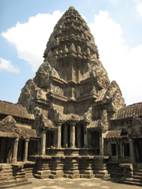


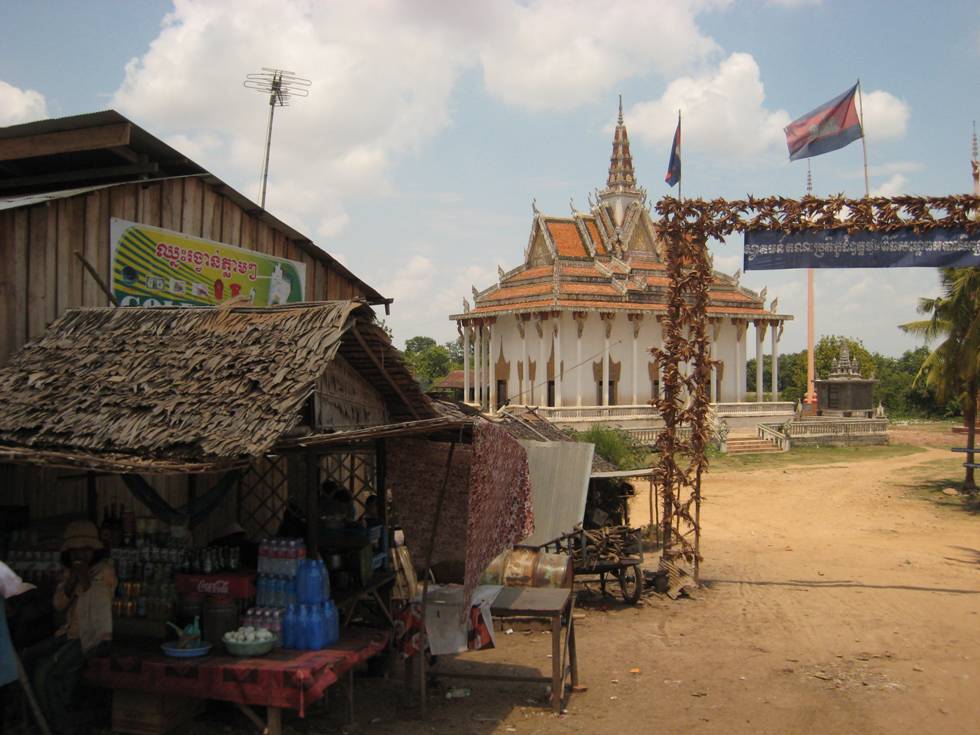
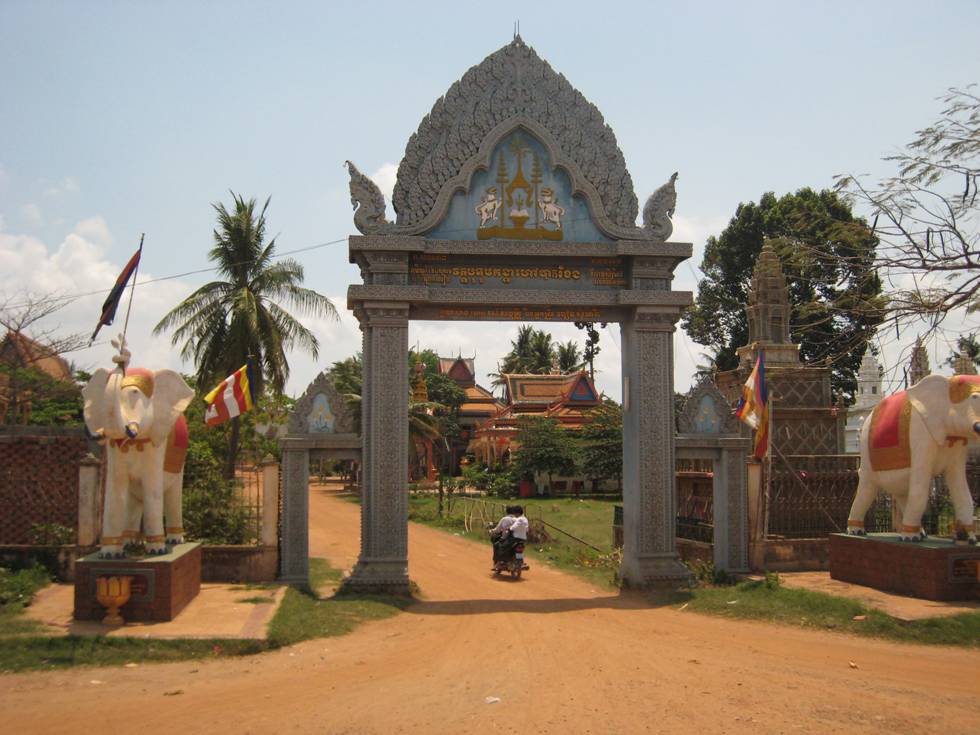
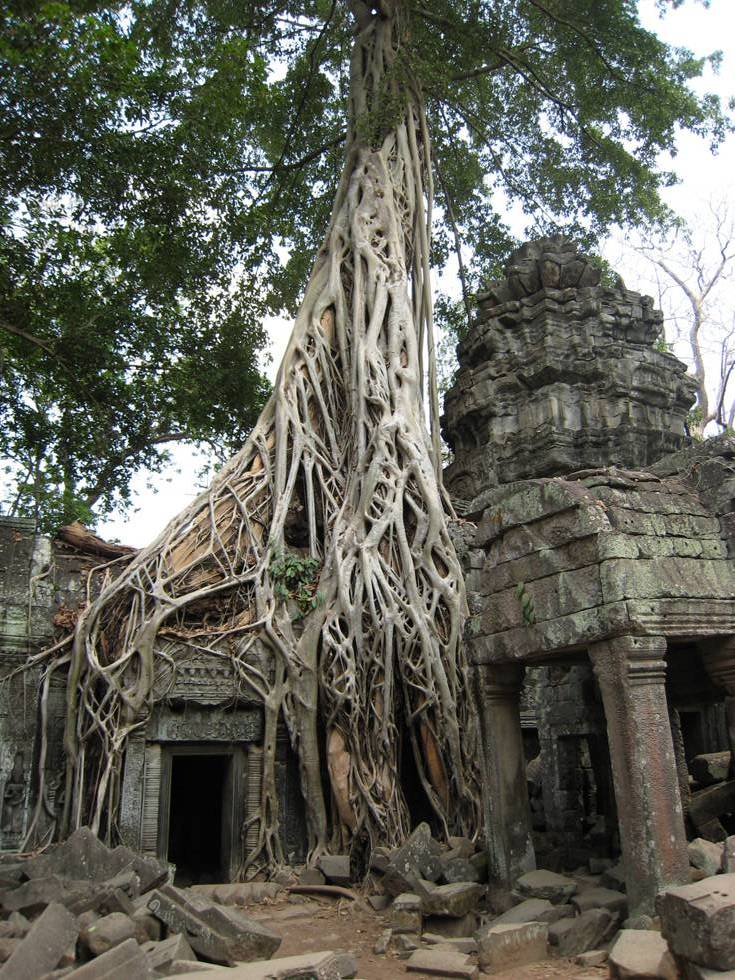
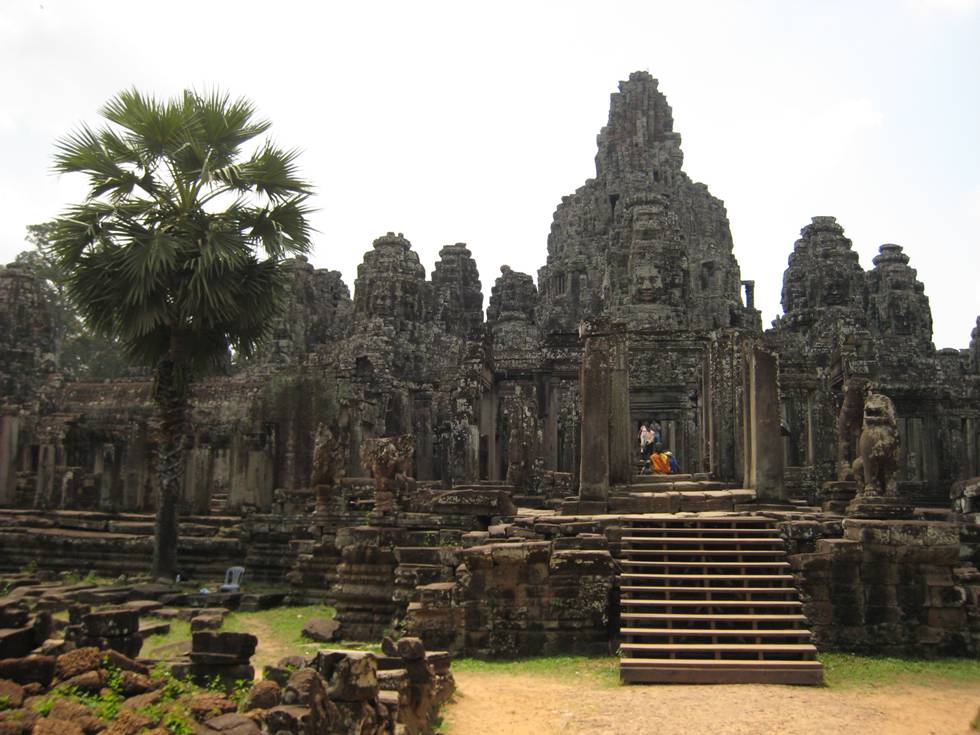
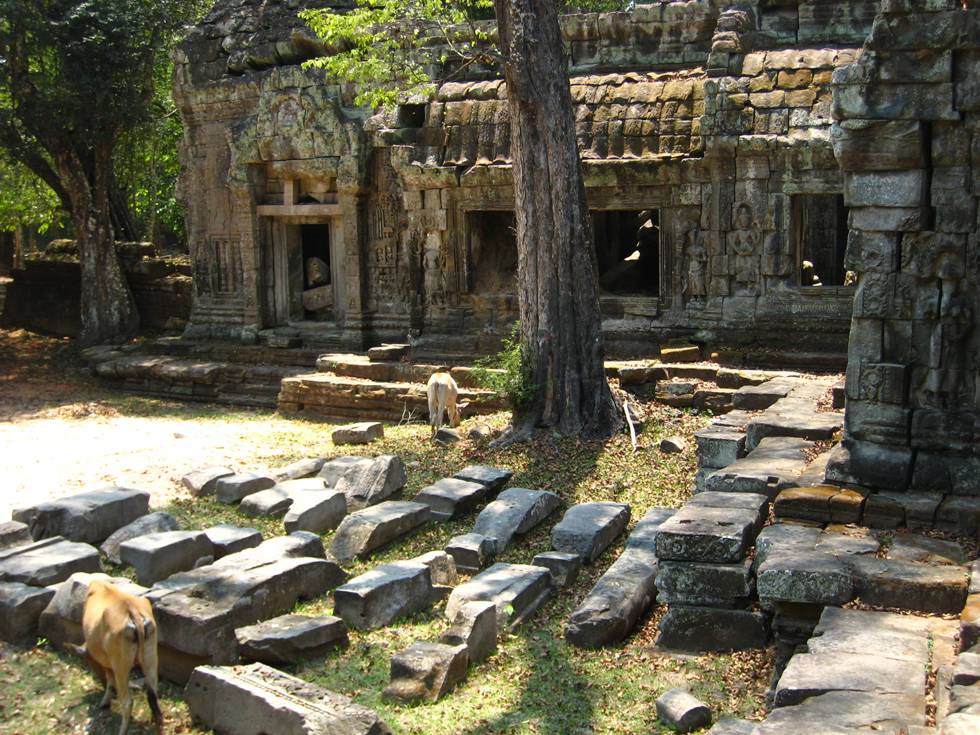
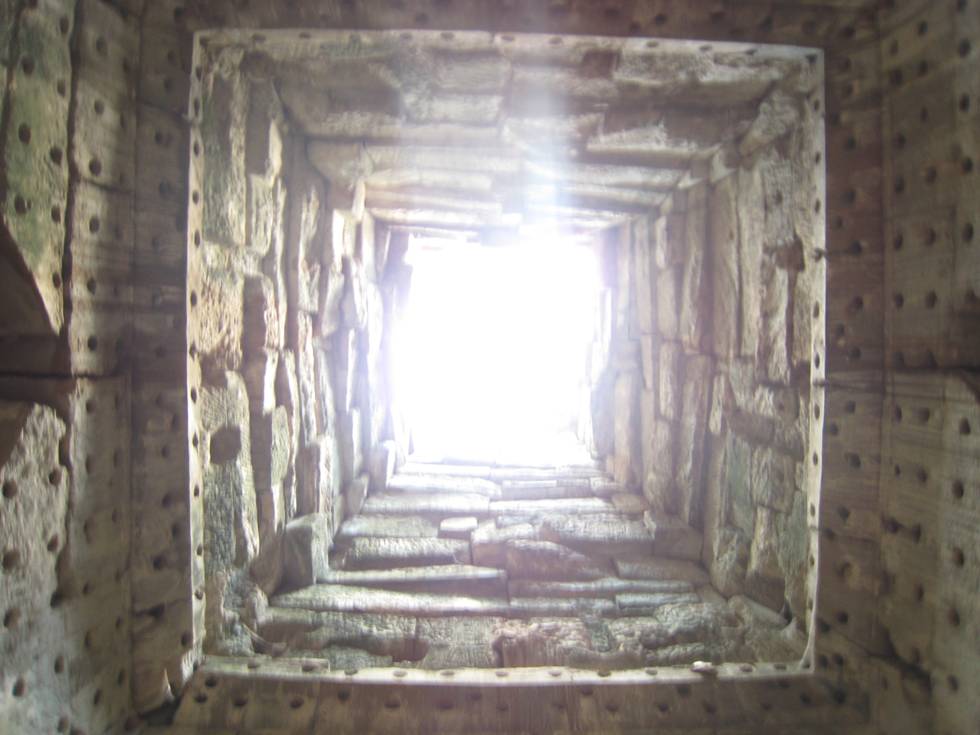
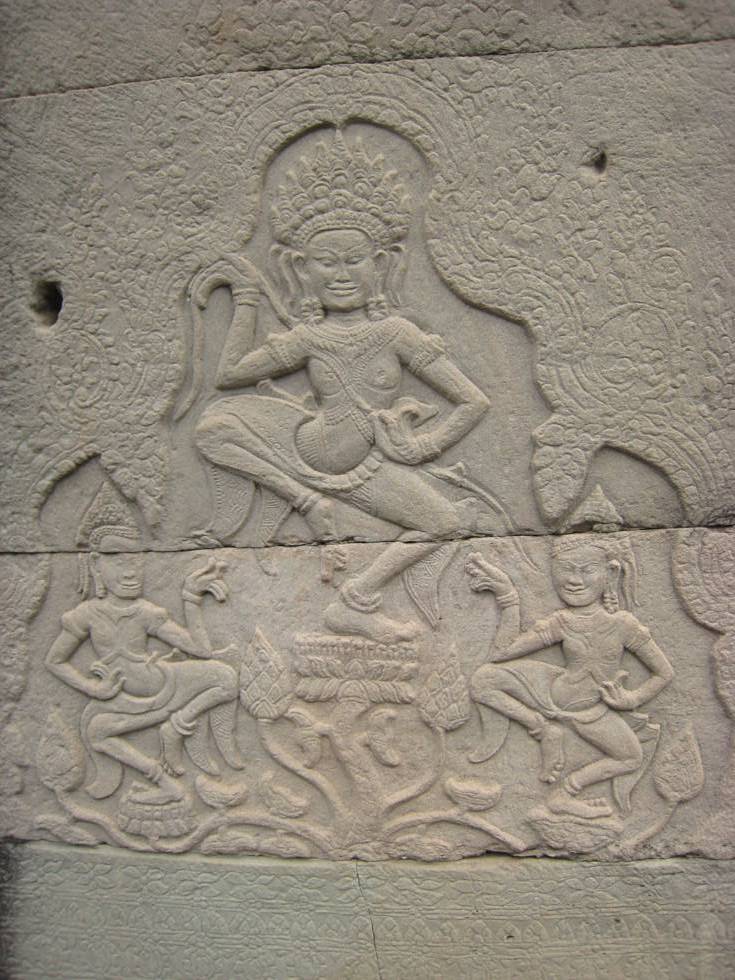
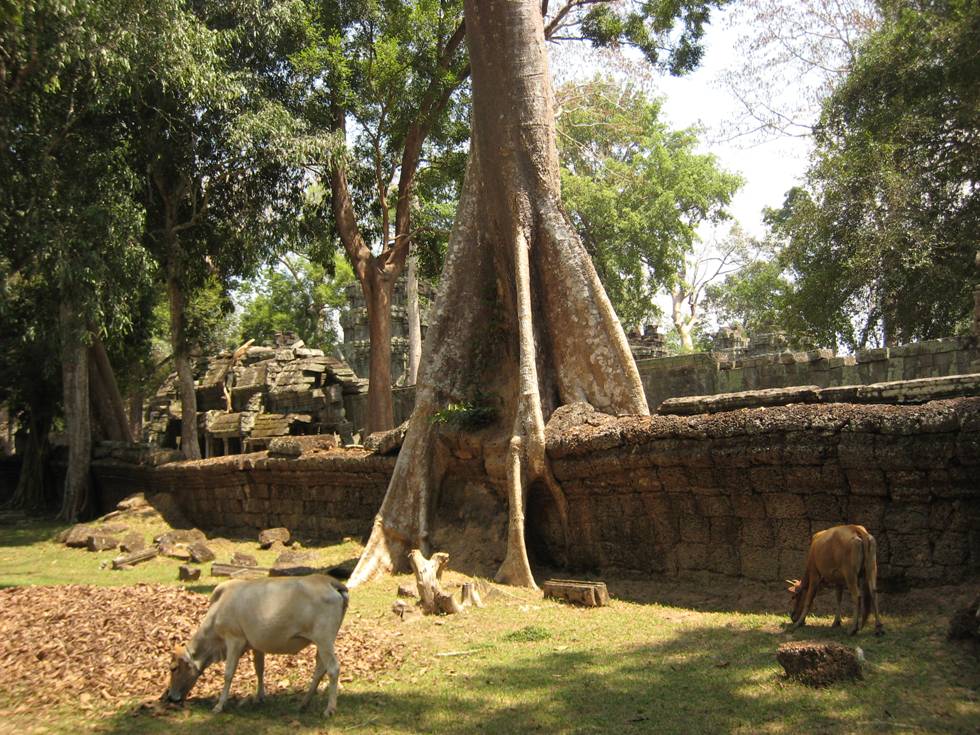
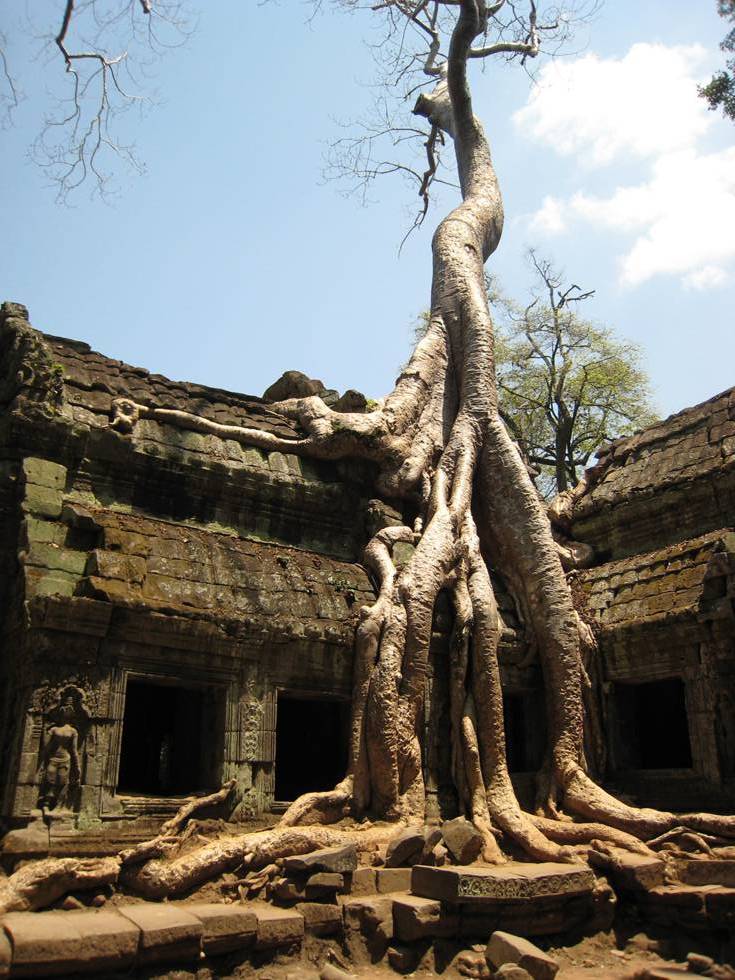
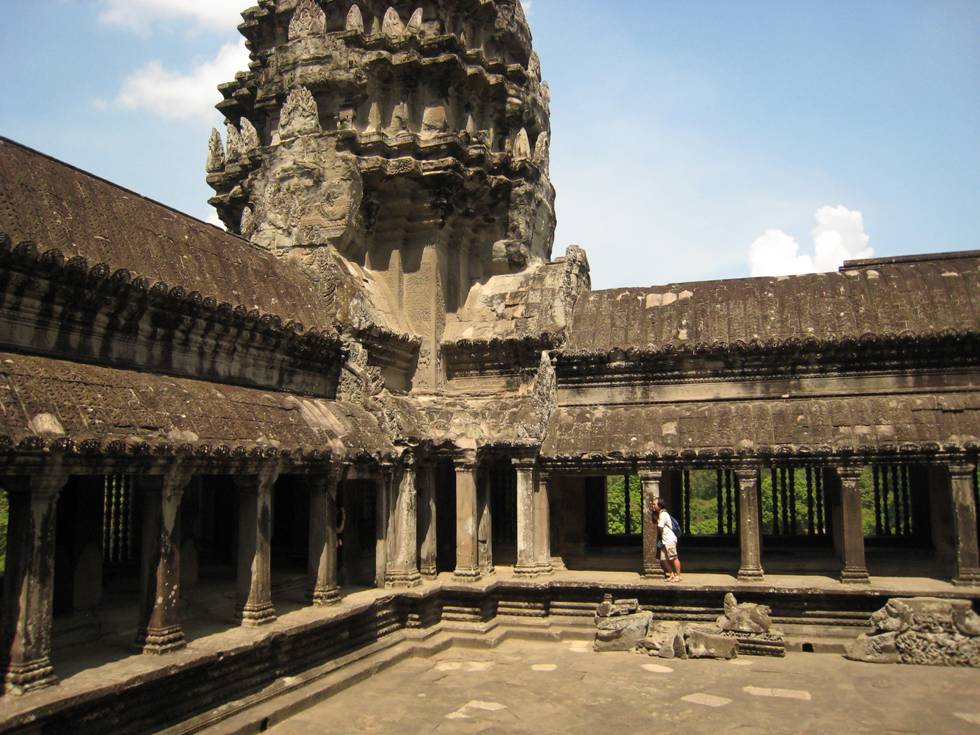
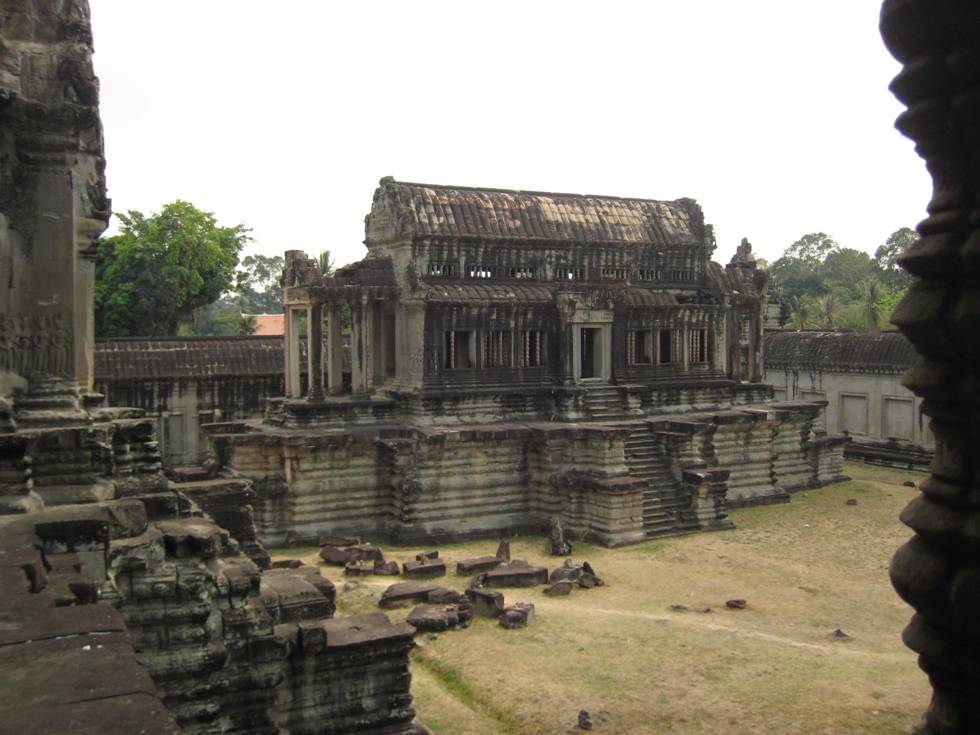
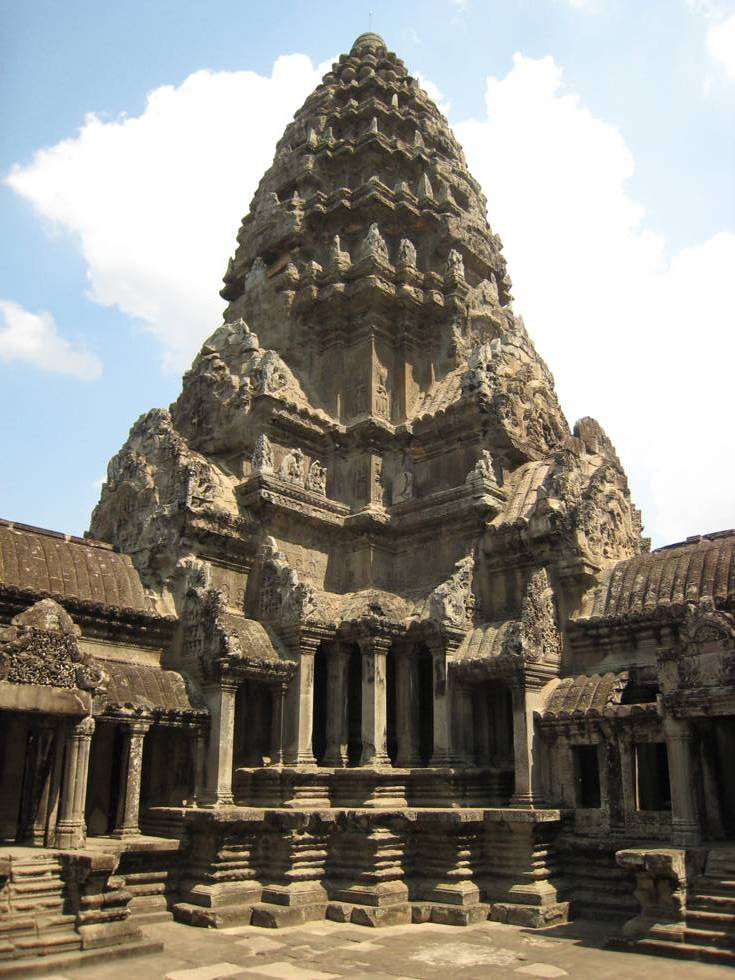
Angkor Wat temples. A huge complex of temples, the former capitol of the Khmer empire who ruled most of SE-Asia in the early middleages.
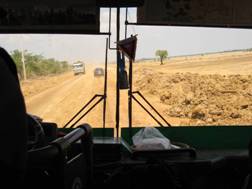


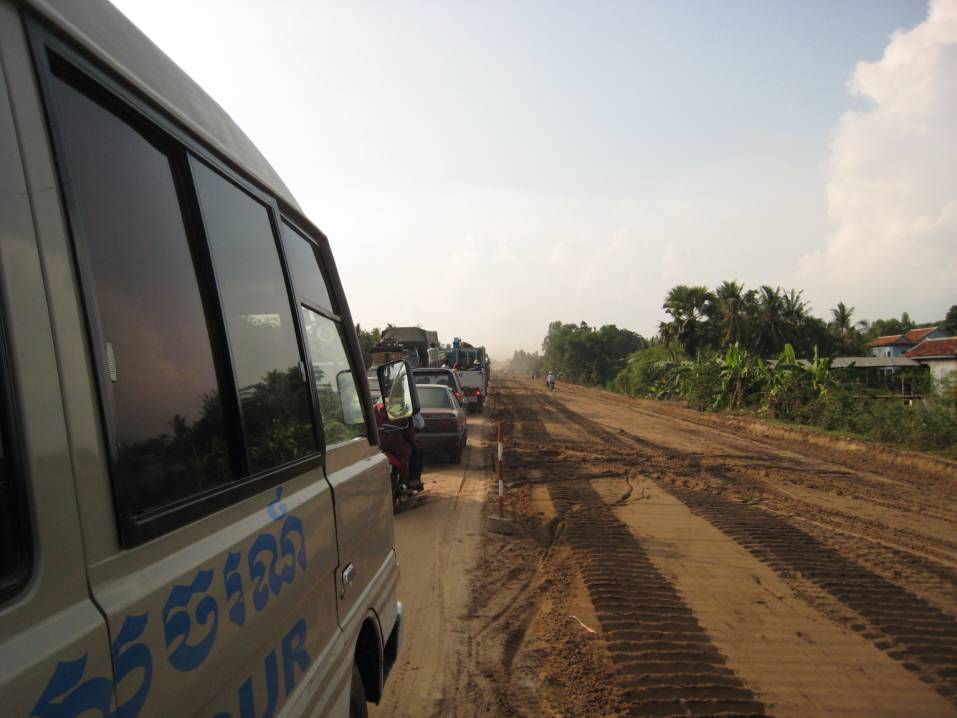
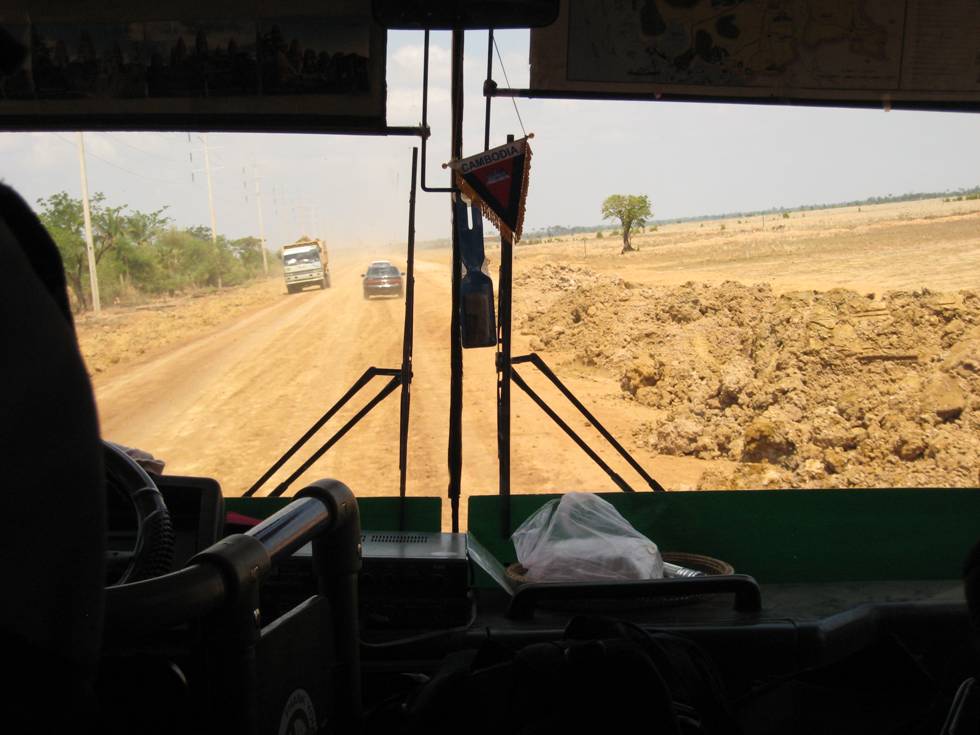
To the border. On of the worst roads of the world, even in a bus.
March 24-26: Phnom Penh; 27: Tompong Kot; 28, 29: Seam Reap (Angkor Wat)
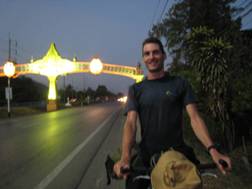
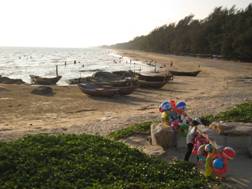


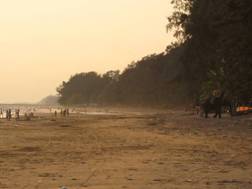
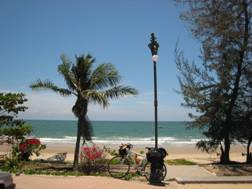

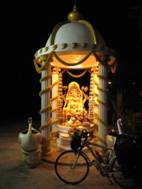
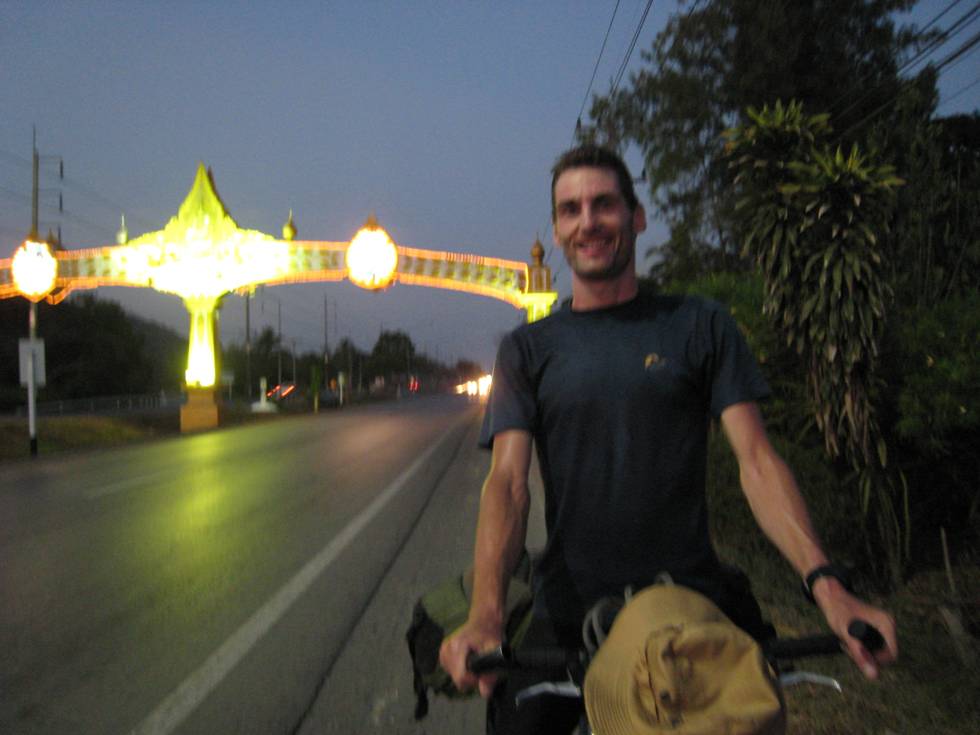
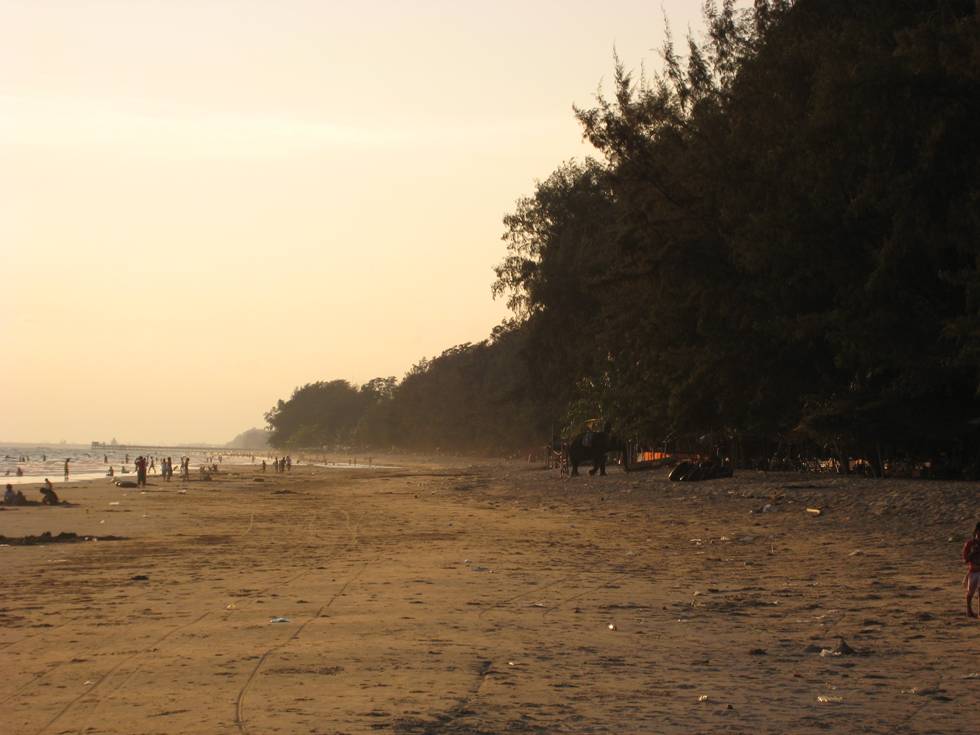
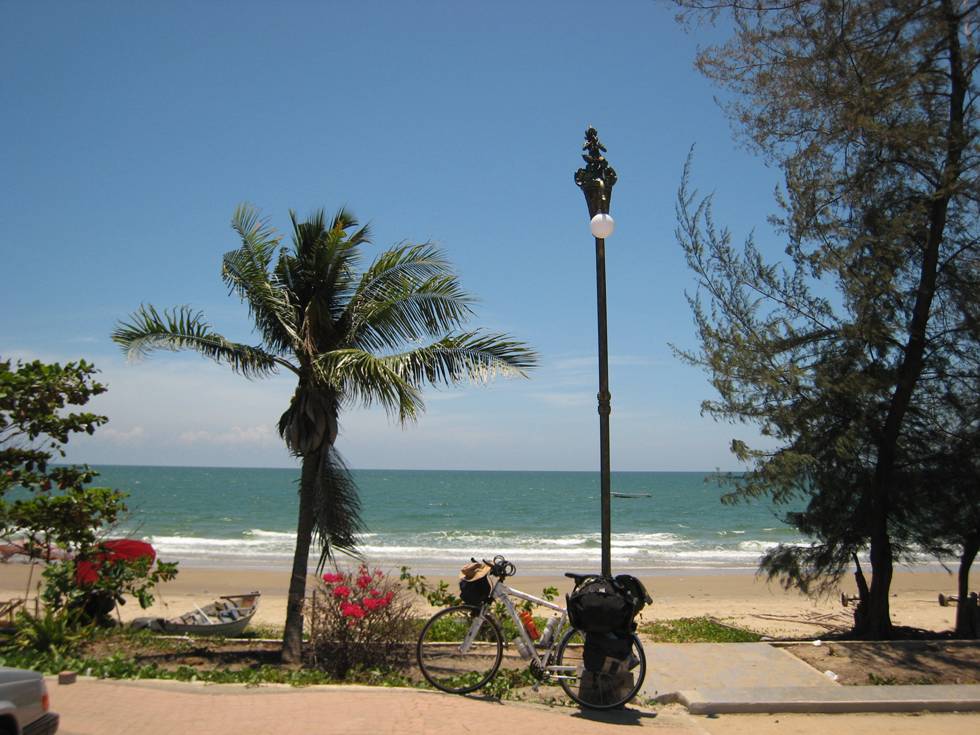
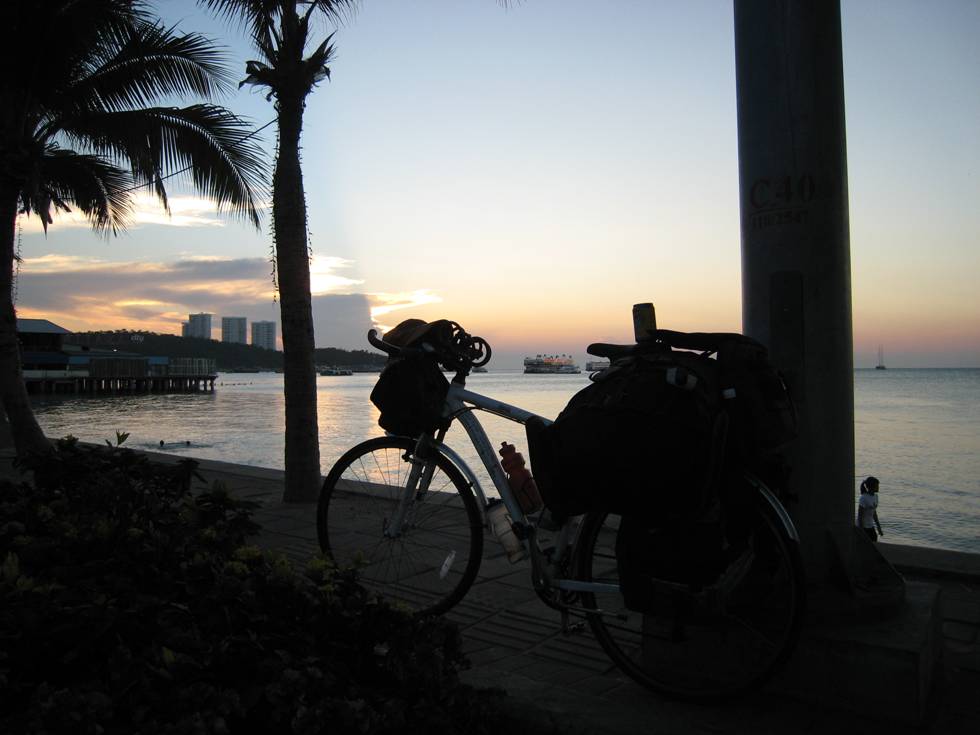
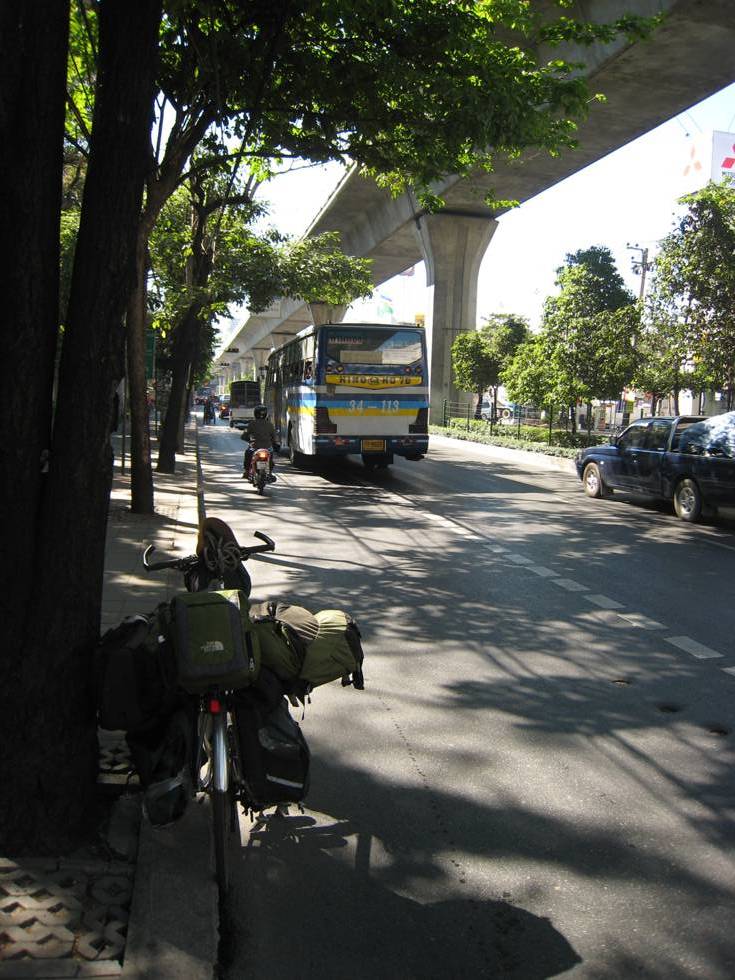
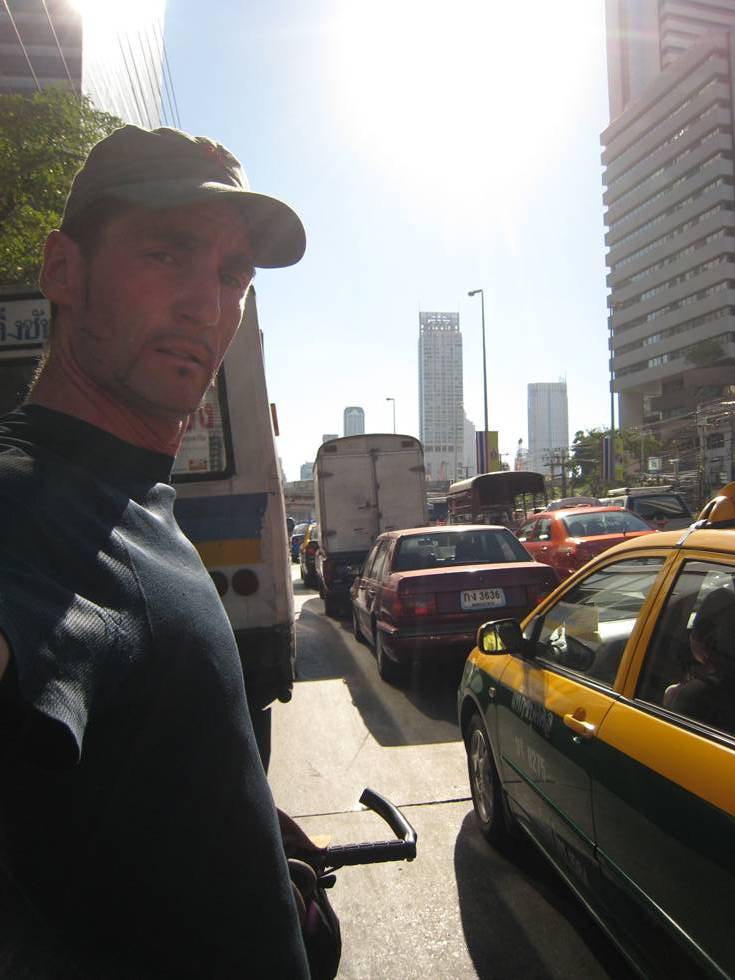
Along the east coast. I spent my last biking days along the Thai East coast, looks nice but it wasn't: still very sick, biking on four lane highways, and sleeping in awfully touristy beach towns like Pattaya, where old white guys hang show of their bellies and their Thai girlfriends of half their age.


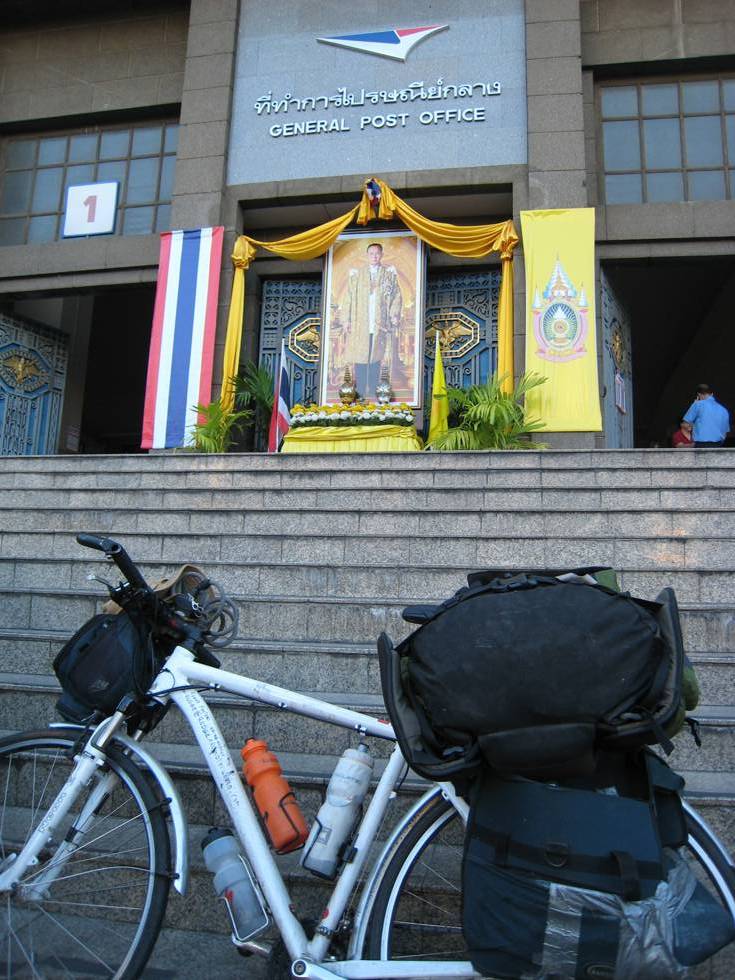
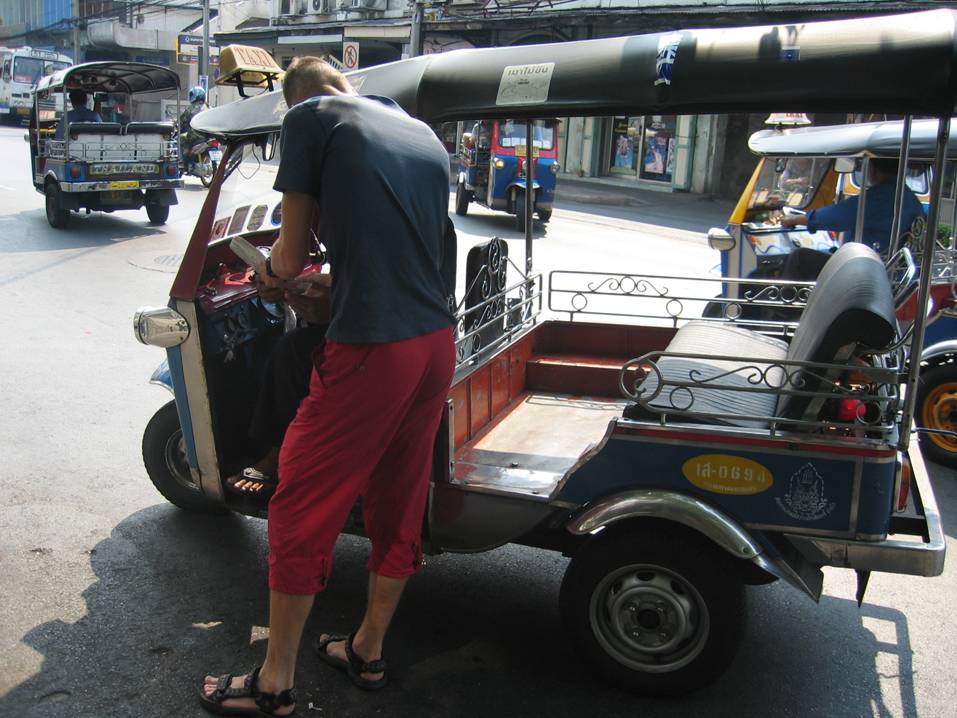
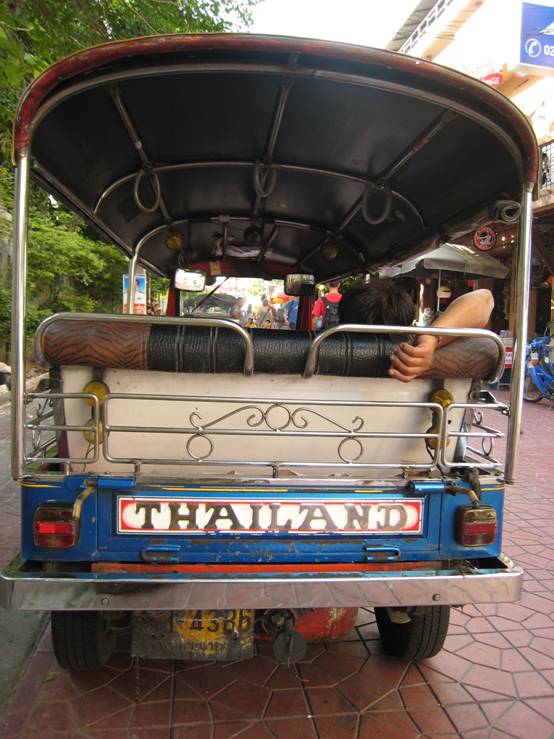
Back in Bangkok. The biking adventure ends at the Bangkok general post office, where I wrapped my bike in a box and mailed it home. The rest of Asia I will be backpacking, a lot smarter considering the unbearable temperatures.

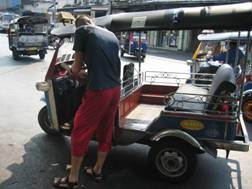
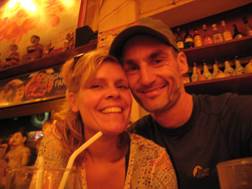
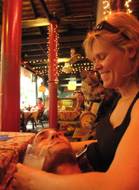
Look who's here! My Dutch girlfriend Kirsten arrived in Bangkok to travel together with me for a month through Thailand, hmmm, very cosy.
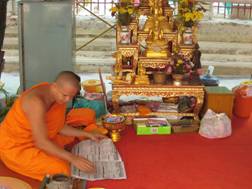
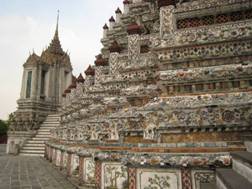




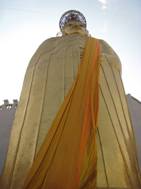
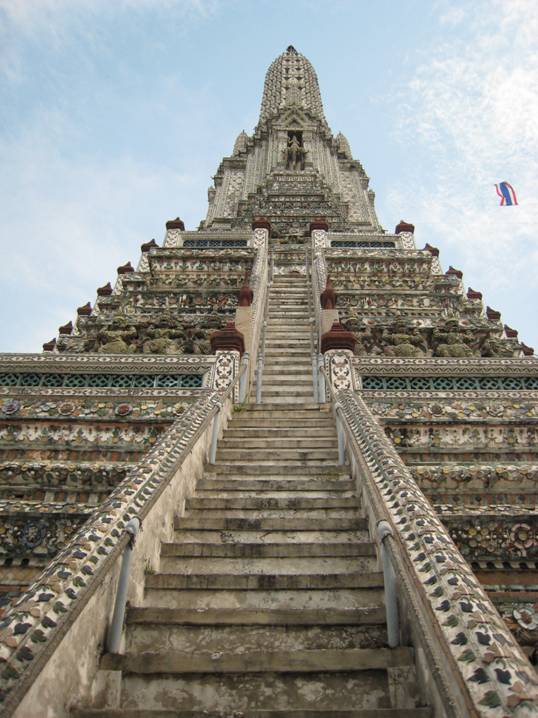
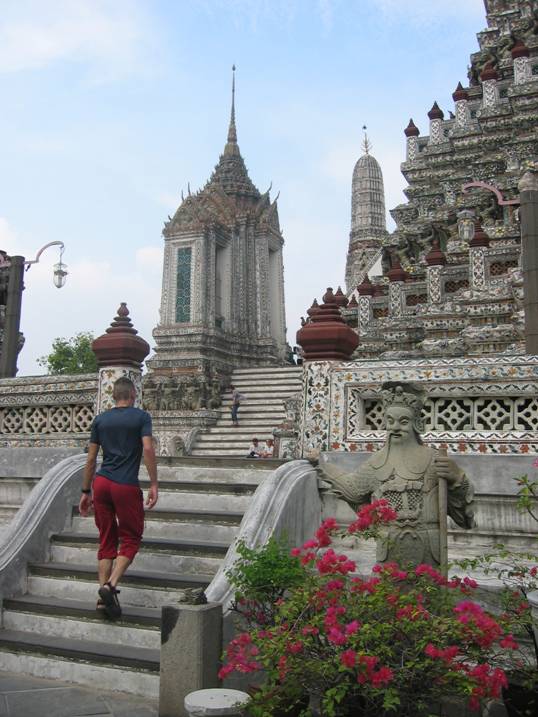
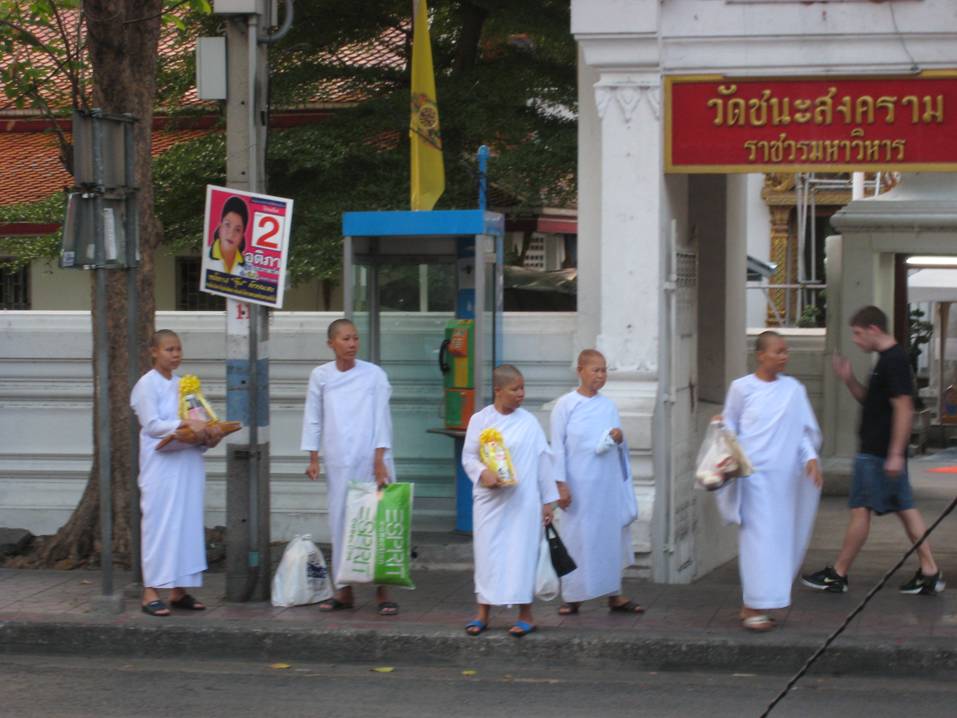
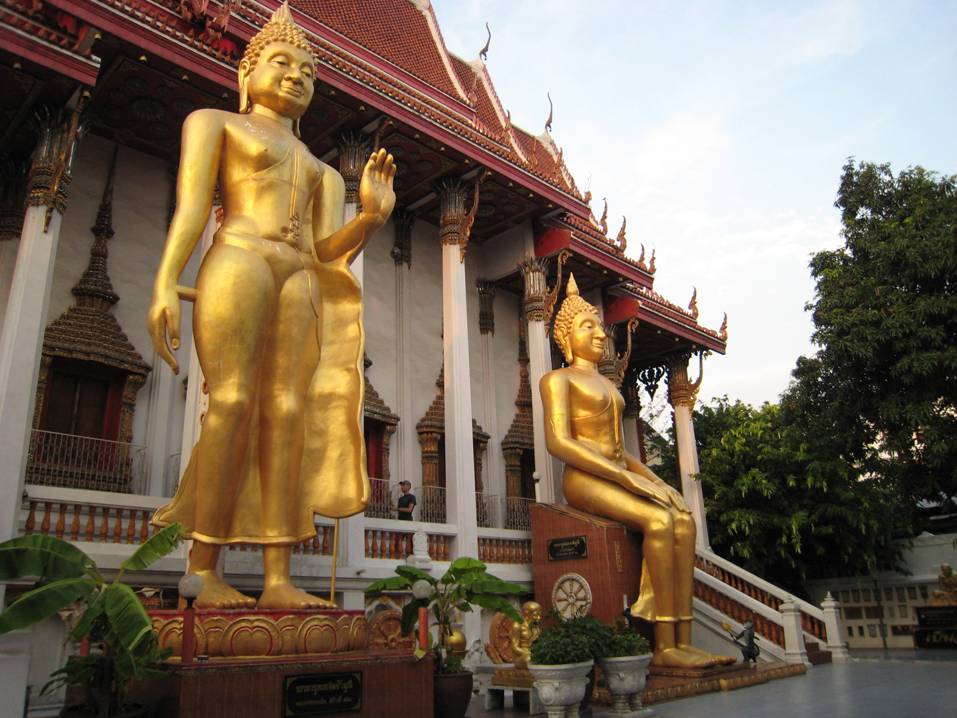
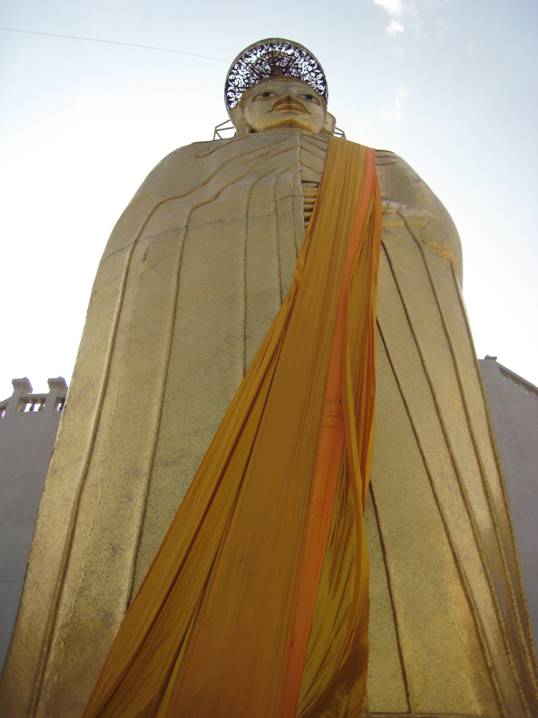
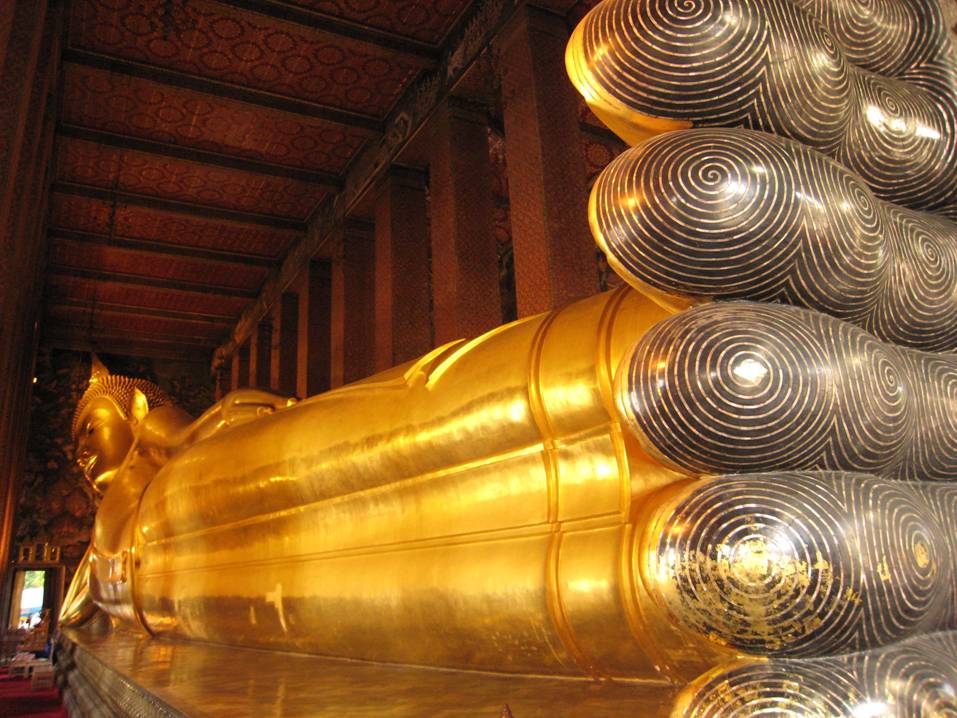
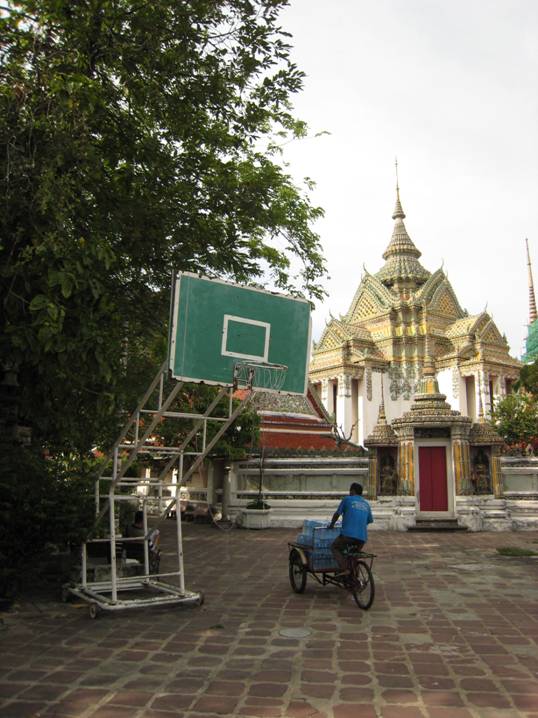
Temple of Dawn and Giant Buddha and Marble Temple, Bangkok.

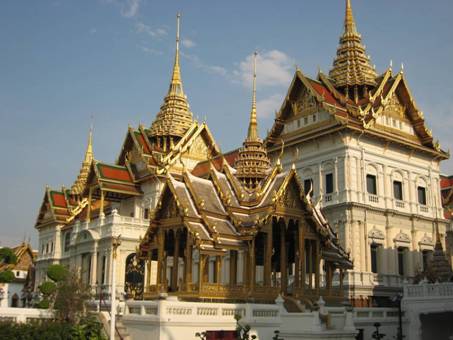

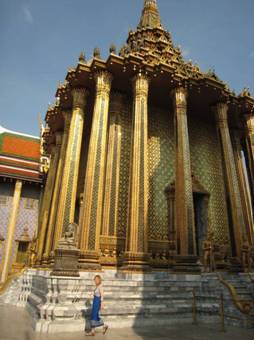
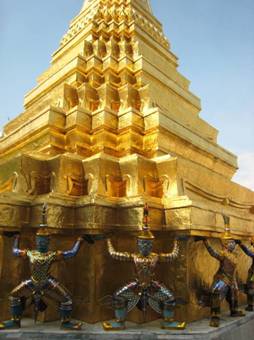

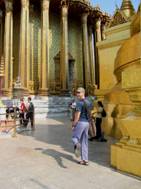
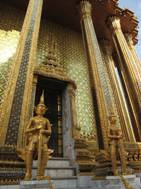
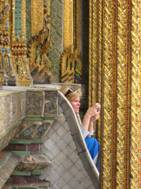

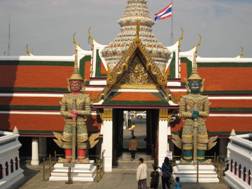

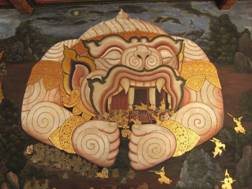

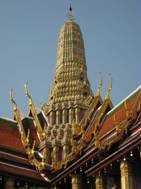


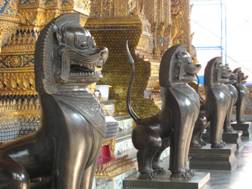


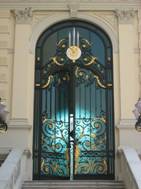
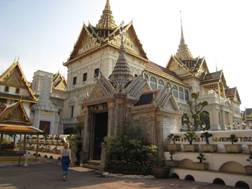
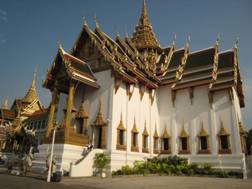
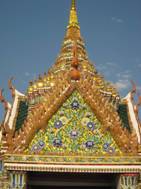
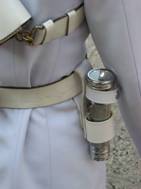
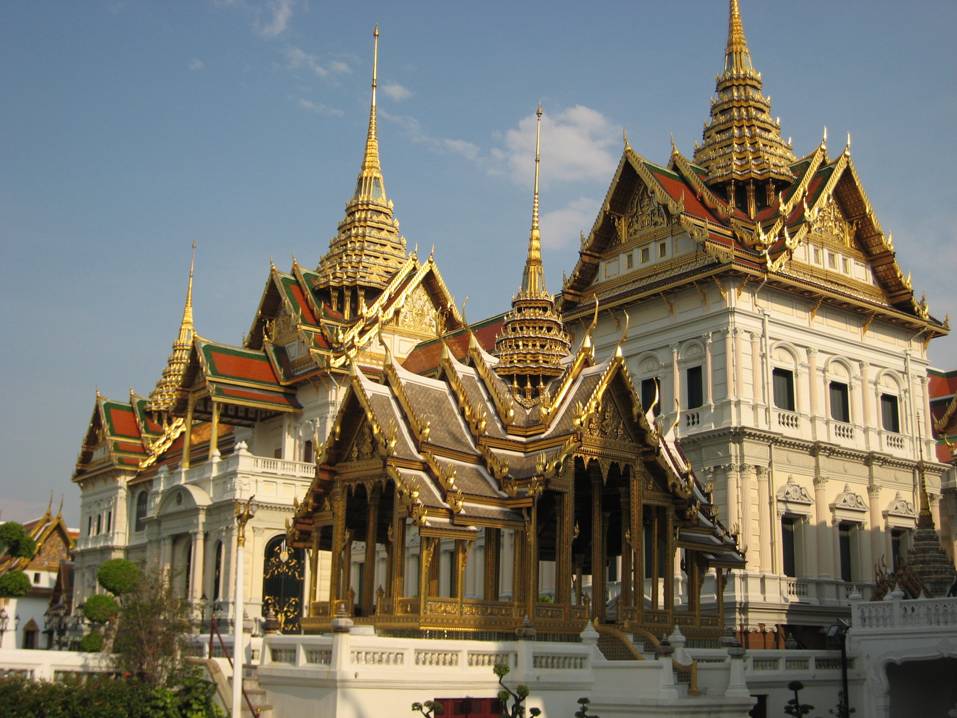
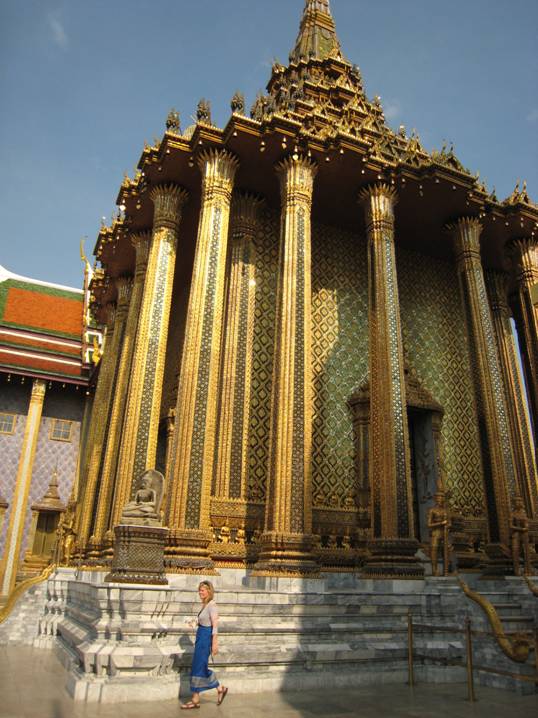
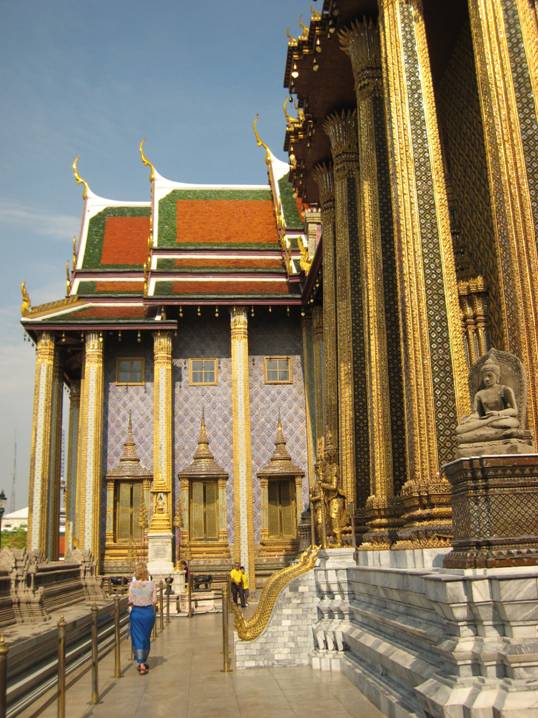
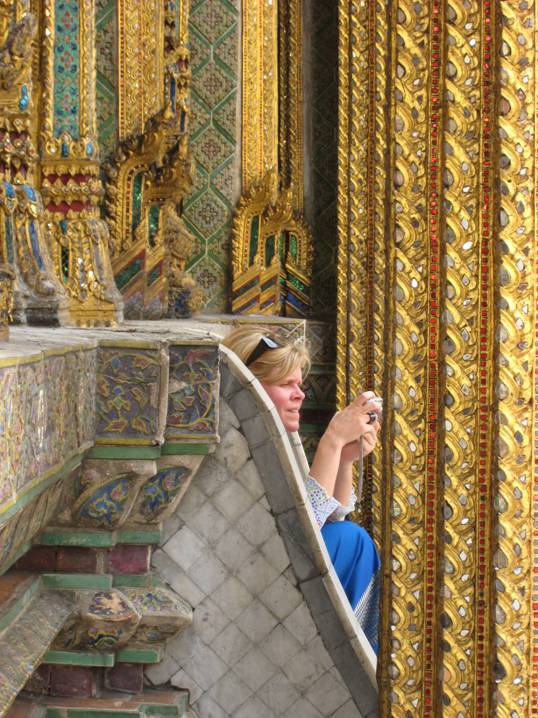
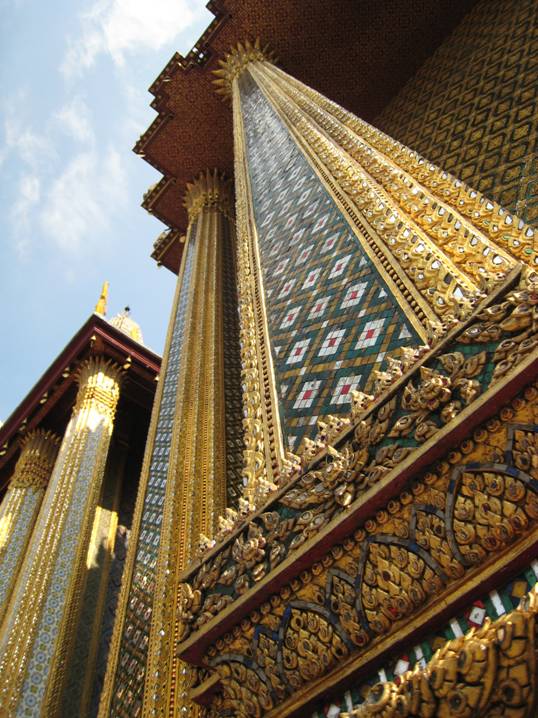
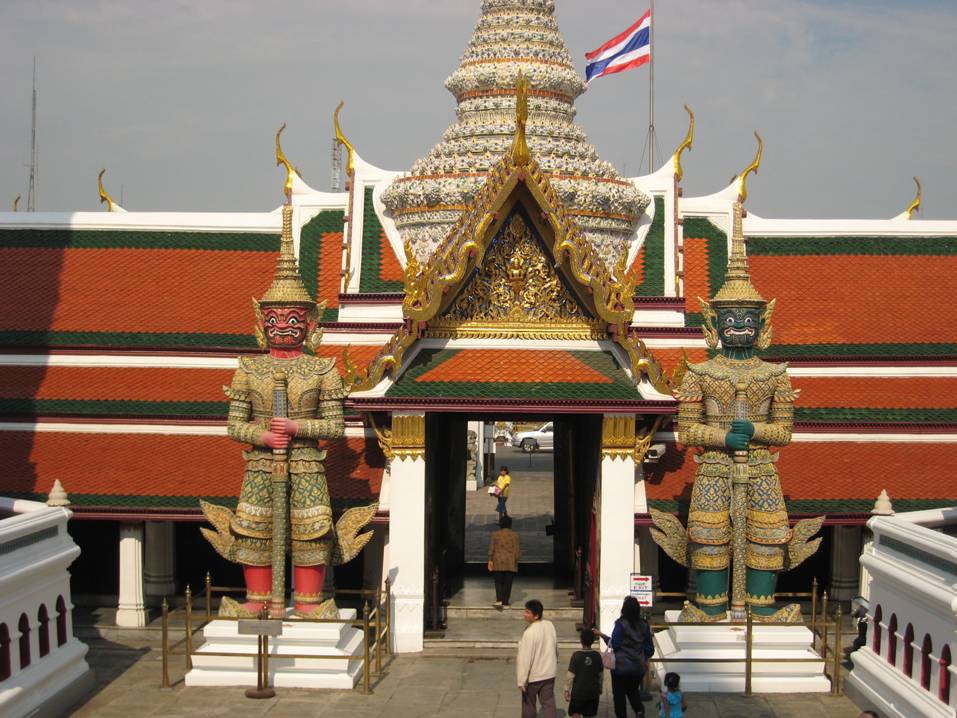
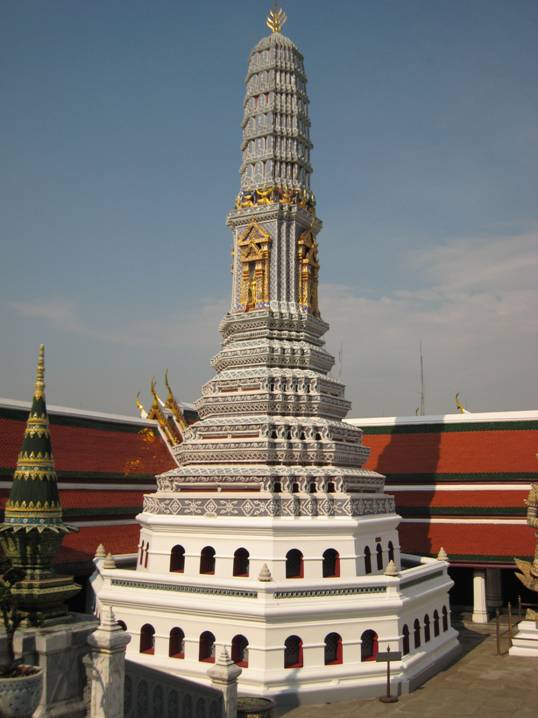
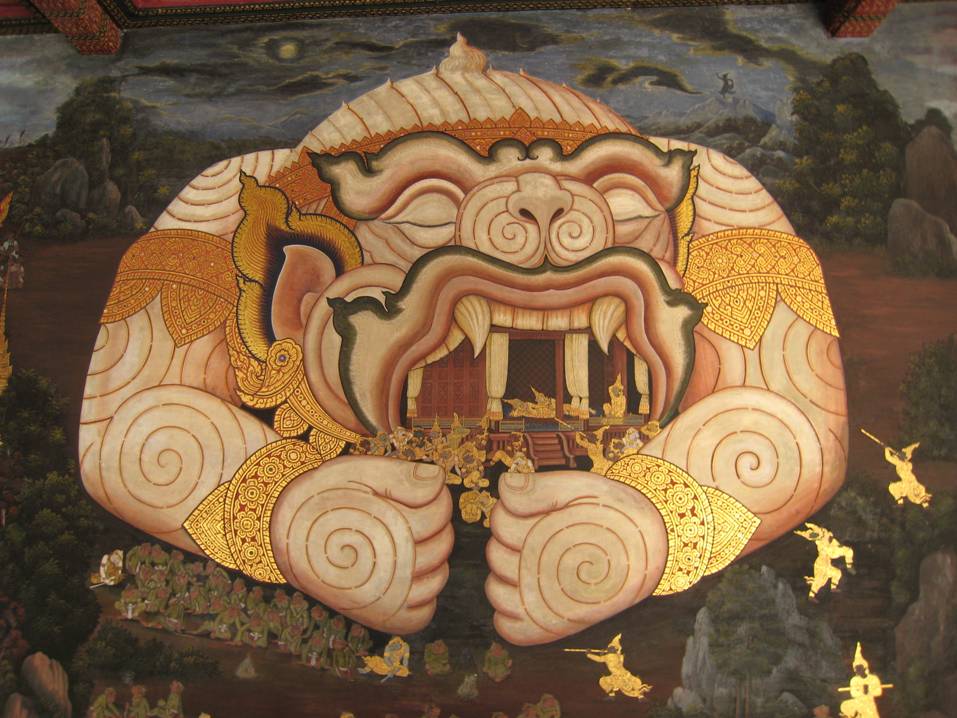
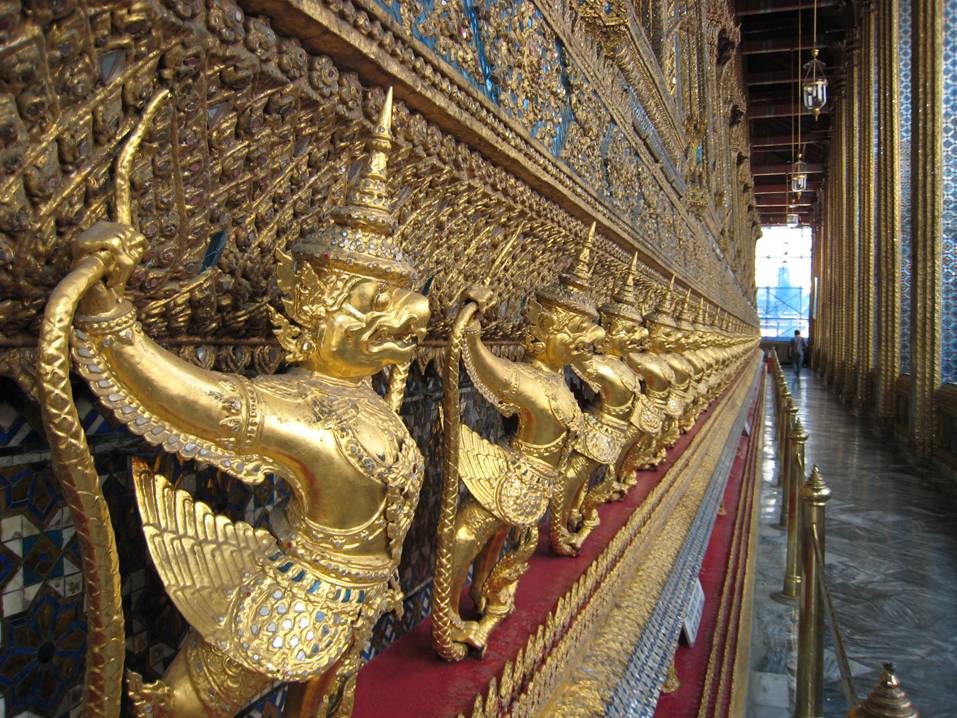
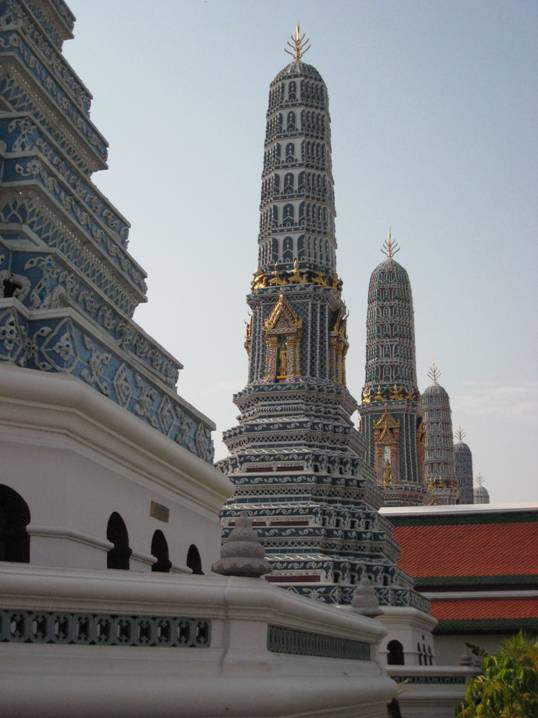
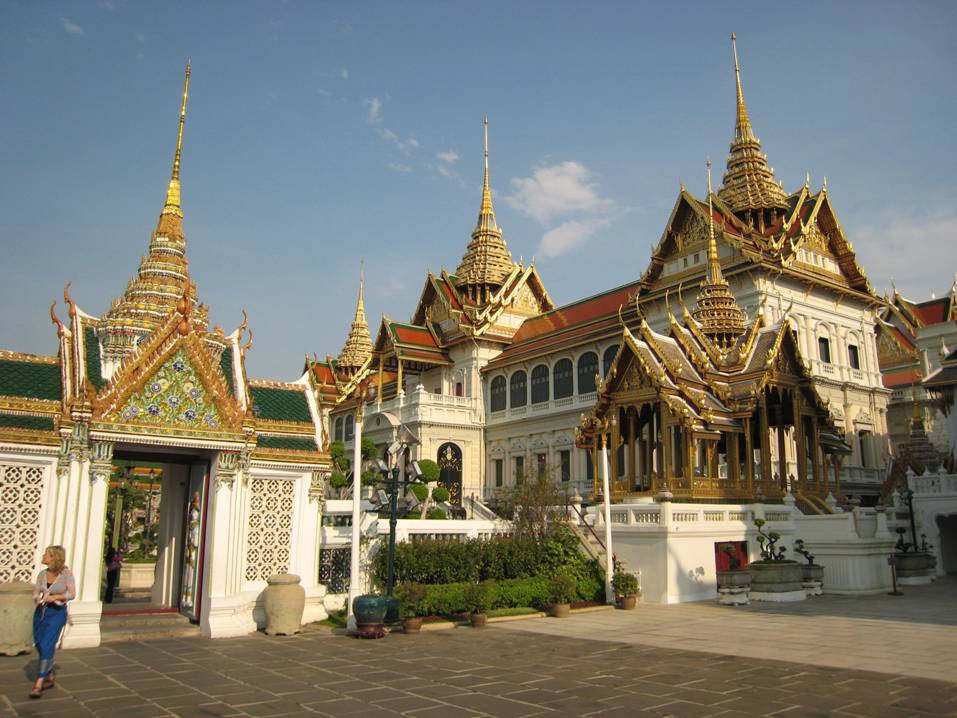
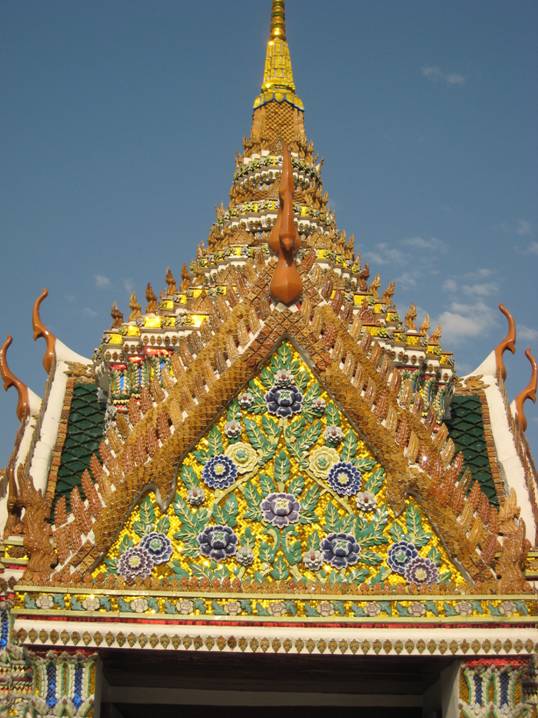
Royal Palace and Wat Phra Kaew temple, Bangkok. Allthough I have seen way to much palaces and temples by now, these ones are still very impressing, I have never seen more gold (paint) in my life.
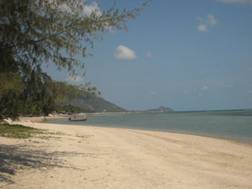
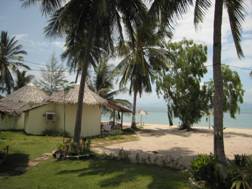

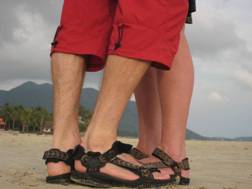
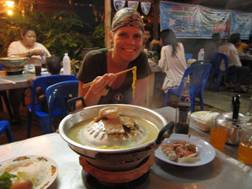

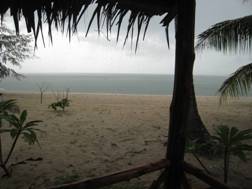
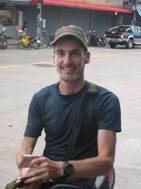

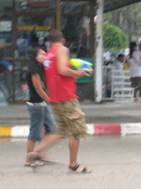
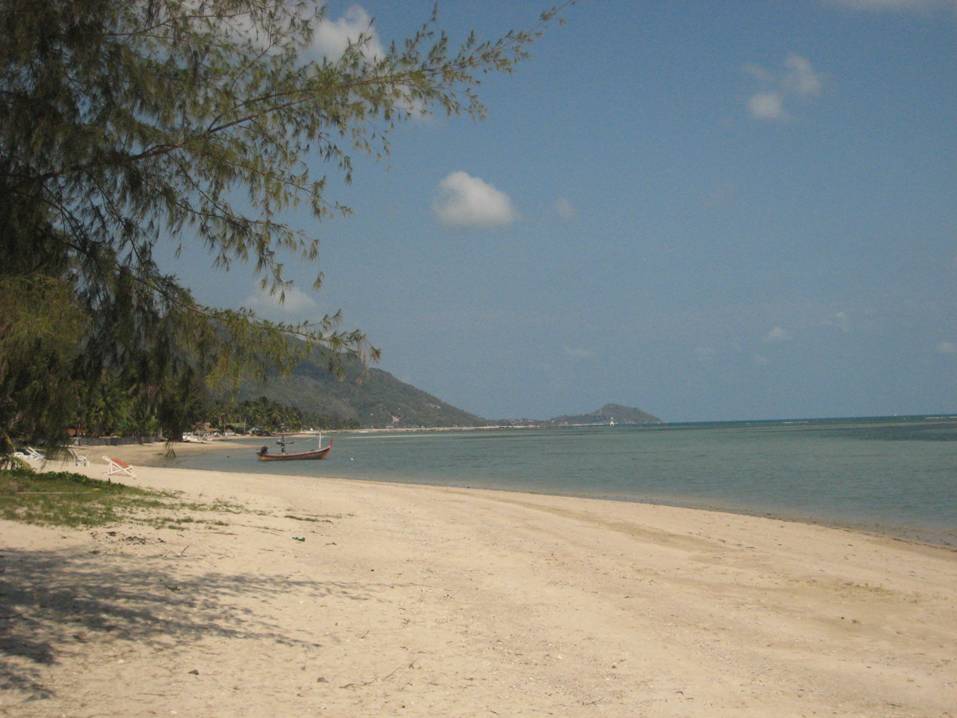
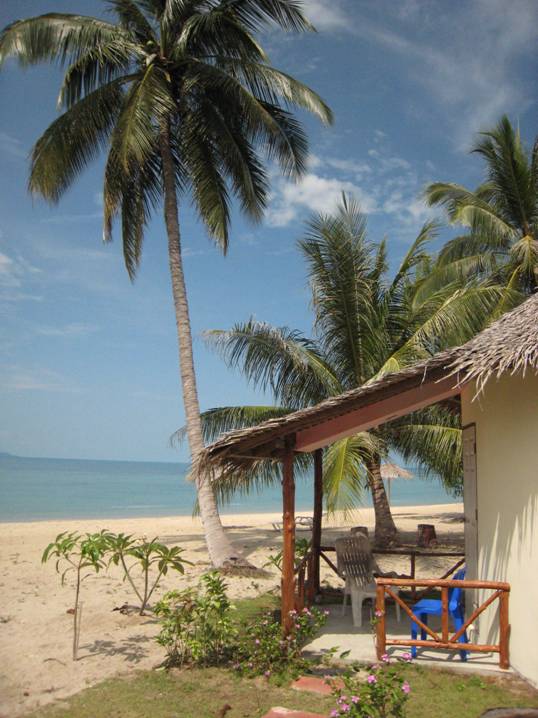
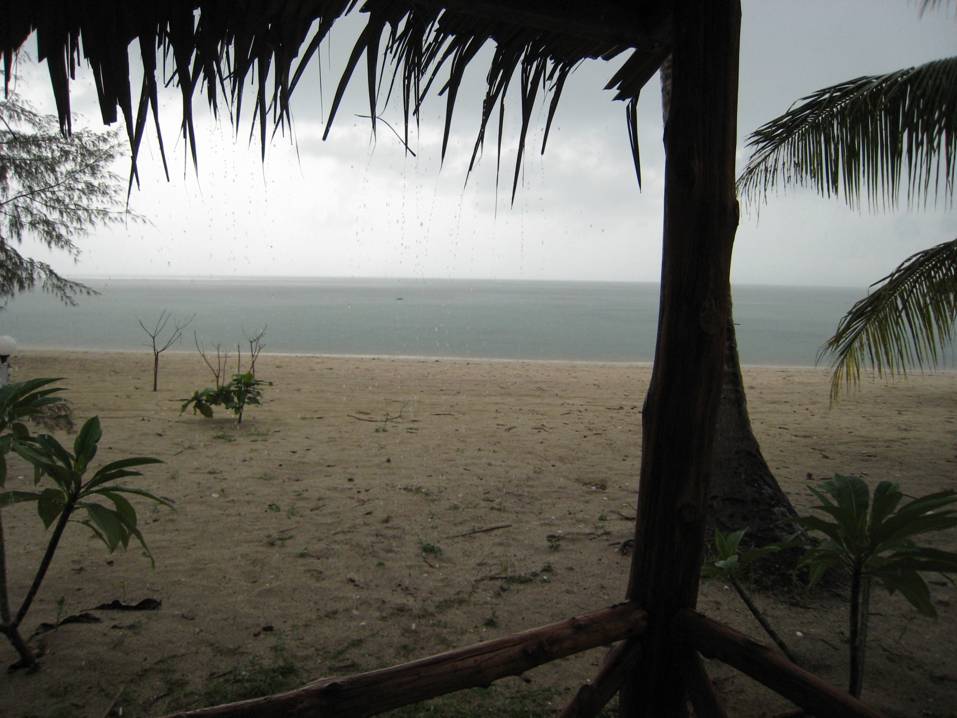
Kho Phangan island. On the south east coast, famous for the full moon parties, but we missed it so we spent some quiet days on the beach and enjoyed the beginning of the water festival.


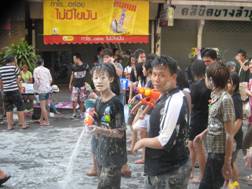
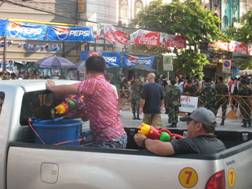
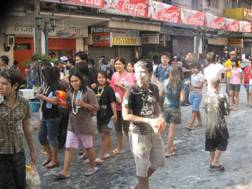
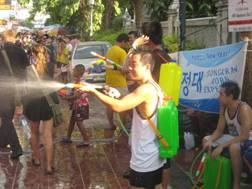
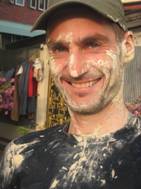
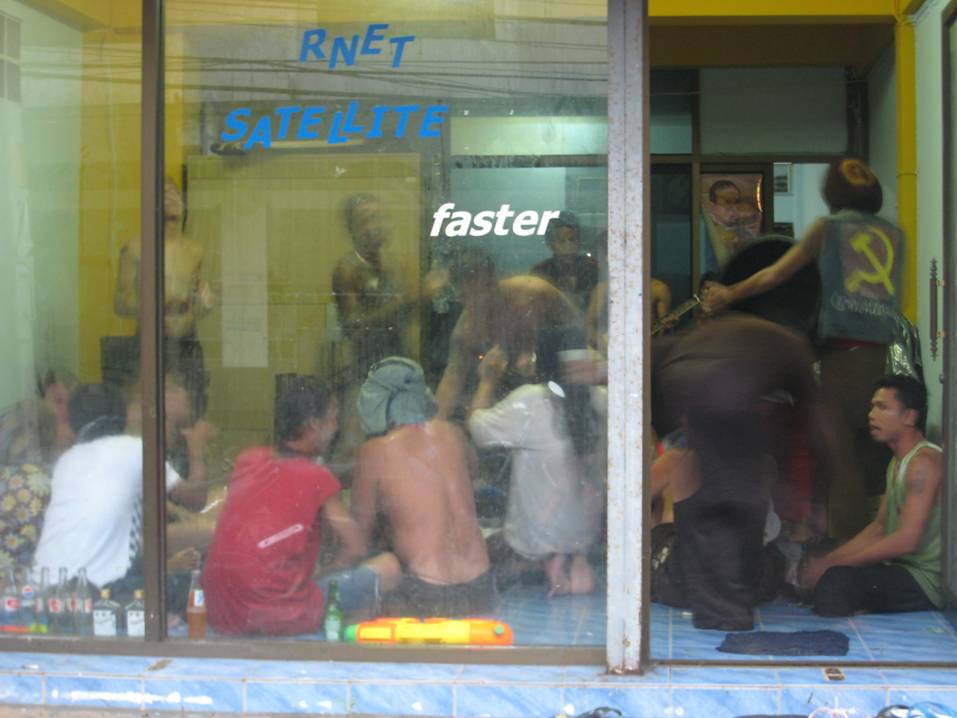
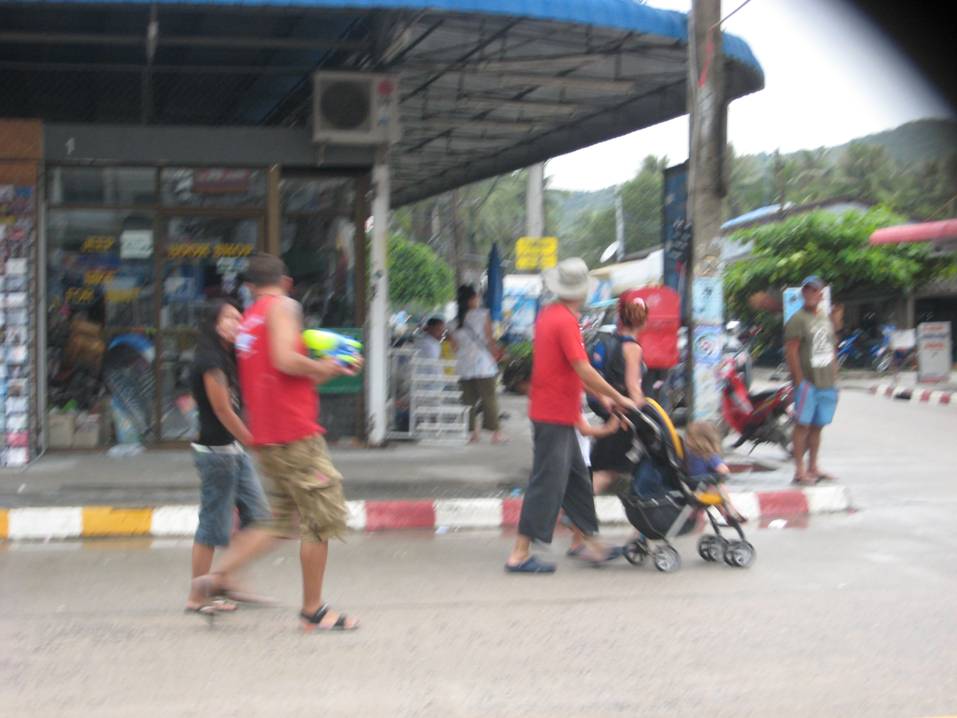
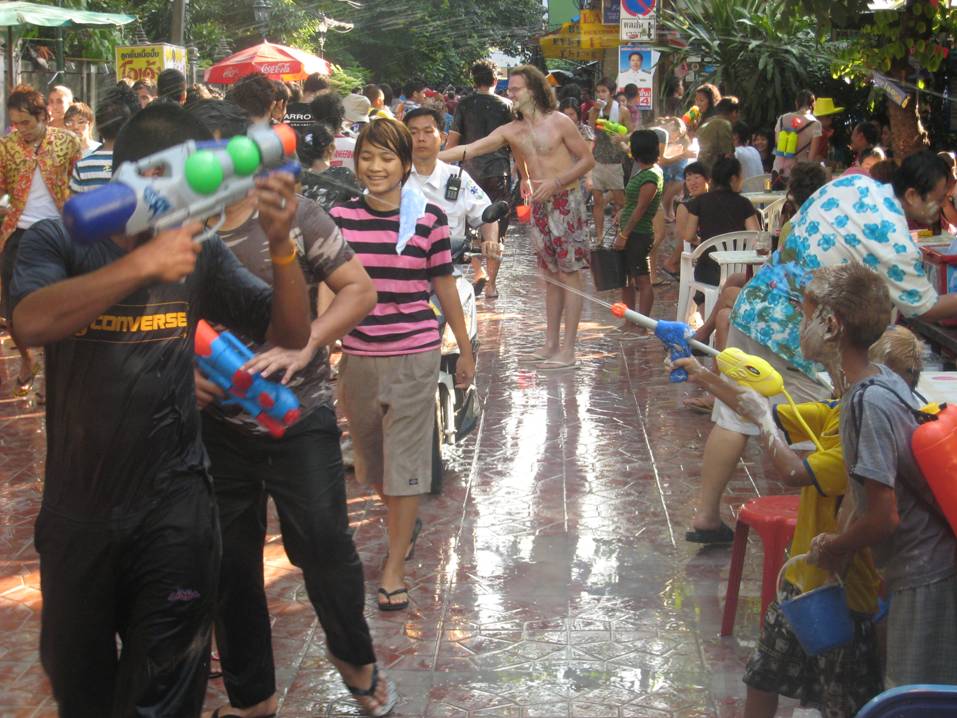
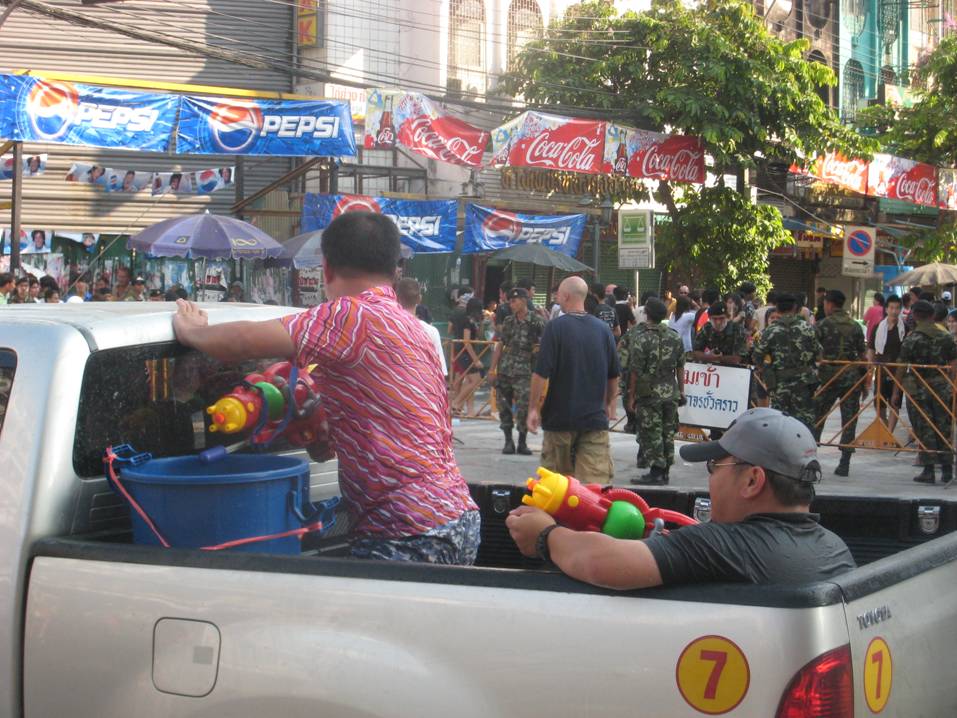
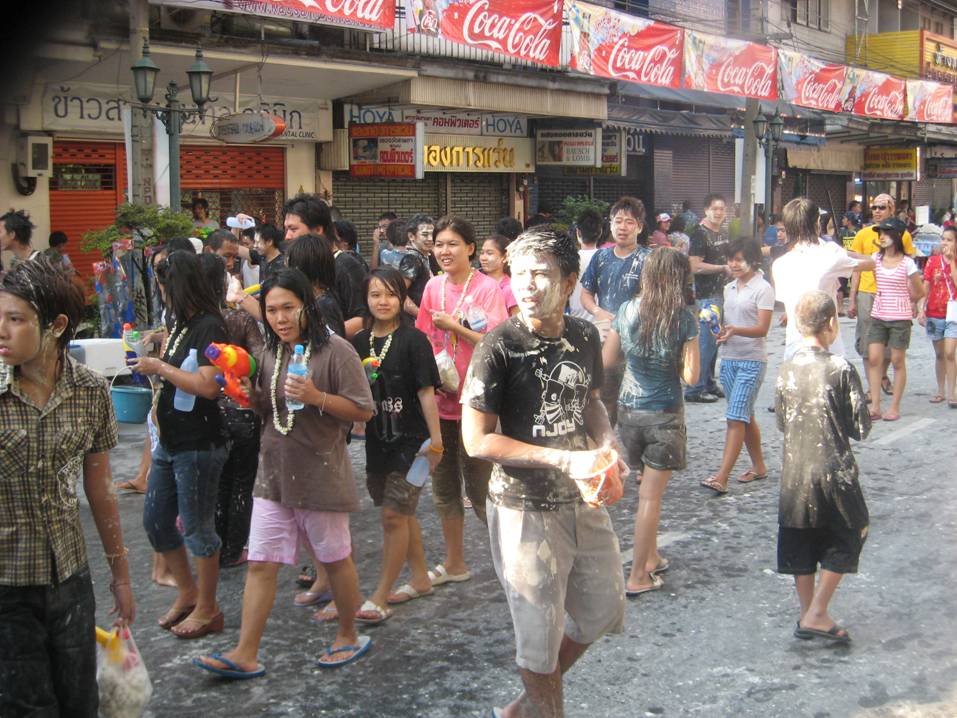
Water festival, Bangkok. Buddhist New Year water festival, lots of fun and a welcome refreshment in the heat when everyone splashes eachother with water and rubs chalk powder on eachothers cheeks for good luck in the new year.


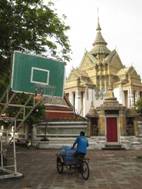

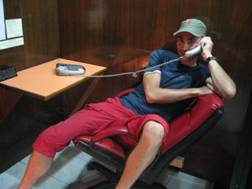
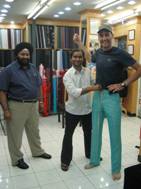
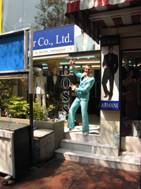
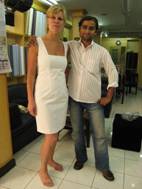
More Bangkok Business. Besides some temples, Kirsten went shopping for tailor made clothes and I expanded my Hoi An fashion collection with a little disco touch...
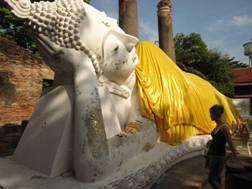
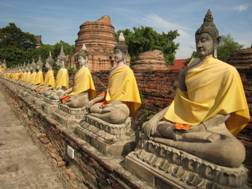

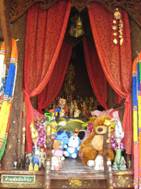

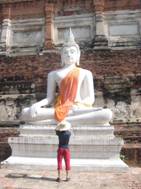
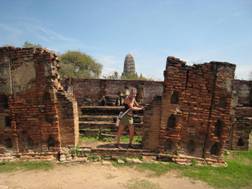
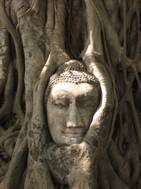
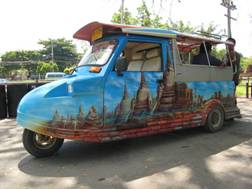
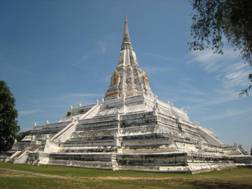

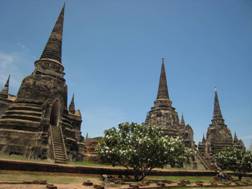
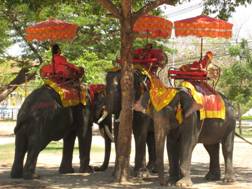
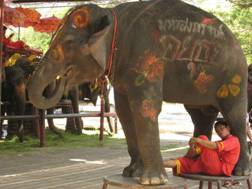
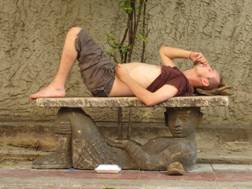
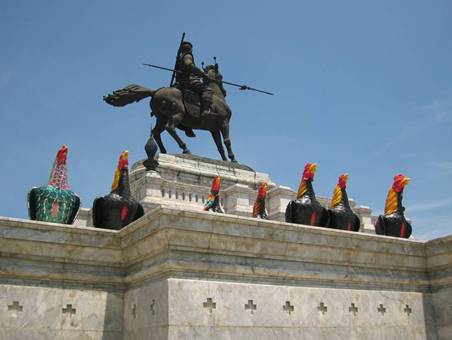
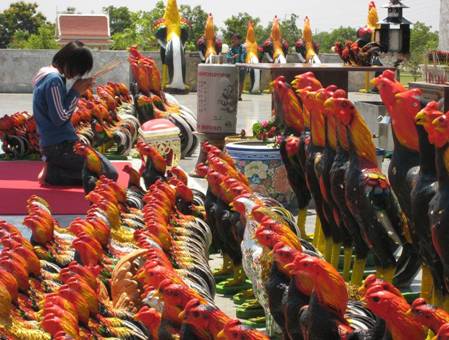
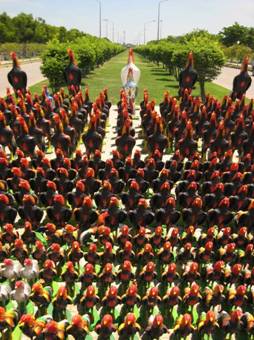
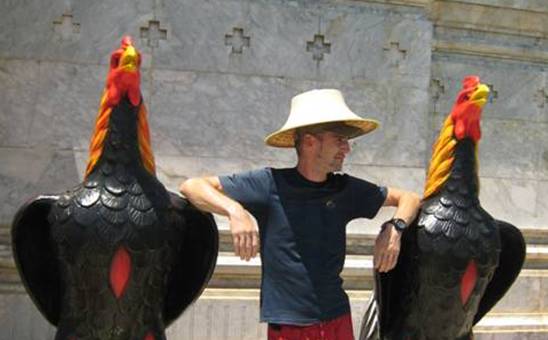
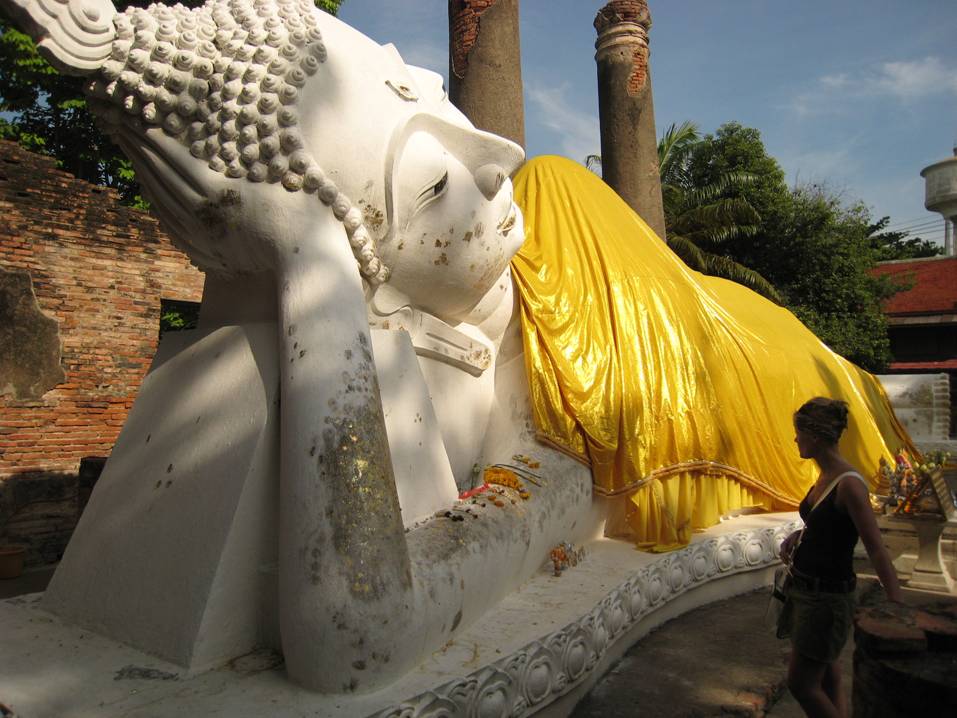
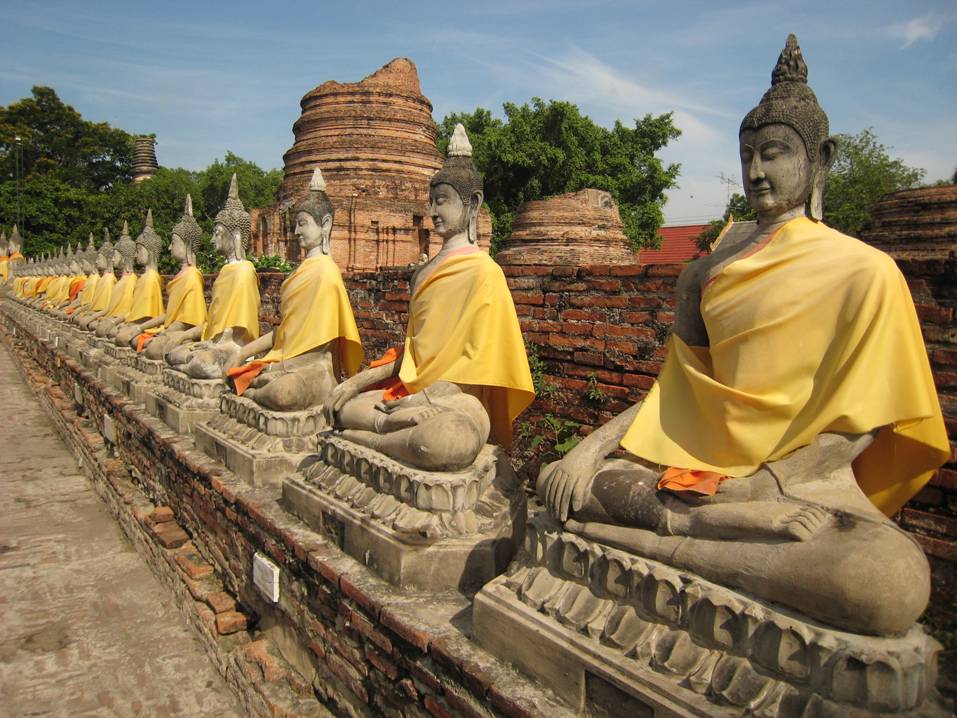
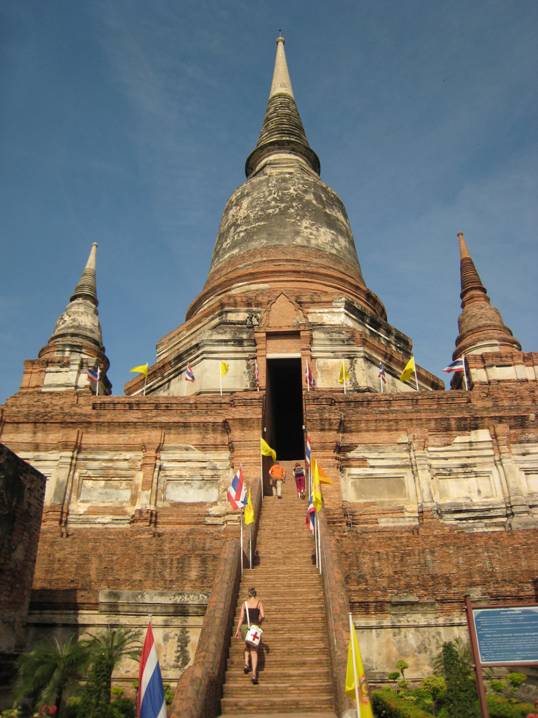
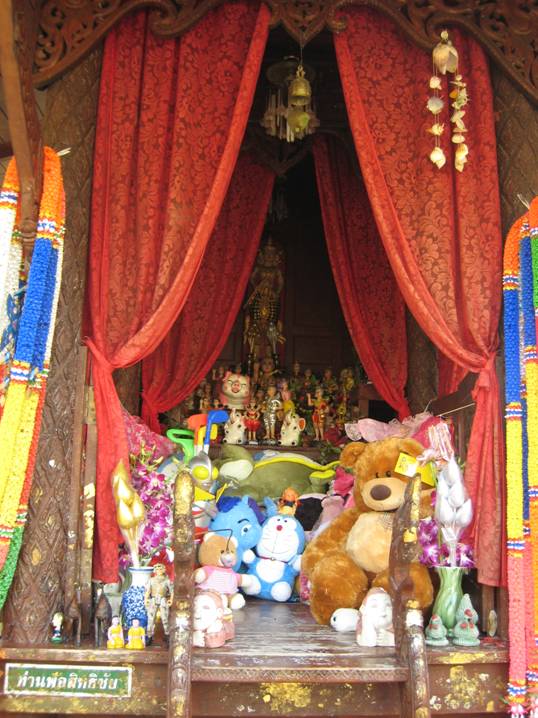
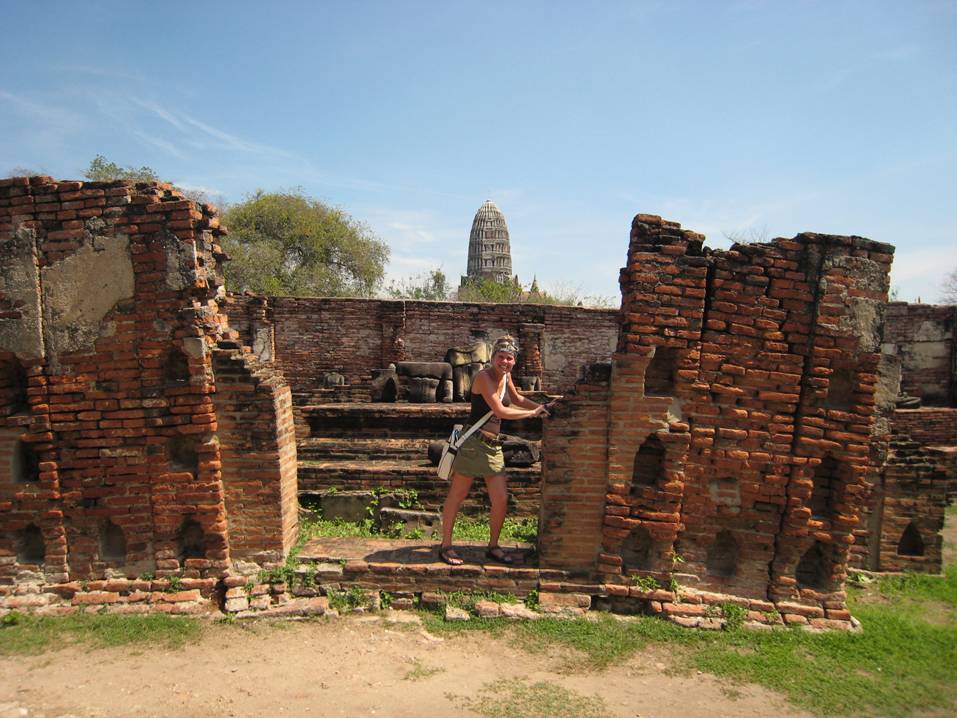
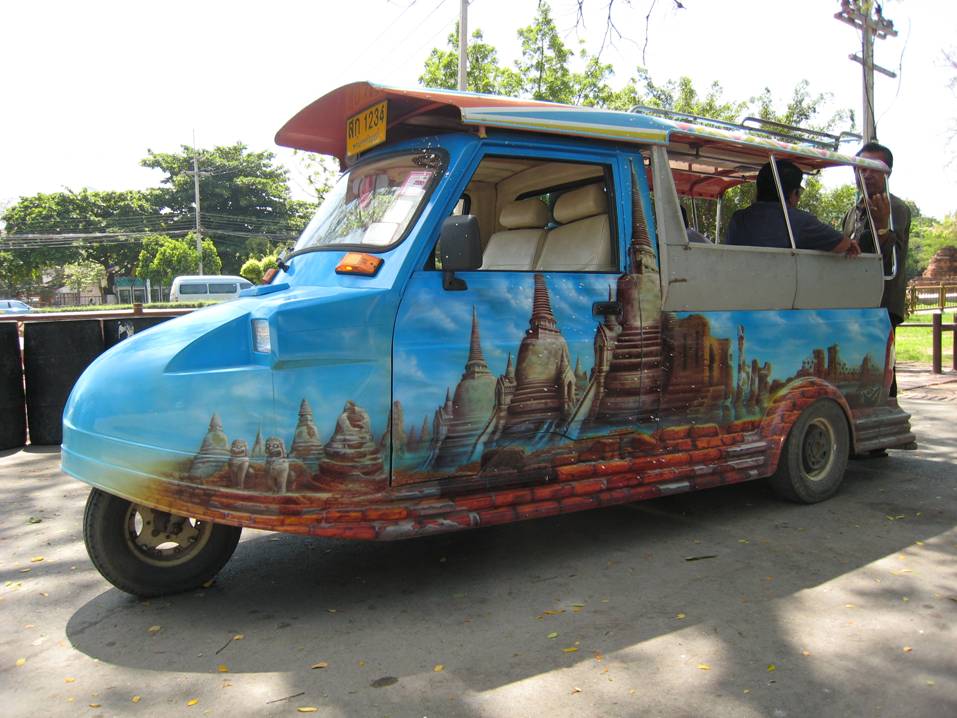
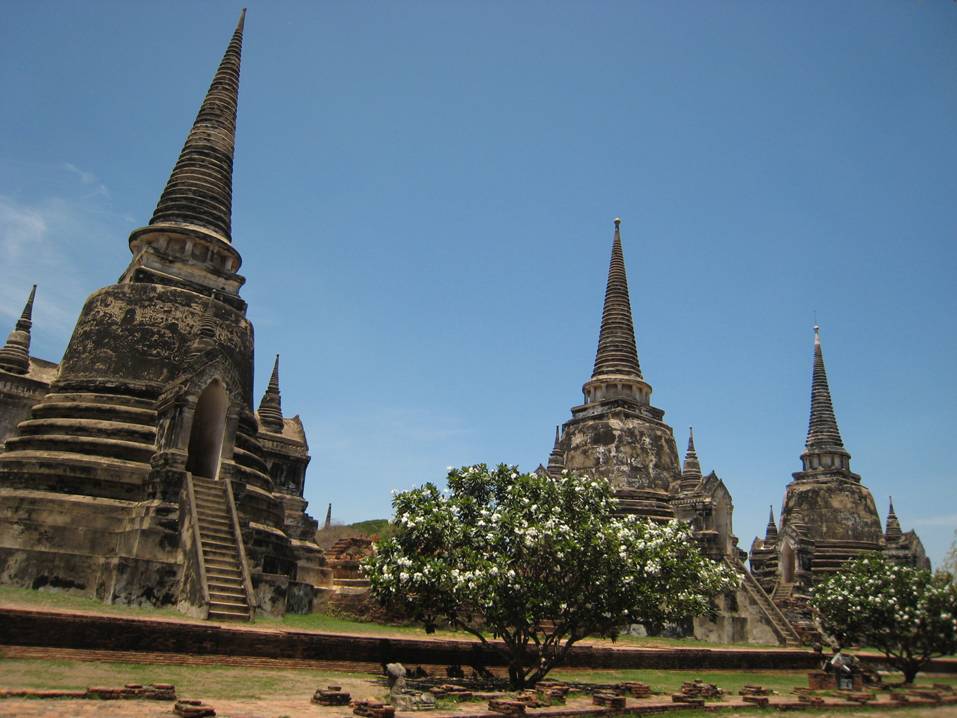
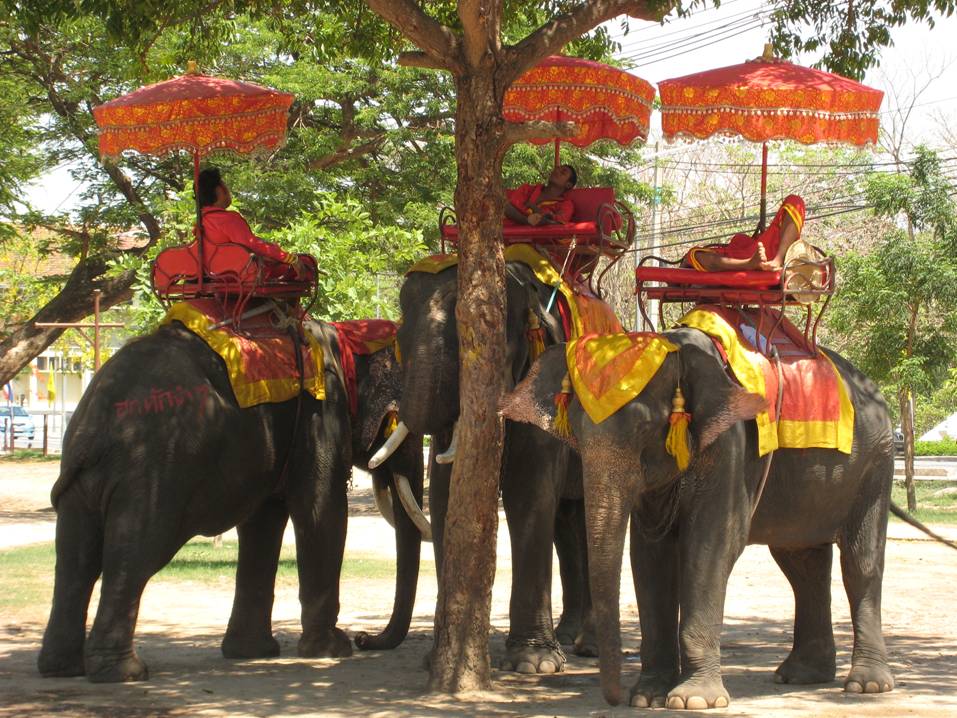
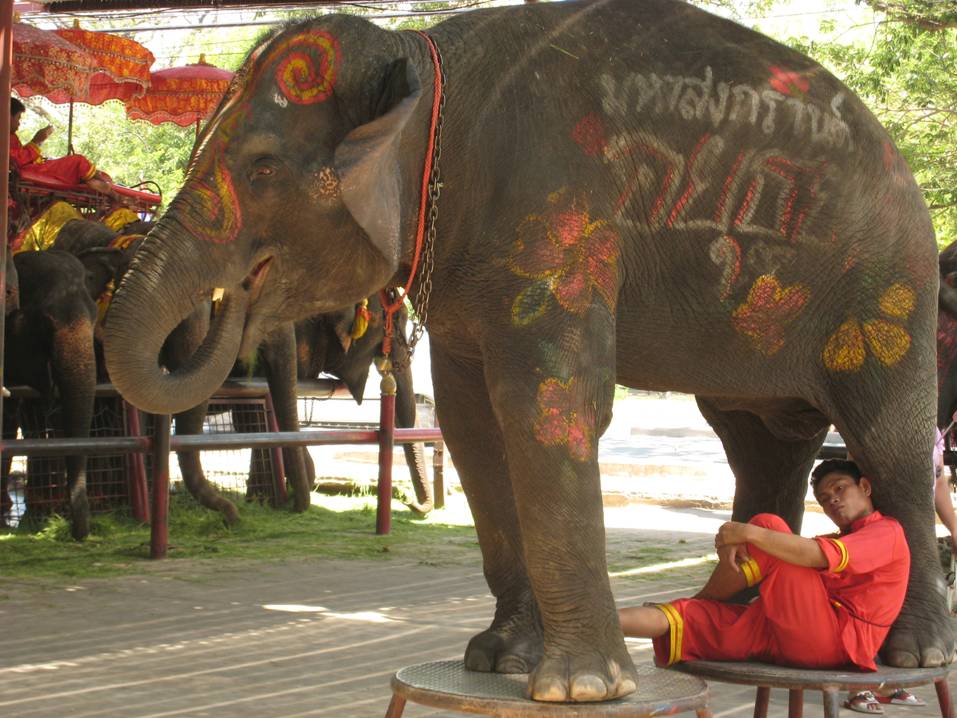
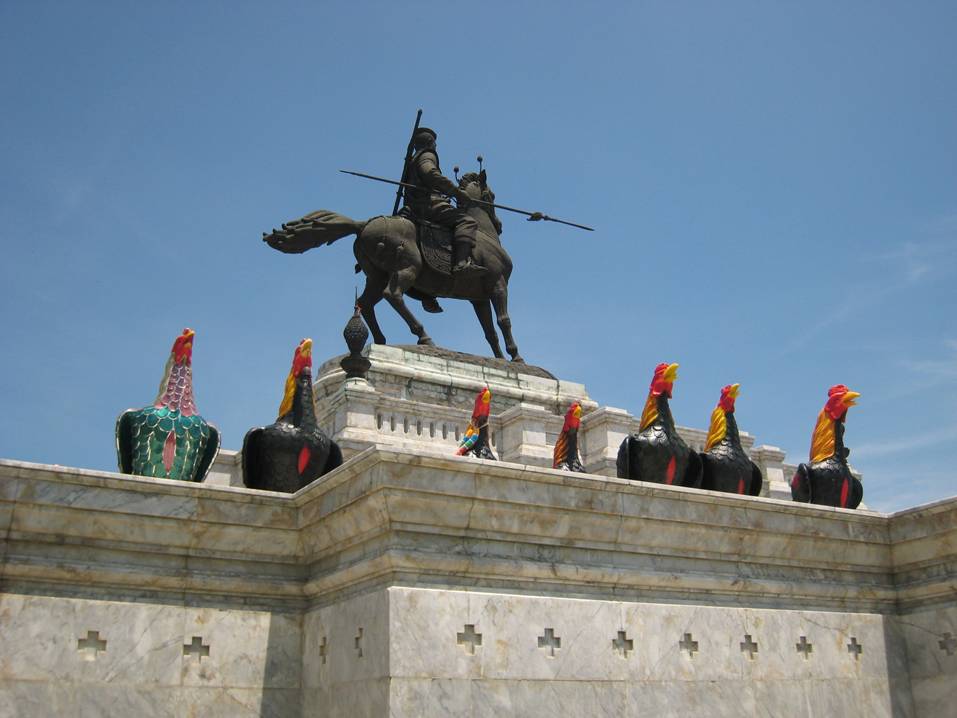
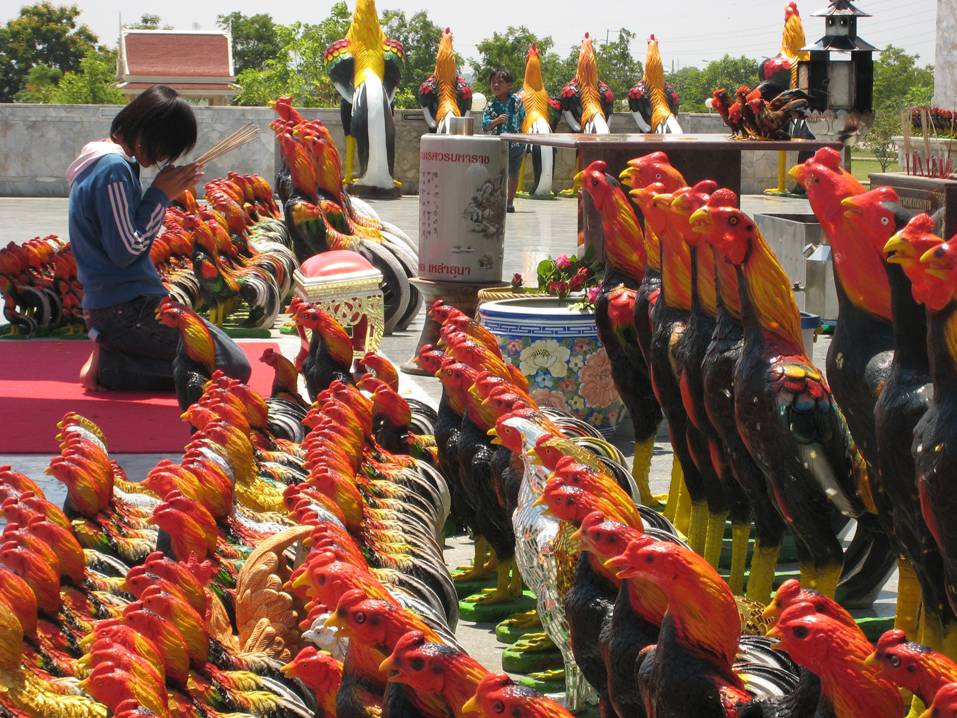
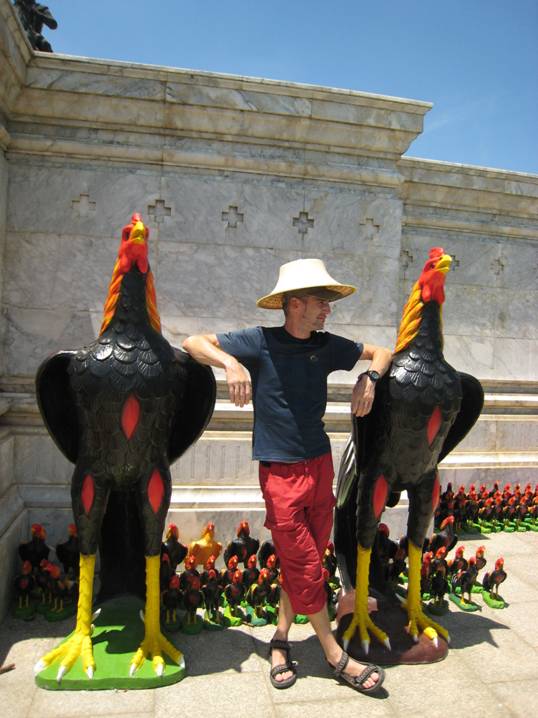
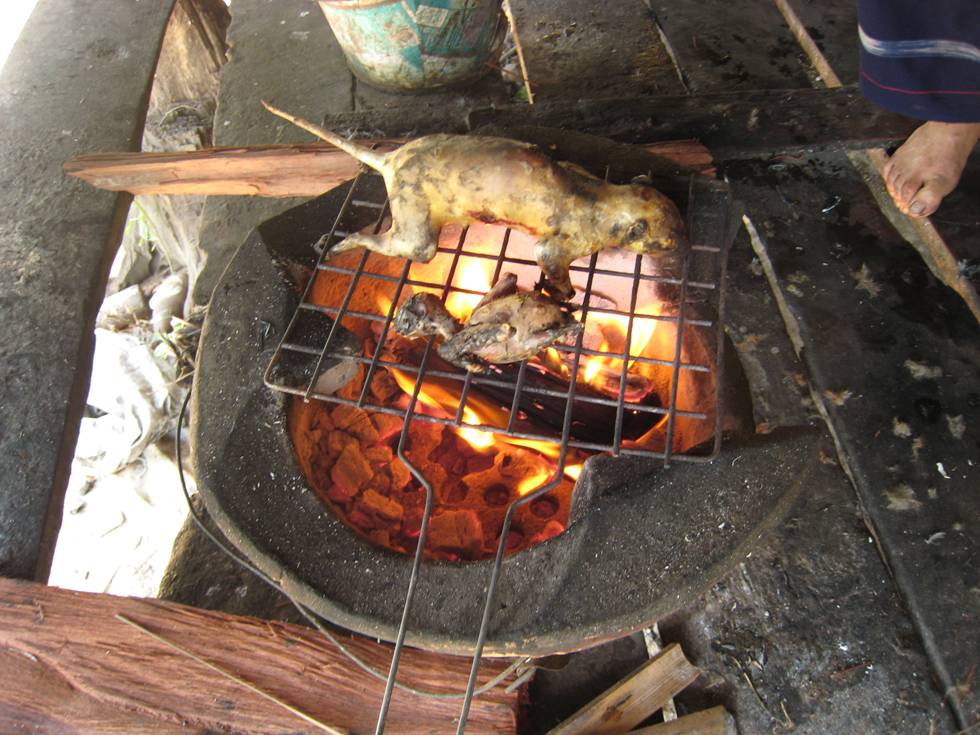
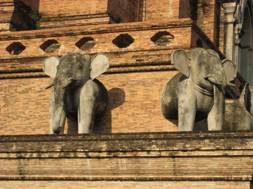
Ayuthaya. The former capital of Thailand with loads of temples, elephants and... chickens?

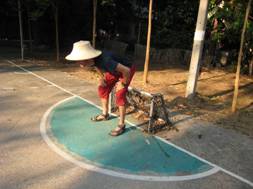
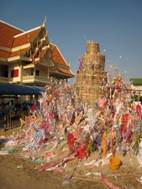


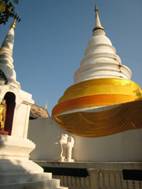
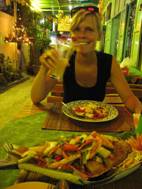
Chiang Mai. City in the north of Thailand, with a lot more temples.
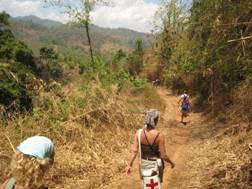


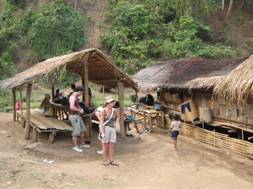

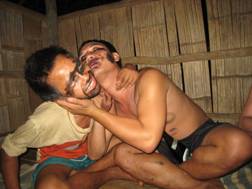


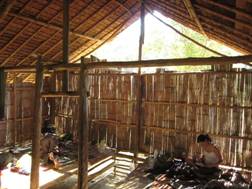

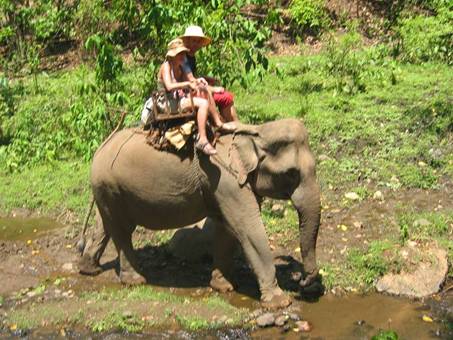


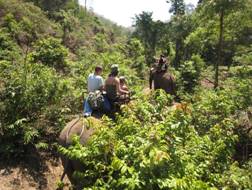
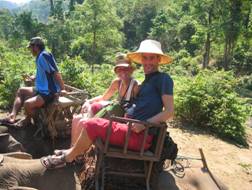



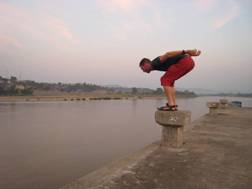
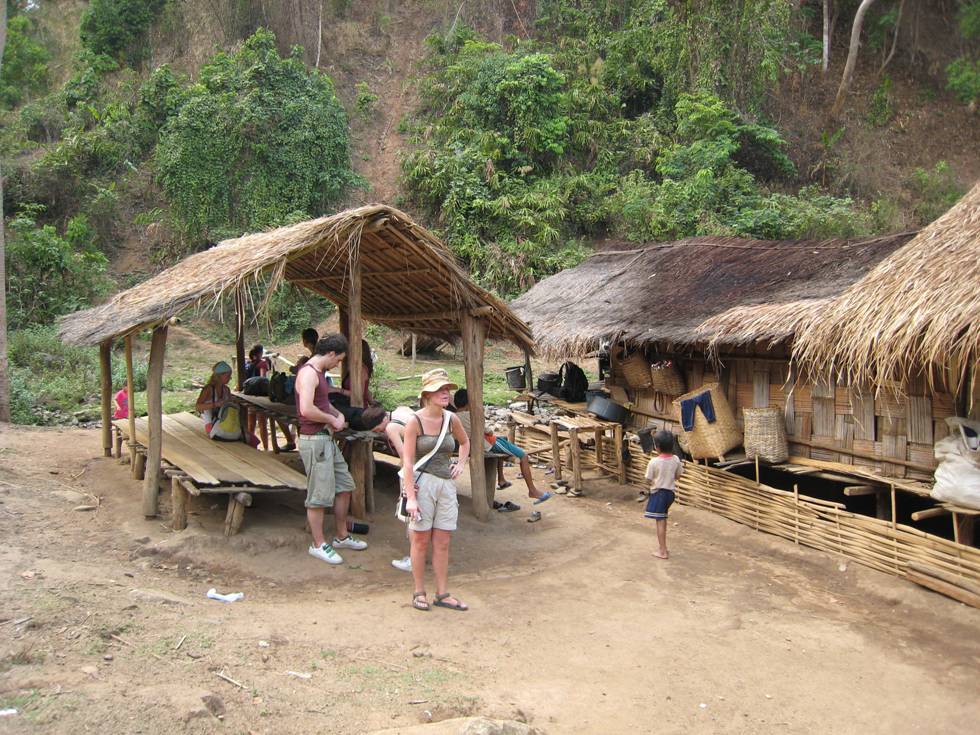
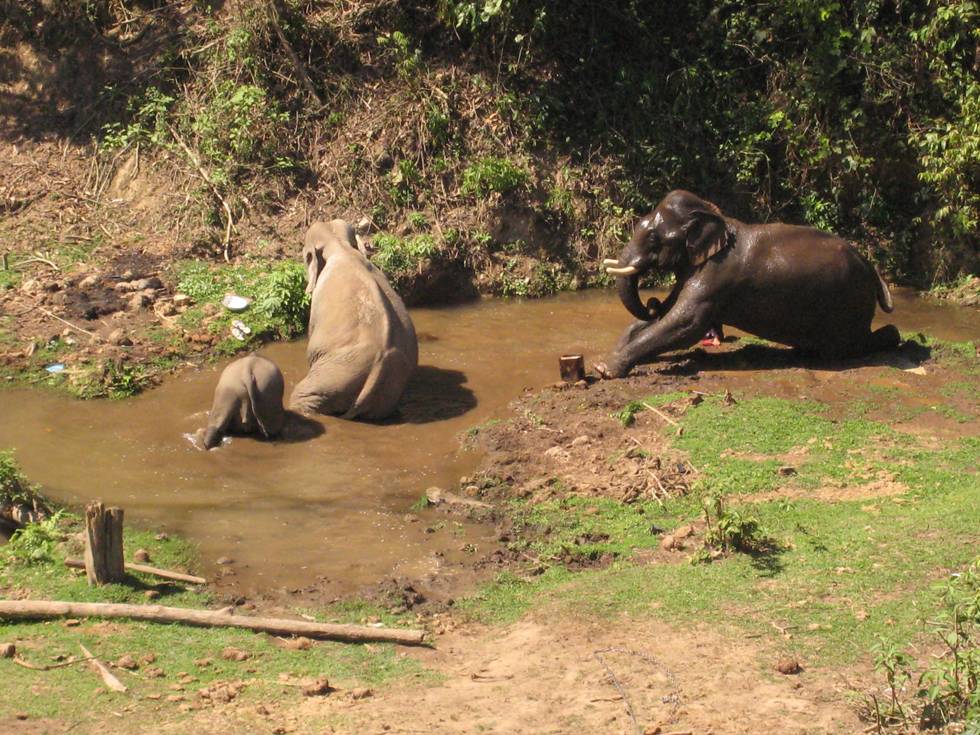
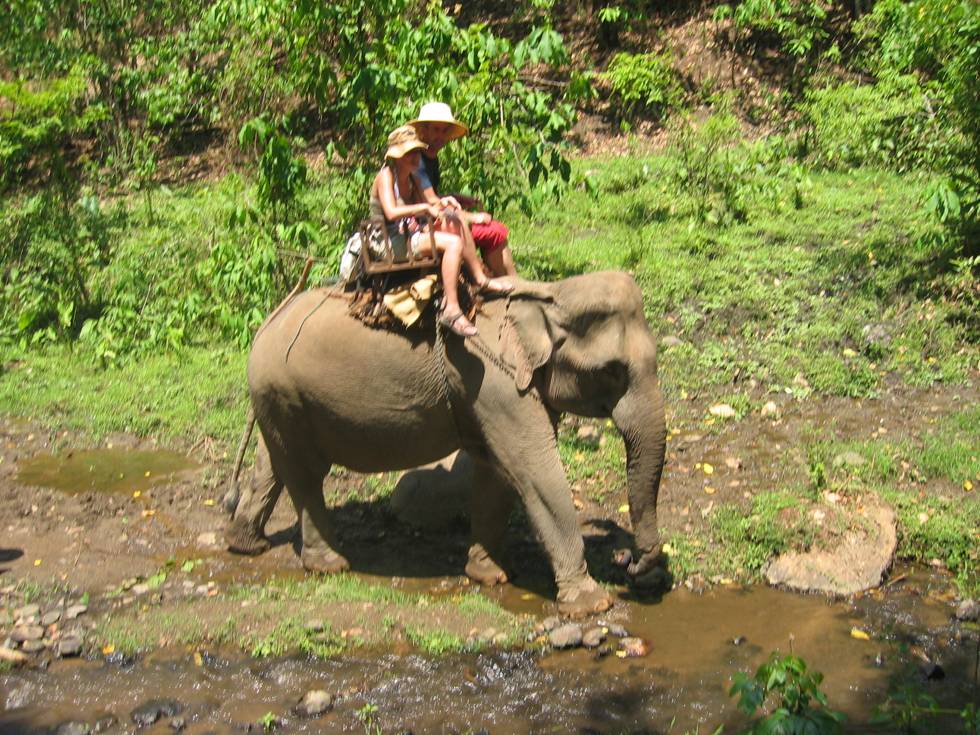
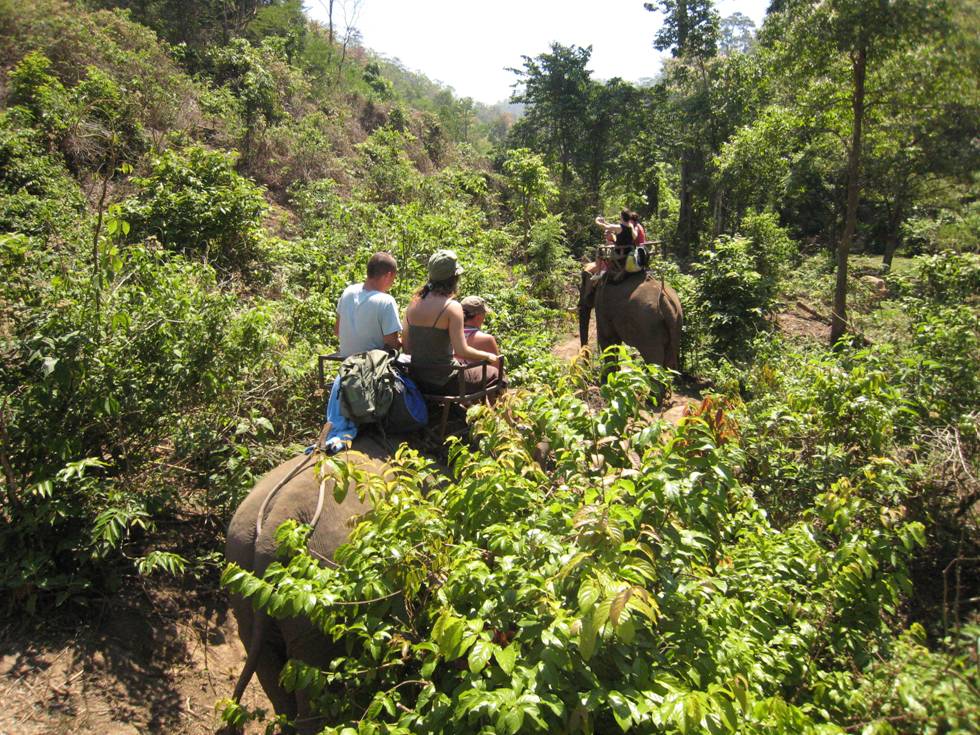
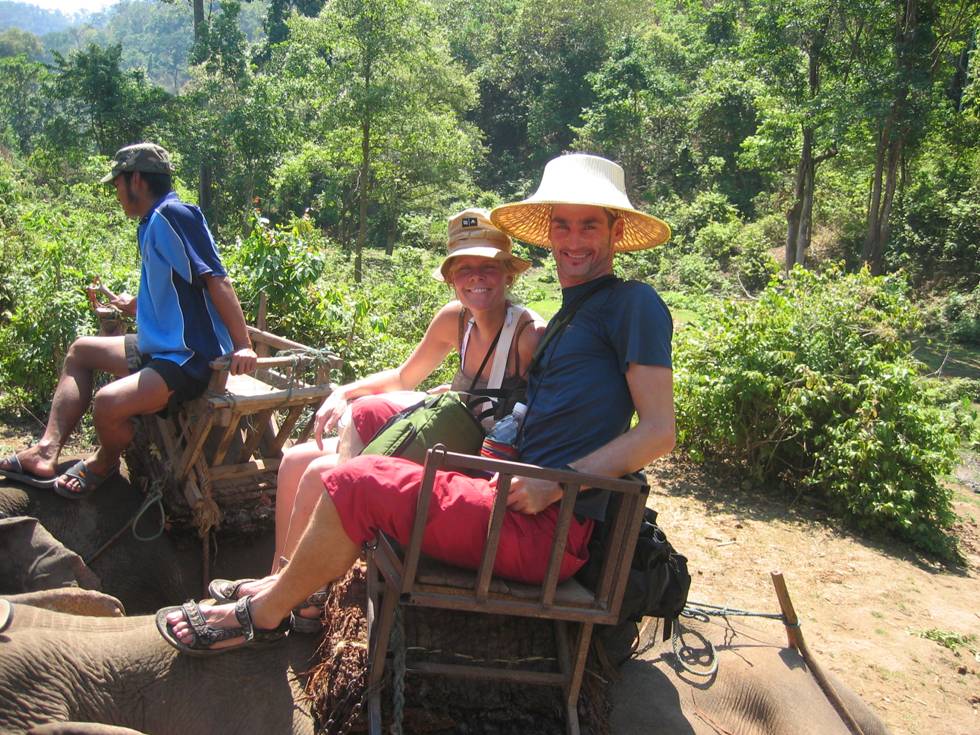
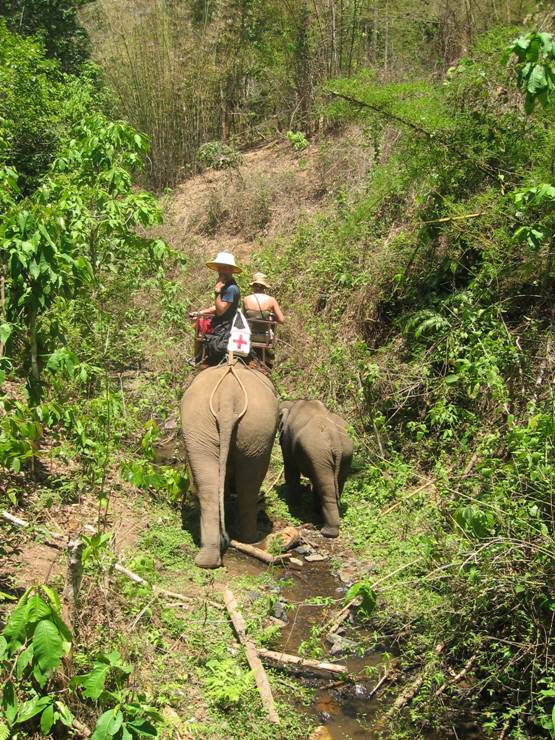
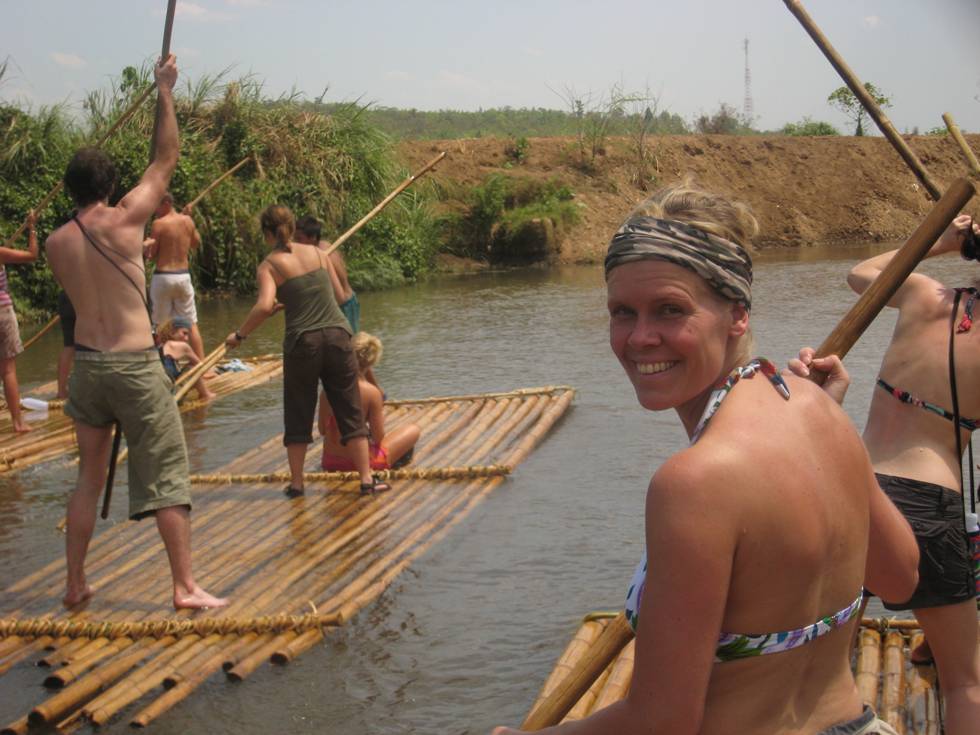
Pai national park. We took a nice and very hot walk through the forest and the hill tribe villages, road on an elephant, floated on bamboo raft, and took the bus to the border of Laos.
March 30: Chatnaburri; 31: Rayong
April 1: Rayong; 2: Pattaya; 3-9: Bangkok; 10-13; Kho Phangan; 14-18: Bangkok; 19: Chiang Mai; 20: Pai; 21: Chiang Mai; 22: Chiang Kong
Laos (April 2007)
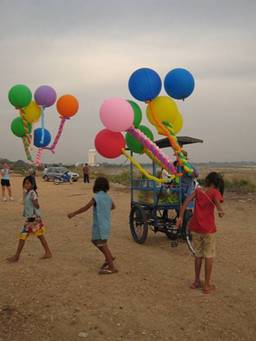


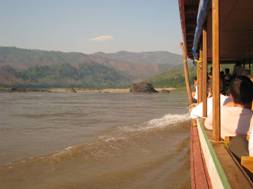
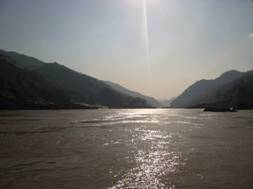
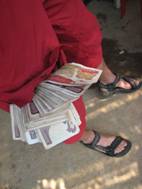
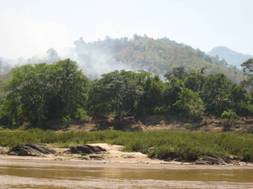

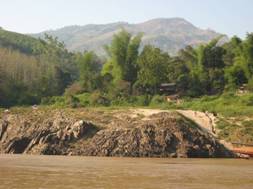


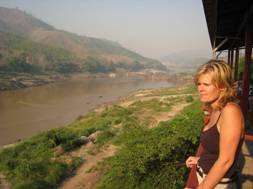


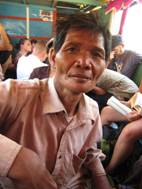
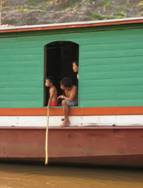
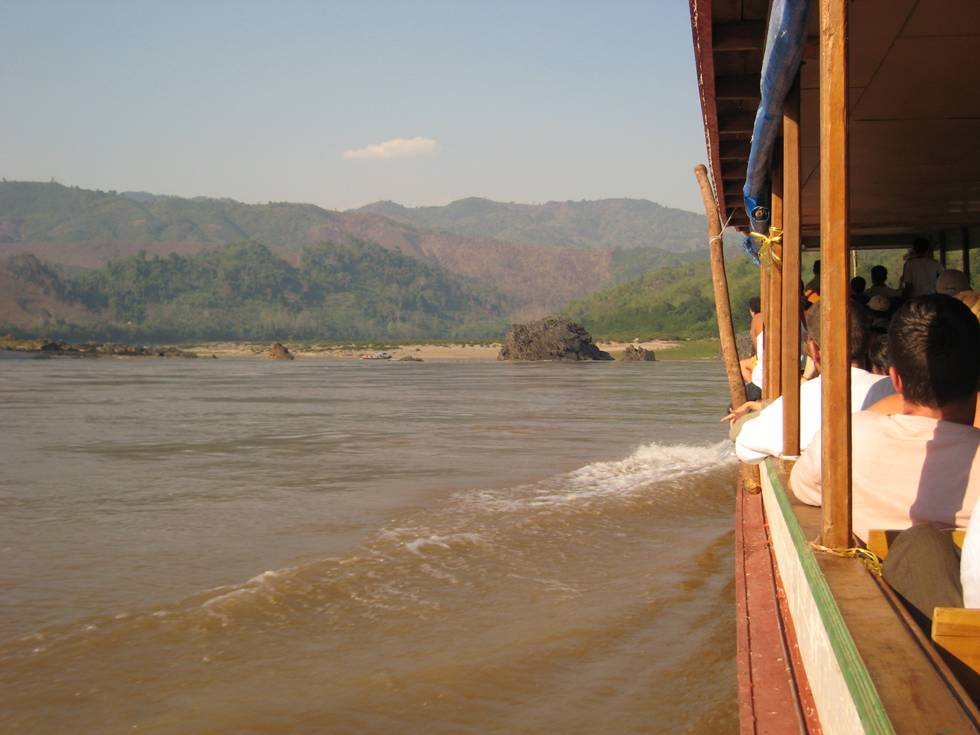
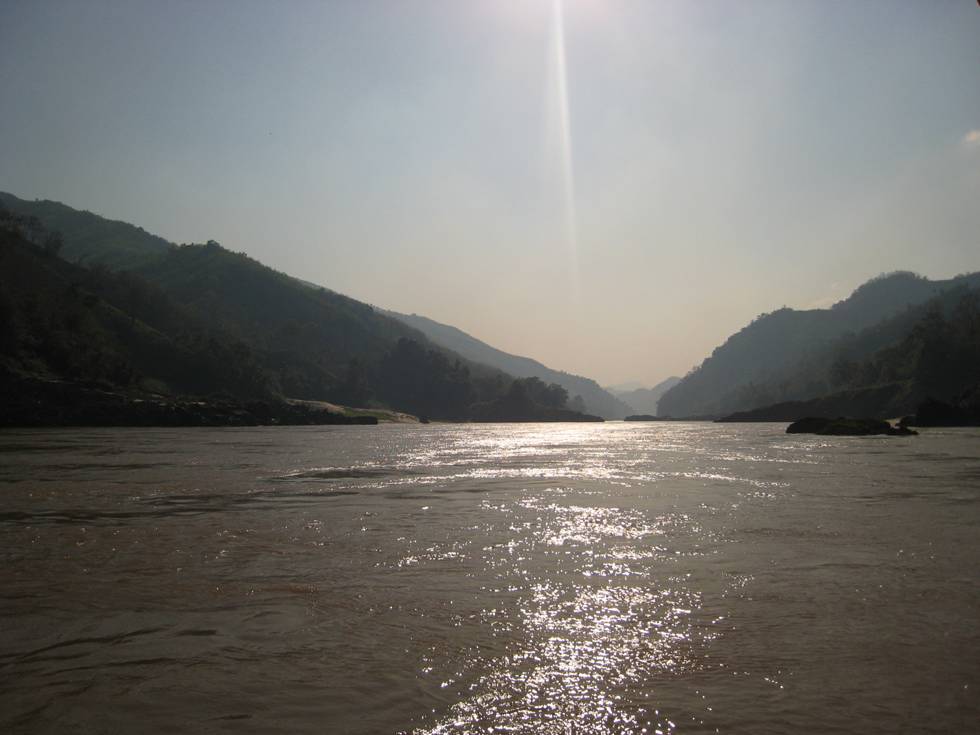
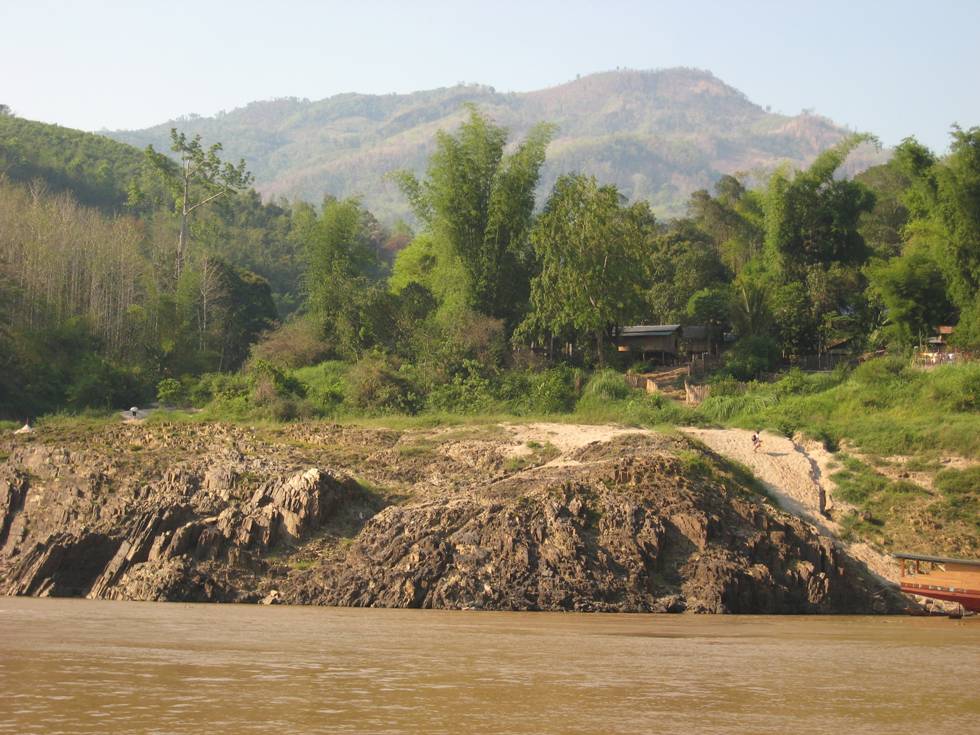
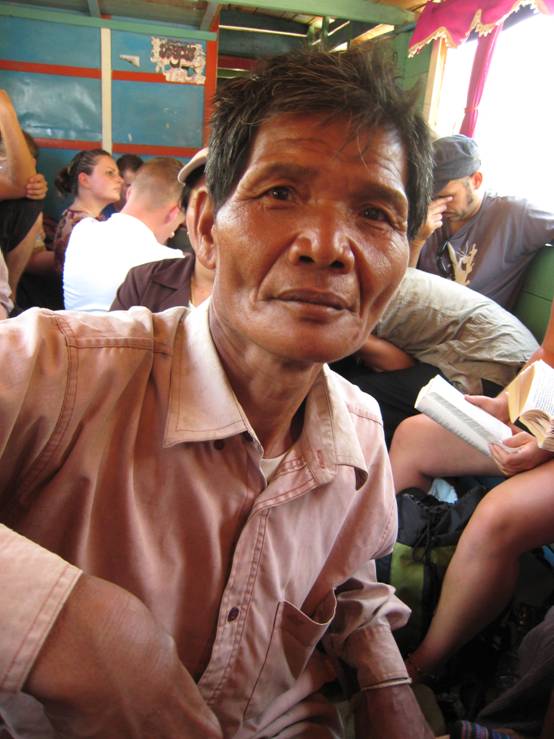
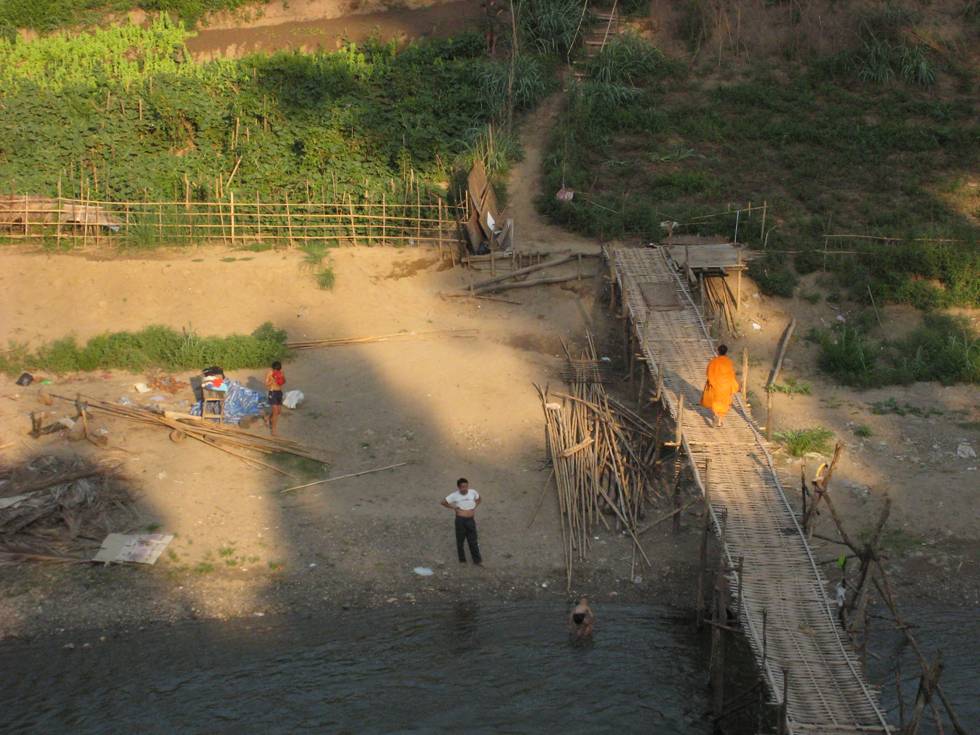
Mekong river boat. Two days on the slowboat down the Mekong river, all the way from the Thai border to Luang Prabang.


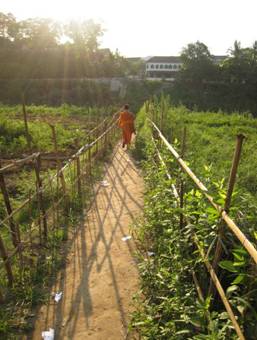
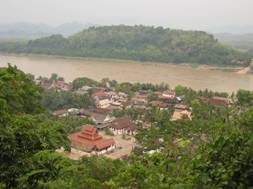


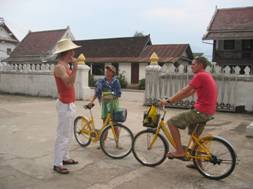
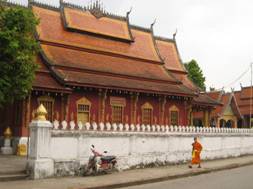

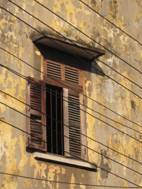
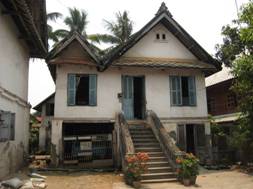


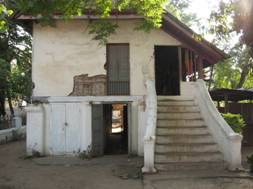


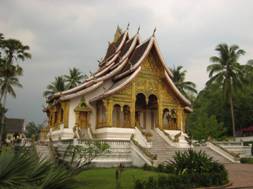
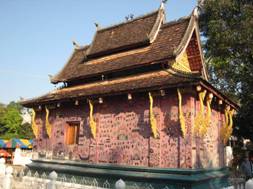

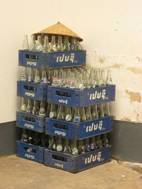
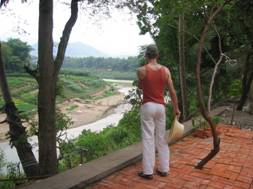


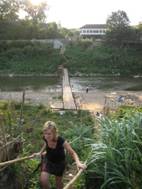
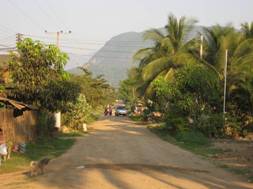
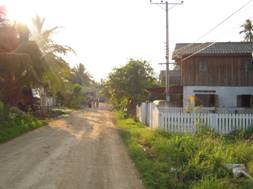

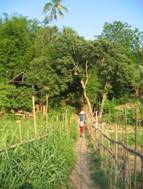


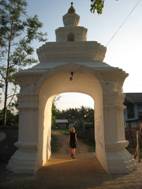

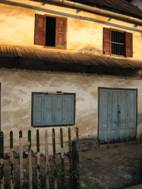


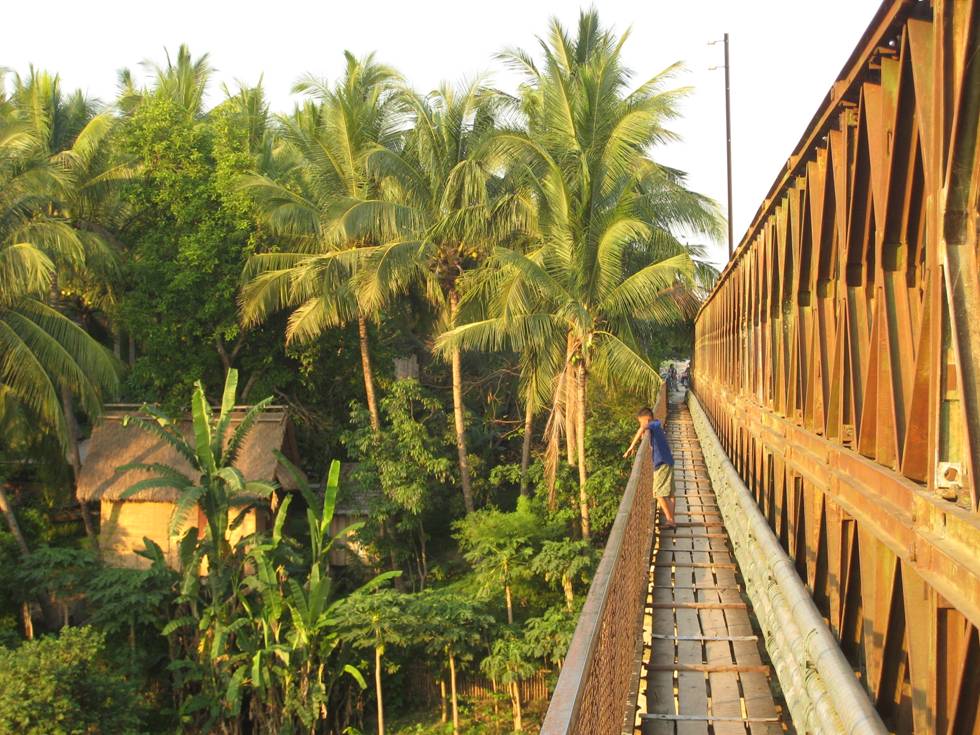
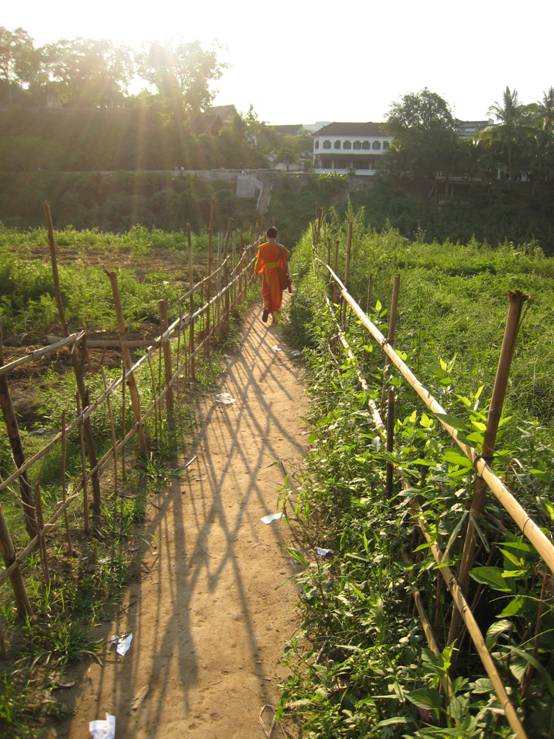
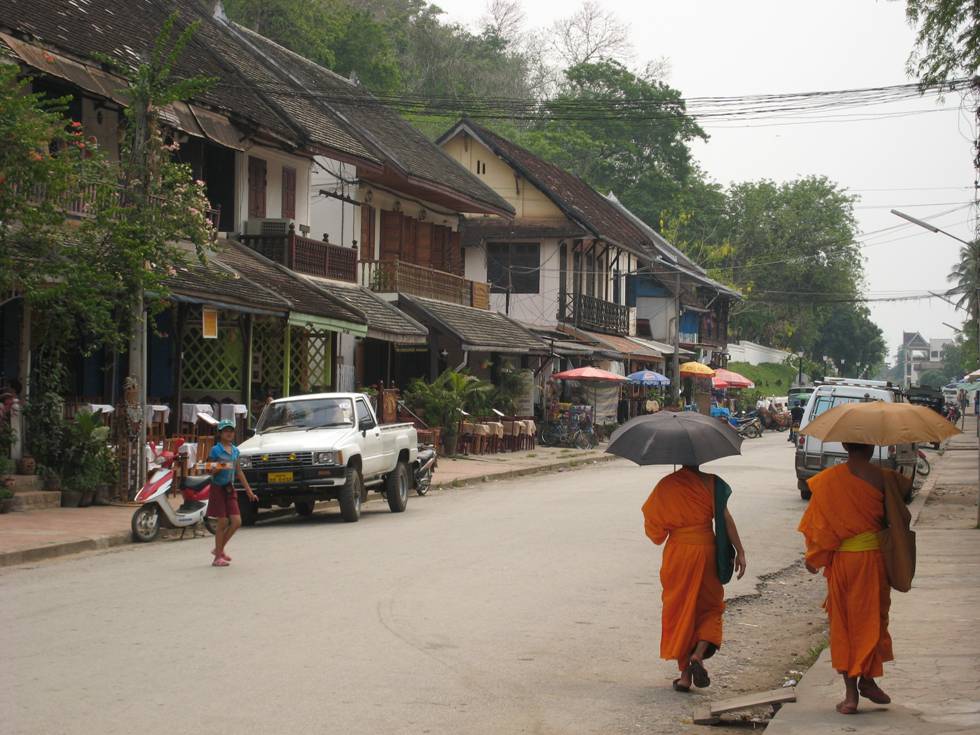
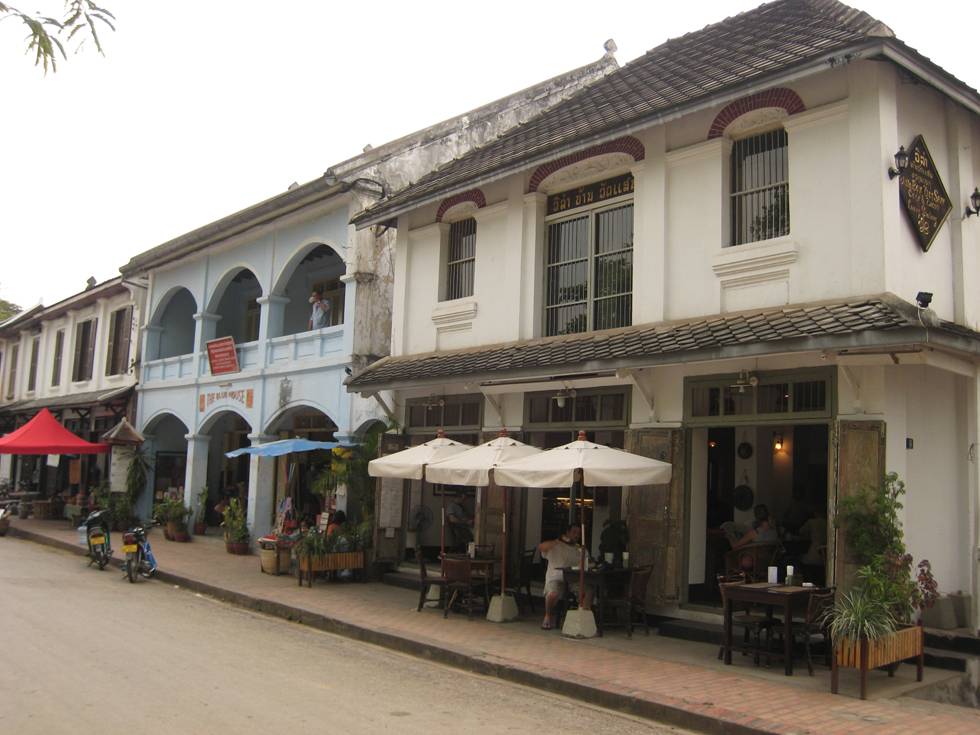
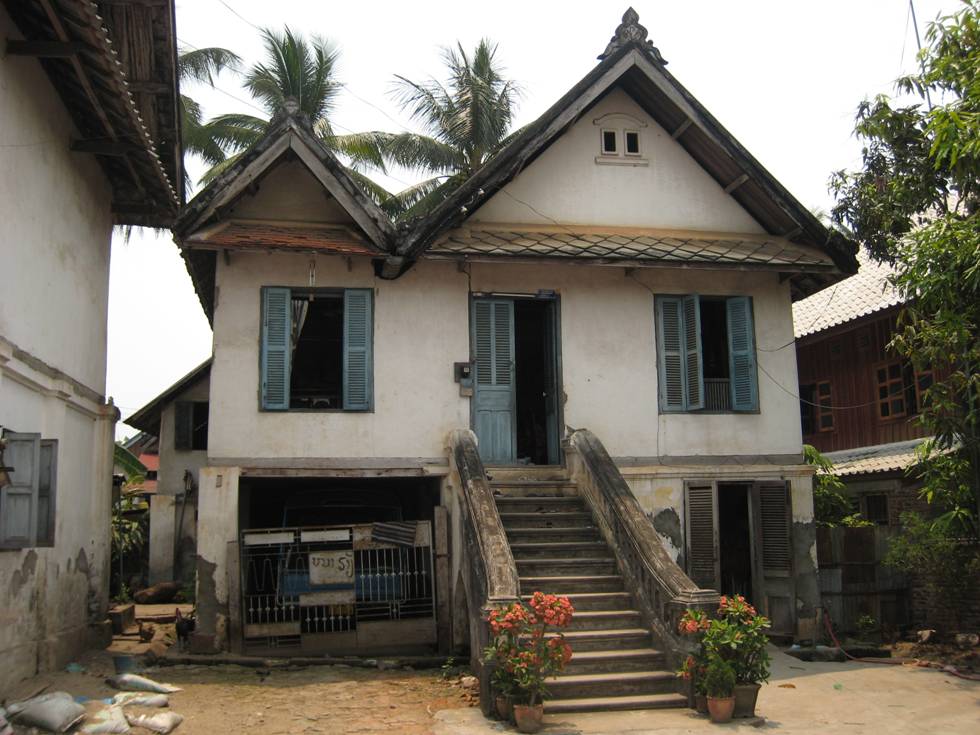
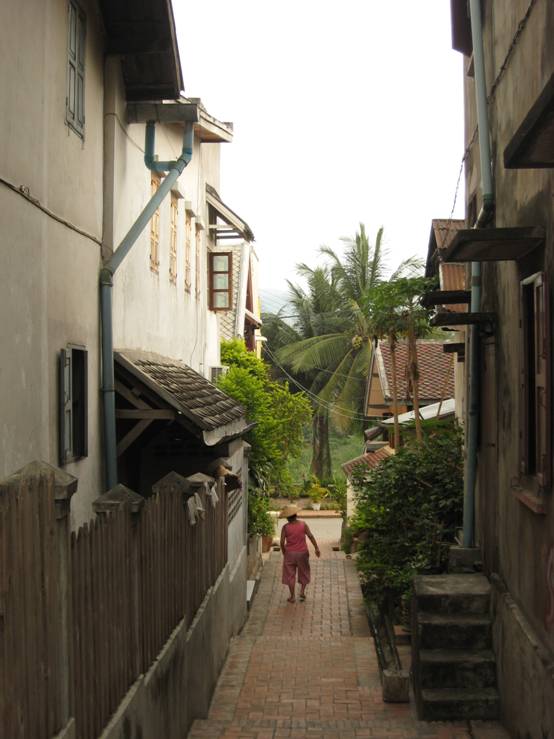
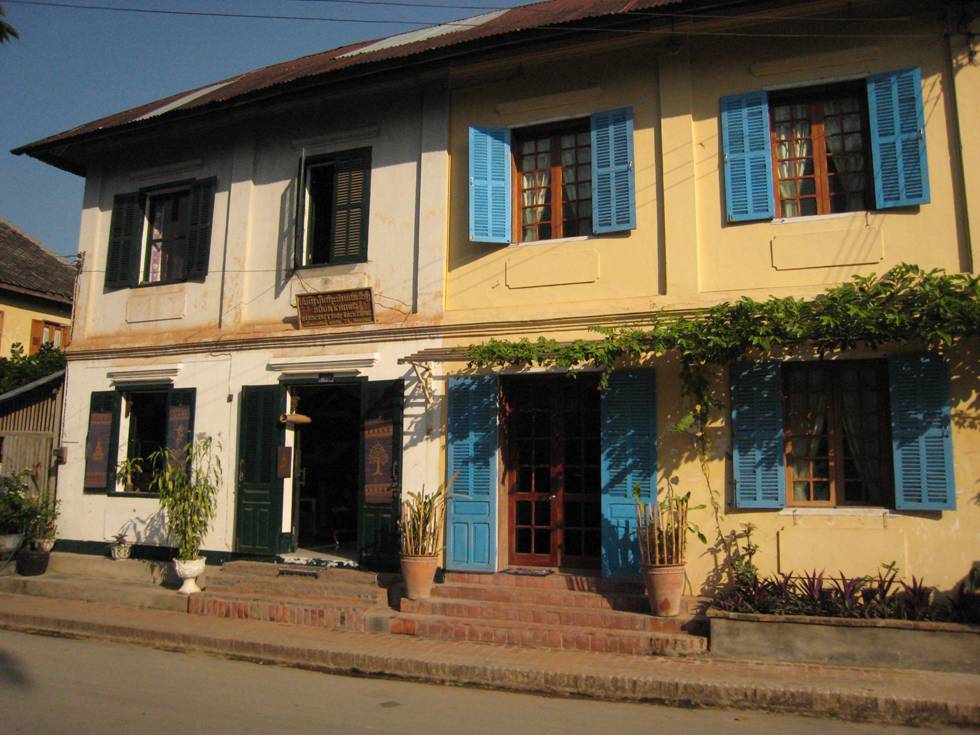
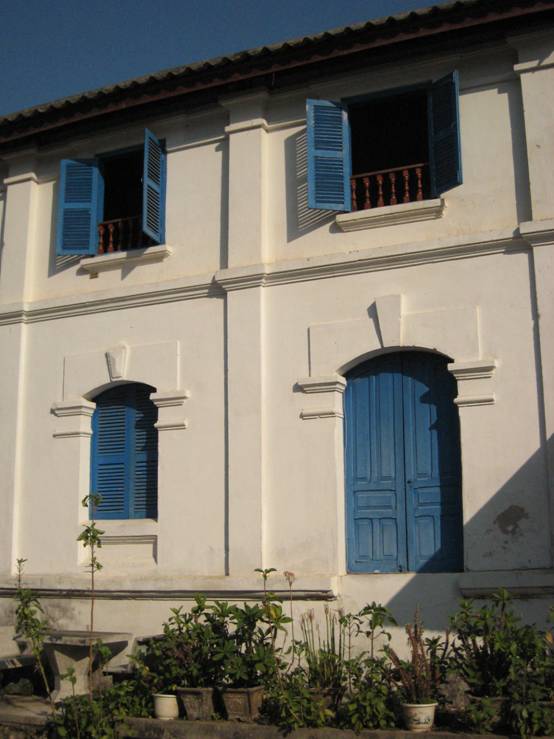
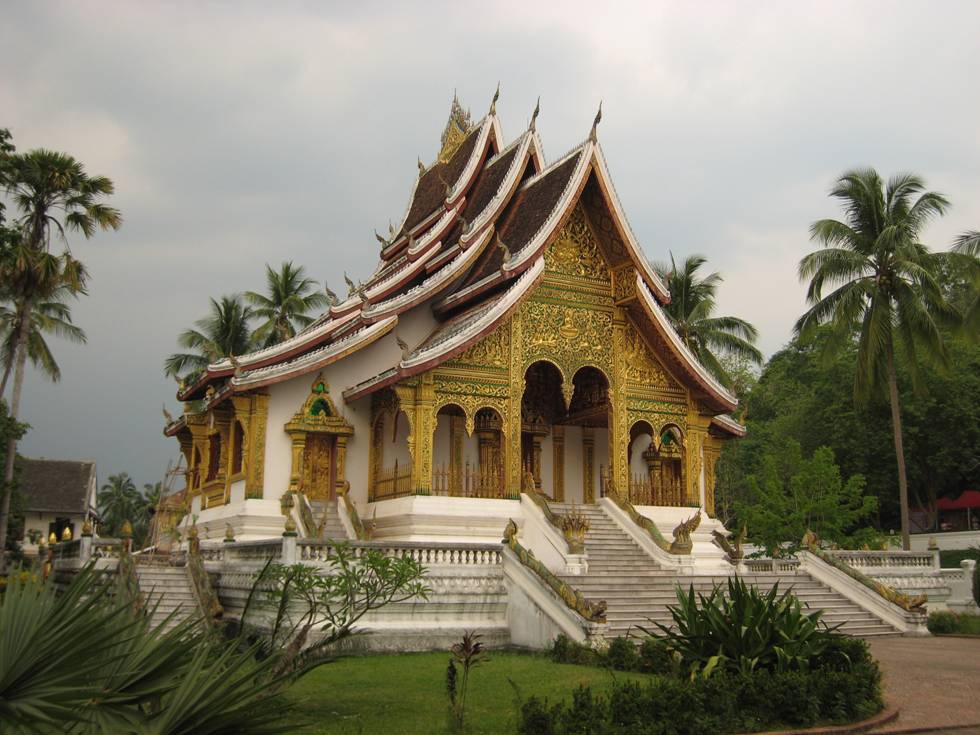
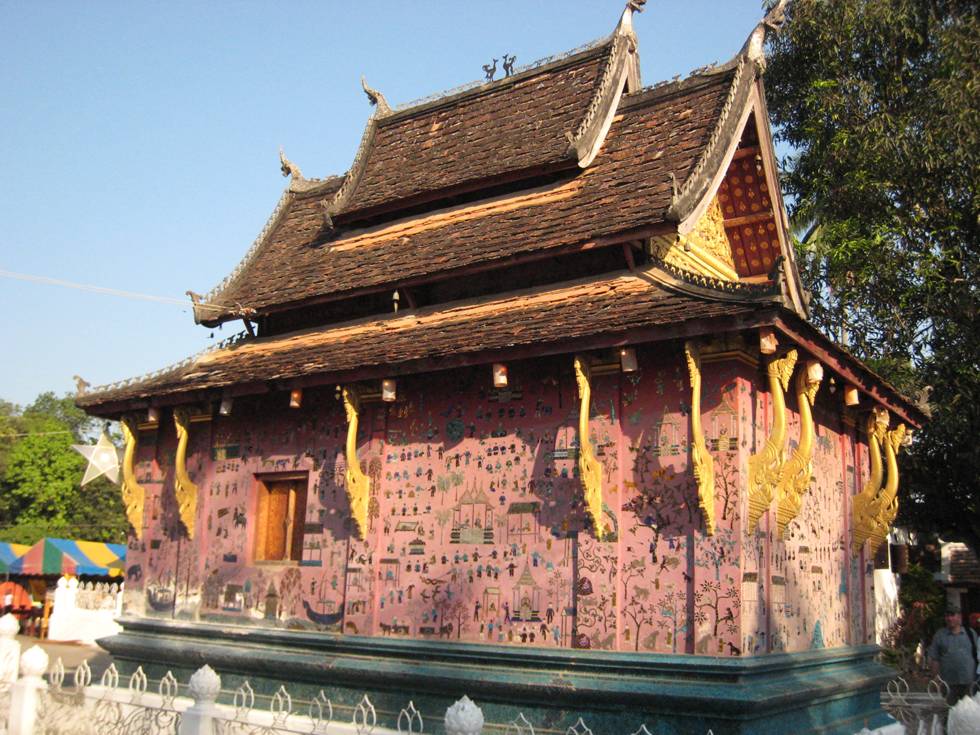
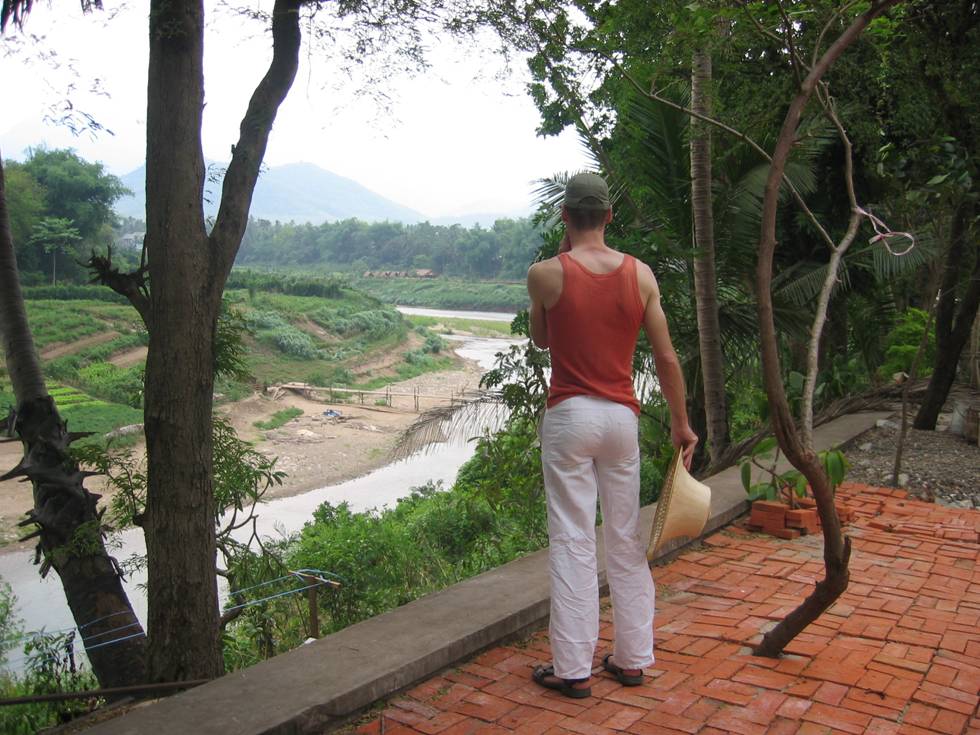
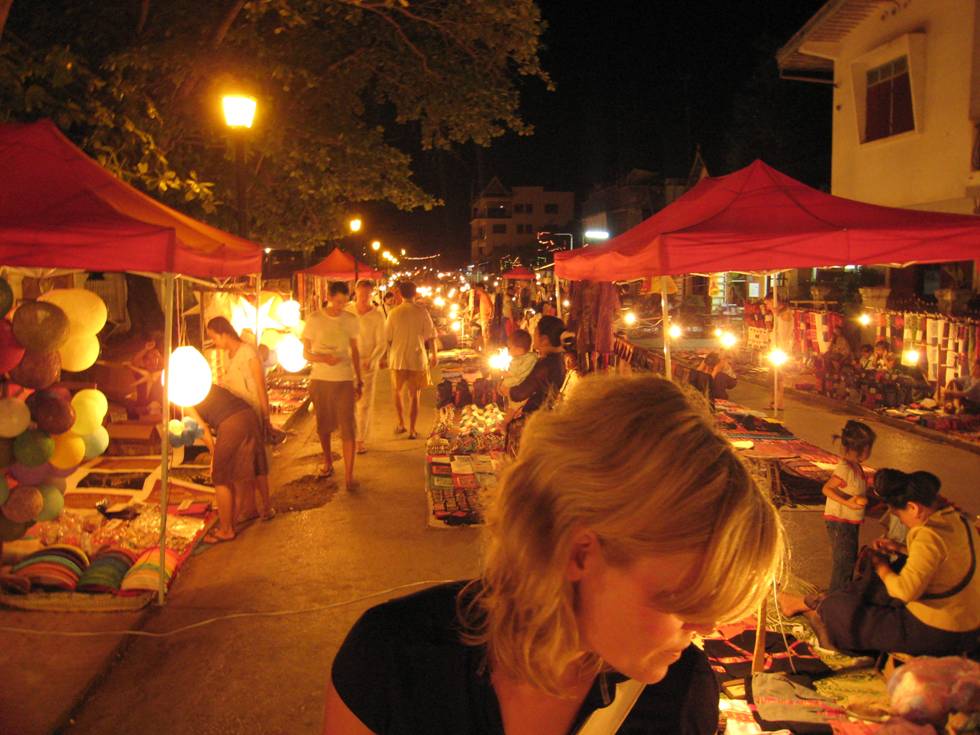
Luang Prabang. A lovely town on the Mekong river, with loads of colonial French architecture and a relaxed night market, deservedly a UNESCO World Heritage site.
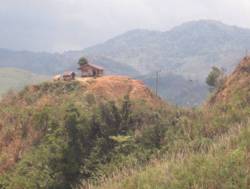

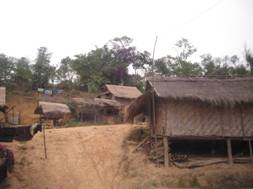


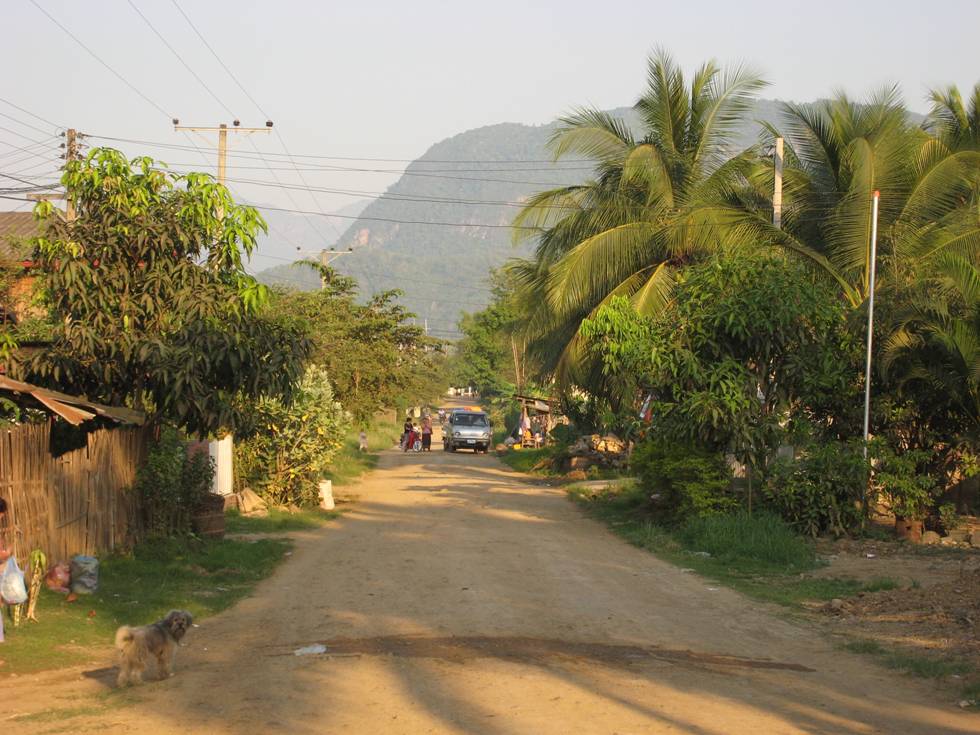
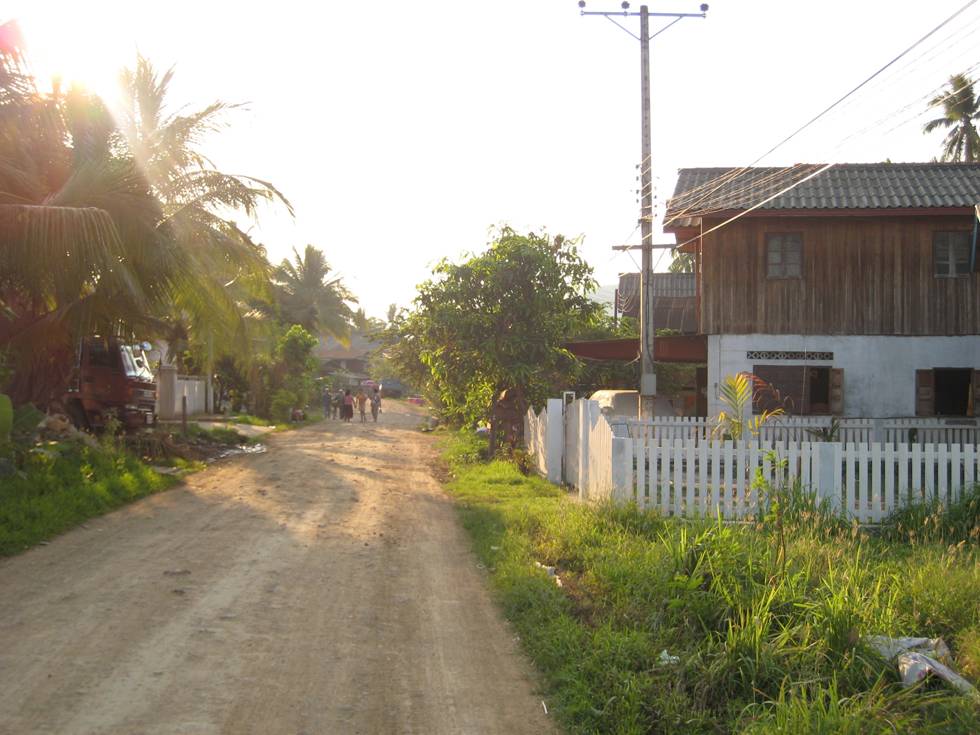
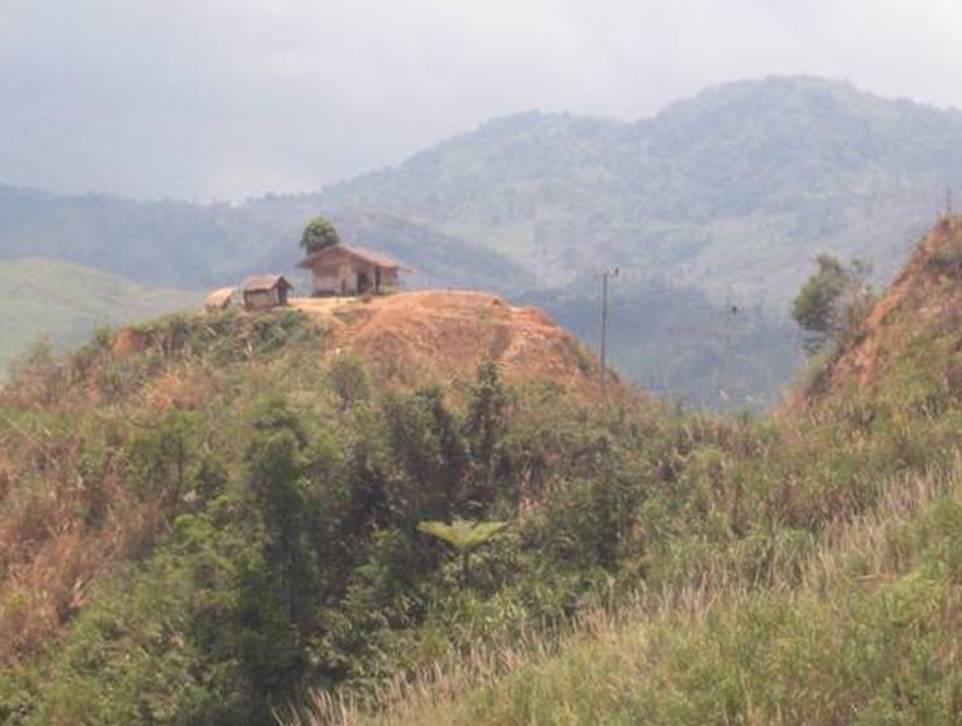
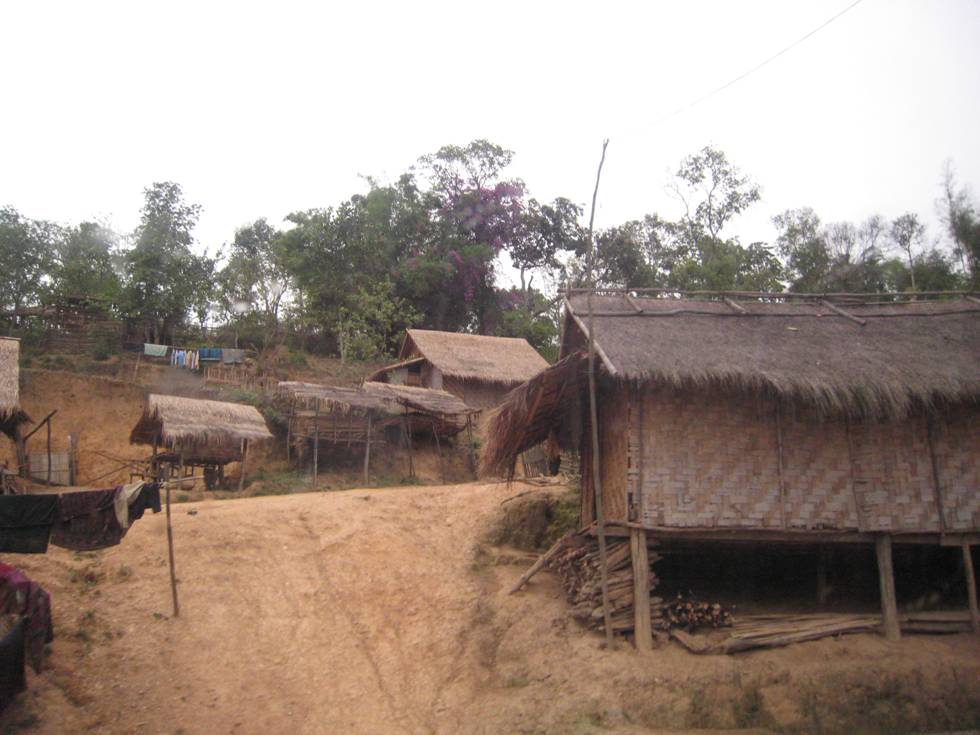
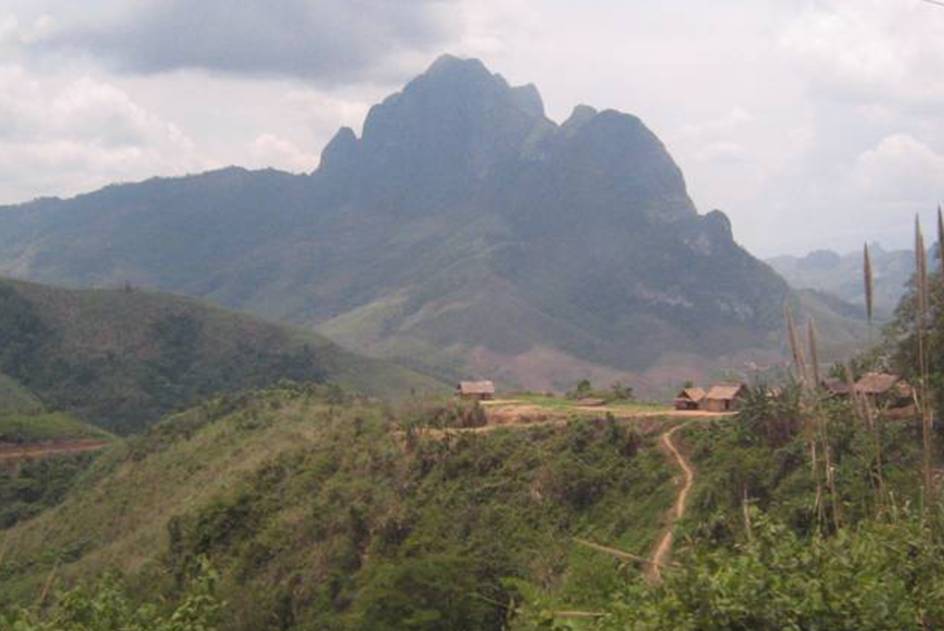
Lao countryside. The small winding road in the Lao mountains makes two hundred kilometers take about 7 hours and a flat tire, but the view is amazing, the country is very sparsely populated with just a few villages of mainly bamboo huts. I should have biked this road.


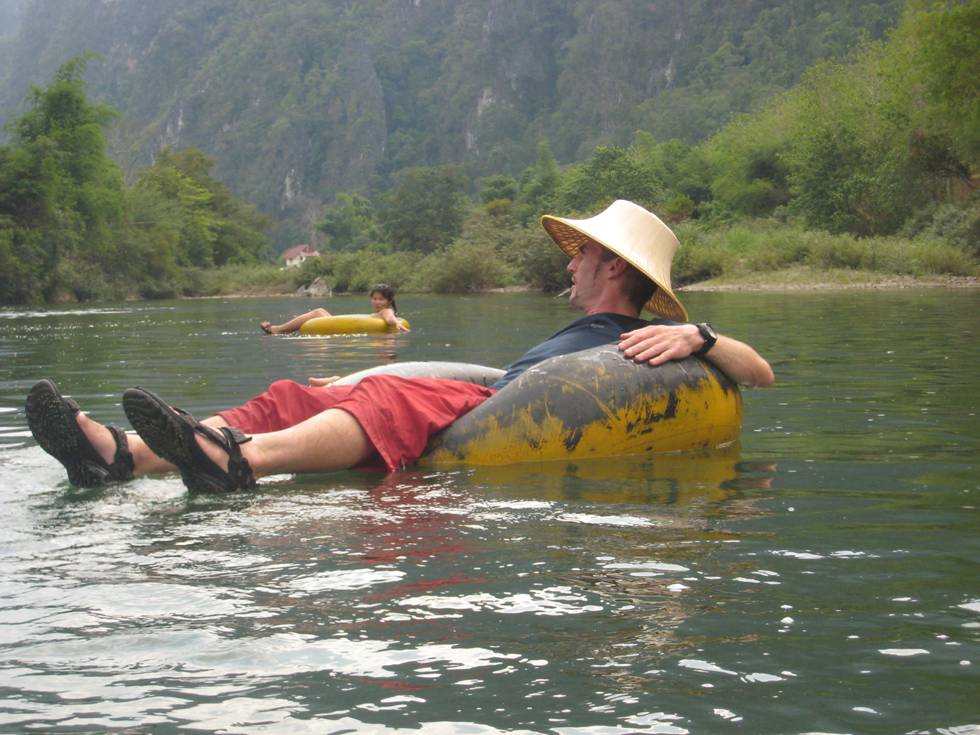
Vang Vieng. A village amidst limestone mountains, were backpackers tube the river from bar to bar, and the pizzeria has an unbelievable side menu...

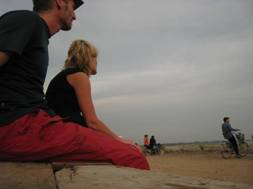


Vientiane. Time to say goodbye, snif. My holiday with Kirsten went way too fast and ends here in Vientiane, from where she'll fly home, and I'll fly to Kunming in China for the last two lonely months...
April 23: Pakbeng; 24-26: Luang Prabang: 27: Vang Vieng; 28-30: Vientiane
May 1: Vientiane

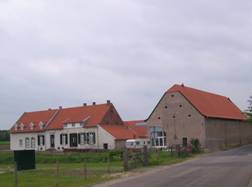
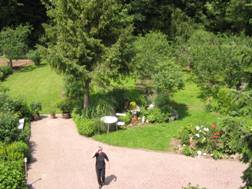


Retour Netherlands. As soon as I arrived in Kunming, I had to go home for family problems, and spent the whole month of May in the Netherlands. Please don't ask for details.

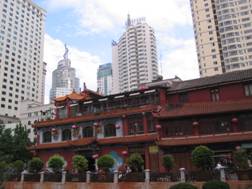
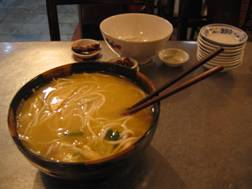
Kunming. A pleasant city in the mountains in the South West, but nothing special.


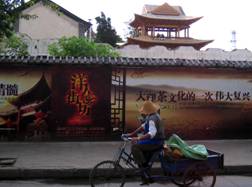


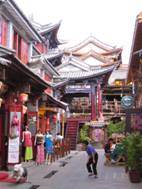

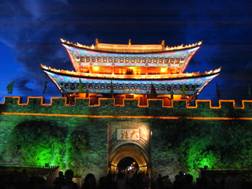
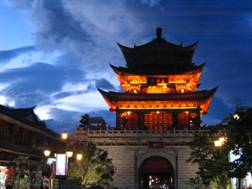

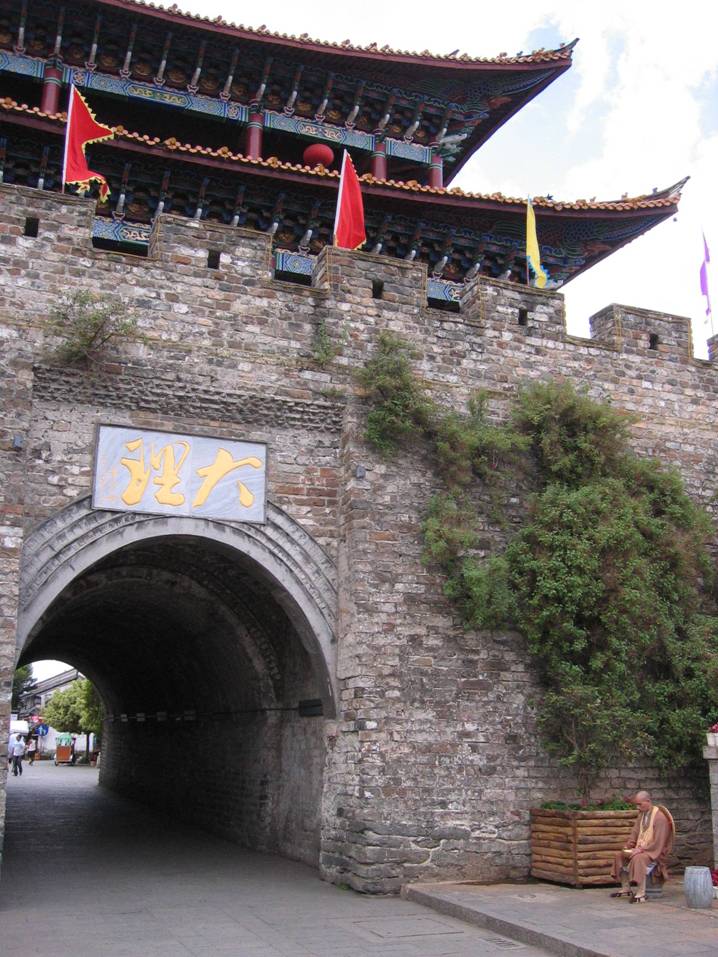
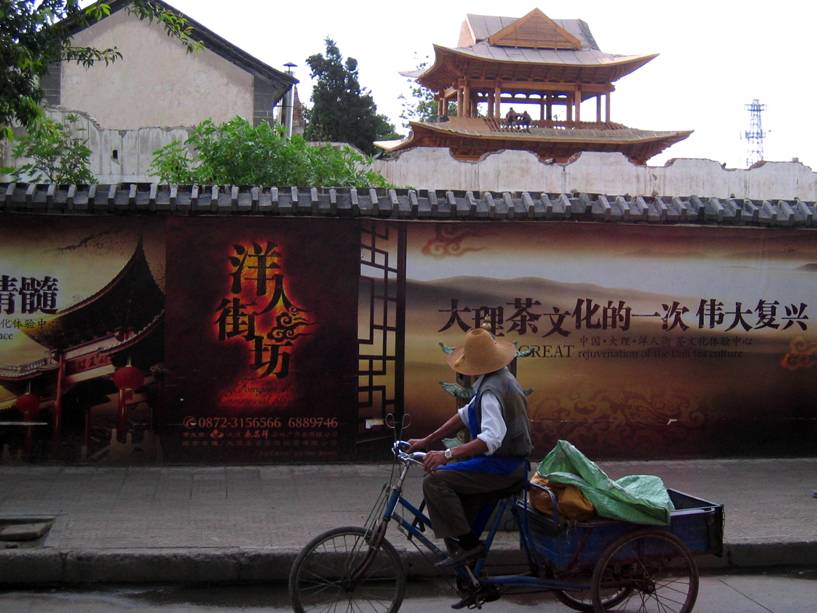
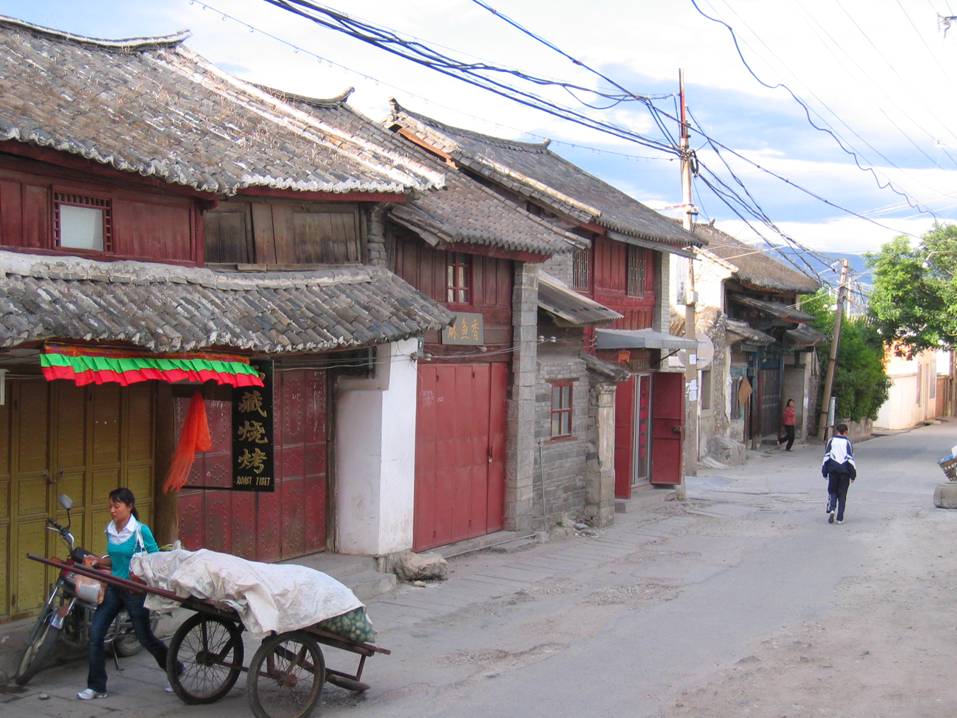
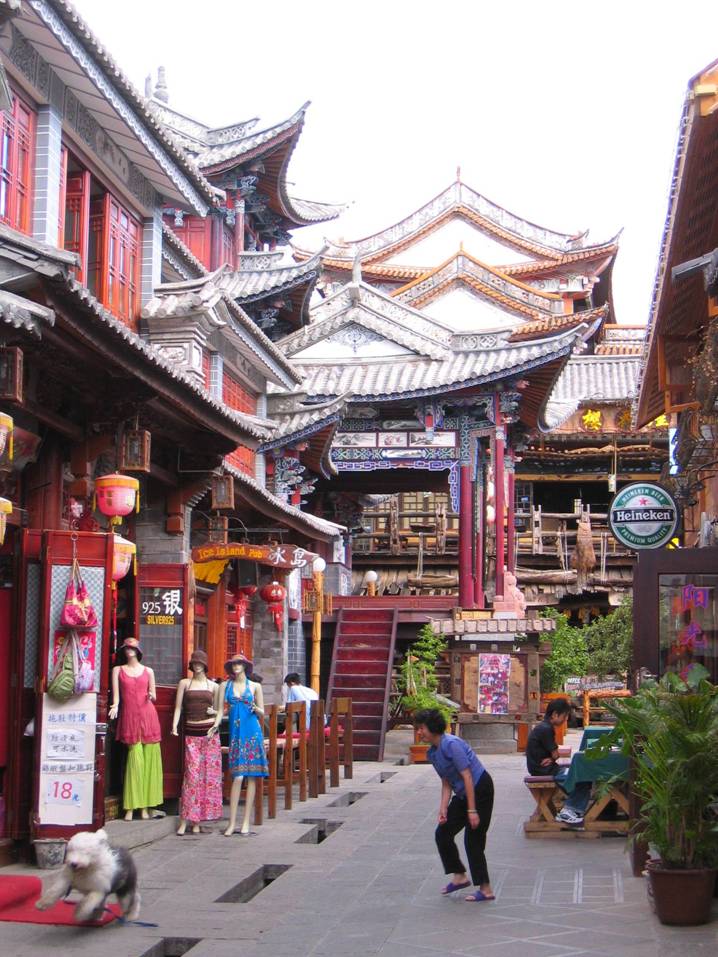
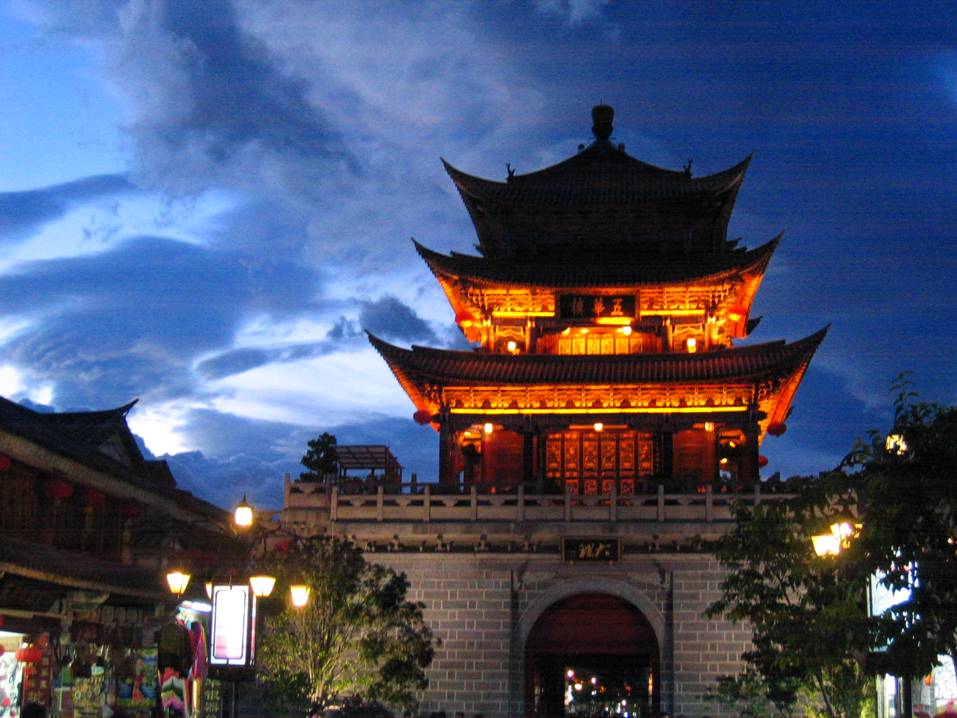
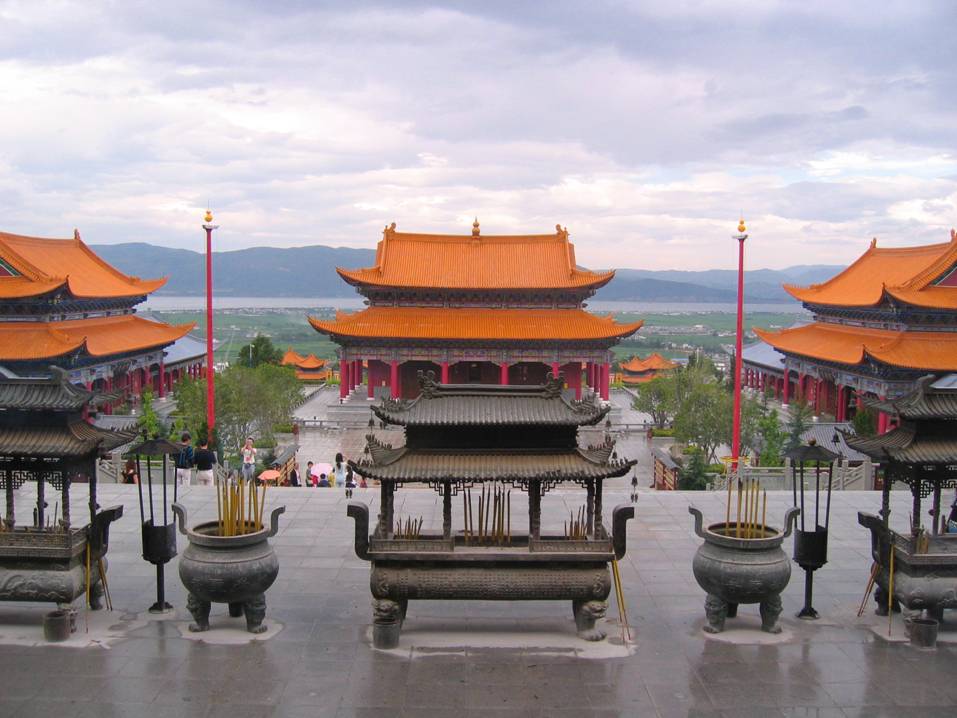
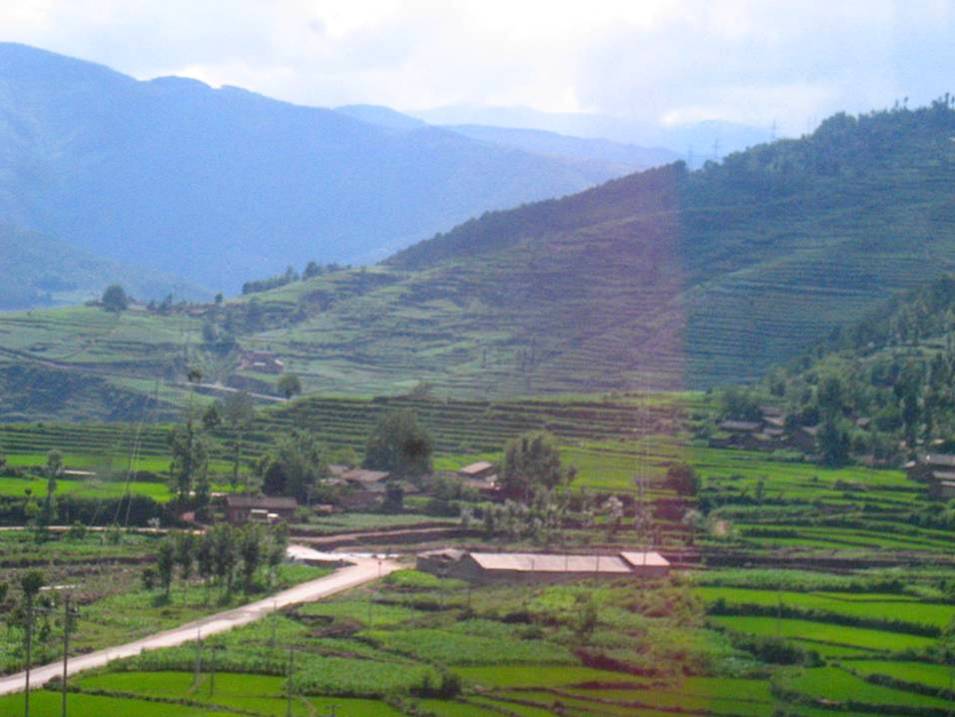
Dali. China like in the old days, but very touristy and rebuilt as new.


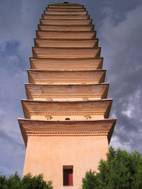

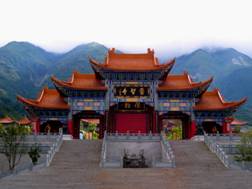

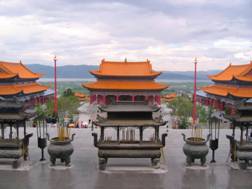


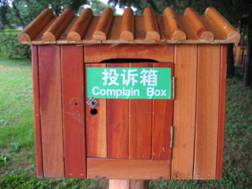

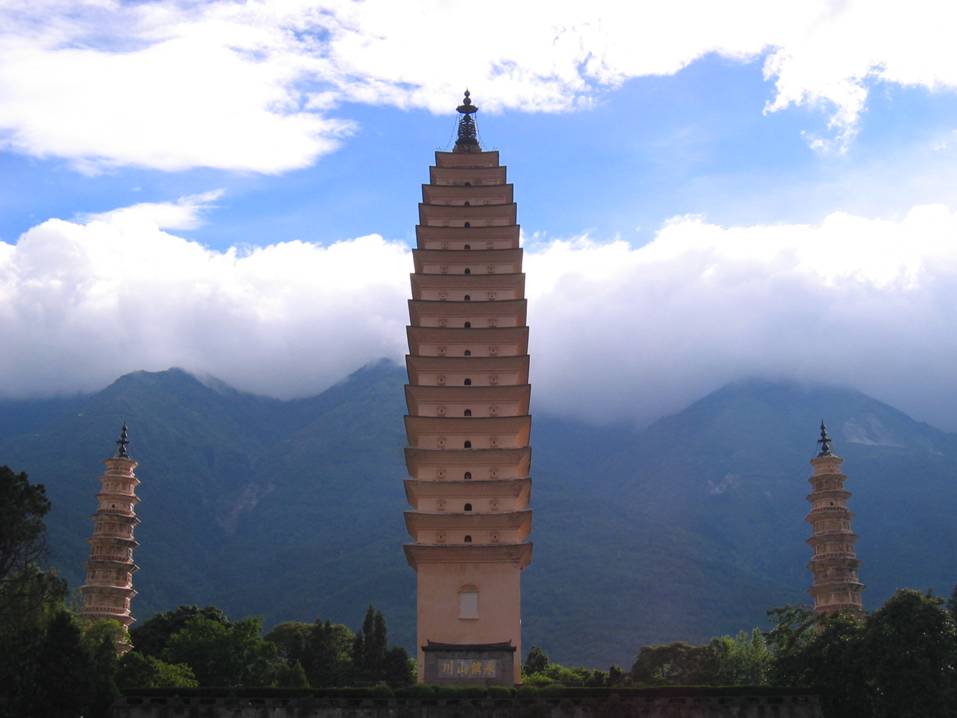
Three pagode temple near Dali.
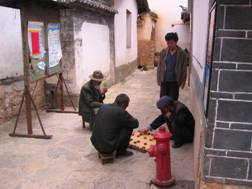
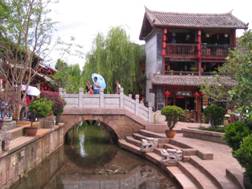
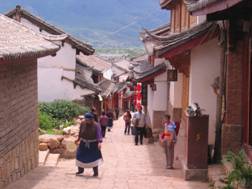

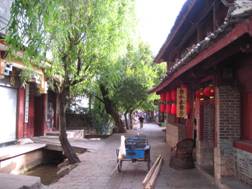

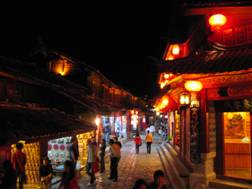

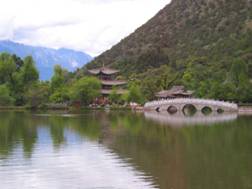
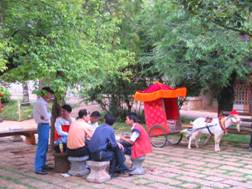
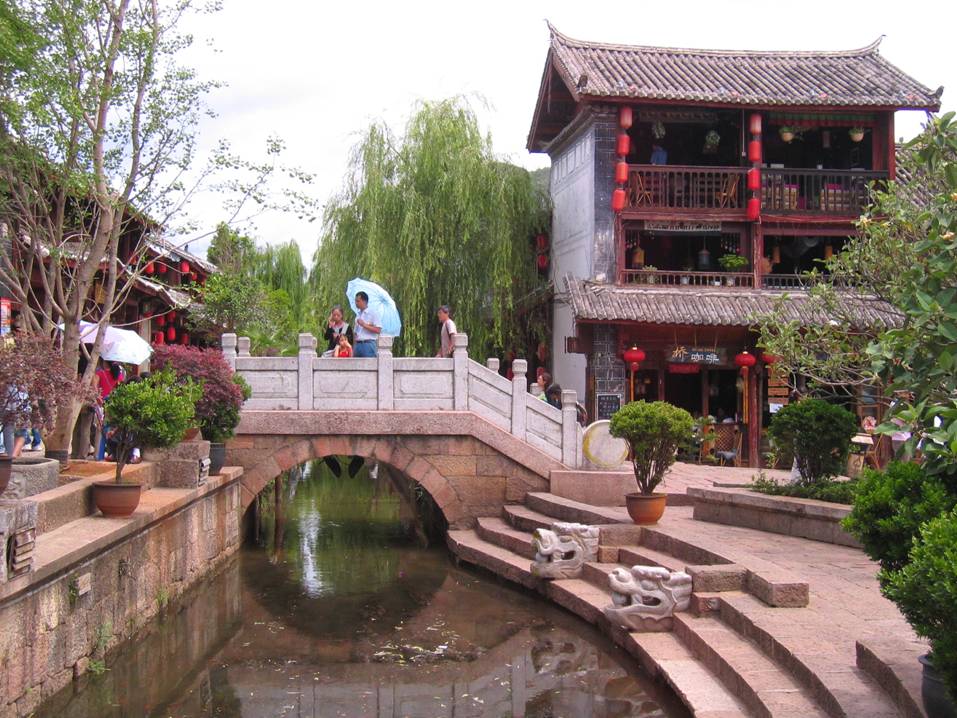
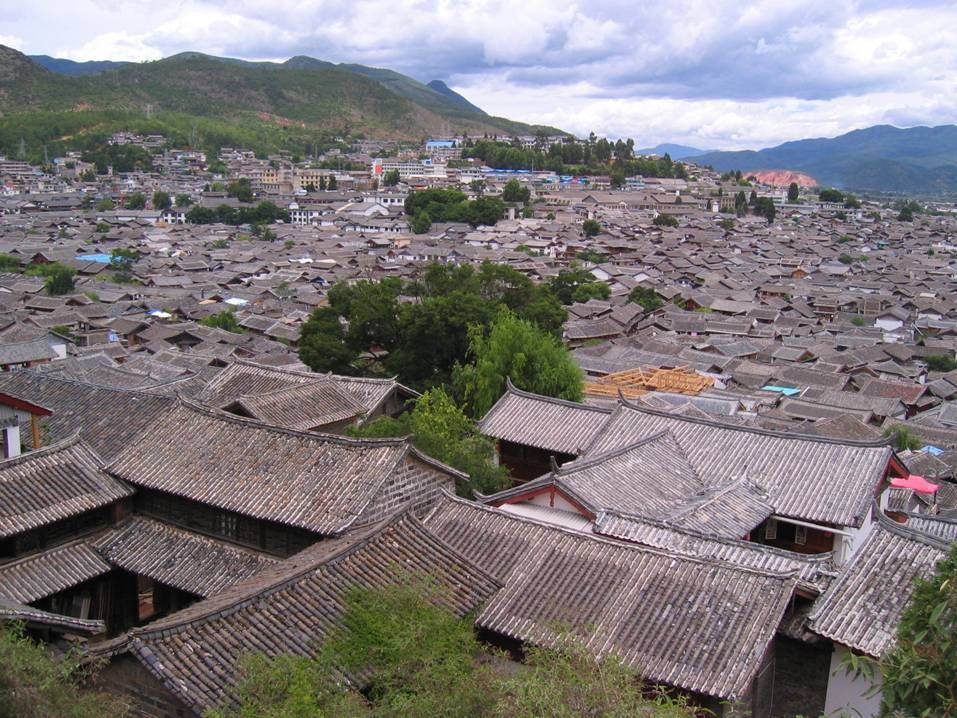
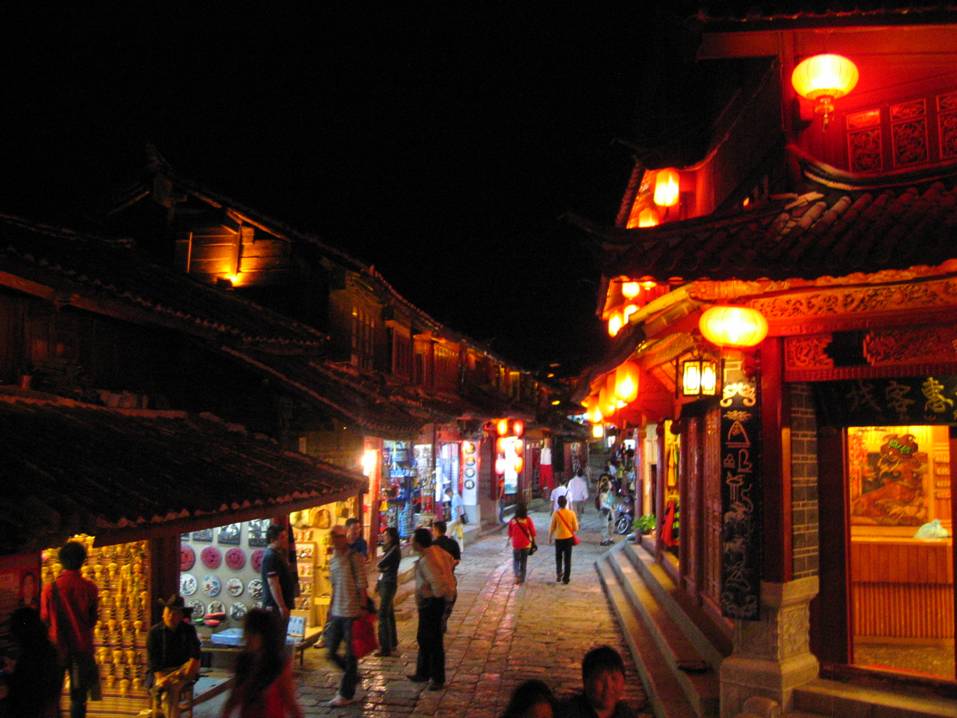
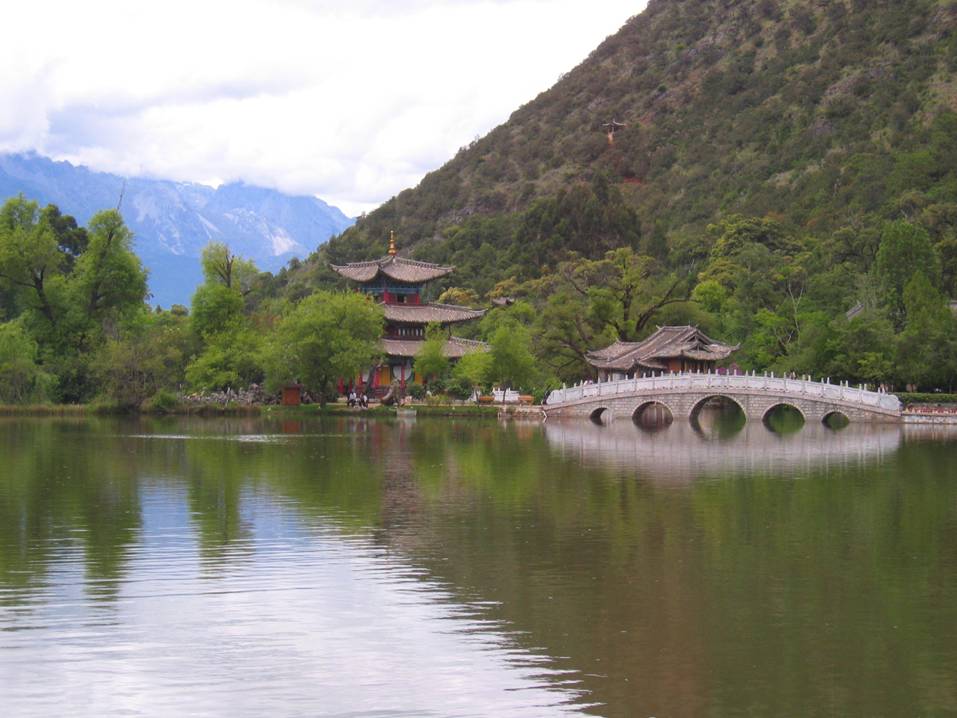
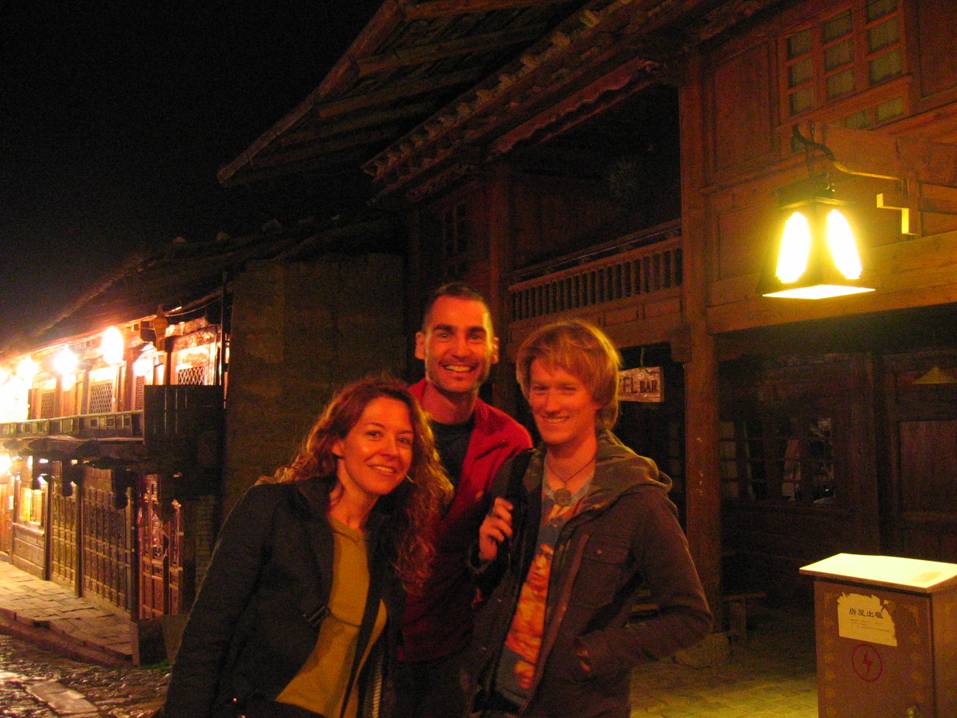
Lijang. Another old Chinese town, nice and touristy.
This region of the Yunnan province is home to the Naxi people, who are the last people on earth to have (had) a maternal society, very interesting.
Women have no husband but only a boy-friend, who comes around at night and leaves again in the morning to live and work with his mother's family. He is not responsible for his own kids, instead they are supported by their uncles and the rest of the mother's family.
If a word is made female, it expresses something greater; if a word is made male, it expresses something lesser.
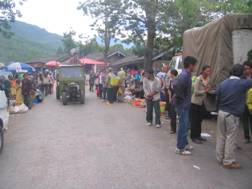
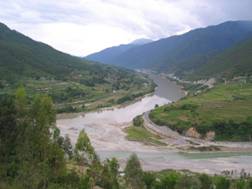


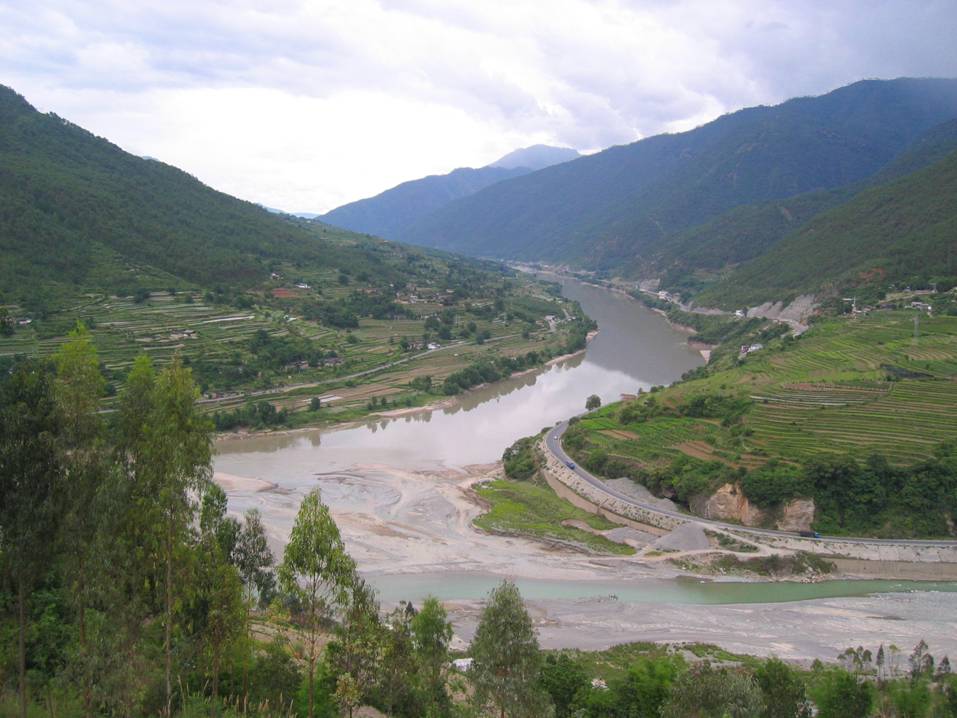
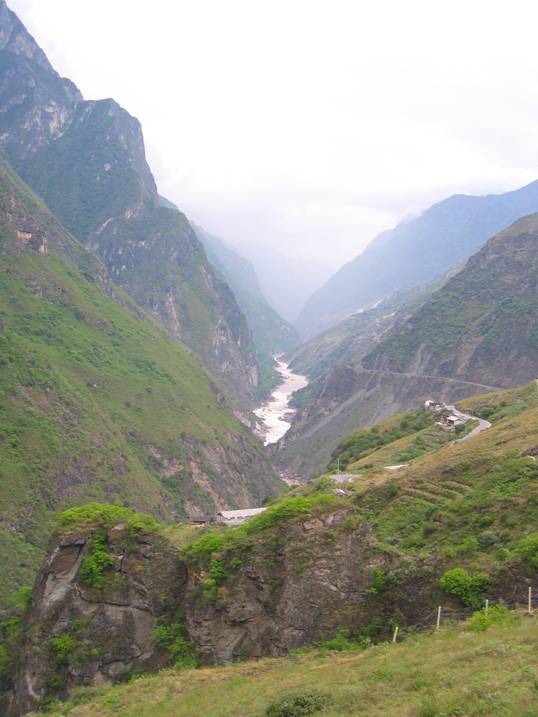
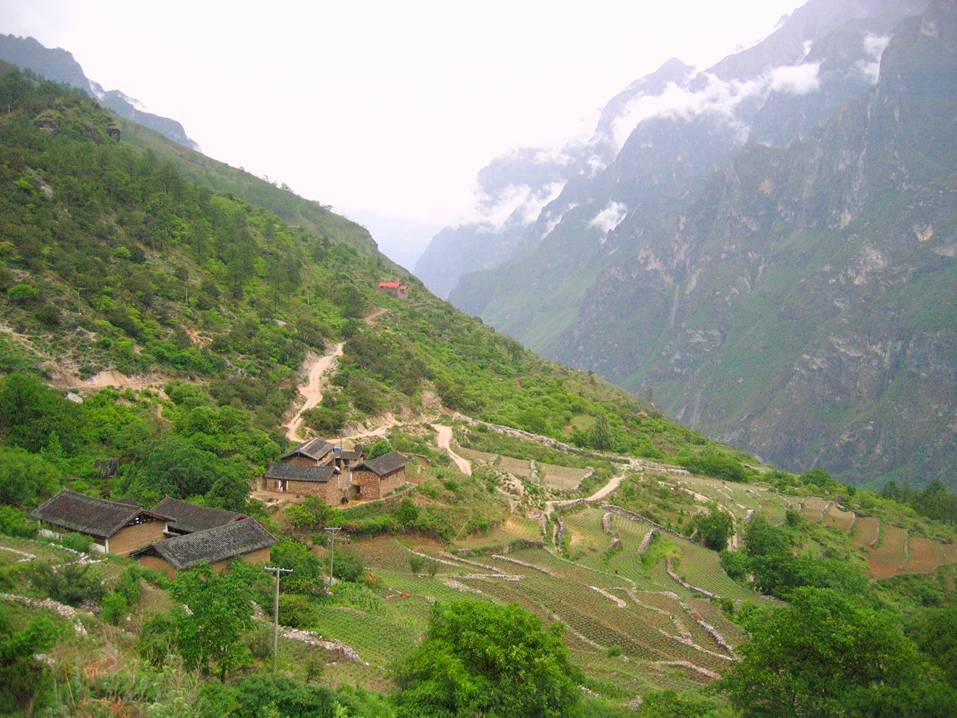
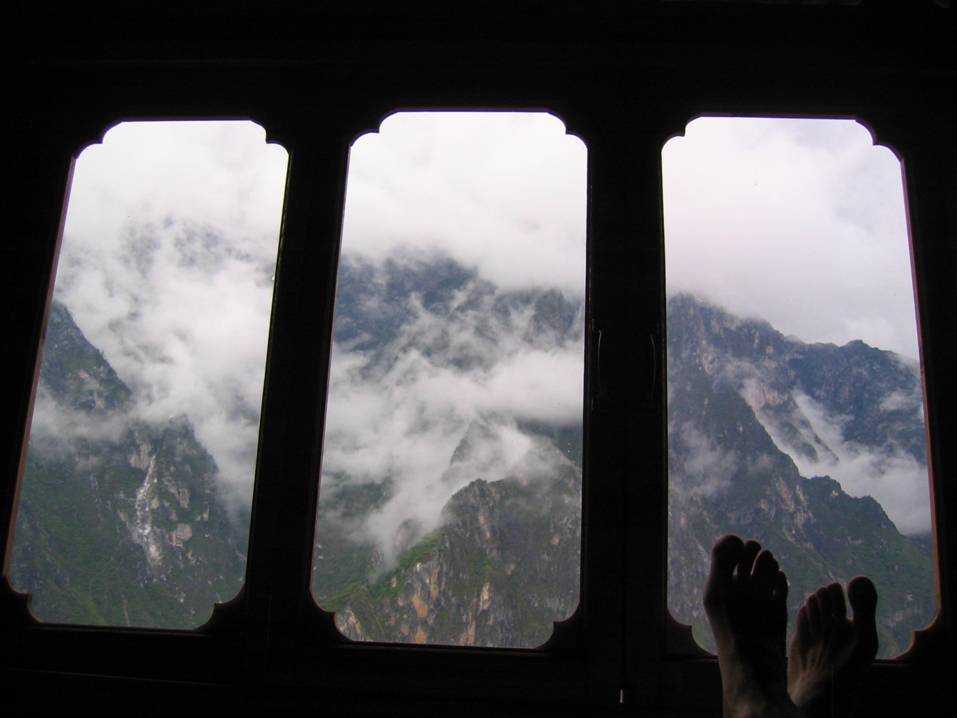
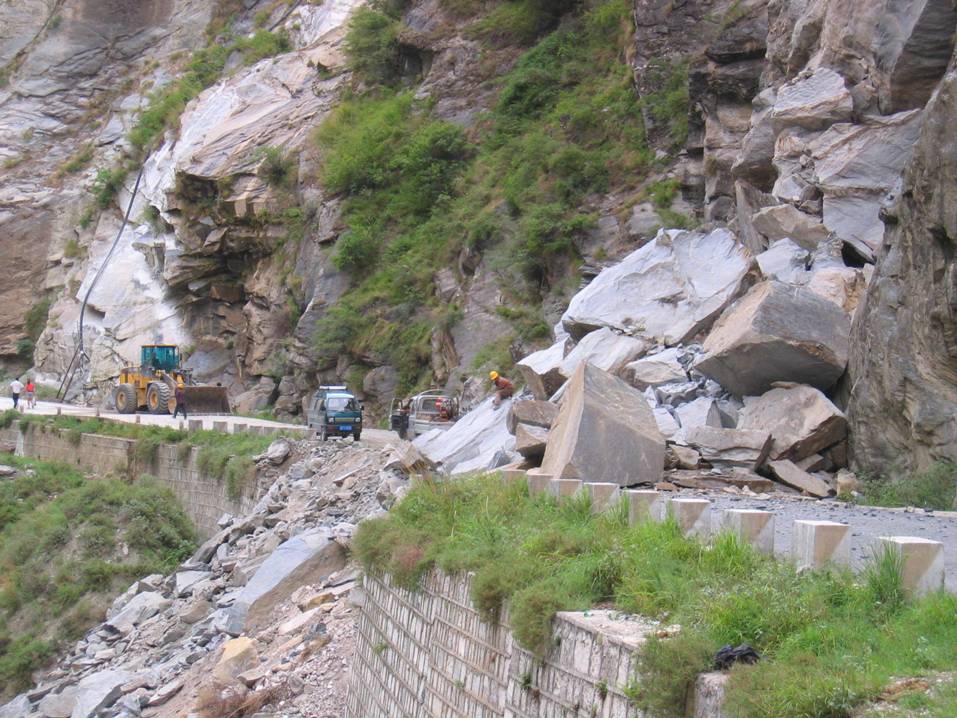
Tiger Leaping Gorge. Not as impressive as the Chinese boast, but still a very nice walk.

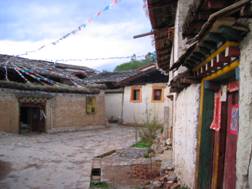
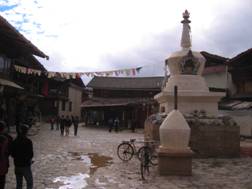


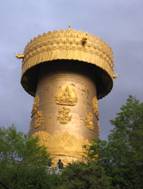


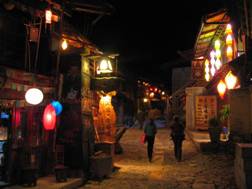
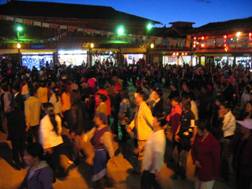

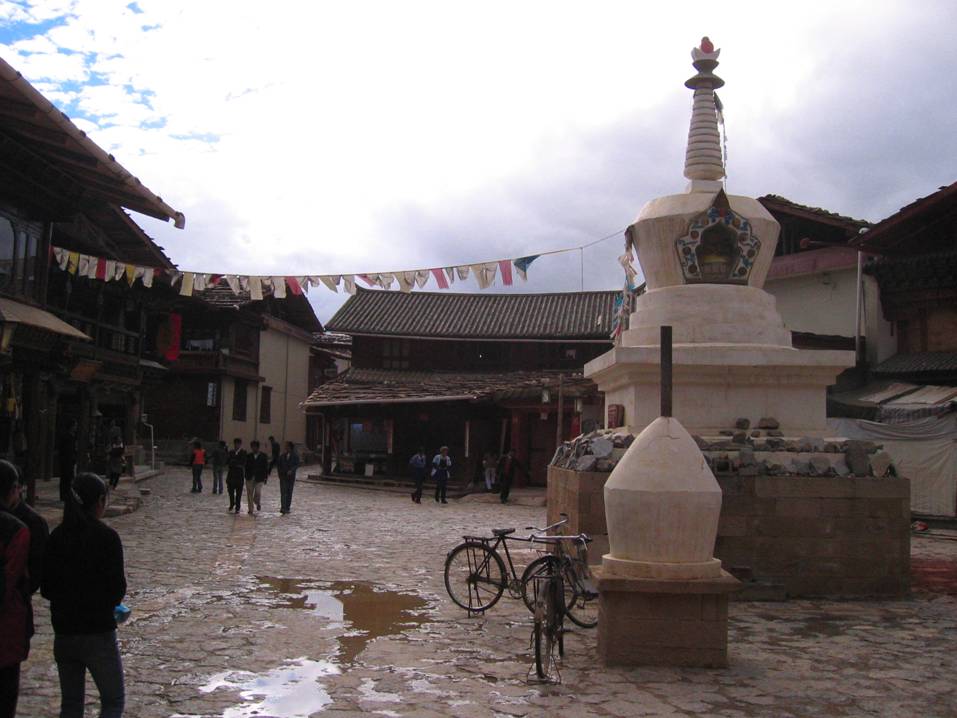
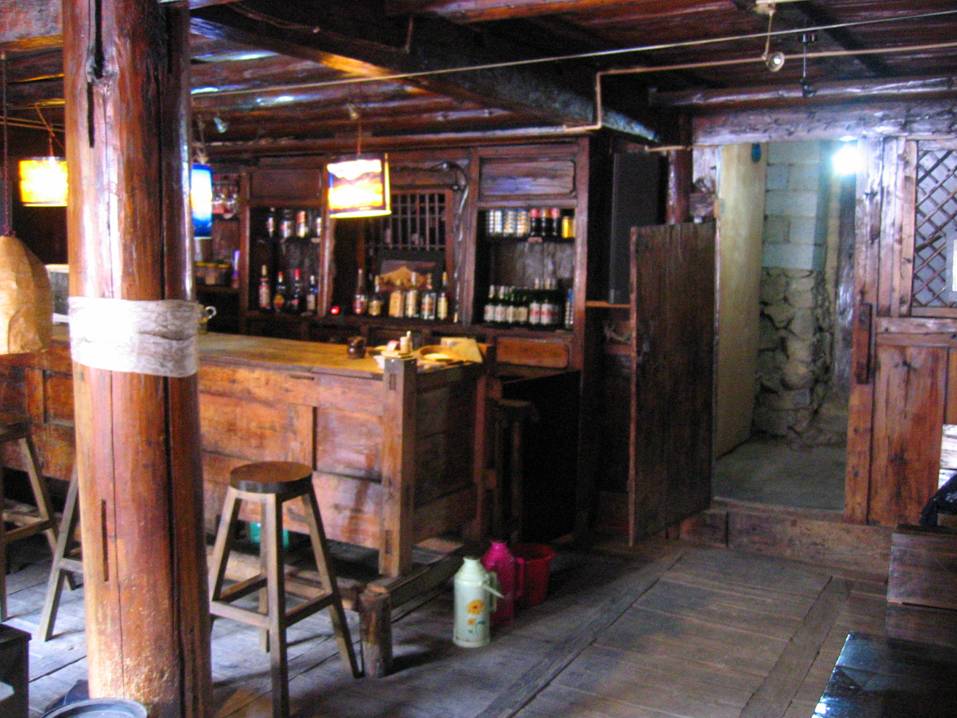
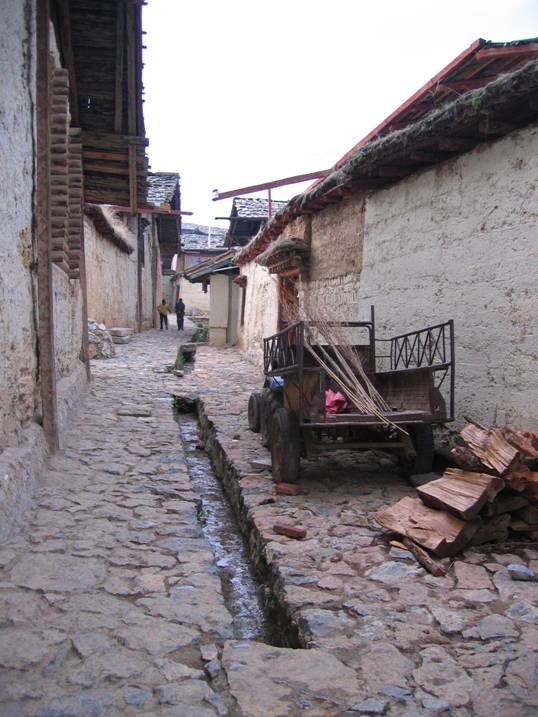
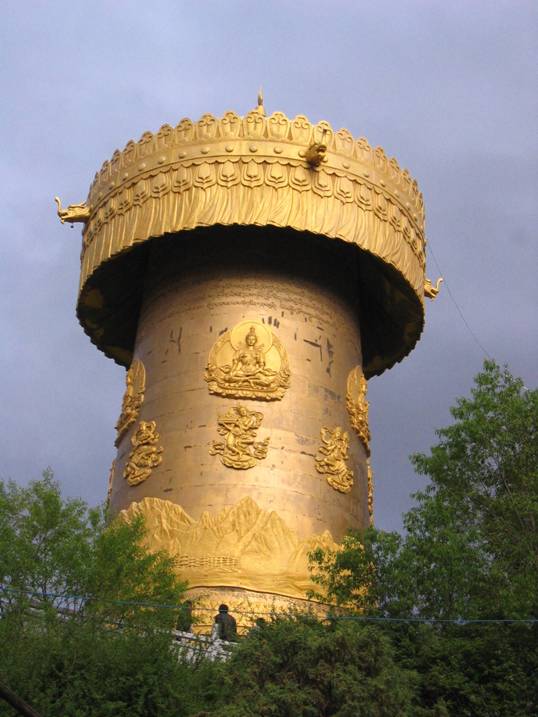
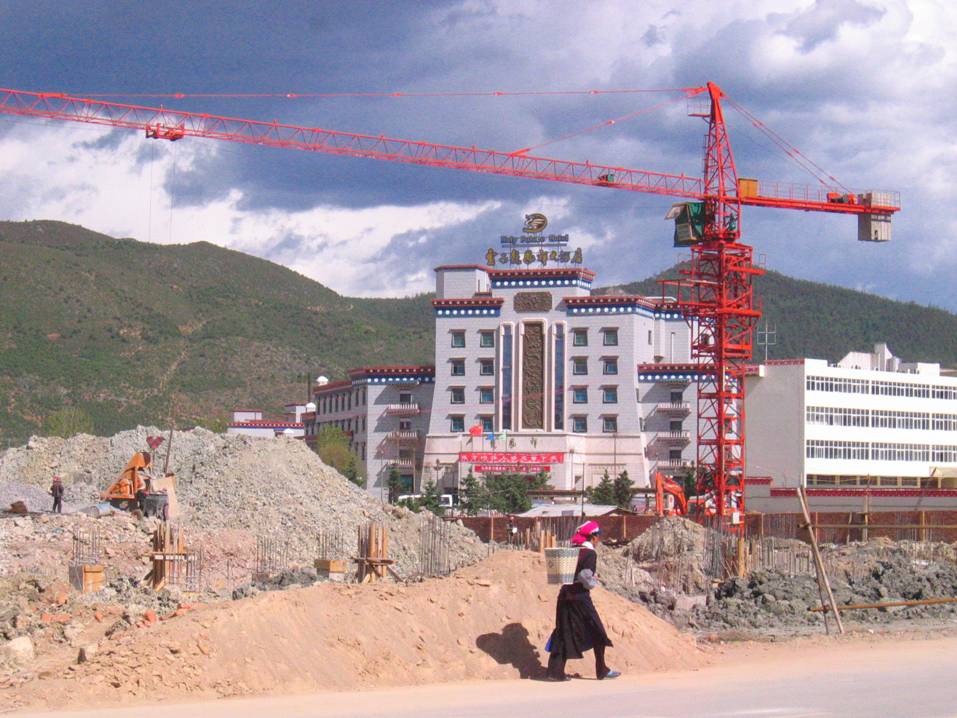
Shangri-La. A city on the border of Tibet. A few years ago it was called Zongdian, but to express its beauty and especially to attract more tourists, the Chinese converted its name into Shangri-La.
In the movie below you can hear how the Tibetans have modernised their traditional dancing with an up-beat base...
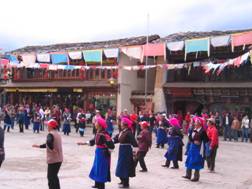
3.7 MB MOVIE: china shangrila dancing.avi
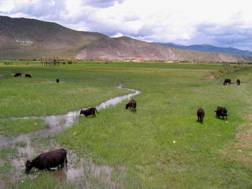

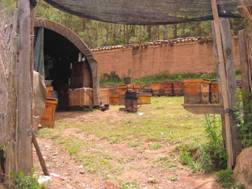

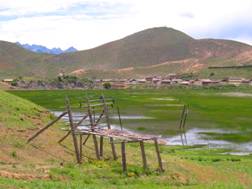
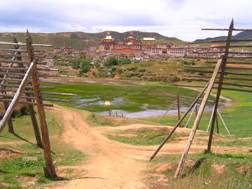
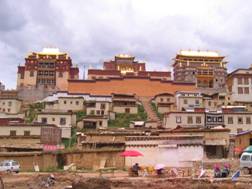


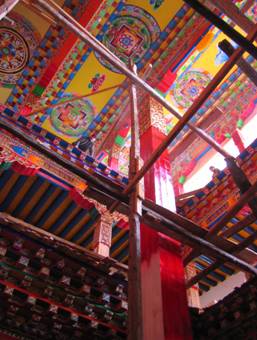

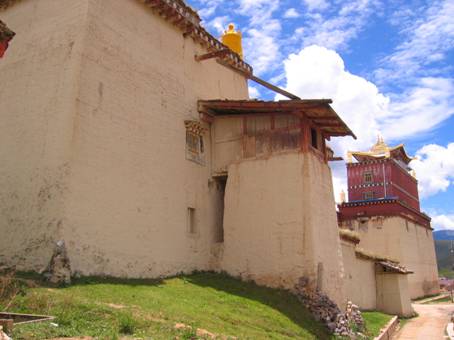

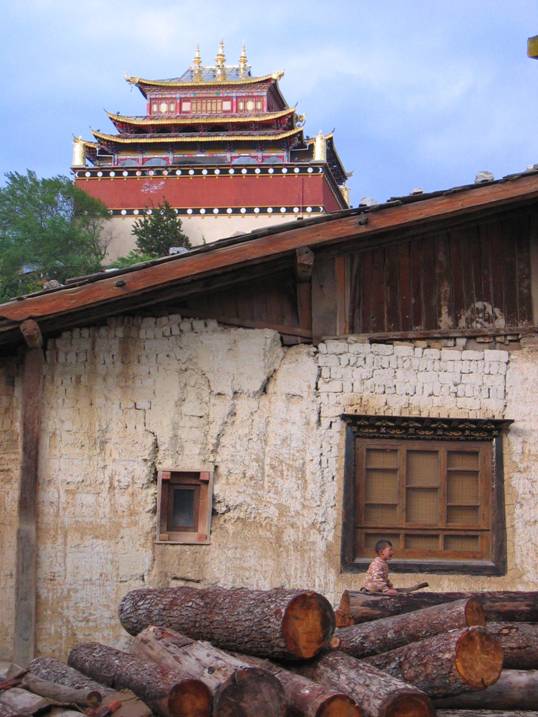
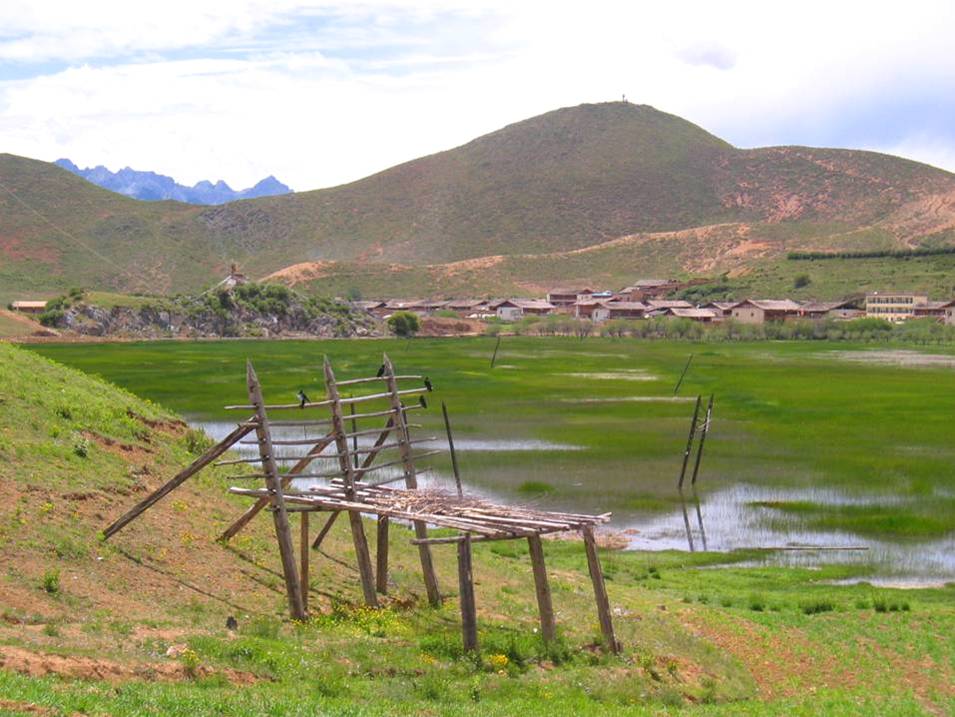
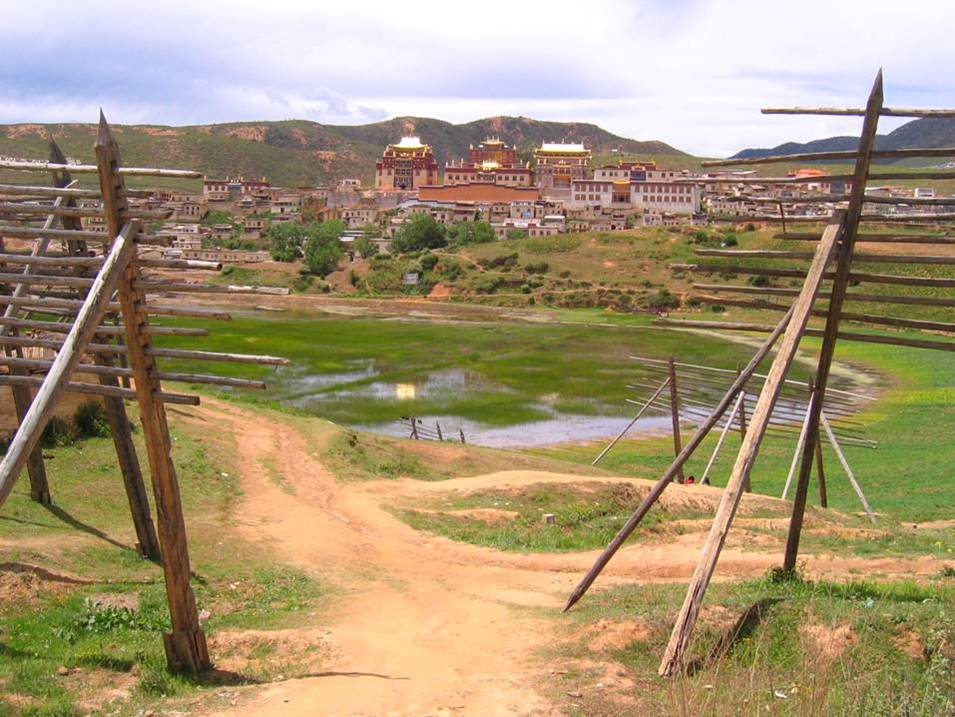
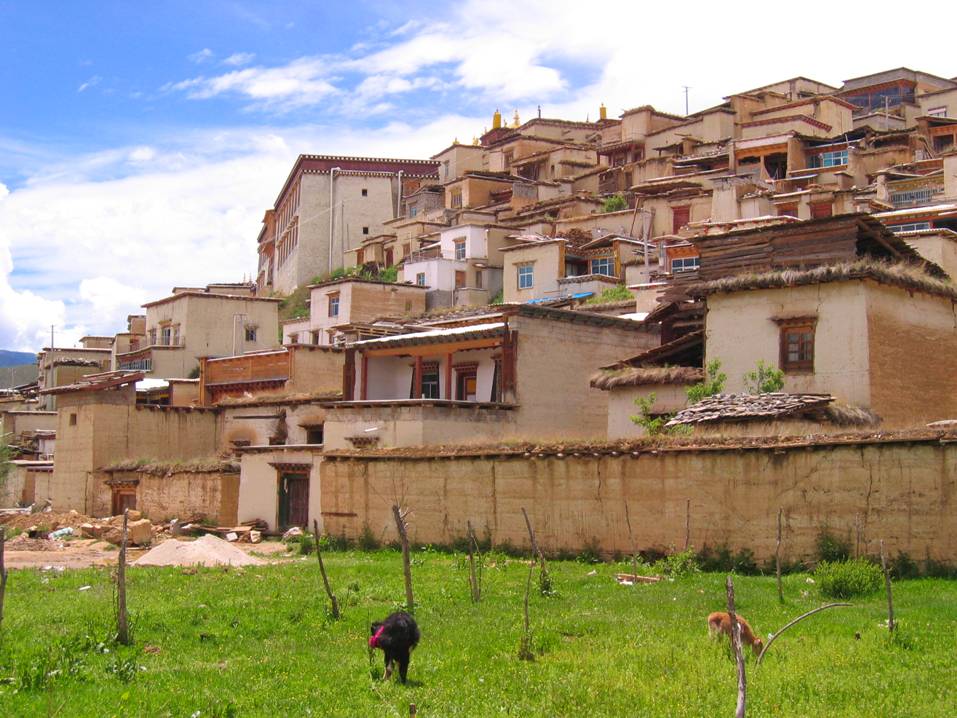
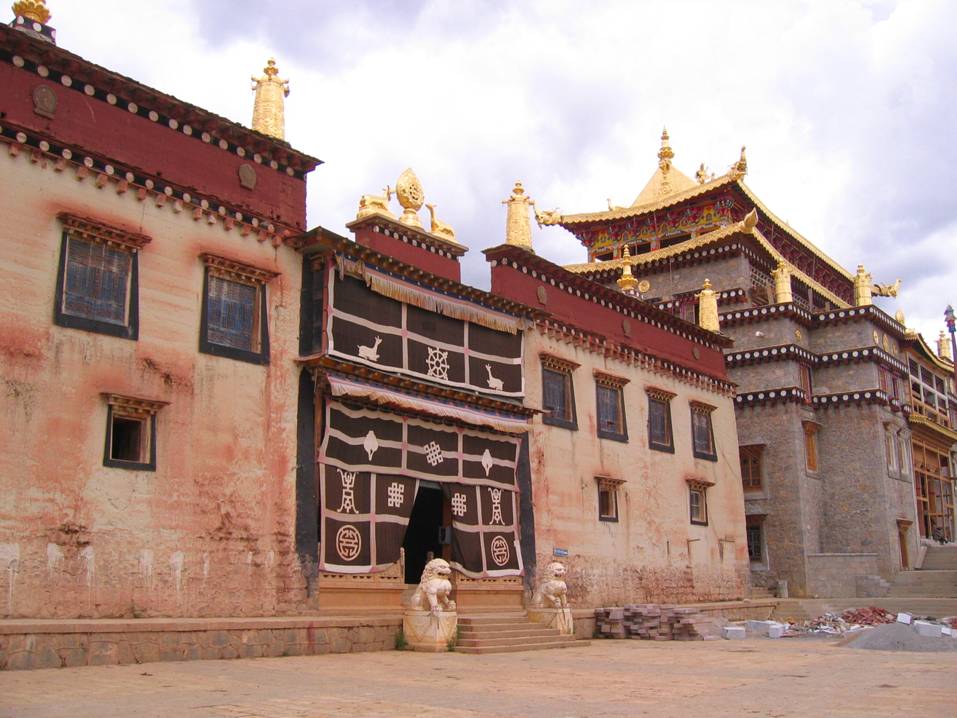
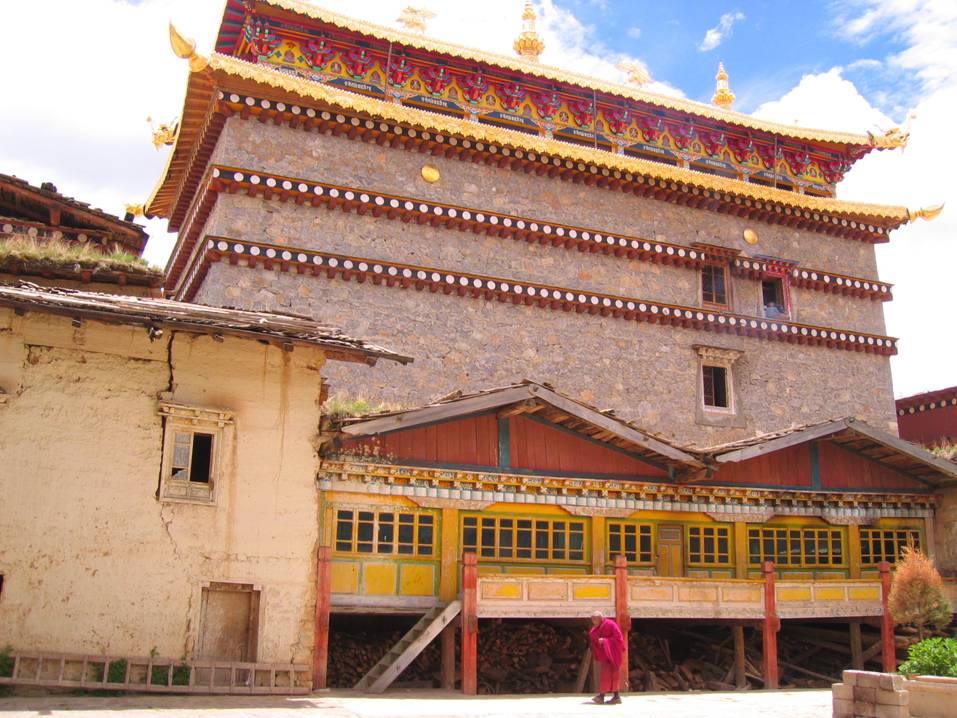
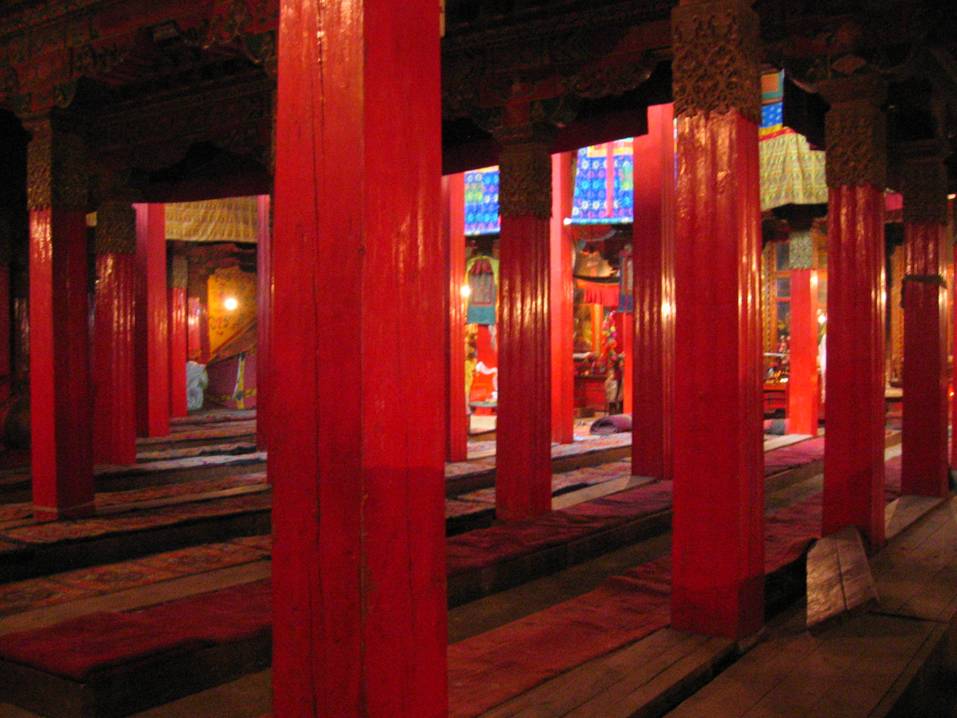
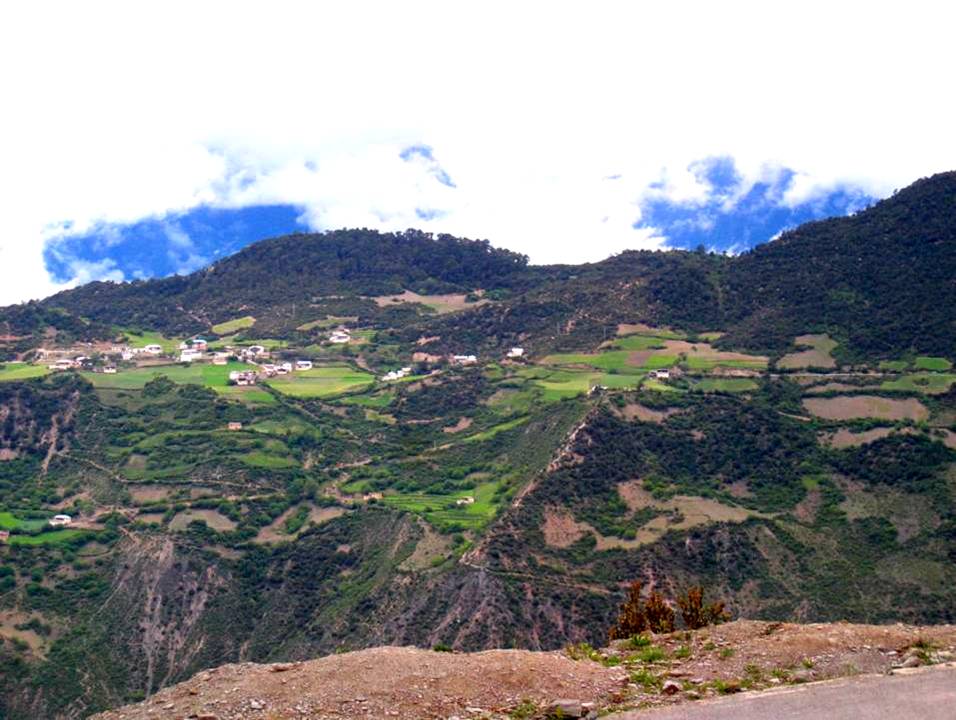
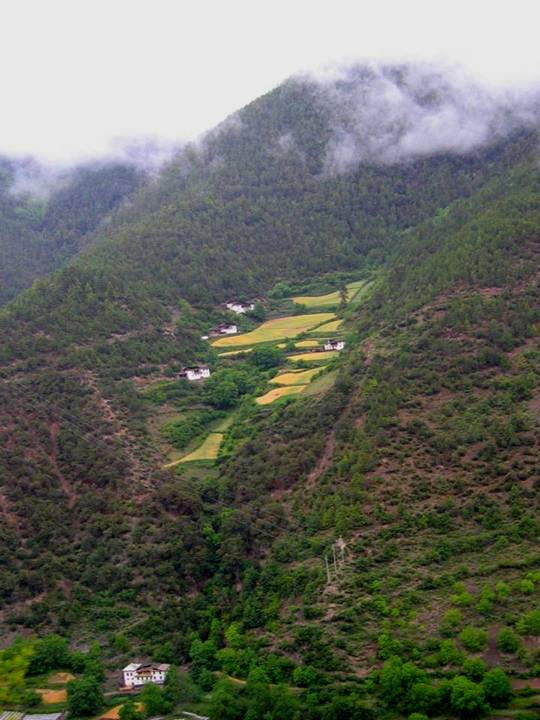
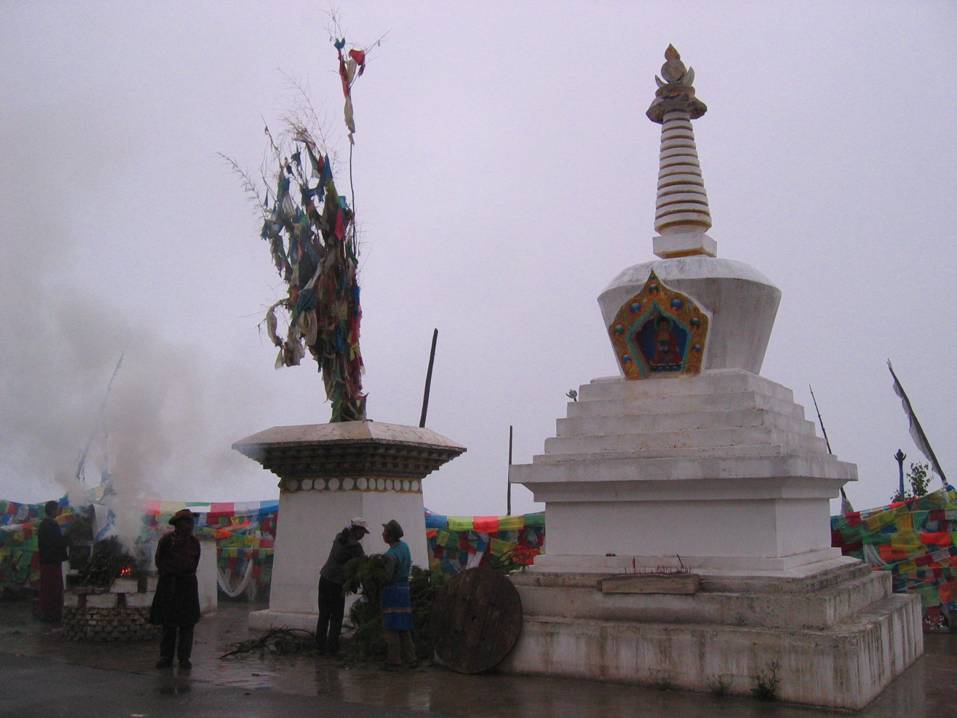
Tibetan temple near Shangri-La. Amidst the beautiful landscape lies one of the most important Tibetan temples.


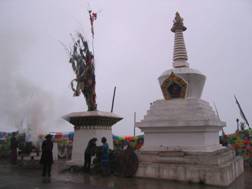
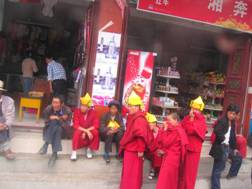
Forth and back to Deqin. I tried to sneak illegally into Tibet but they wouldn't sell me the bus ticket, so I had to go back and take a long detour all the way through the Sichuan province to Chengdu for another (legal) try.
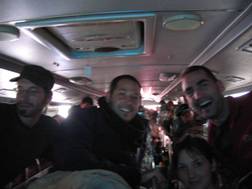


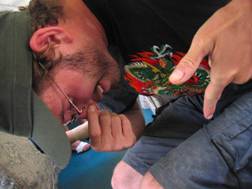


Sichuan province. Bussing an training through the beautiful Sichuan province, I learnt why the Mossad is so much better than the CIA, how to balance a gyroscope on your tongue, and about not washing trousers for three months (Quique, eres un cerdo).

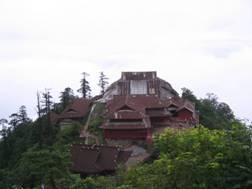

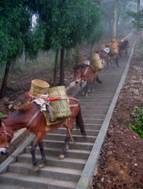


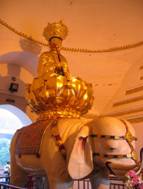
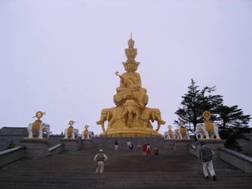
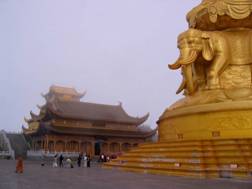

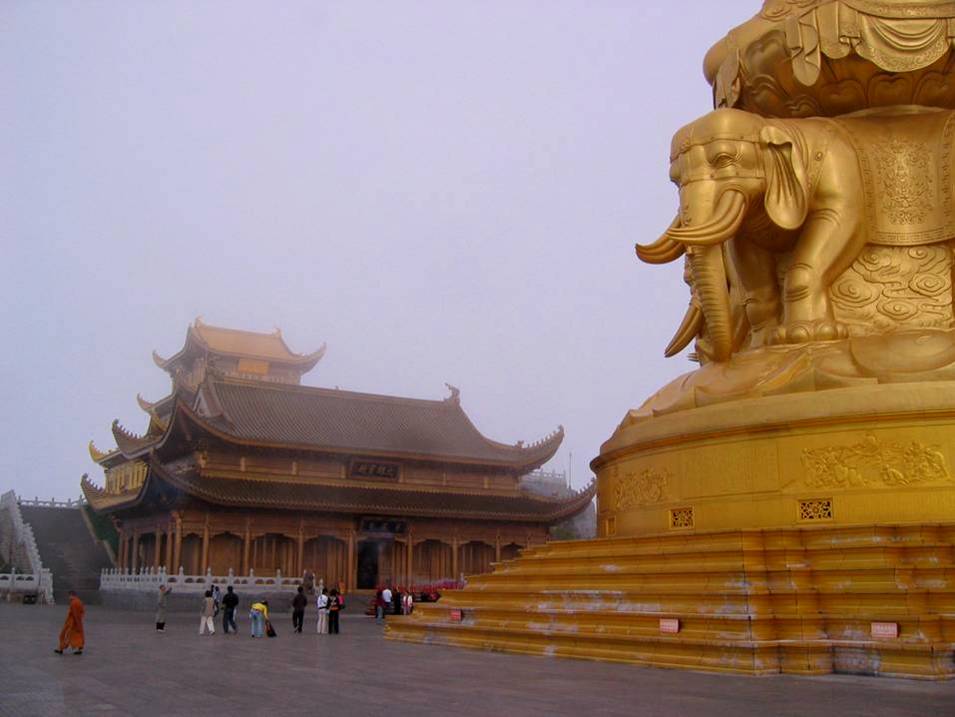
Emei Shan holy mountain. About 10 years ago my Oce colleagues organised a contest in our brand new R&D building, to run its stairs (about 60 steps) up and down 50 times in half an hour.
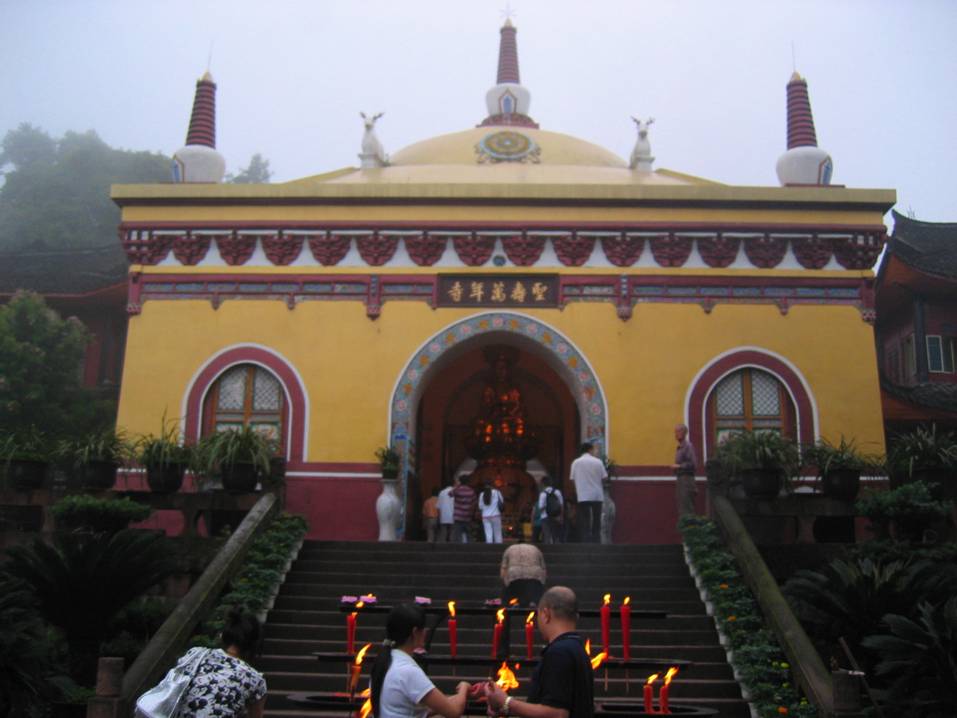
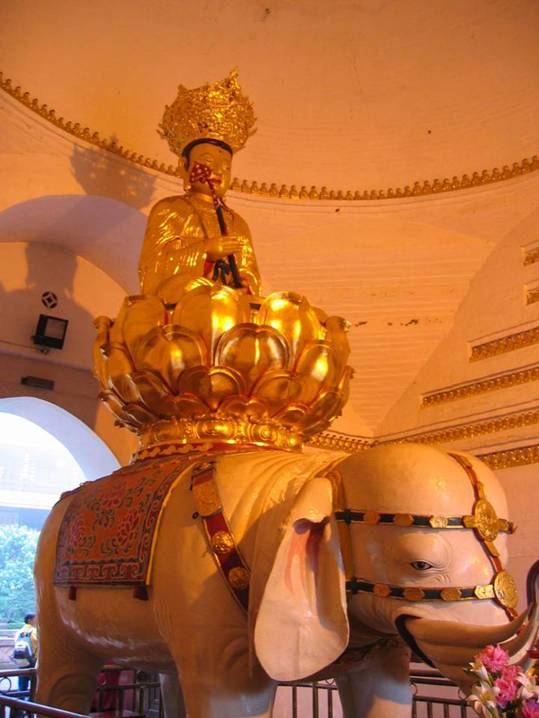
However, this was peanuts compared to climbing the holy mountain of Emei Shan. It is covered with monasteries and temples, all connected with stairs, up to 3000m high, and they are still buidlnig more (1st picture).
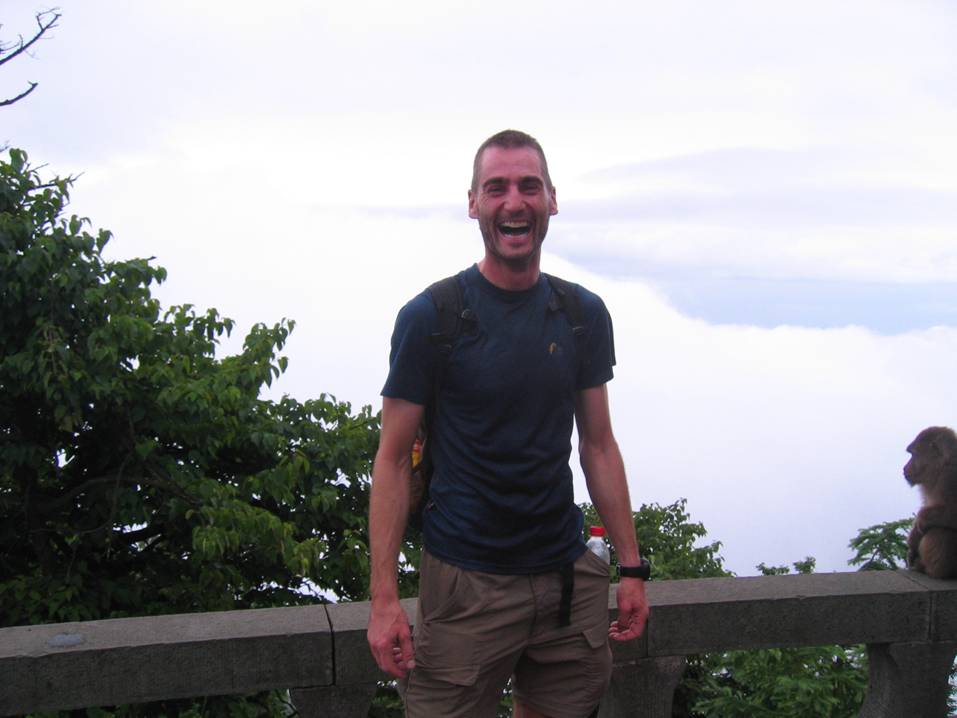
I managed to ascend over 1500m in three and a half hours, definitely a personal record, including getting rid of the monkey hanging on my backpack, haha.
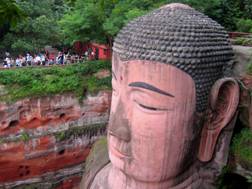
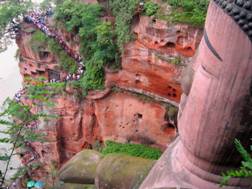

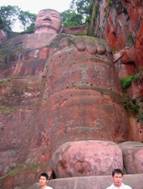
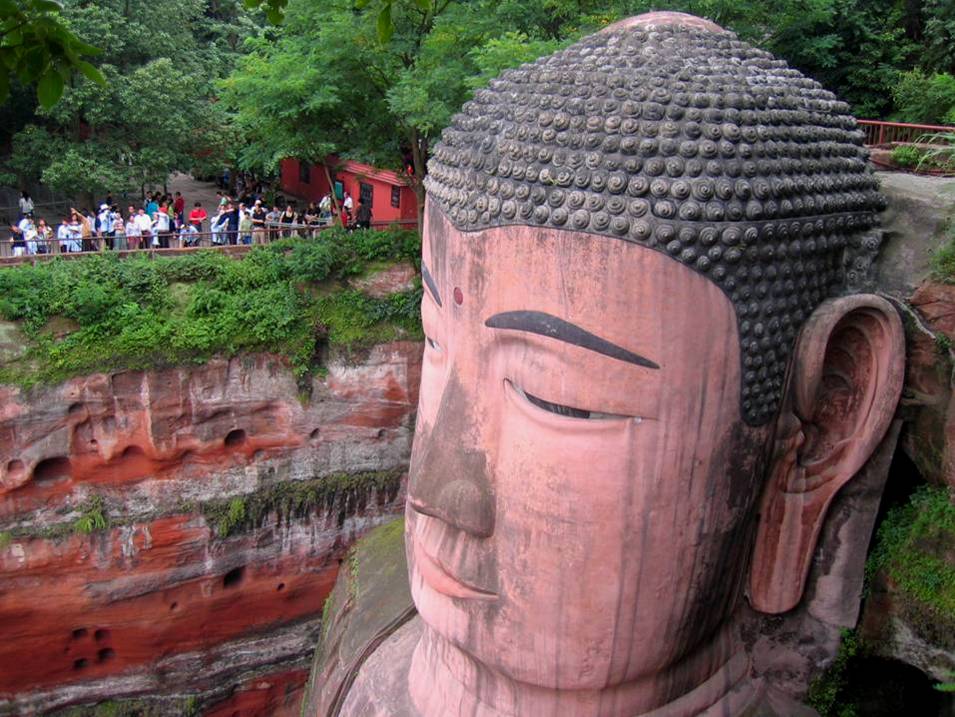
Lechan big buddha. Another stairs running contest: Lechan's big sitting buddha is over 70 meters high!


Chengdu. Famous for its Giant Panda breeding centre. From here I will fly to Lhasa in Tibet.
May 2,4: Kunming
May 5-June 3: Netherlands
June 4,5: Kunming; 6,7: Dali; 8,9: Lijang; 10: Tiger Leaping Gorge; 11-13: Shangri-La; 14: Deqin; 15: SanshiPan; 16,17: Emei Shan; 18-20: Chengdu;
Tibet (June 2007)
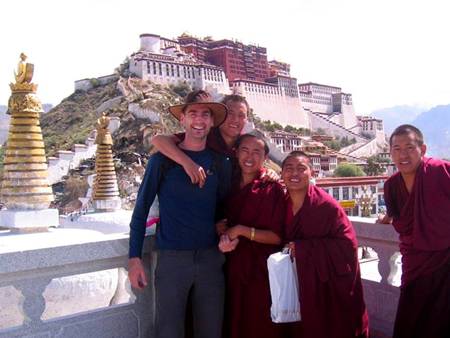
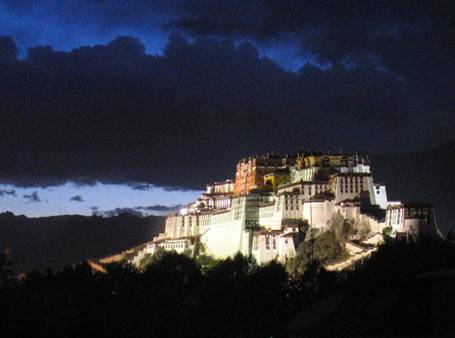


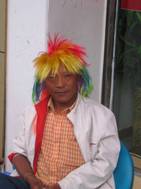
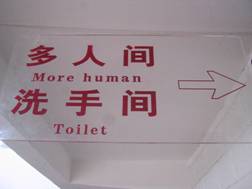


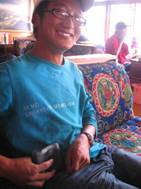
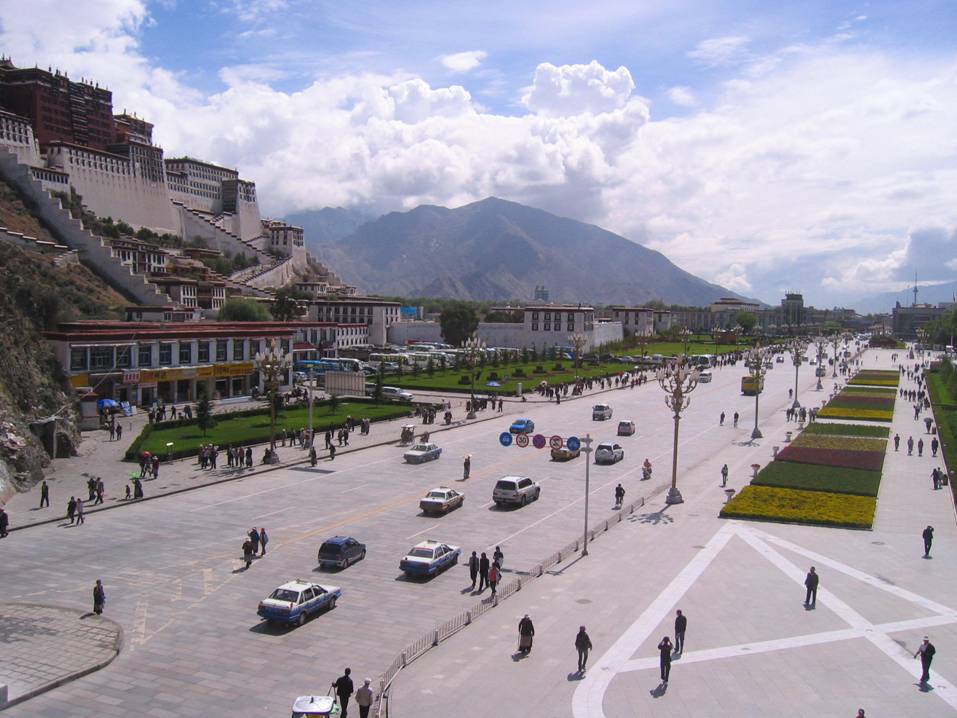
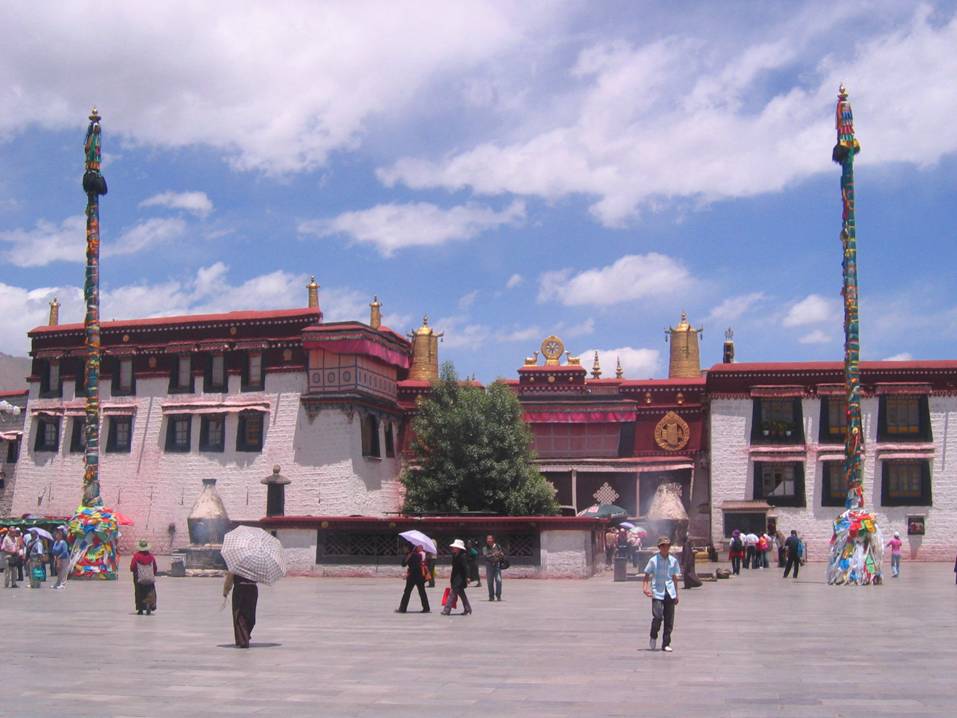
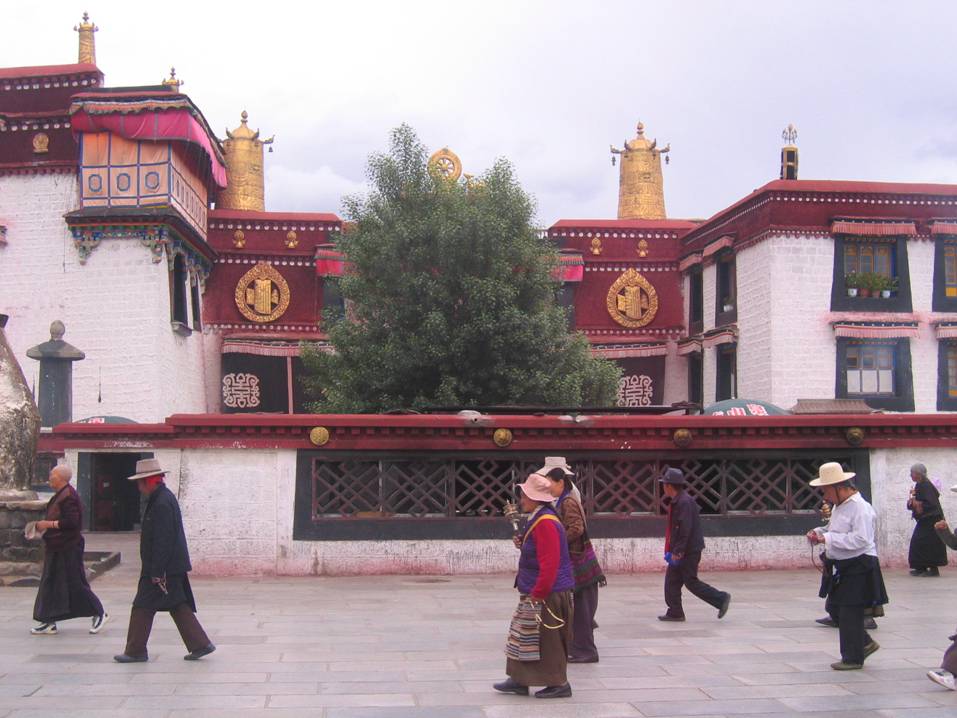
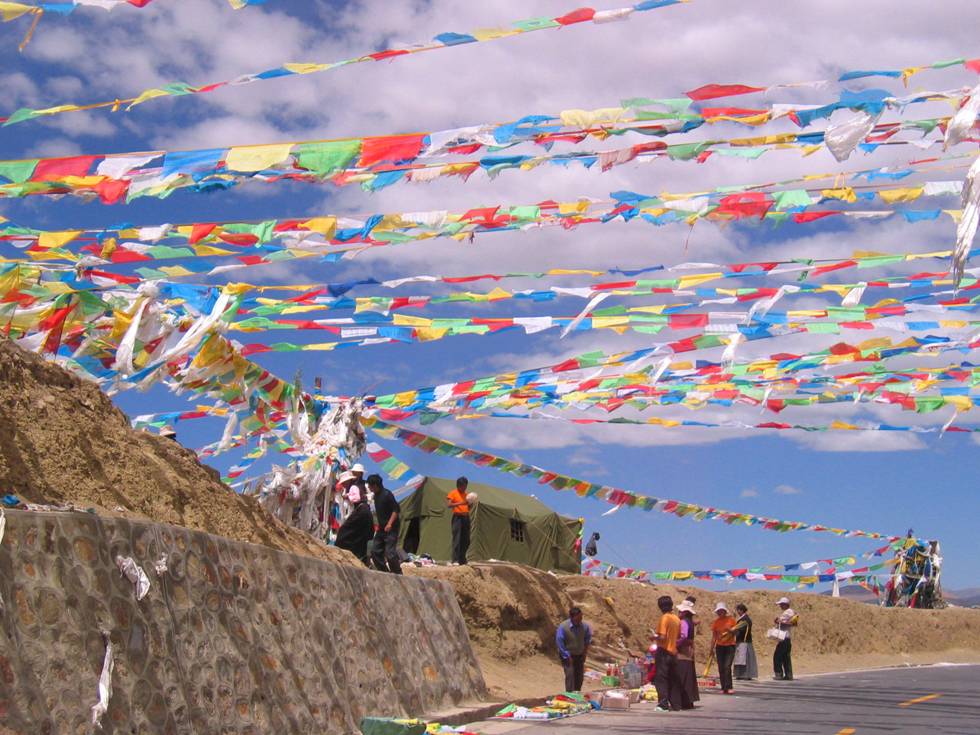
Lhasa. This is not the best time to visit Tibet, not only because of the many Cinese tourists at this time, but also because the travelling restrictions for foreigners have been intensified since some f**king Americans burnt a Chinese flag two months ago on the Mount Everest, so it is currently almost impossible to travel indepently around Tibet, you always need an expensive permit and guide.
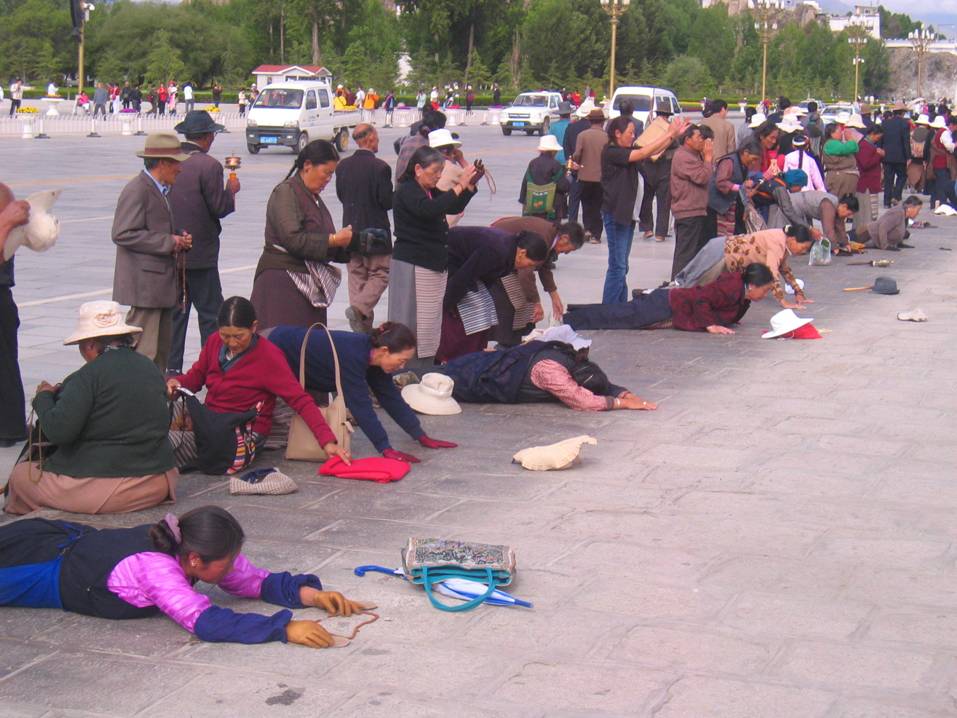
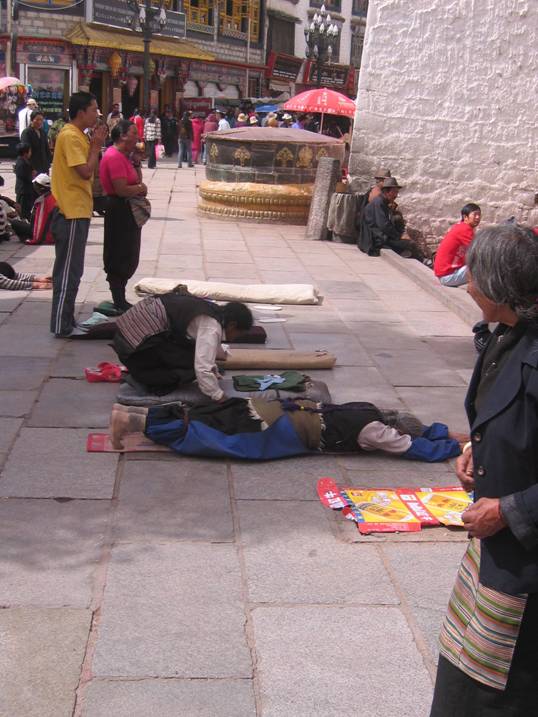
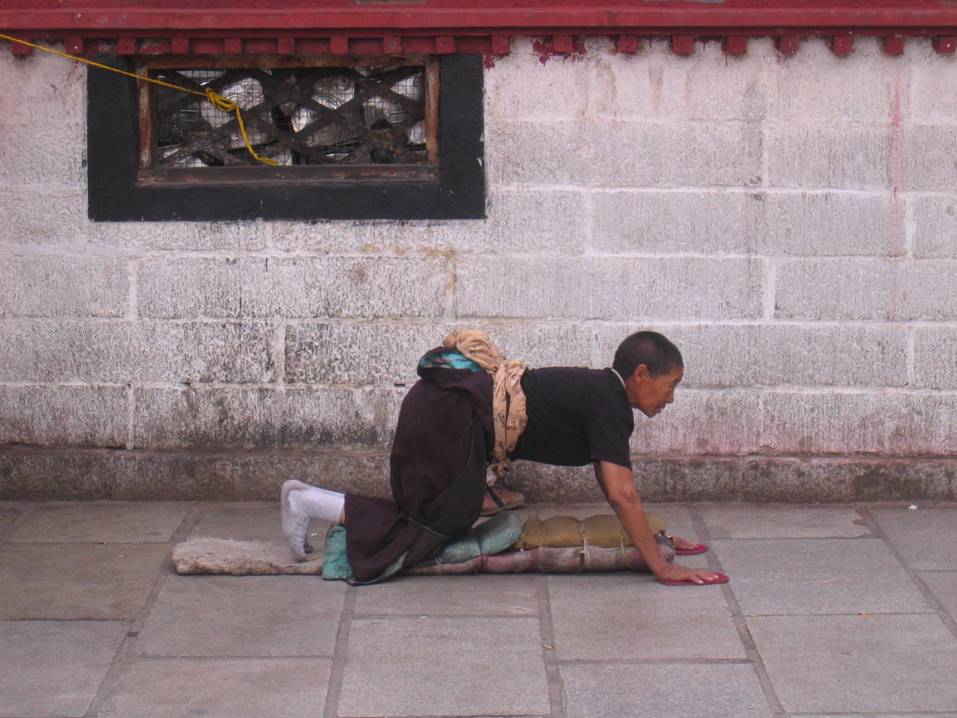
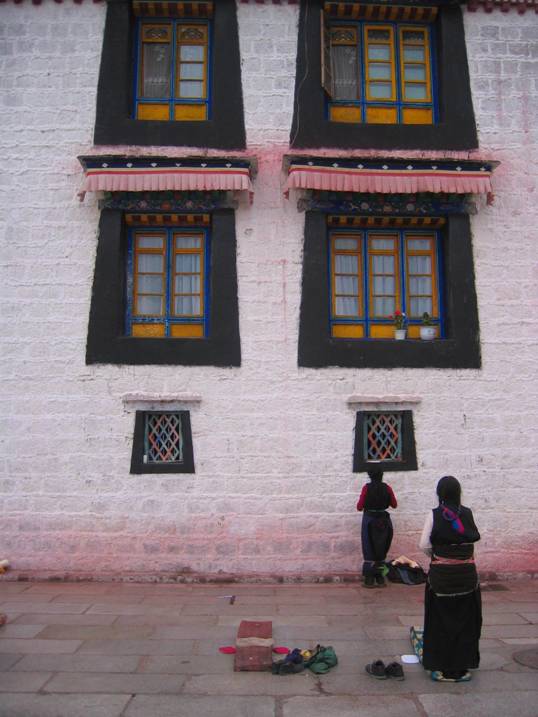
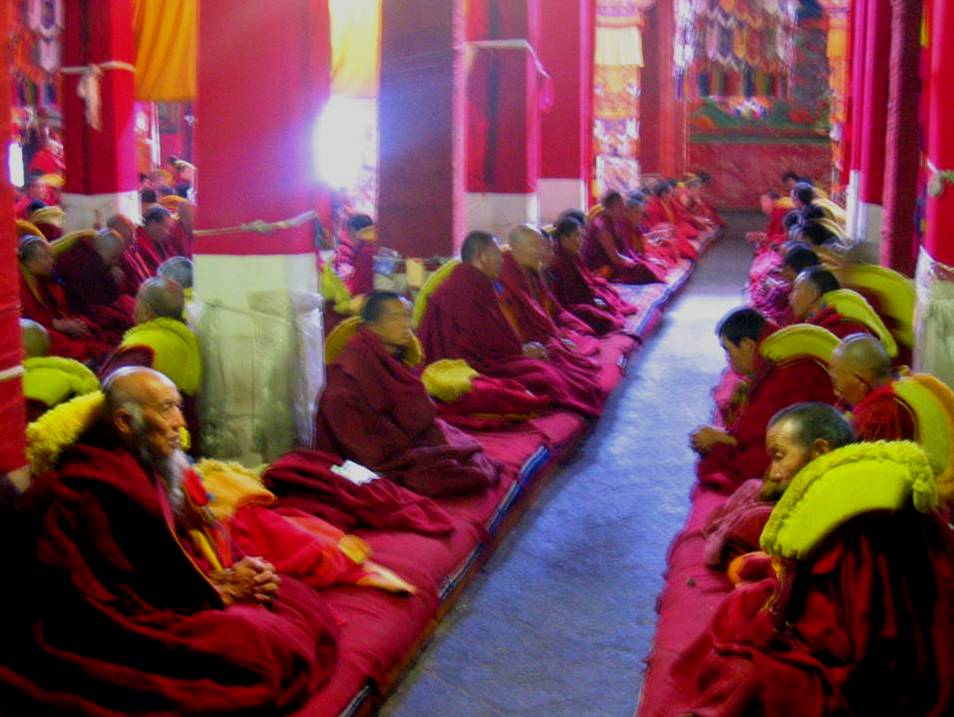
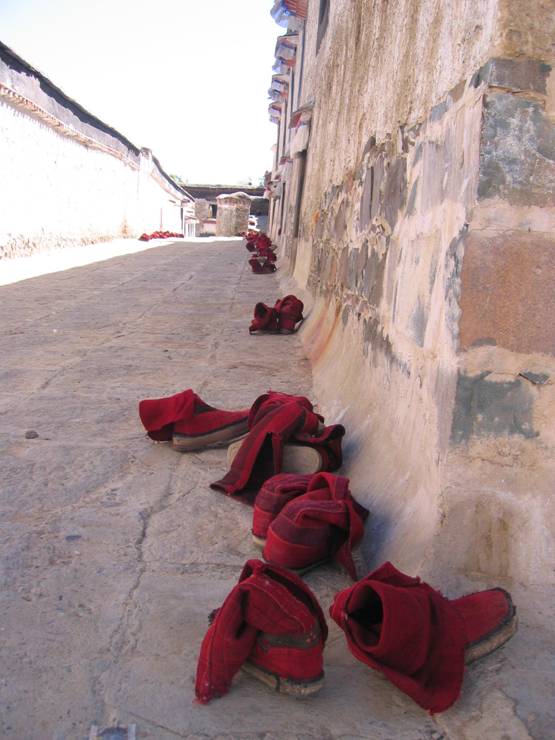
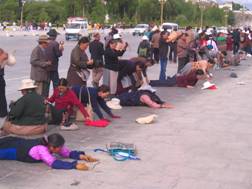
The forelast picture shows people praying in the center of Lhasa at a monastery which was destroyed during the Chinese Cultural Revolution.
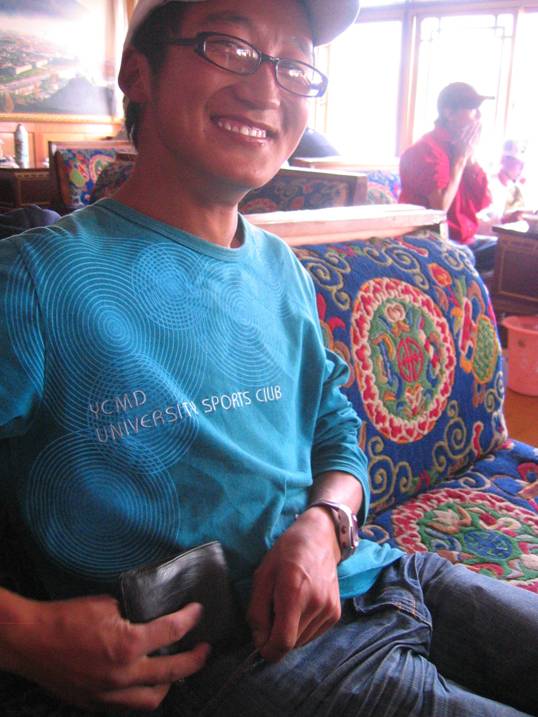
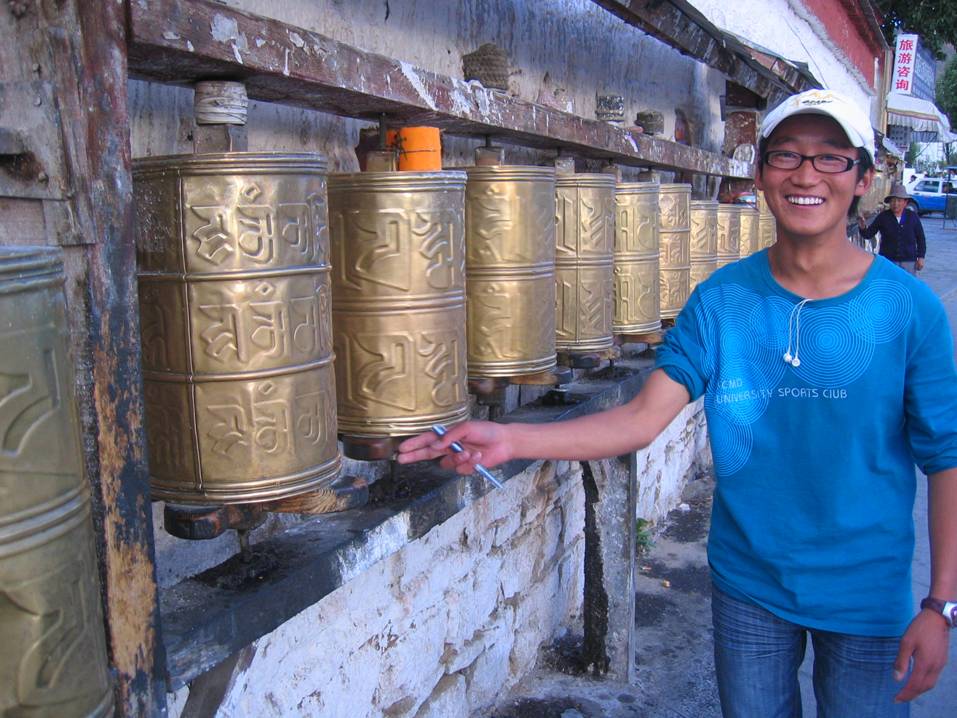
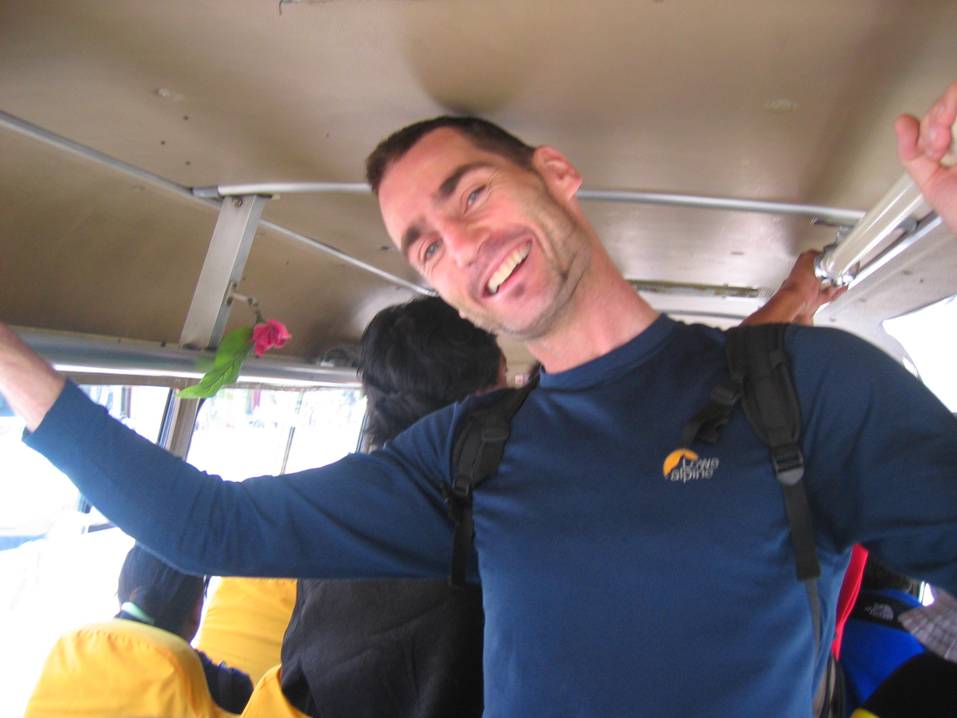
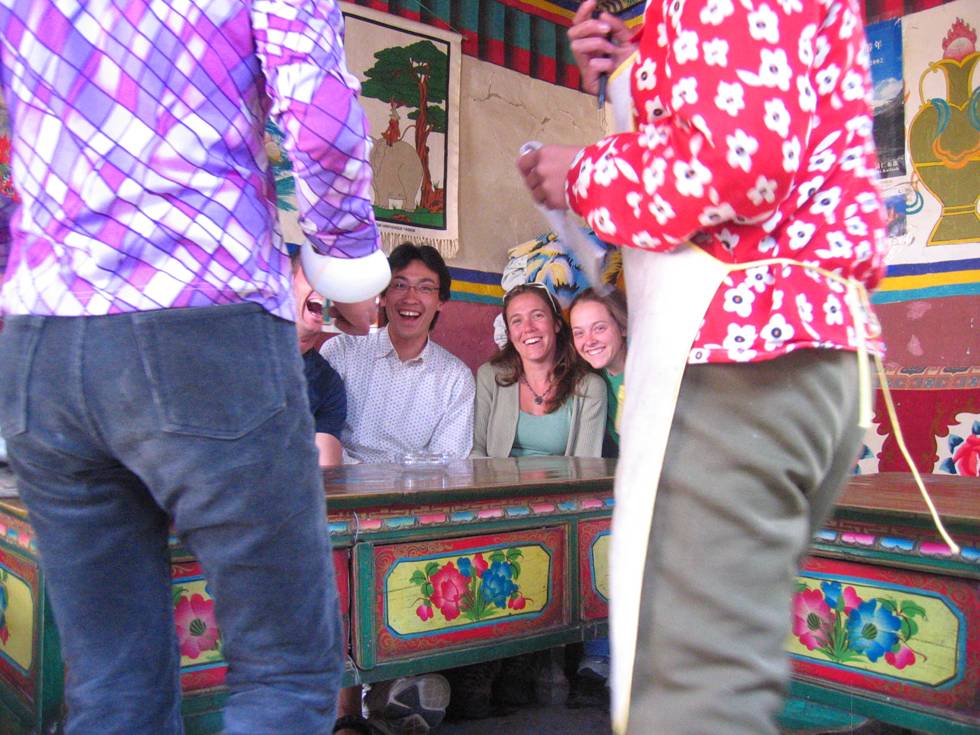
The last picture shows Sonam Dhoppel, a student who showed me around Lhasa and the monasteries. I taught him English, and he taught me how to swap your wallet pictures when you visit your other girlfriend...


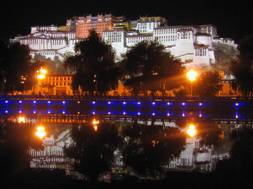

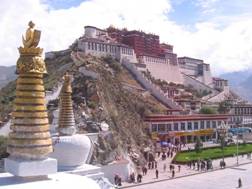
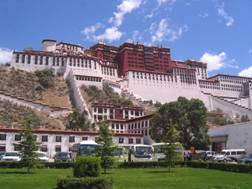

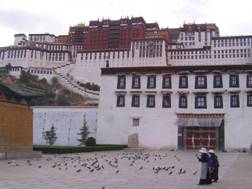
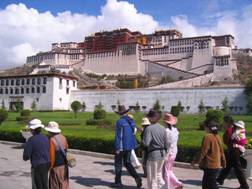


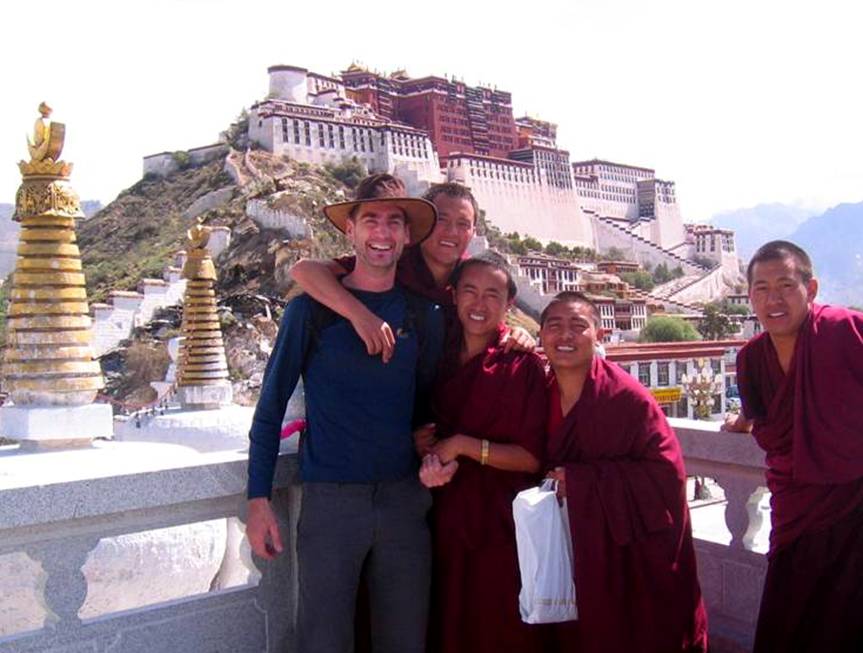
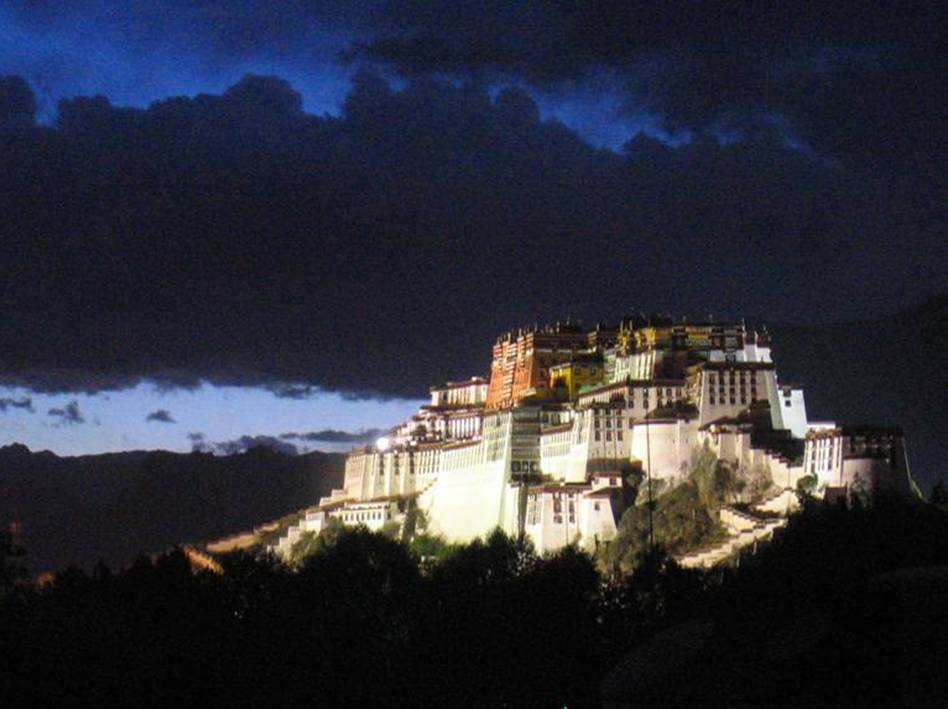
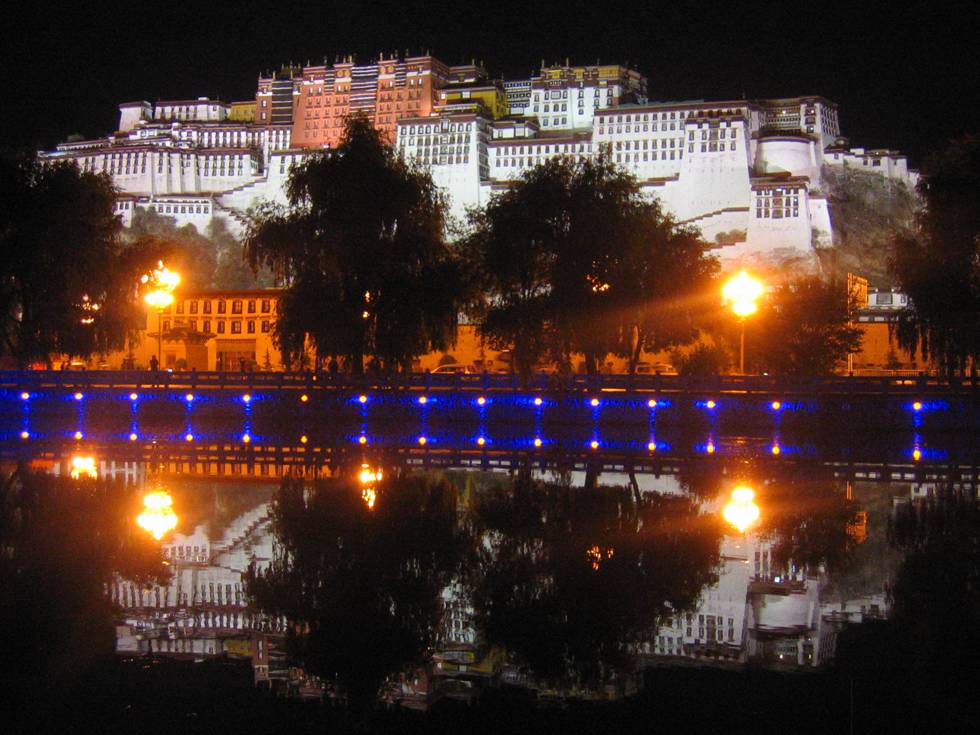
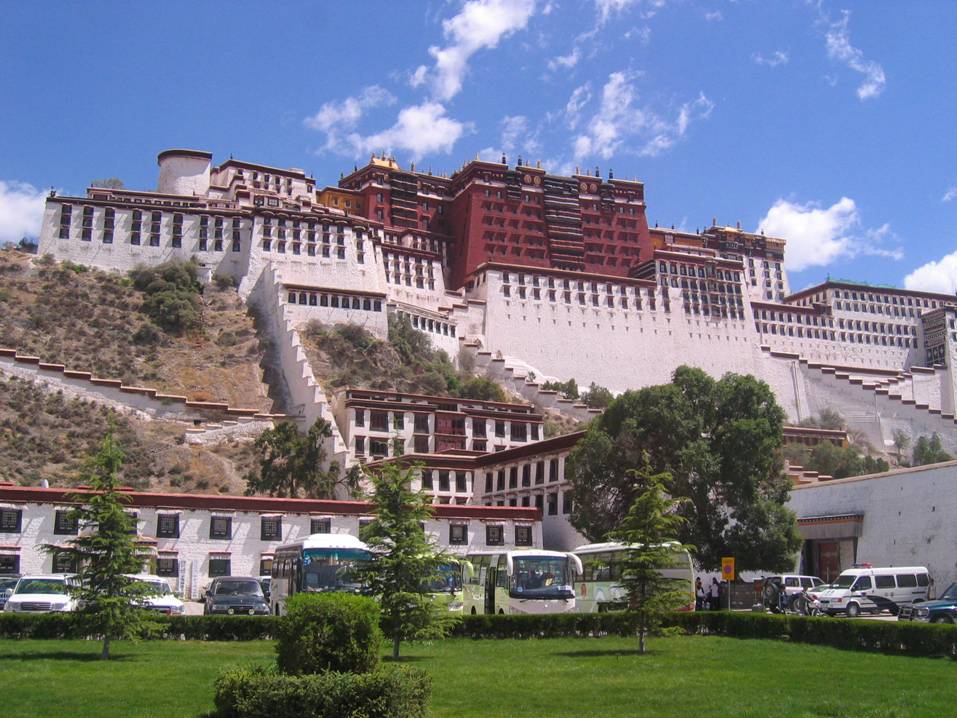
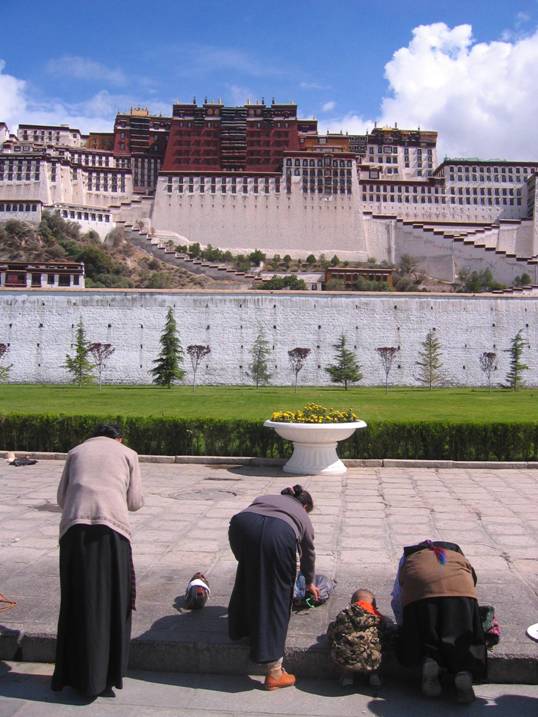
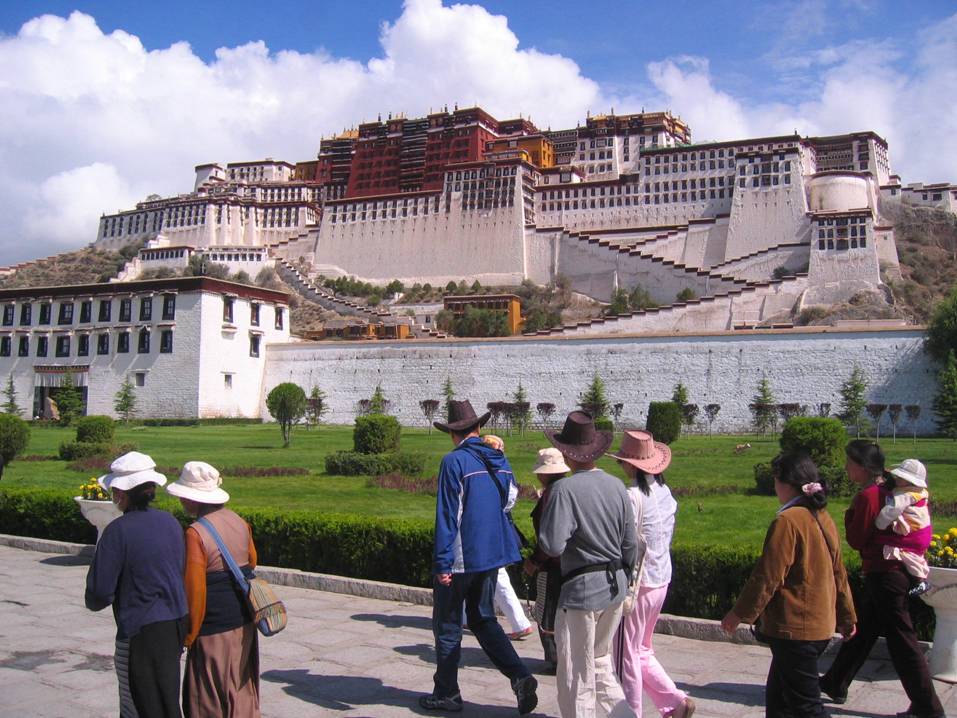
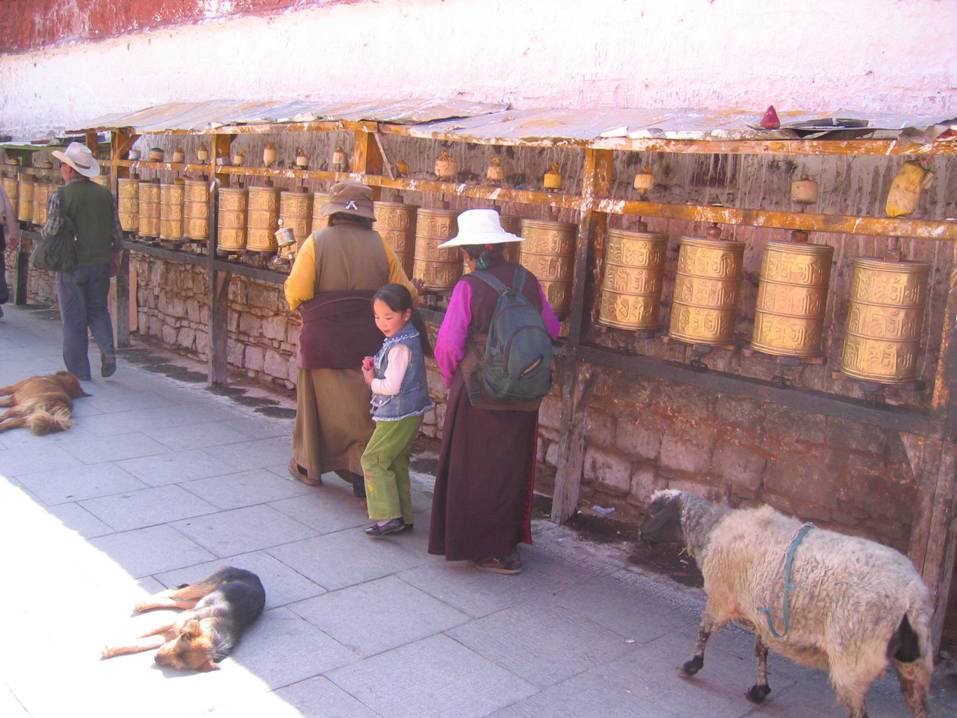
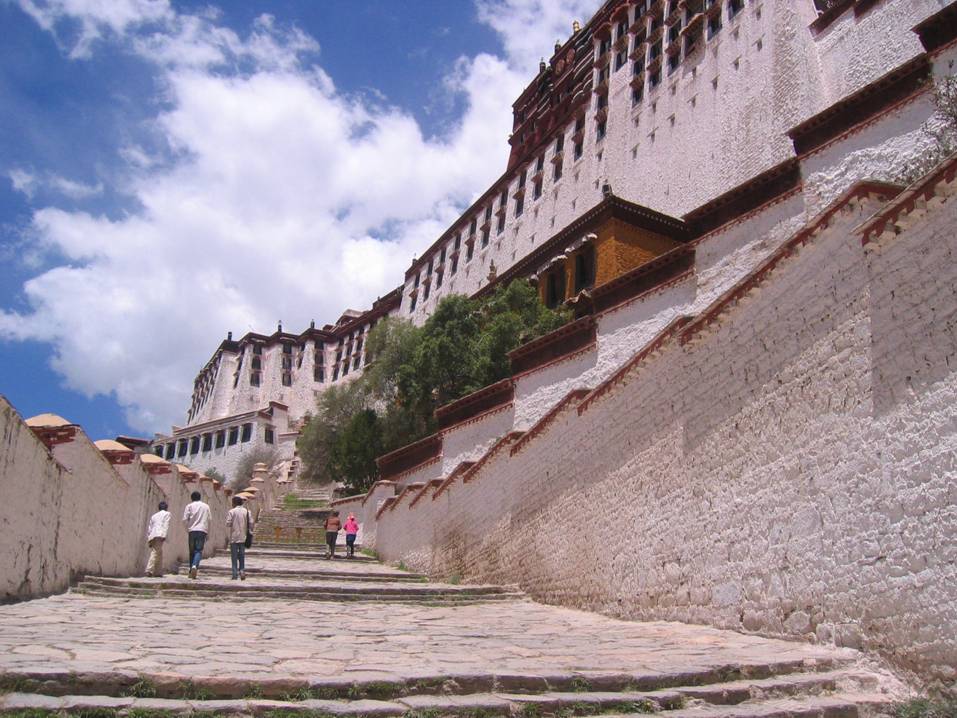
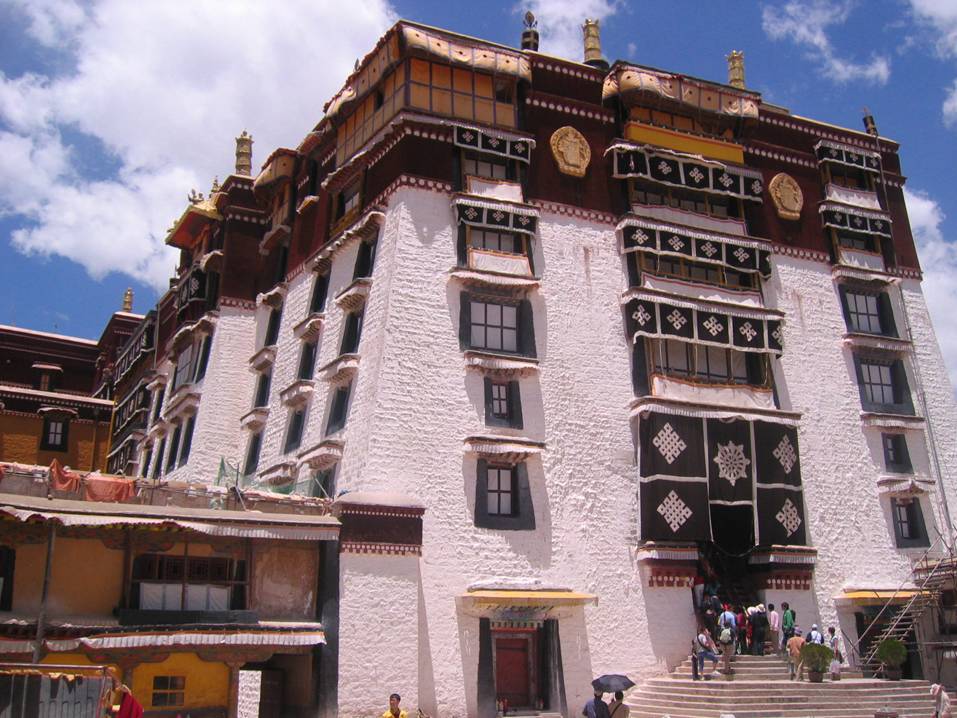
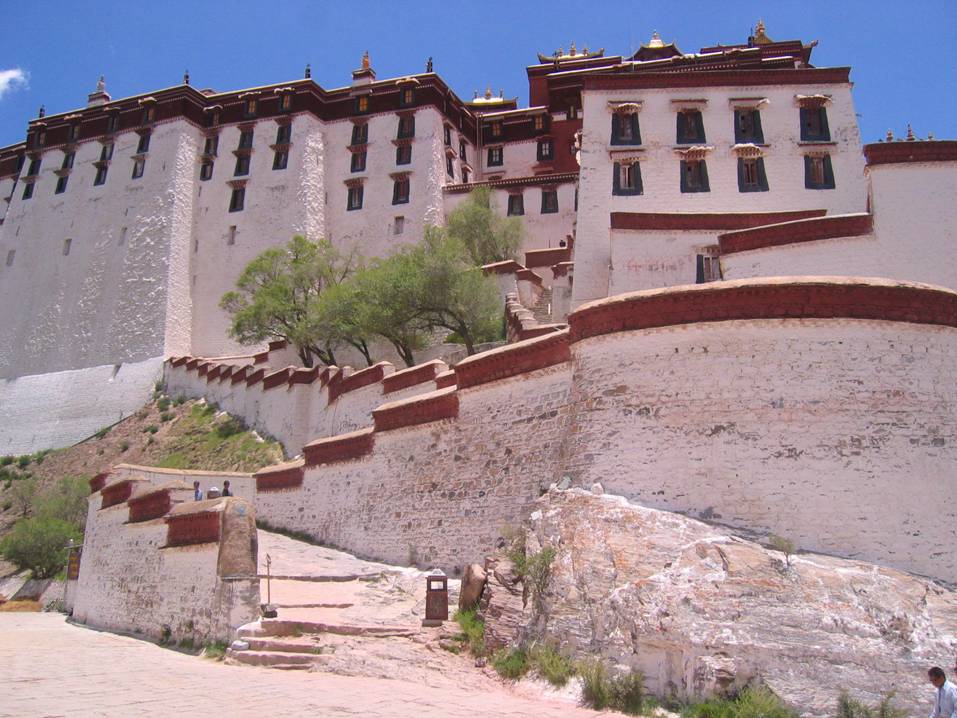
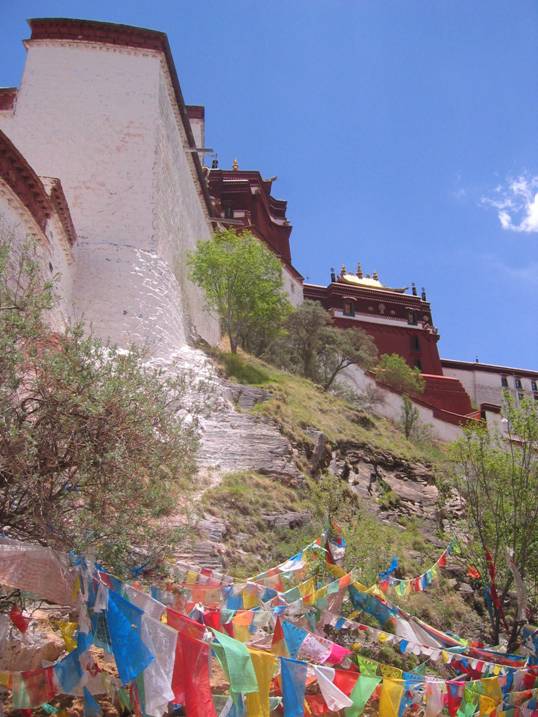
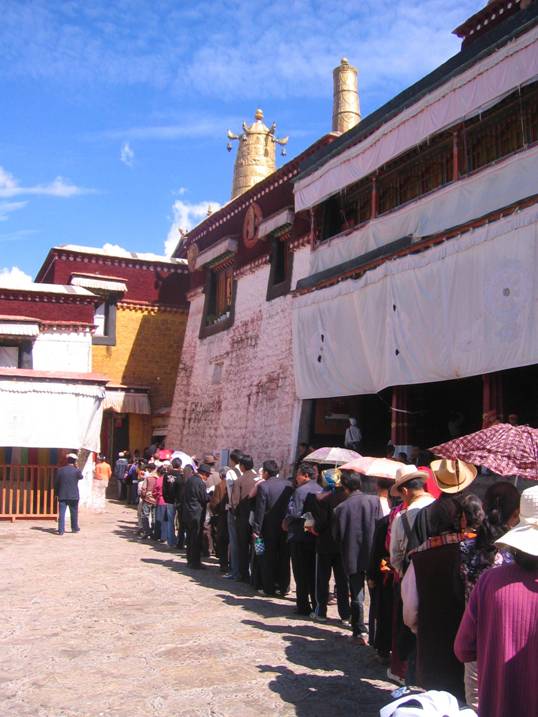
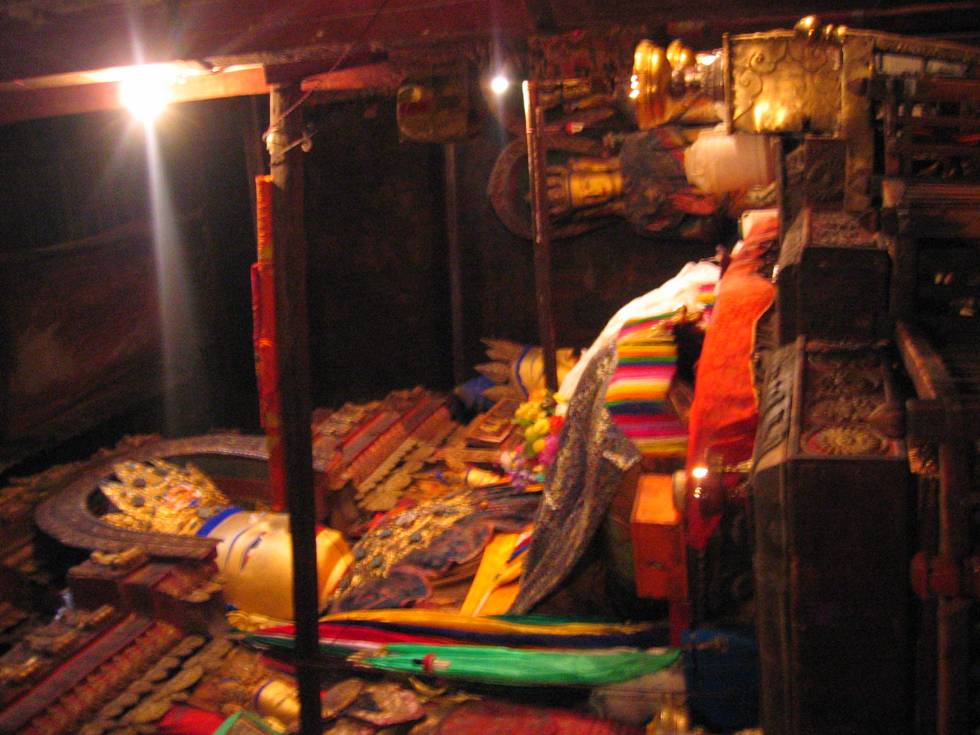
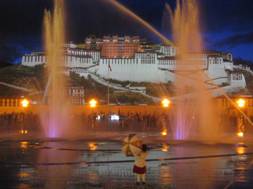
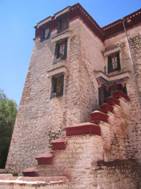
Potalo palace. I had seen it many times on pictures so I had not expected it to be such a impressive surprise: one of the most beautiful buildings I have ever seen, and definitely the most beautiful one of China. Pilgrims walk around the palace turning the big praying rolls and their own hand praying rolls.
Inside this vely holy place are the tombs of most of the Dalai Lama's (no pictures).
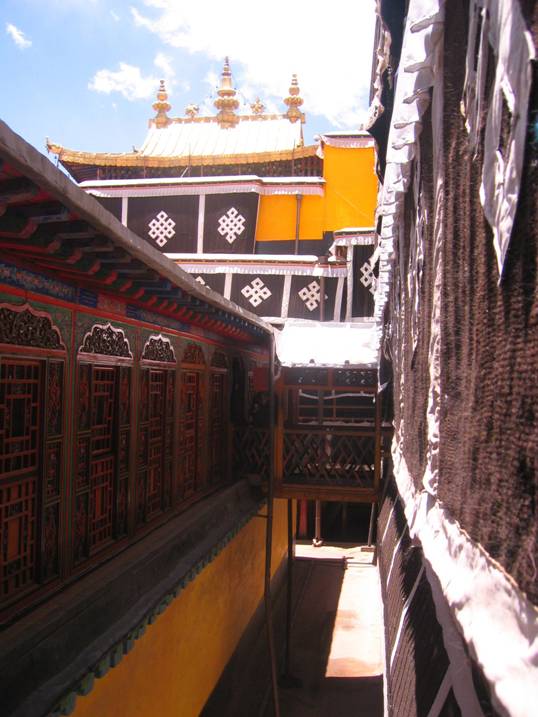
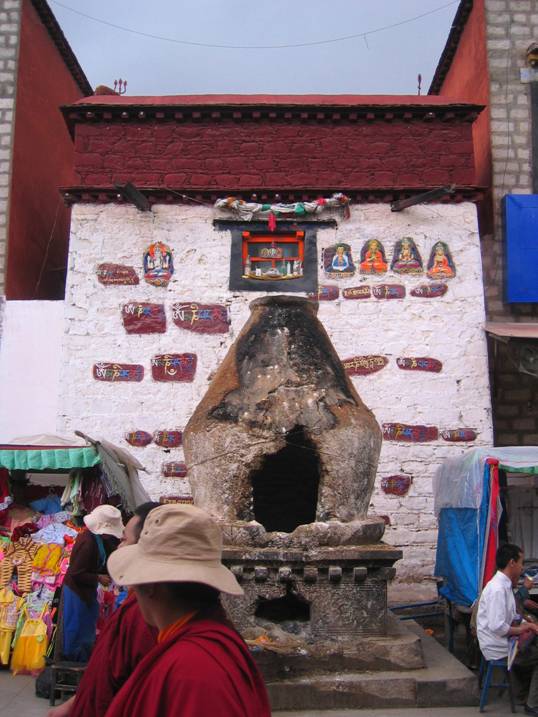
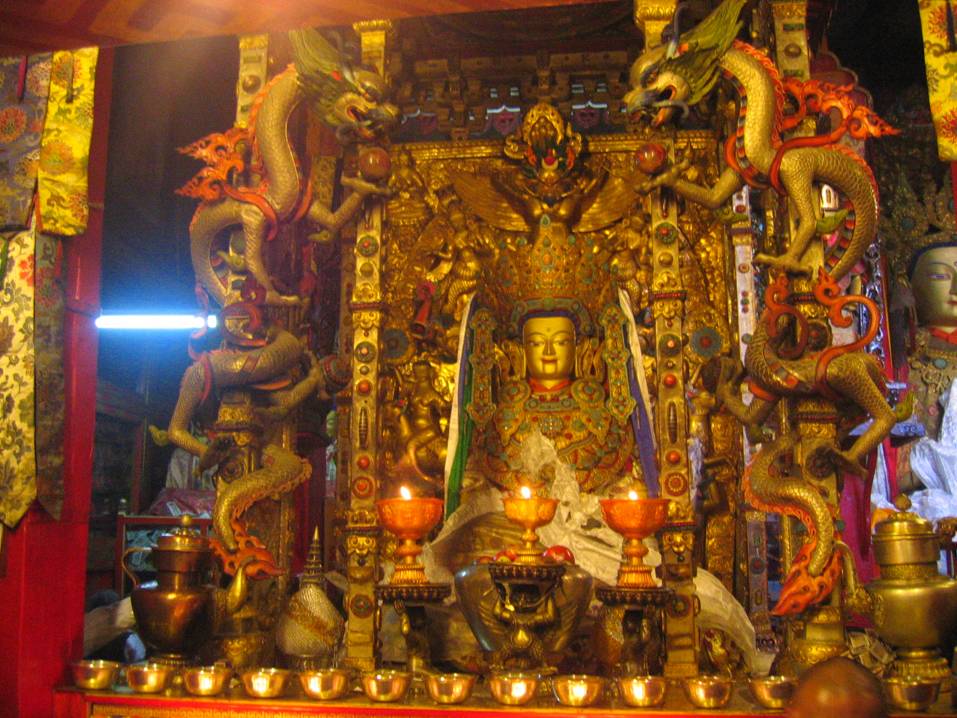
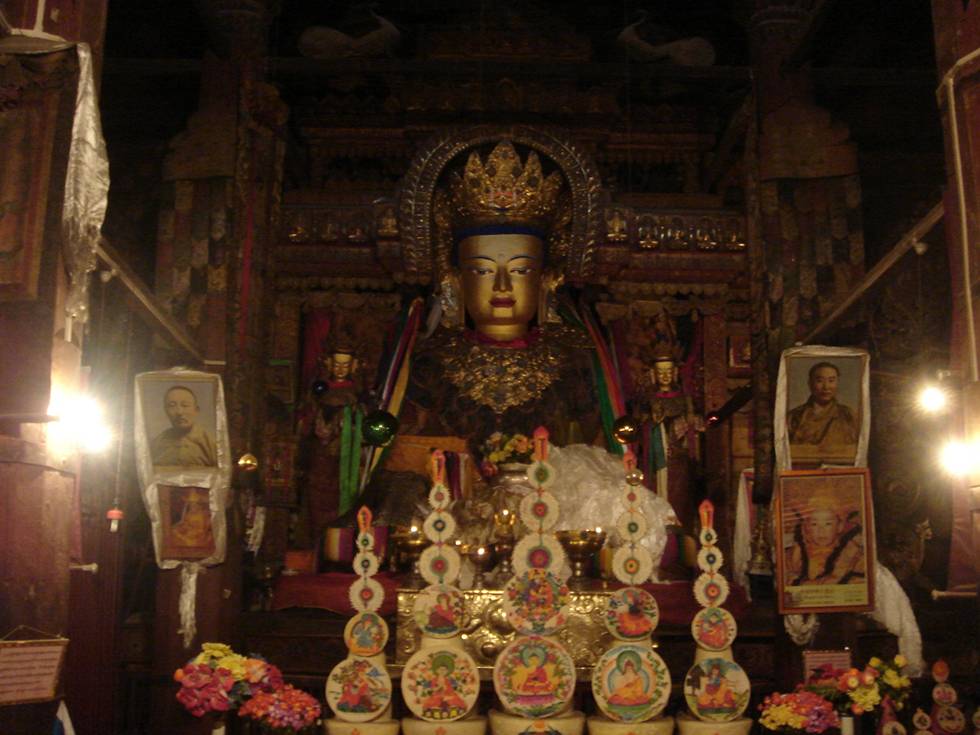
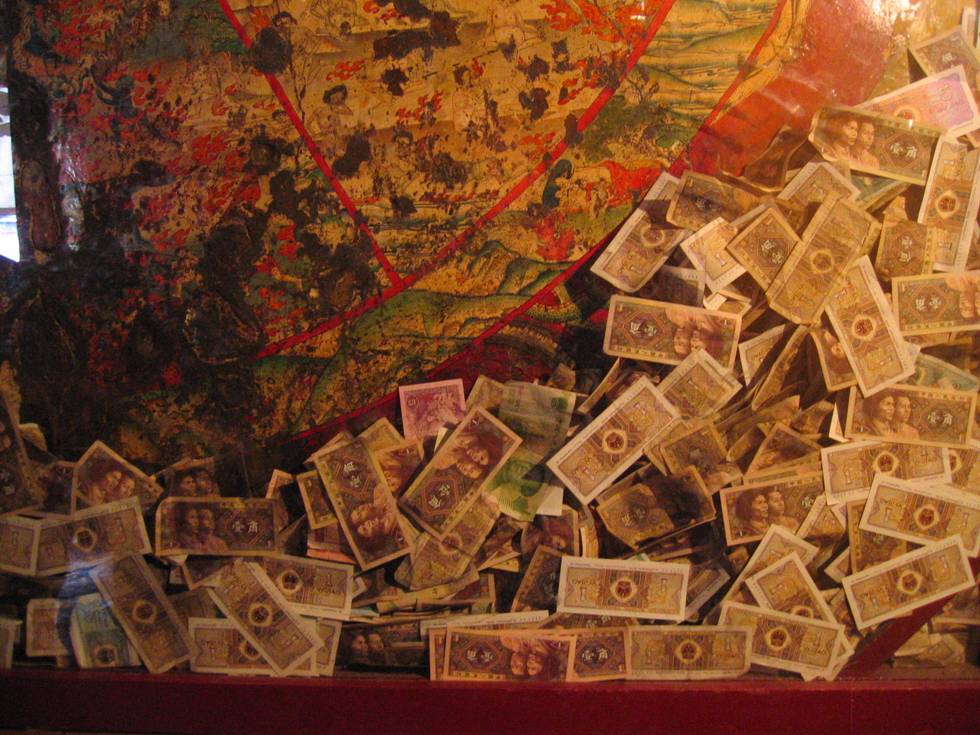
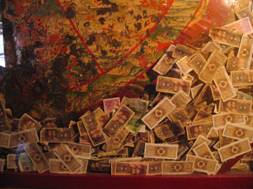
Like in all the Tibetan monasteries, you will find money everywhere, not only on statues but also on the floors and doors (second last picture), and you can see more monks counting money than actually praying.
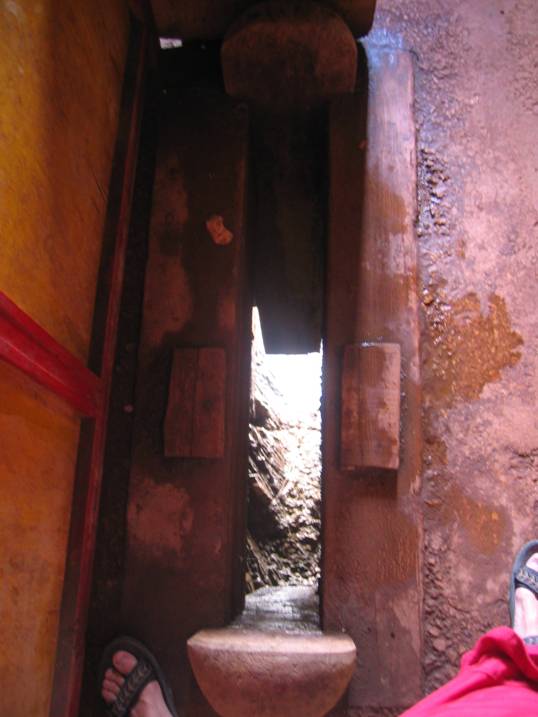
Top attraction is the toilet (last picture), it takes seconds for your droppings to hit the mountain...
4.2 MB MOVIE: tibet potalopalace.avi

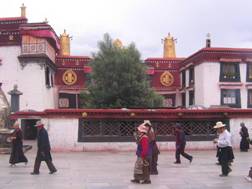
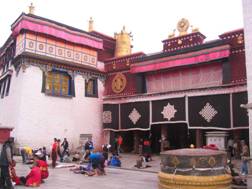
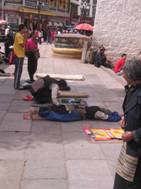

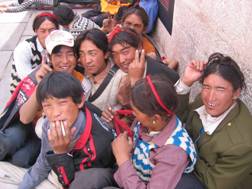
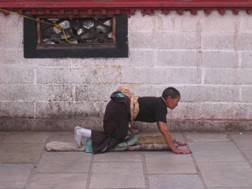
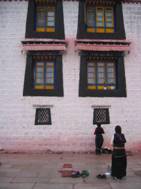
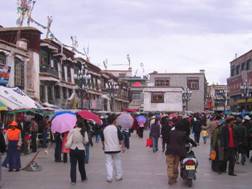
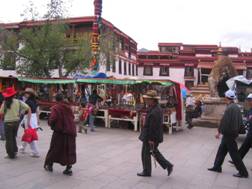

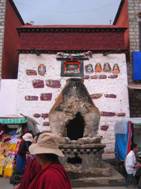
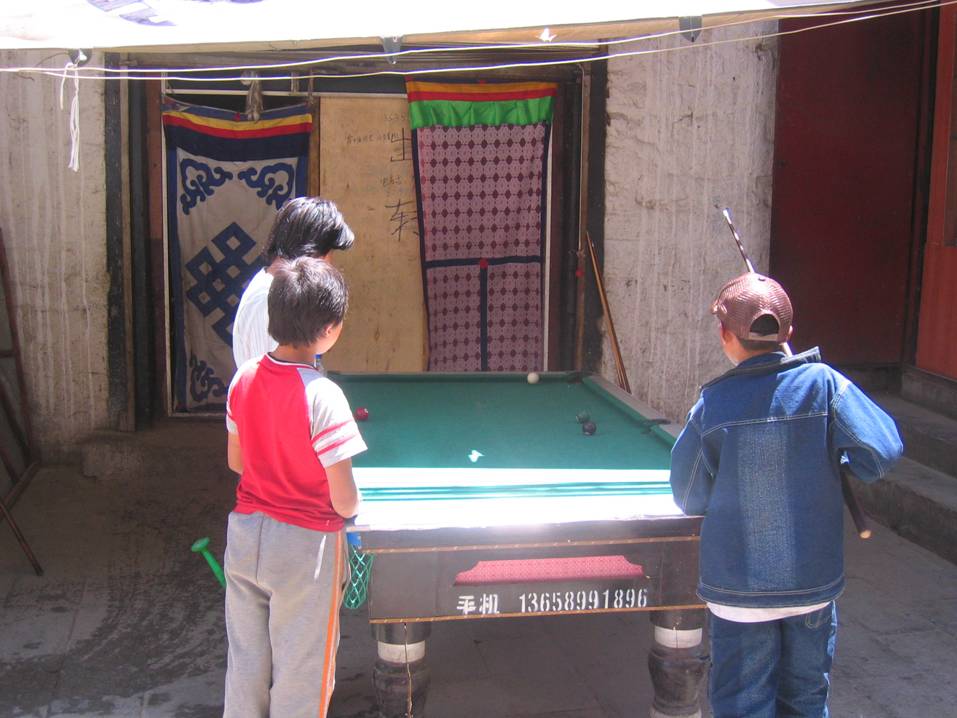
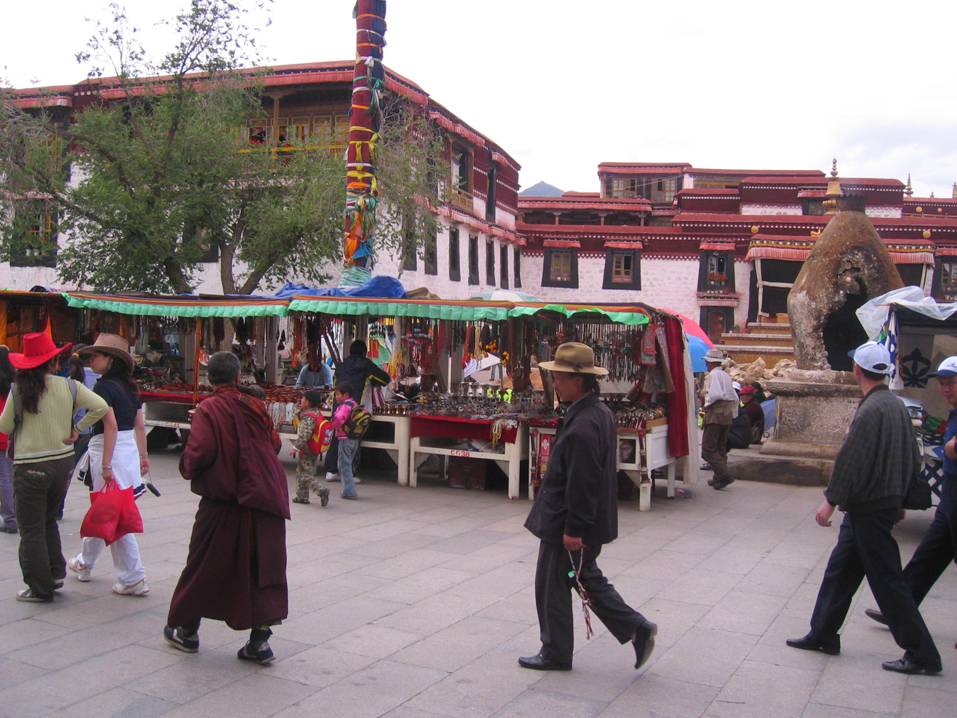
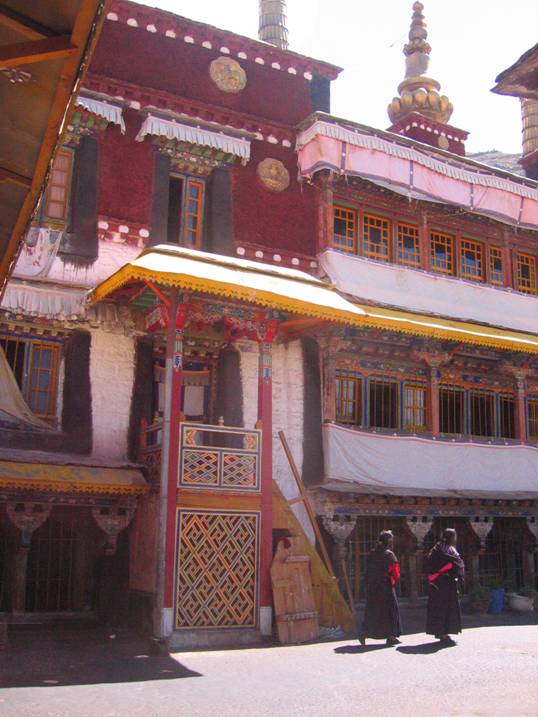
Barkhor around Jekong Monastery. Barkhor, the old centre neighbourhood of Lhasa, is a strange mix of street vending stalls between which the Tibetan Buddhist pilgrims make rounds around their holiest monastery of Jekong.
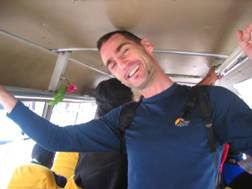
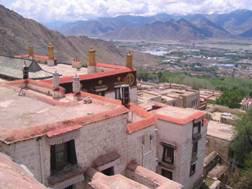

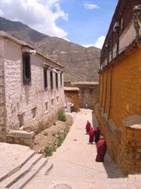


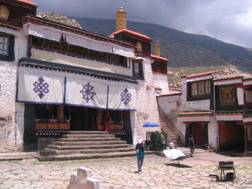
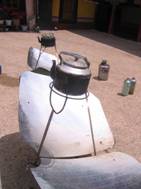


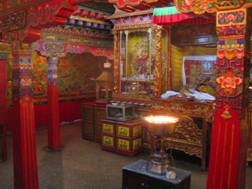
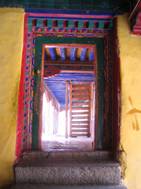


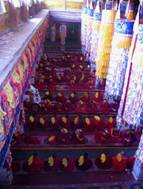

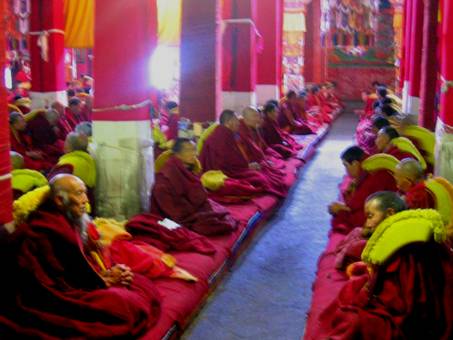
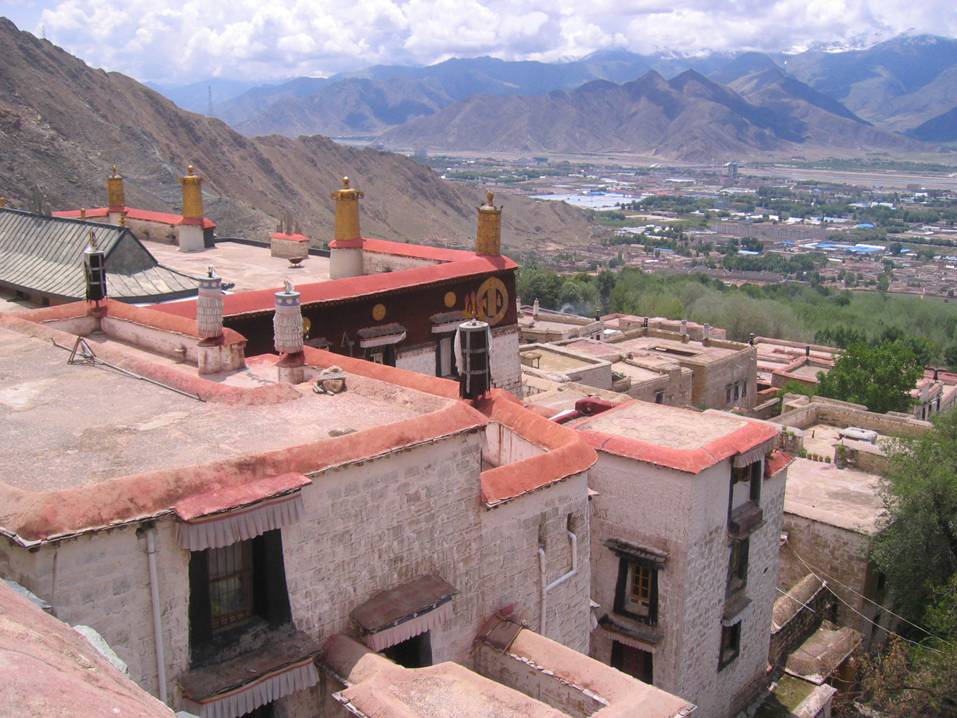
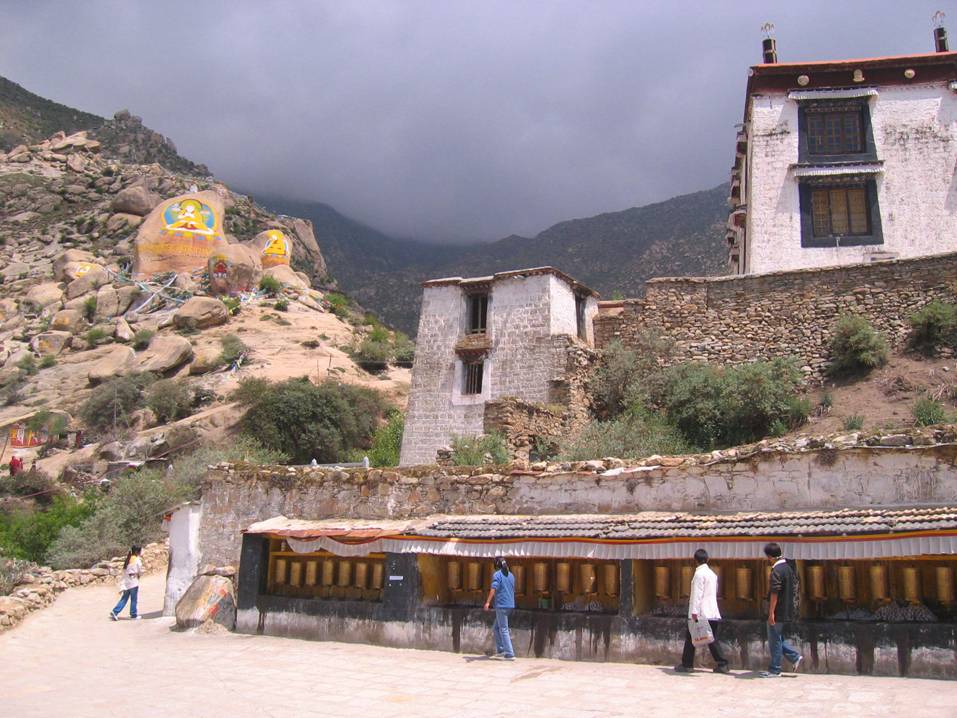
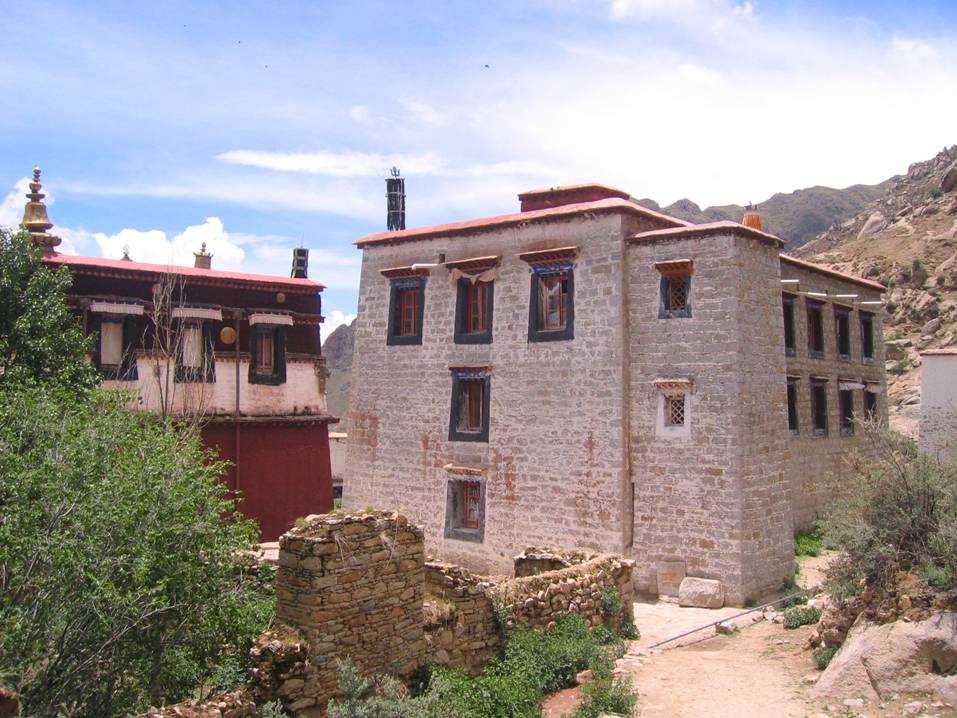
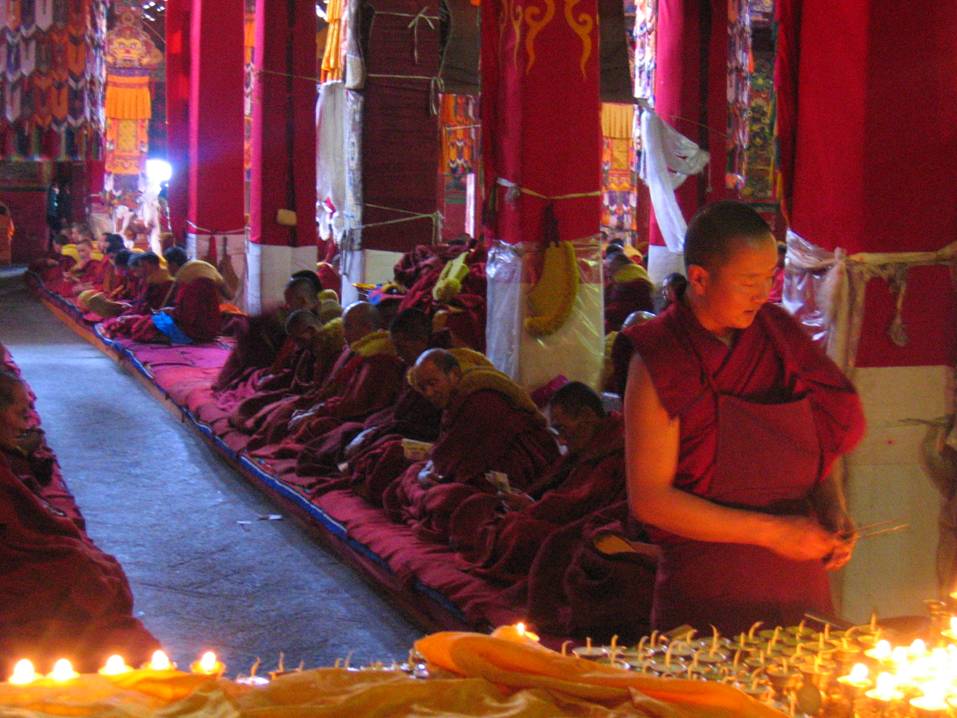
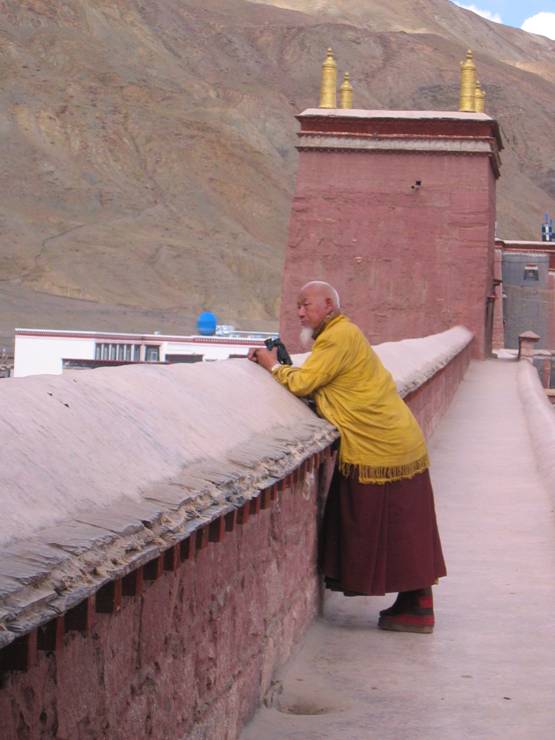
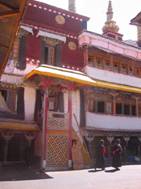
Drepung monastery. One of the largest monasteries of the world, once housing thousands of monks but now 'only' hundreds. Munks run on and of with buckets of yak butter tea.
When I saw among the praying crowd one munk playing with his mobile phone, Sonam laughed and said it was no problem, as longs as he keeps on praying...
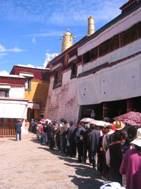

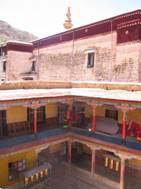
Sera monastery.

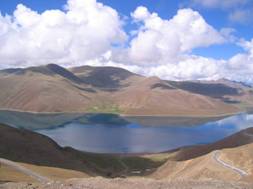


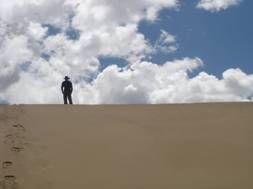


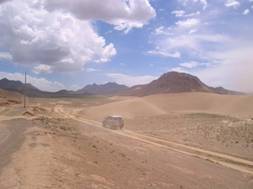
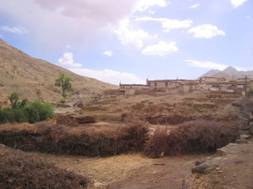
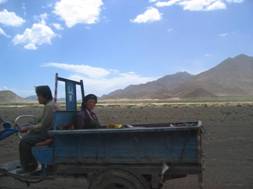

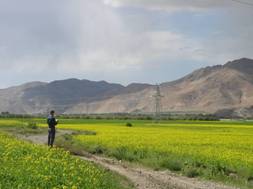

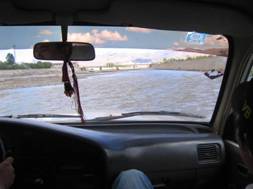
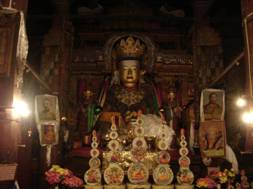
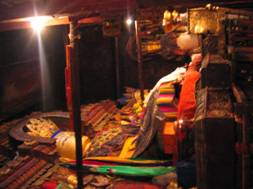


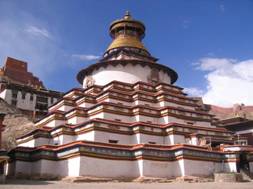

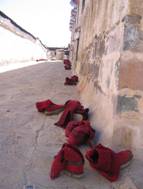
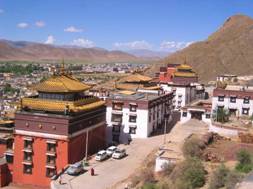


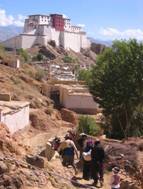


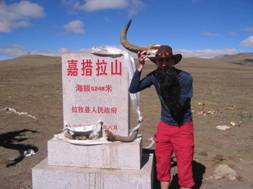


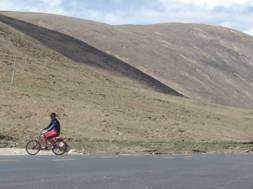
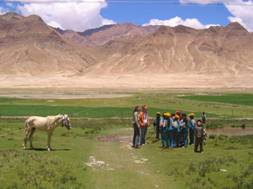
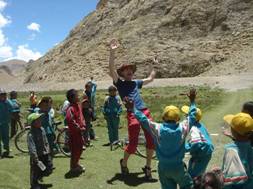
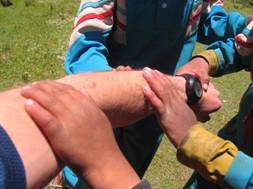

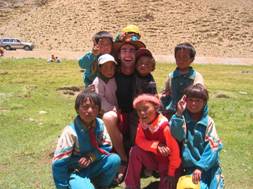
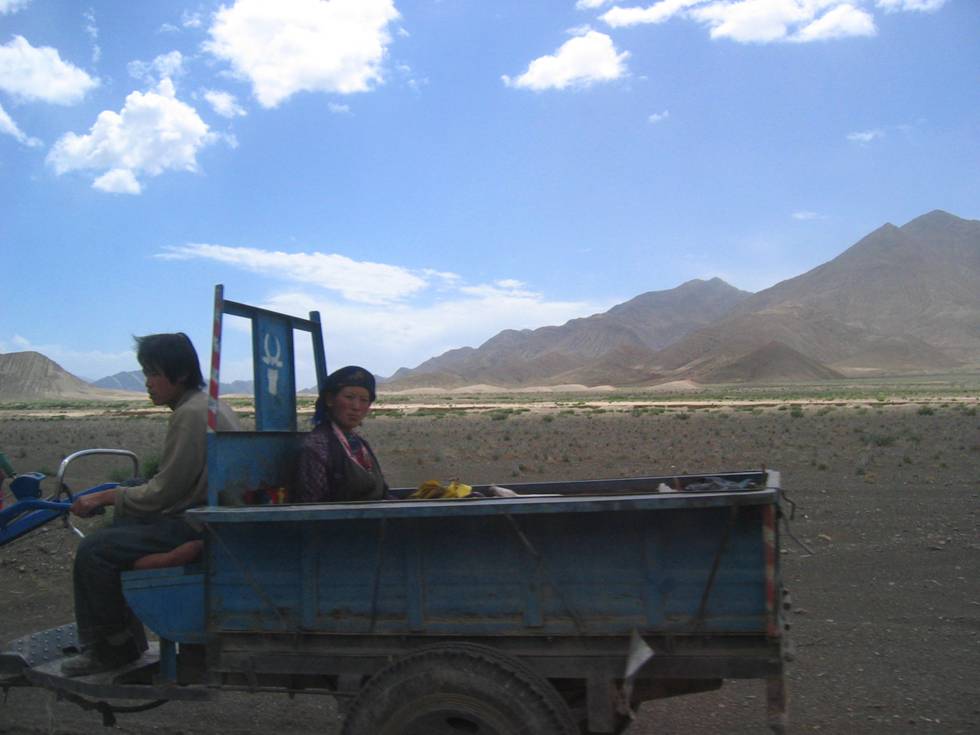
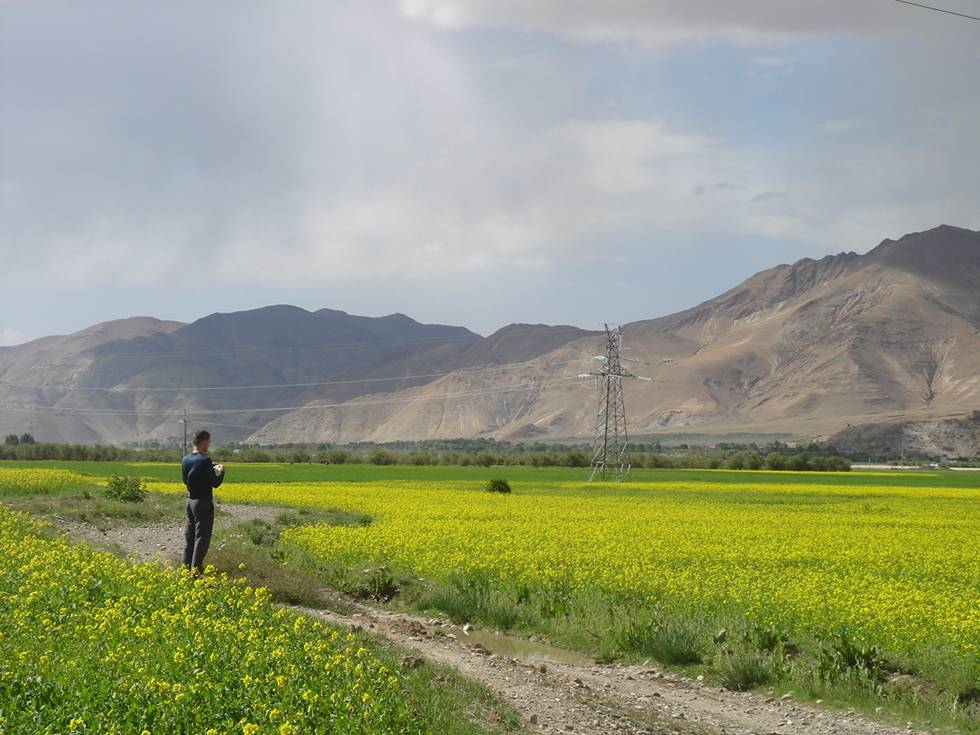
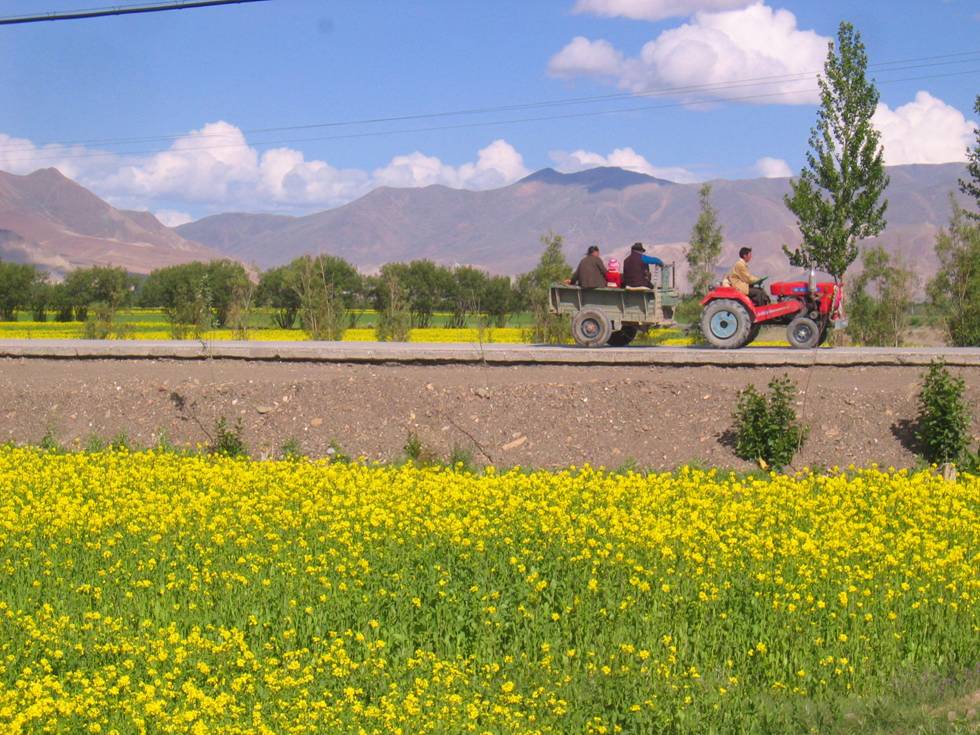
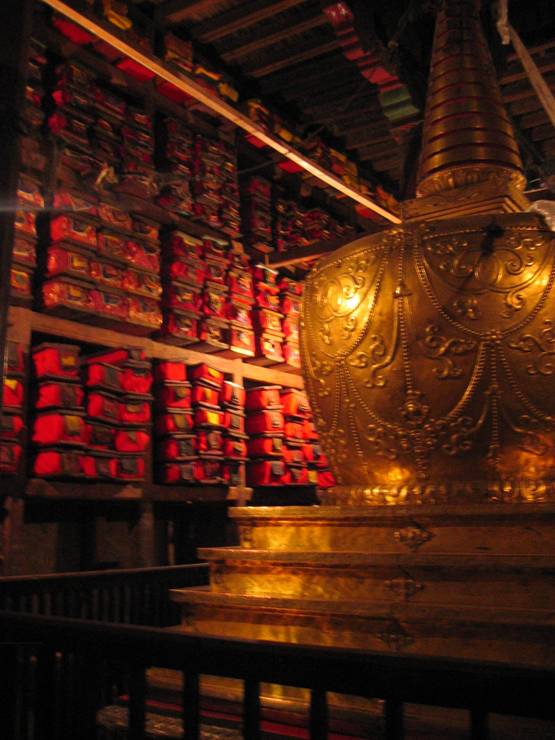
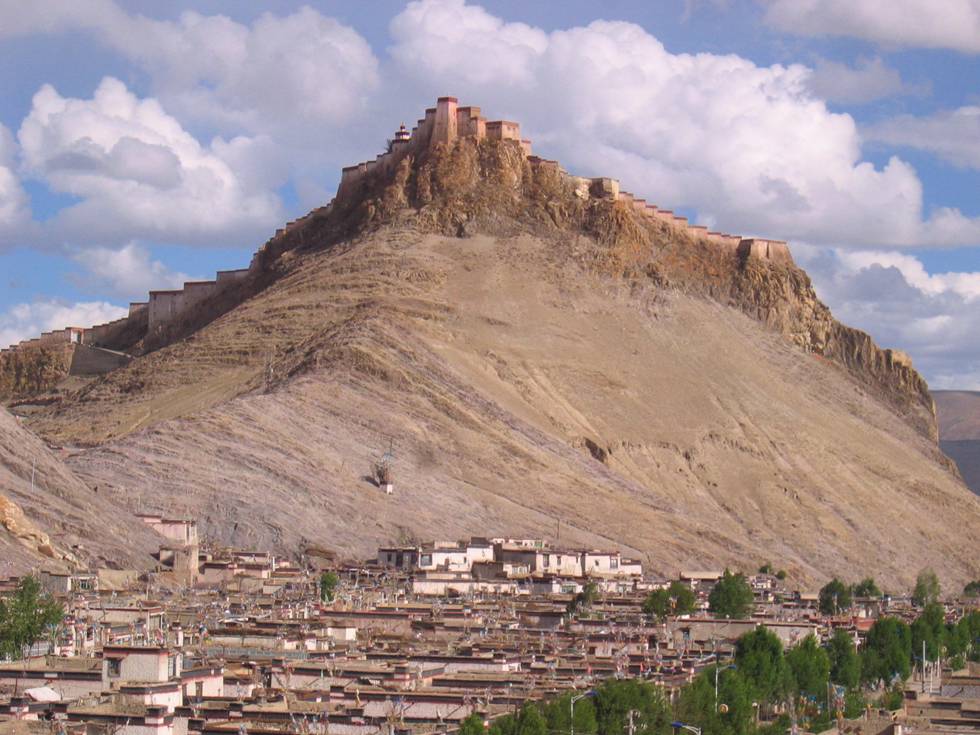
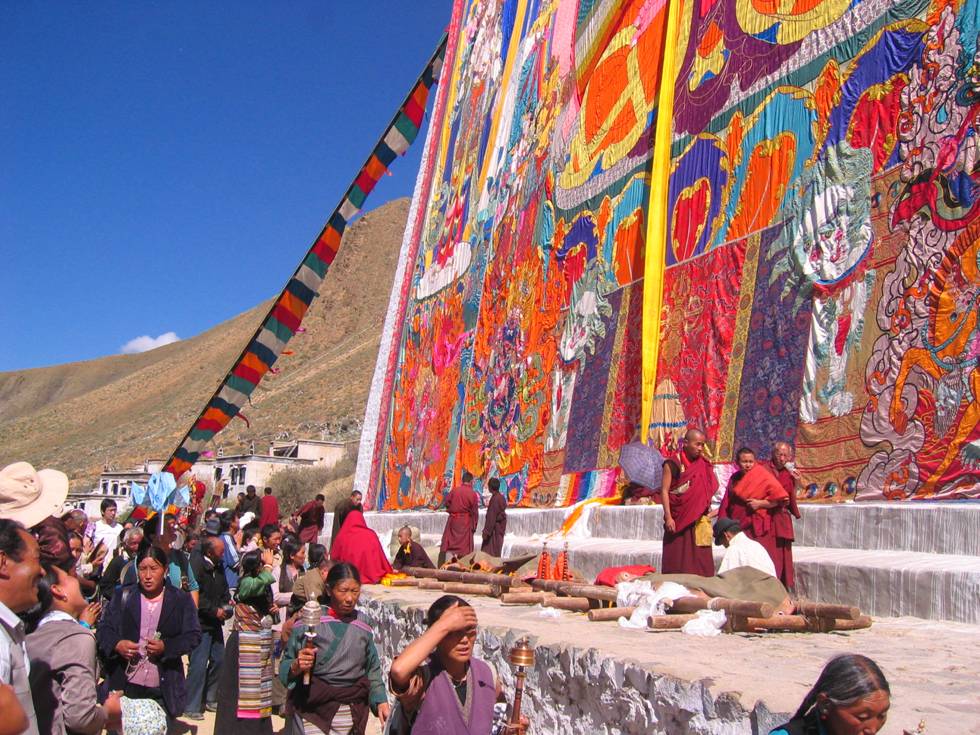
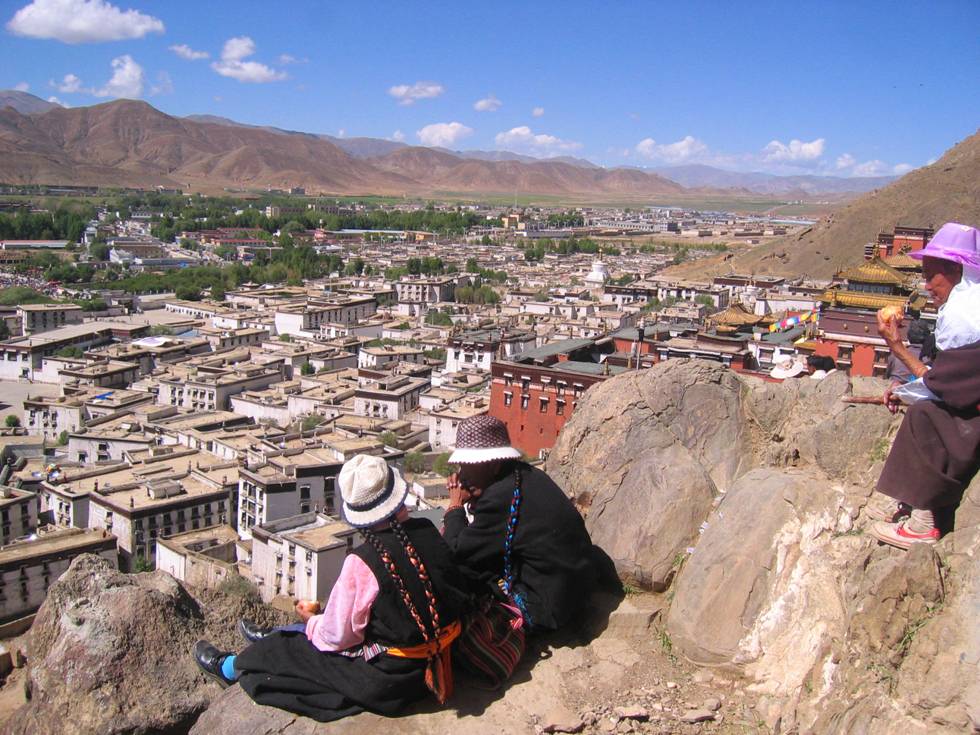
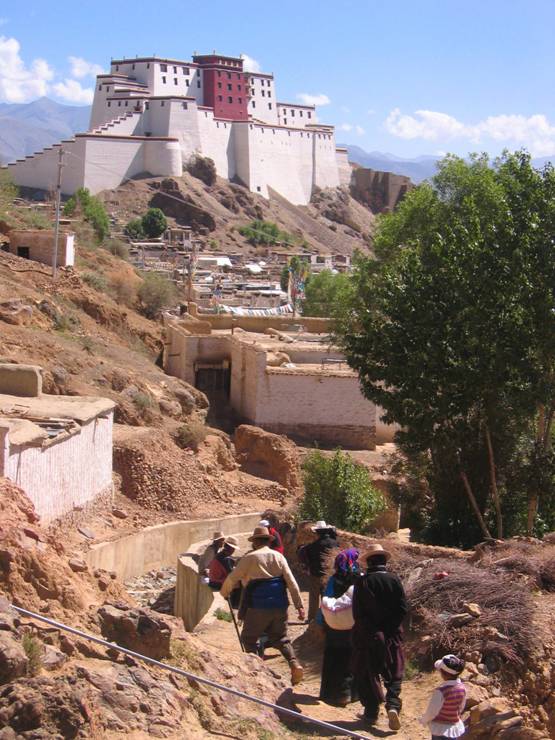
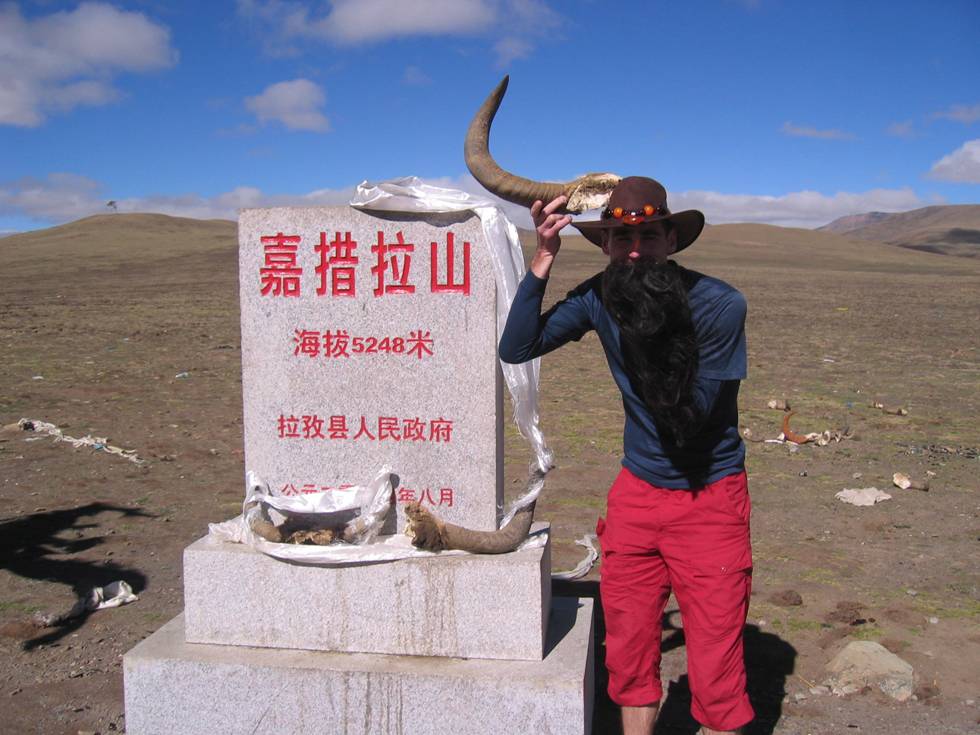
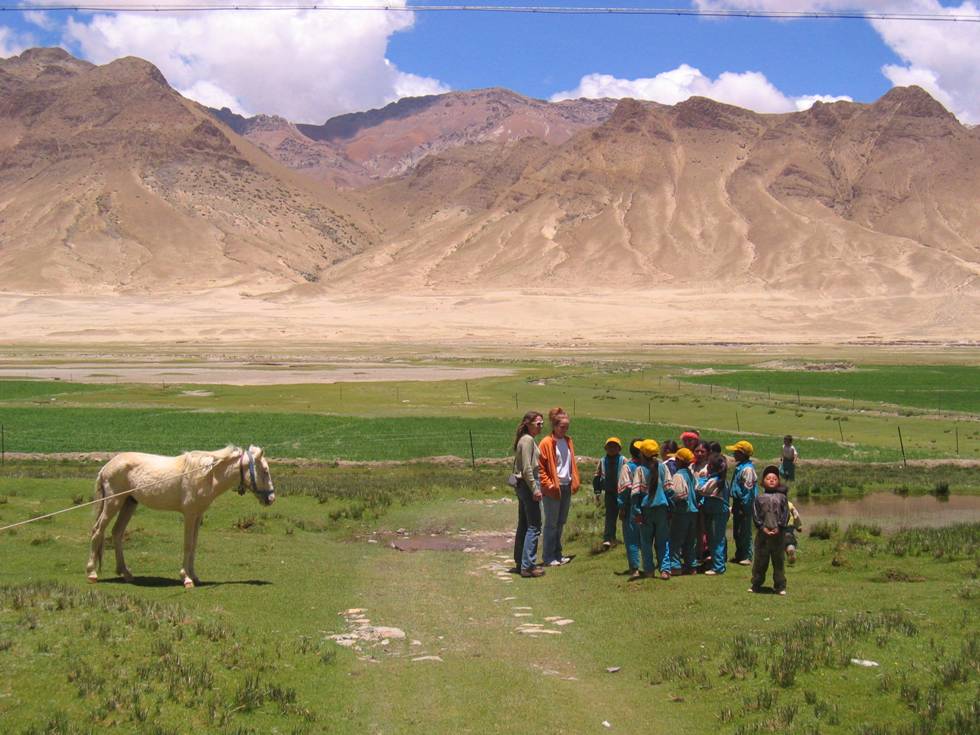
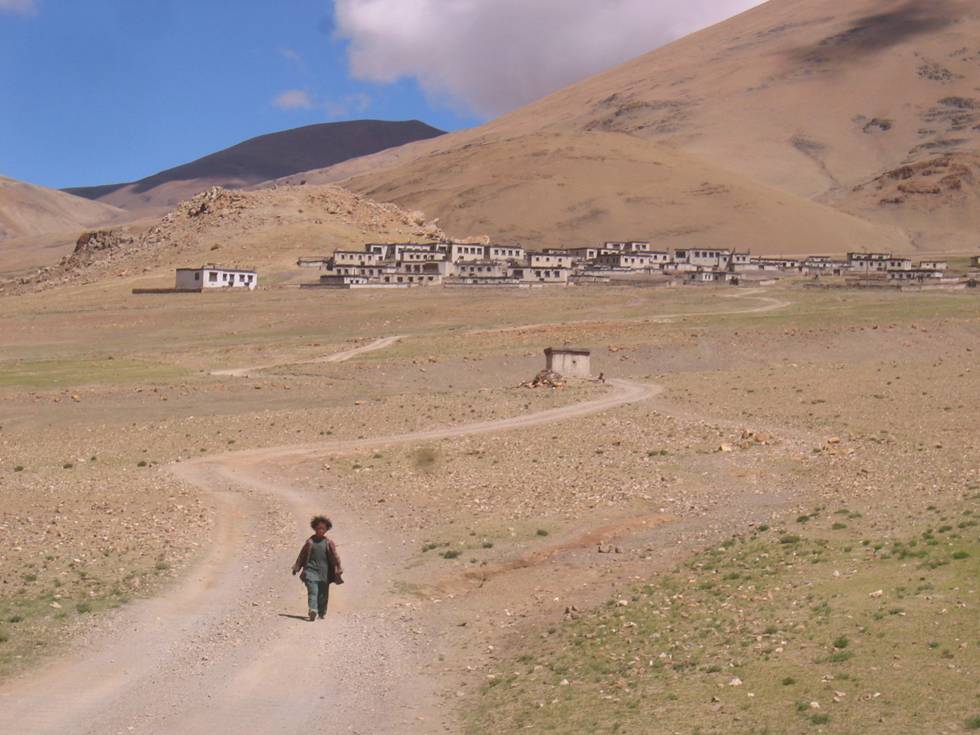
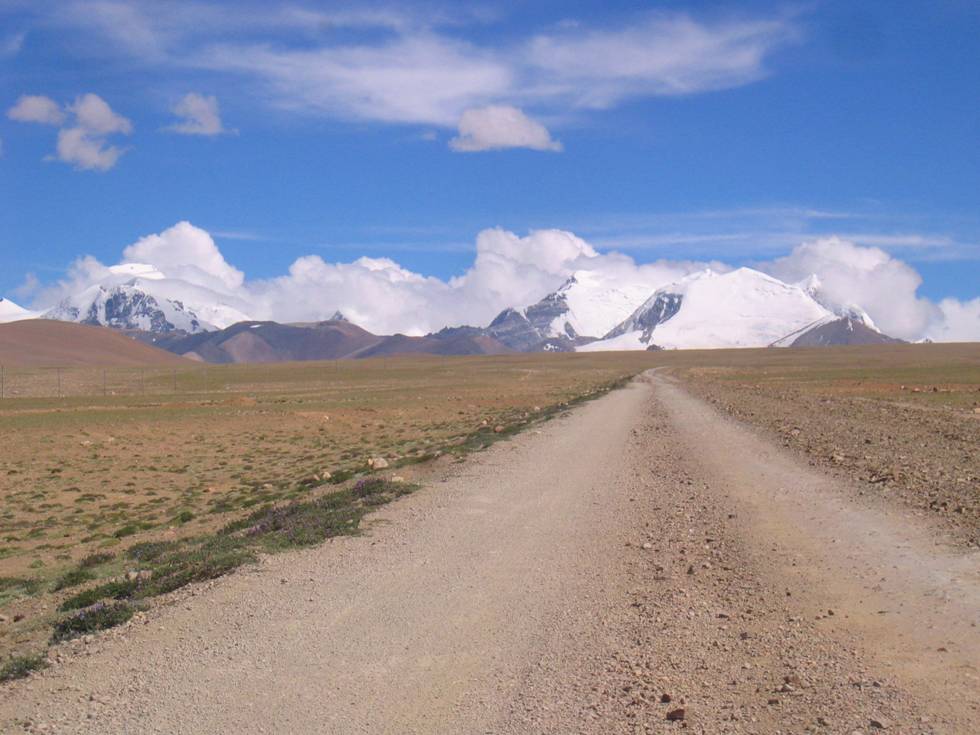
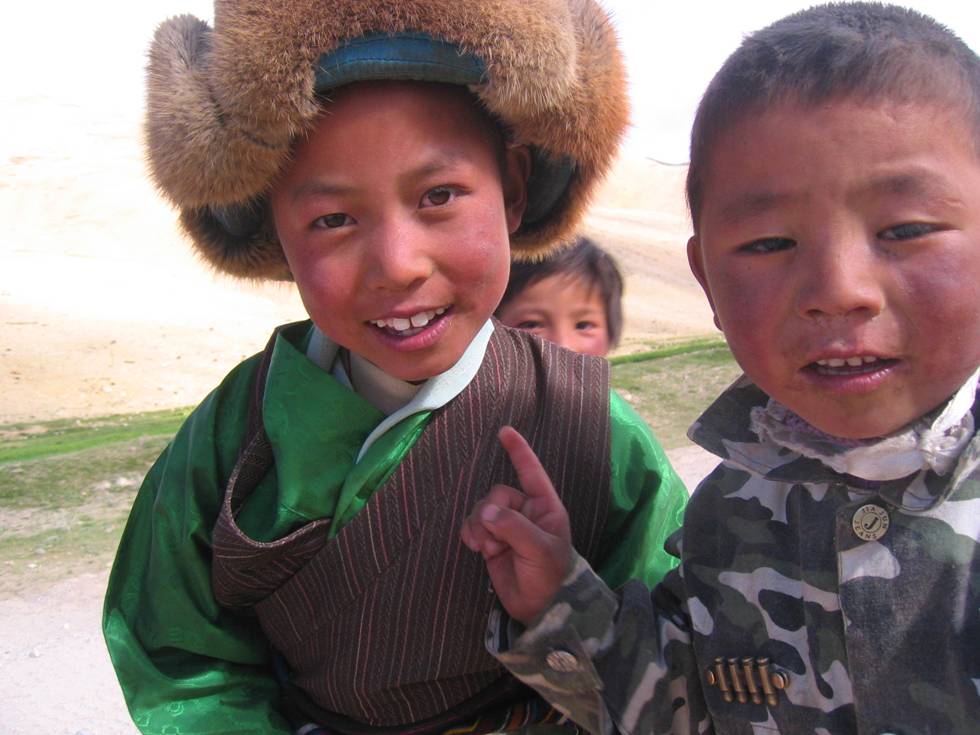
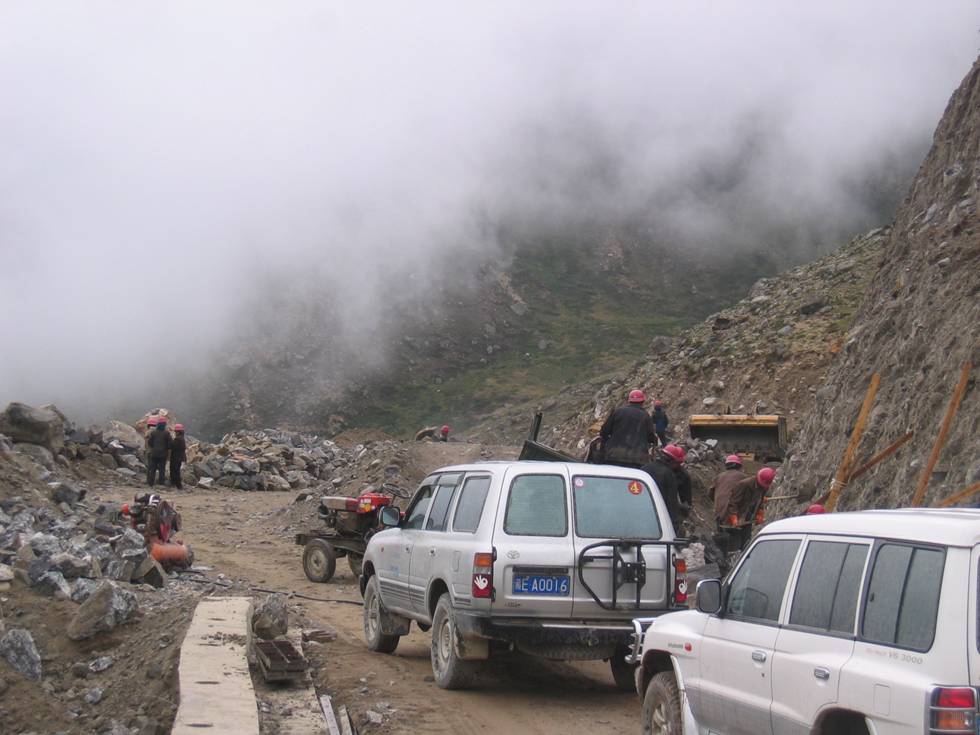
Tibet overland. I went from Lhasa overland to the Nepali border with a Landcruiser together with Norimichi, Erica and Jennifer. We passed the 'cities' of Gyantse, Shigatse and Sakya, with loads of monasteries on the way and unforgettable landscapes with dry mountains, lakes and deserts.
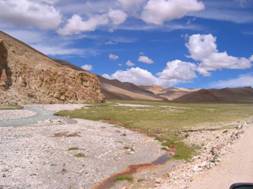

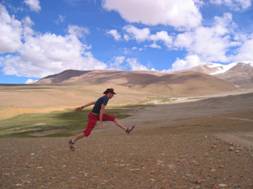
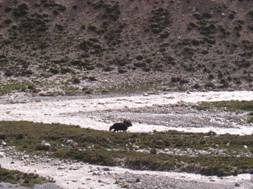


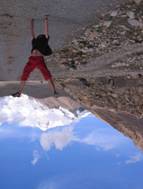


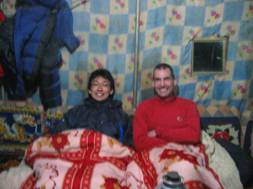
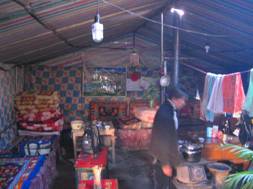


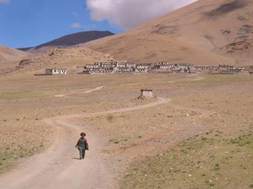
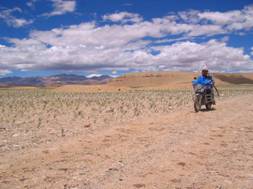


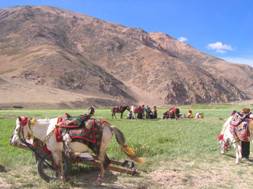

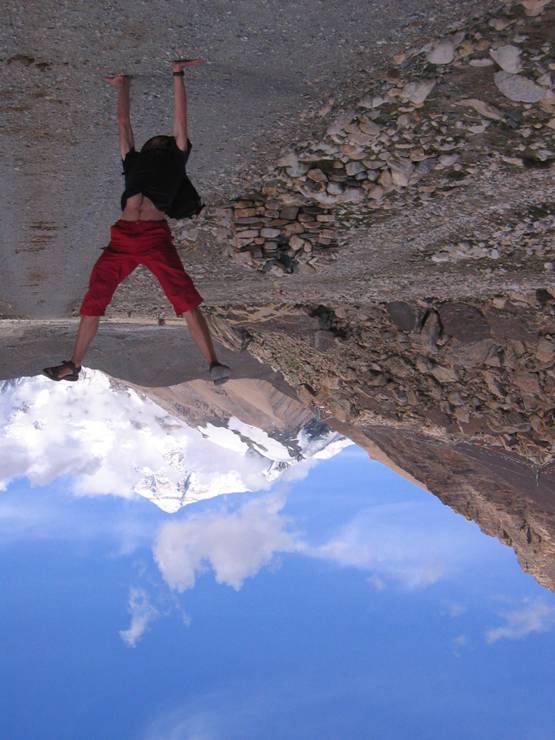
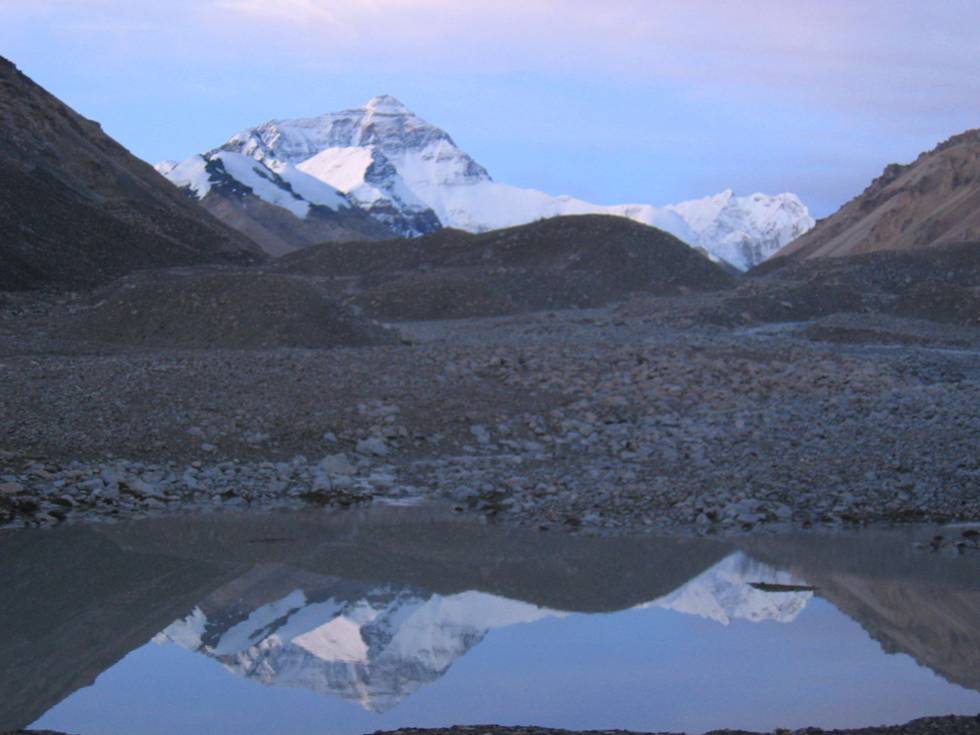
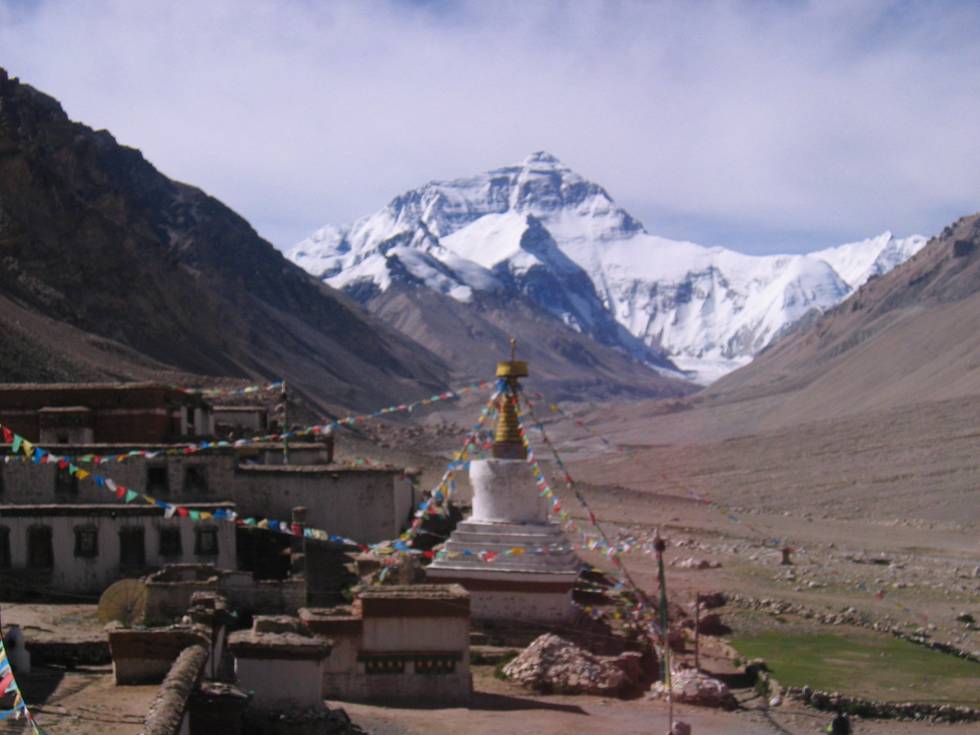
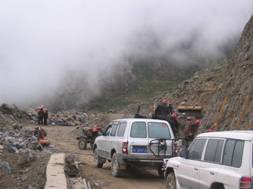
Mount Everest Base Camp. Of course it would have been peanuts to climb it: I feel fit, I'm used to the altitude, the weatheer seems perfect, I would love to make it to 8000 or even higher, and I'm here, so who could stop me?
Well, money is an issue: the permits alone cost a fortune, and including the rest it would cost me as much as one or several years travelling. So we just went to the Base Camp of the Mount Everest, and I wil have to choose a cheaper mountain...

Border adventures. So far in my adult life, I had hit two persons, two separate but similar occasions: guy steals bicycle, I stop them, I talk to them for a while but they won't say sorry, I punch them once, and afterwards the police shows up and tells me I did the right thing, haha. Now here is the third occasion:
While we were waiting at the Chinese (Tibetan) border with Nepal for the border to open in the morning, we were changing our Chinese money into Nepalese money with one of the money changers who hang around the border.
On his calculator he shows me the rate of exchange, and I recalculate it twice, and we hand over the money to eachother.
As it turned out later, the calculator has been messed with, it was preprogrammed and the '=' and 'M+' buttons were swapped, so that I would get a realy realy bad rate of exchange without knowing.
I didn't know the trick and didn't check the calcualtion by head, but after the transaction I got tipped secretly by another money changer.
So I went back to my money changer, who was now doing business with my friend Norimichi.
I grabbed the money changer and demanded my money, he gives it back to me, I wack him and start chasing him a while, and I secretly paid a big tip to the other money (tipping) changer.
When I get back to Norimichi, I realise that we both have all the money, both Chinese and Nepalese, we just 'earned' about 200 dollars, haha!
But the guy came back of course, with his friend, to intimidate me to return his money.
I told them to get lost, and fortunately there was a lot of border police around so they didn't dear to do much.
However, since it was a lot of money for them, they didn't give up that easily.
Exactly when I was at the border and the douanier was scannnig my passport, the money changers reported us to the police, who took my passport immediately, and Norimichi and I had to go into an interrogation room with the money changer, while Jennnifer and Erica had already crossed the border and were waiting outside.
Inside the interrogation room were three police officers, they started questioning us, and we told about the cheaty calculator. The money changer however showed a different calculator, and later on he even brought a third one.
In the mean time I was thinking that I had to get rid of the Nepalese money before they started stripsearching me, so I asked to go to the toilet, and outside I secretly gave the money to Jennifer.
Back in the interrogation room, when the Police asked for the Nepalese money, I showed them my wallet with only Chinese money, and it worked, haha!
Norimichi however had to give back his Nepalese money.
The police said they were going to fine the thief heavily, but of course they didn't do anything because they knew about the calculator tricks and hadn't done anything in the past, and this time they didn't write anything down and just let him go.
But we taught the money changer a lesson he will never forget, and we earned a dirty 80 dollar, which we spent that day on a Landcruiser trip to Kathmandu, a hotel room and a nice dinner. Fortune is with the brave, once again, haha.
June 21-27: Lhasa; 28: Gyantse; 29: Kalya; 30: Mount Everest Base Camp
July 1: Zhangmou
Nepal (July 2007)

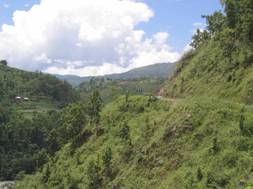
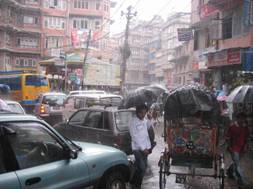


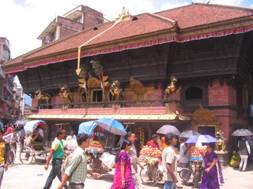
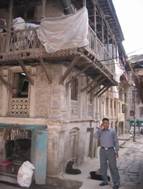

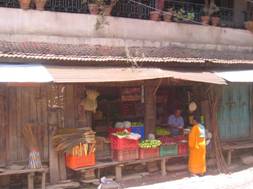

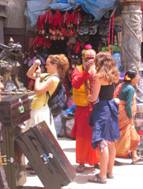

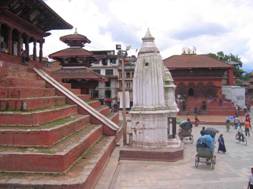

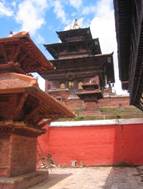

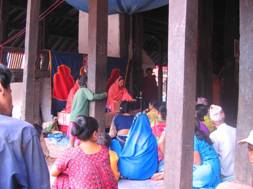

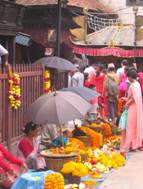


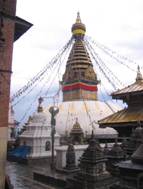


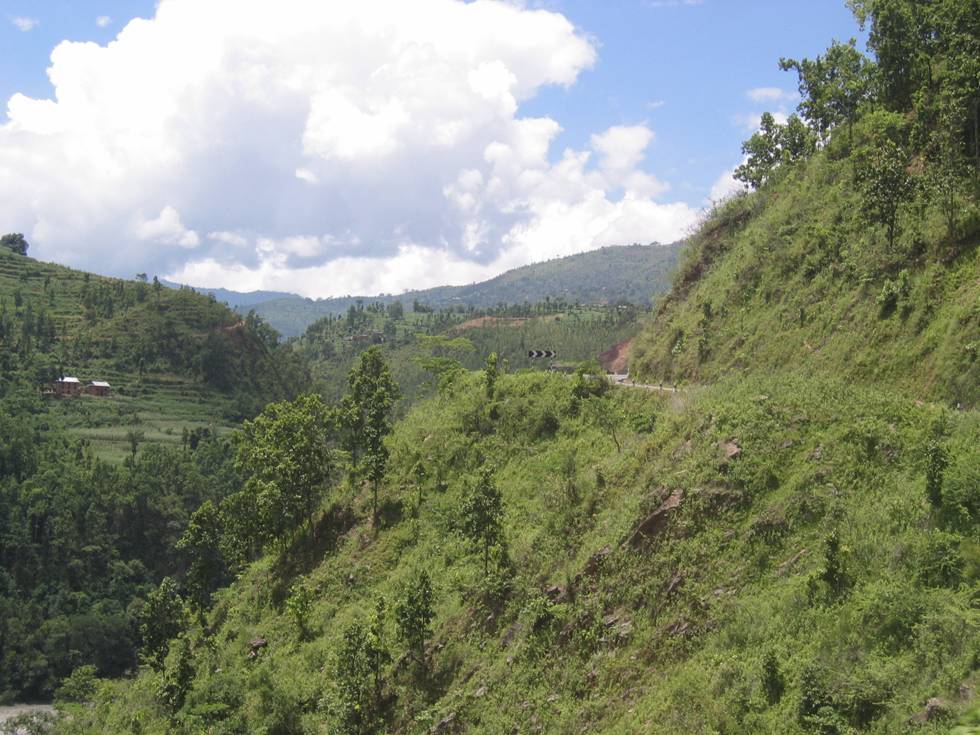
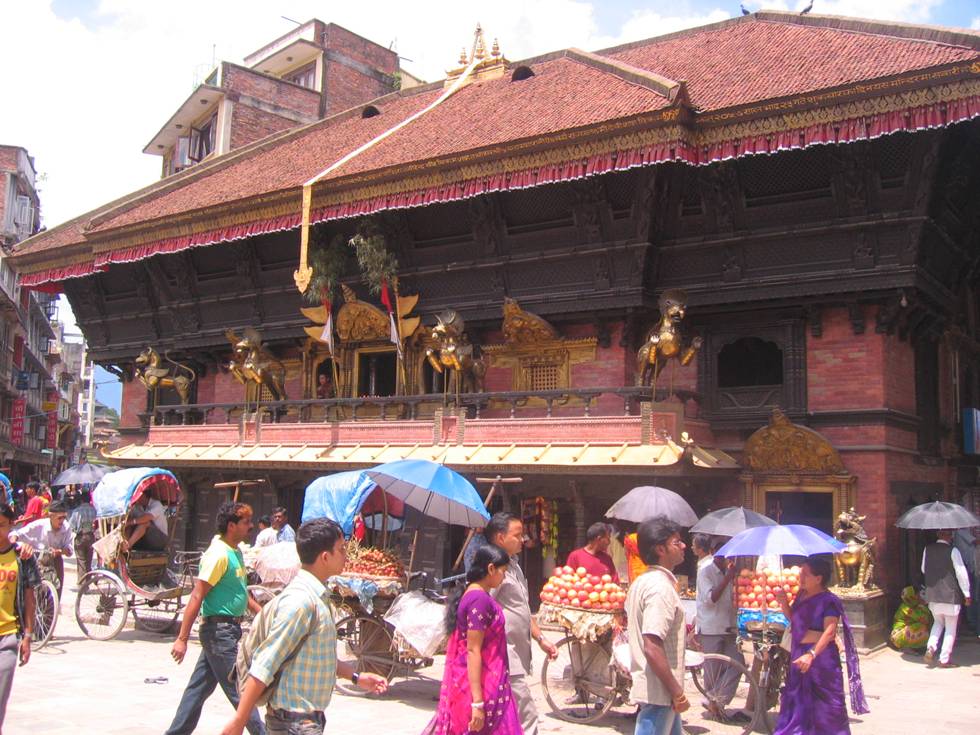
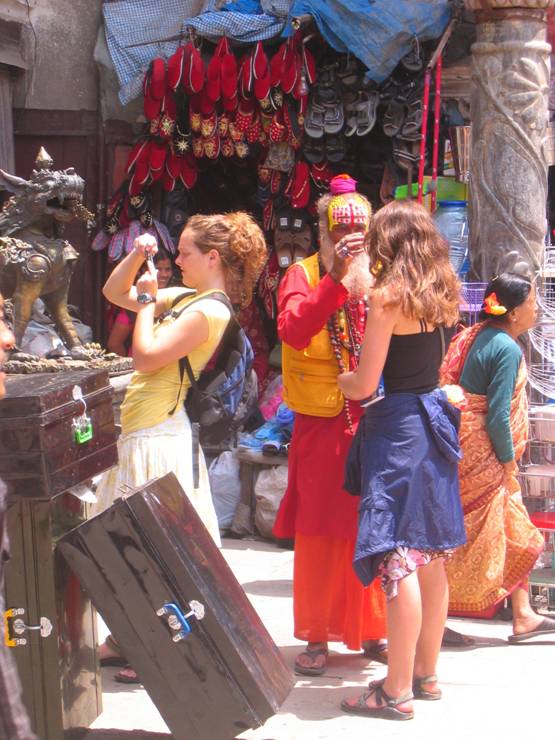
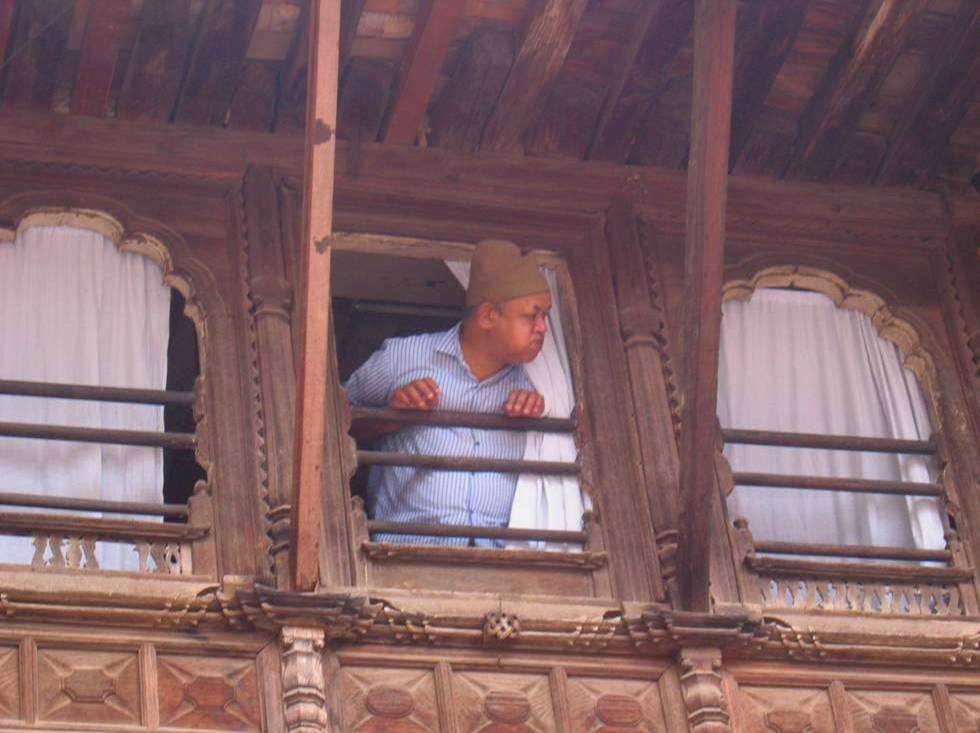
Kathmandu. Crossing from Tibet into Nepal is almost a culture chock: the landscape suddenly turns from dry mountains into tropical jungles, and the people and culture look al lot like Indians.
Allthough Nepal lies in between the giants of China and India, it has its own different culture and was never colonised by the Europeans, it is still a kingdom. However, its landlocked situation and internal struggles make it one of the poorest countries in the world.
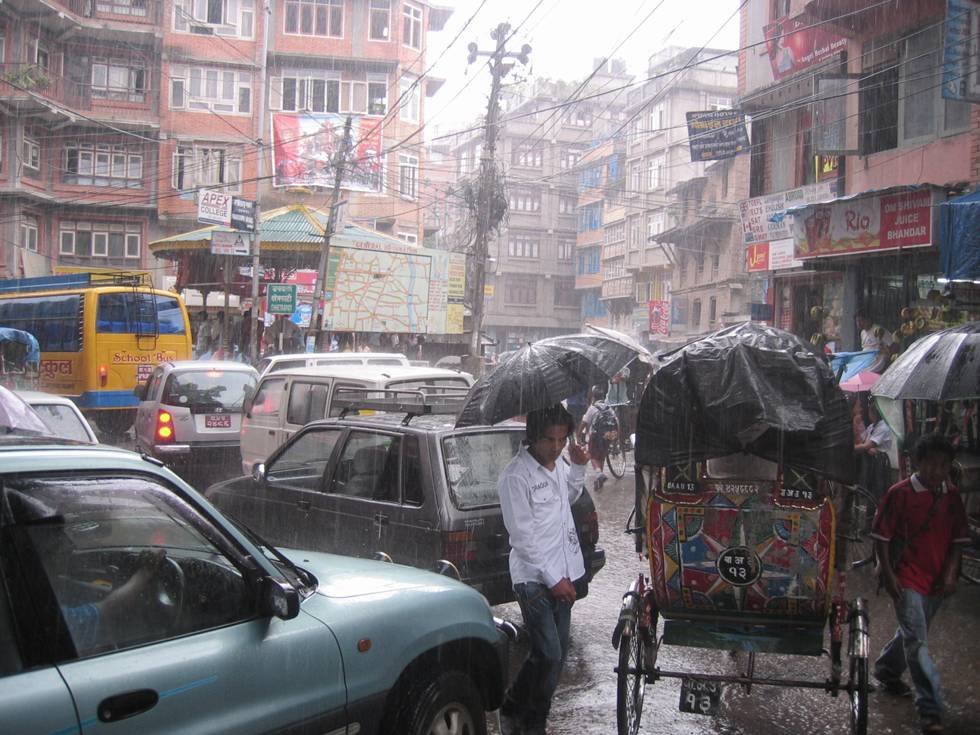
The capital Kathmandu is like a giant village, no high buildings and even in the centre most roads are unpaved.


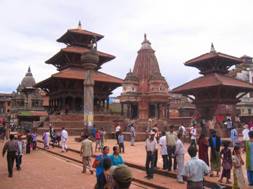
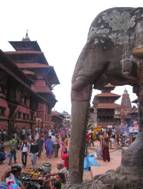
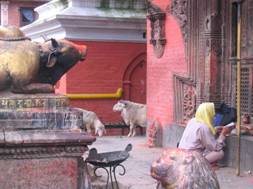


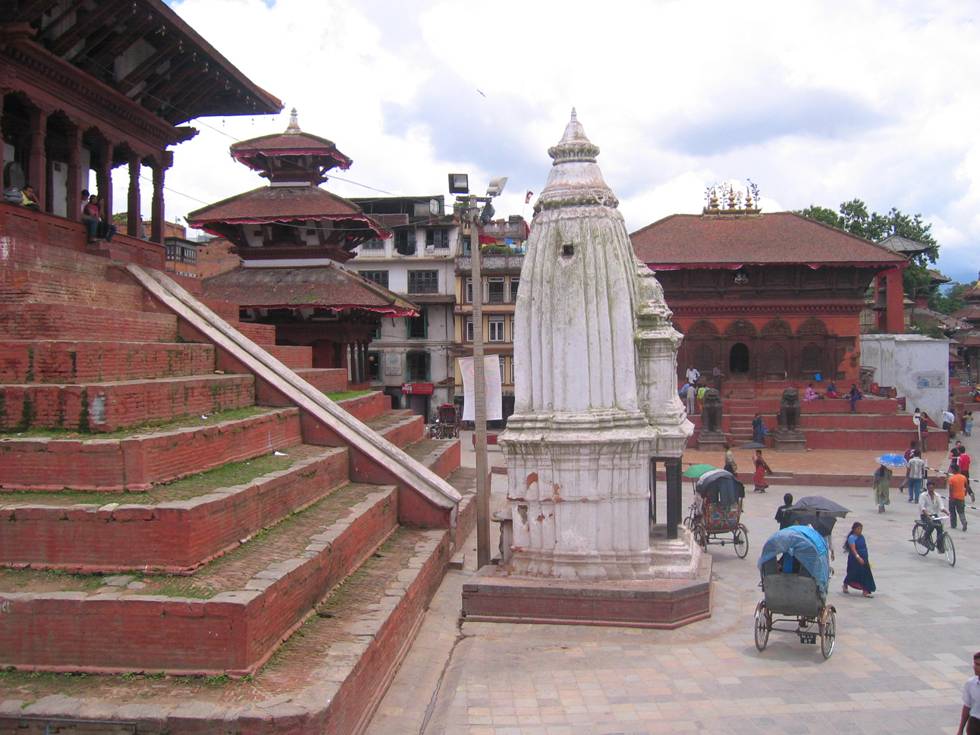
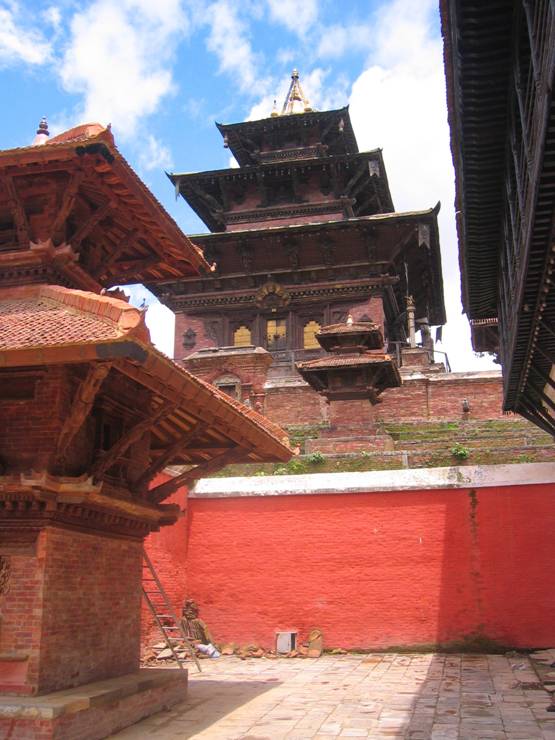
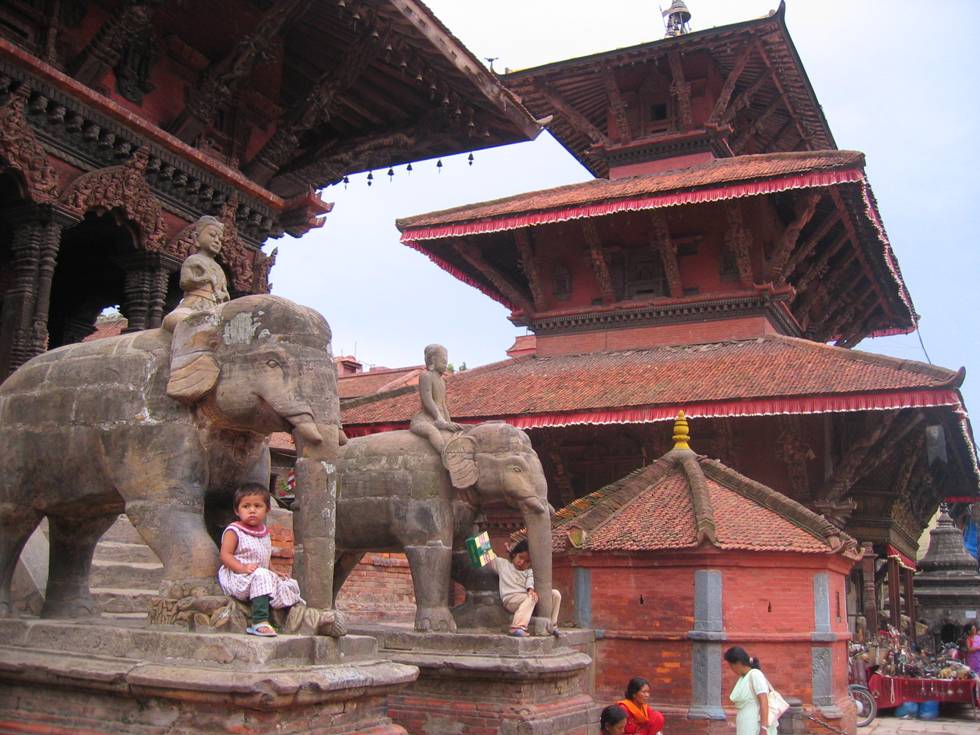
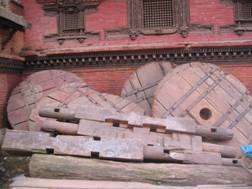
Patan. World Heritage Site near Kathmandu, formerly a different kingdom.

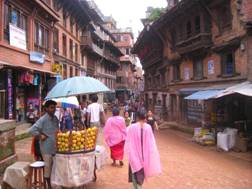


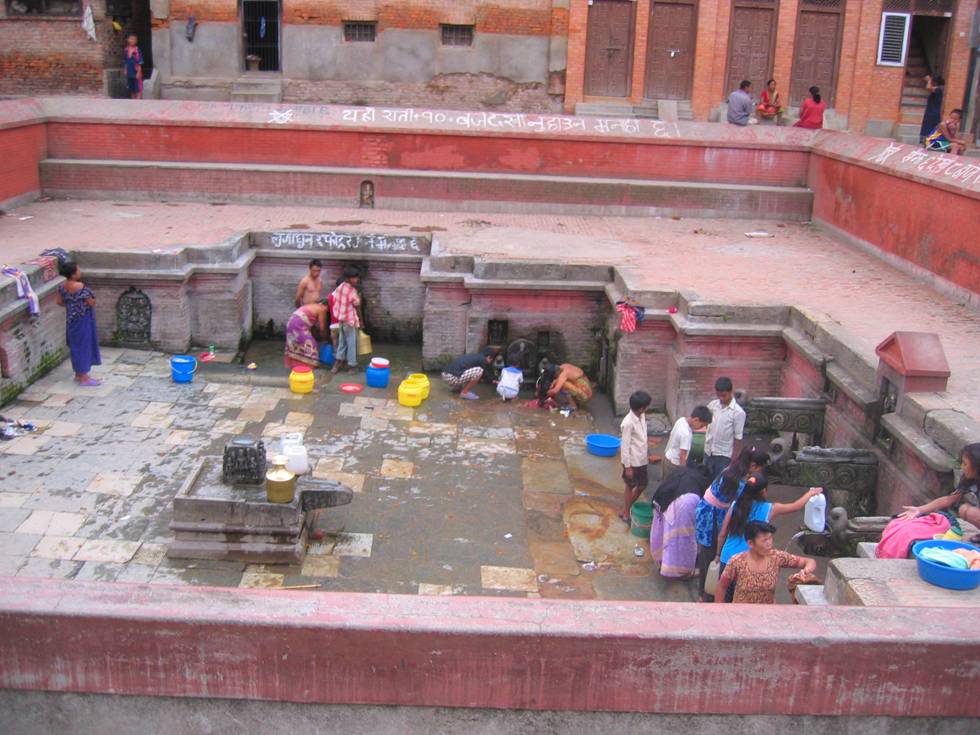
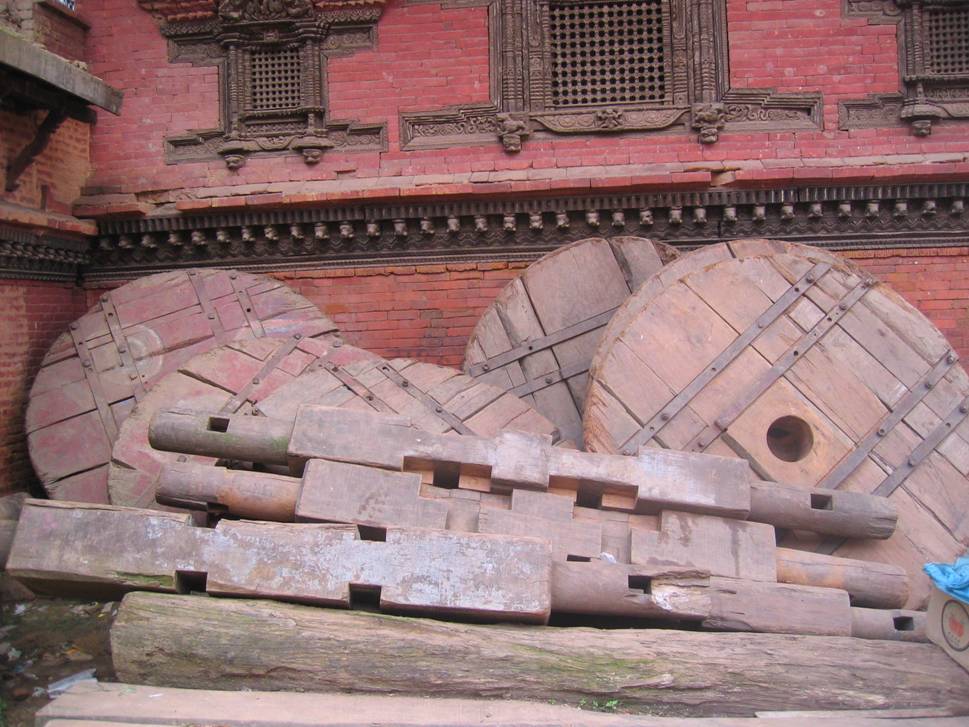
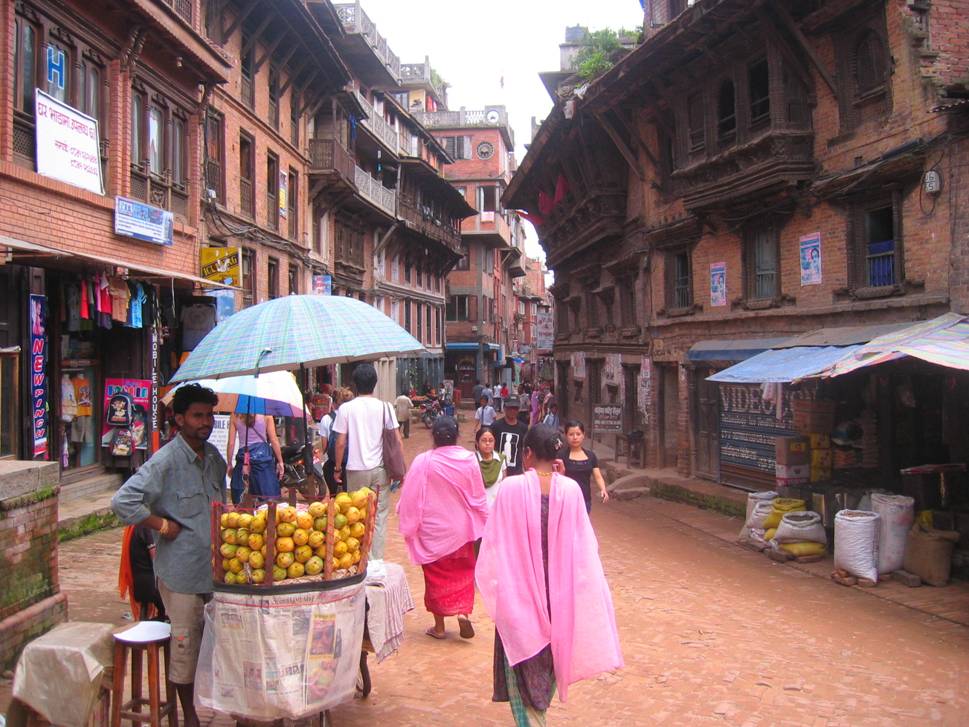
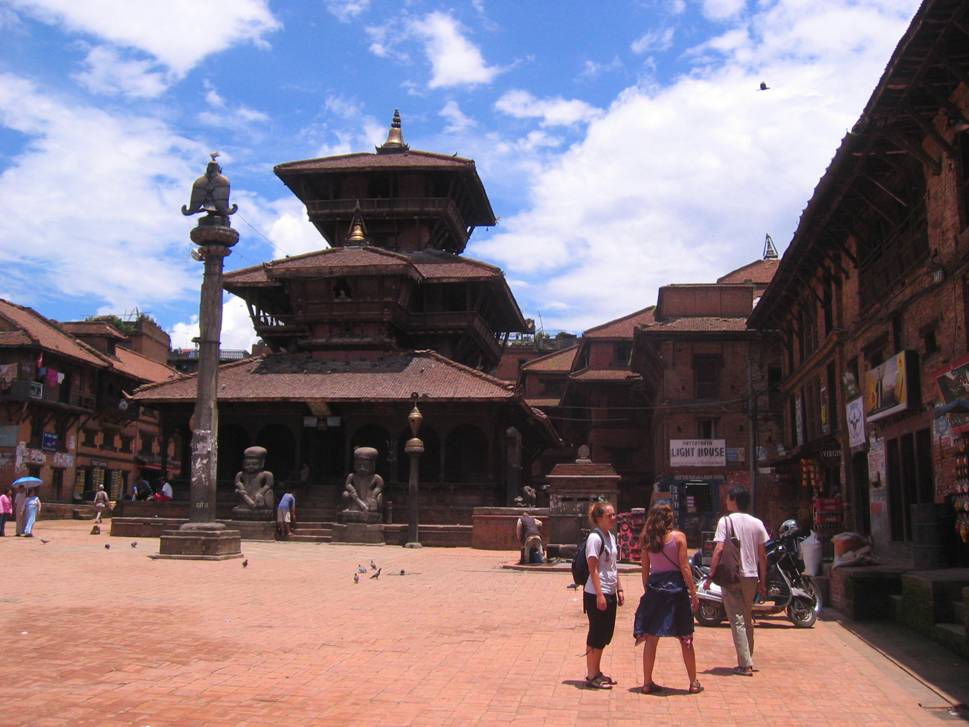
Bahktapur. Another site near Kathmandu.
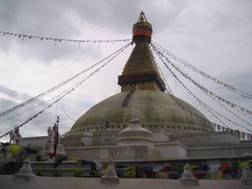
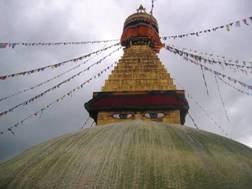
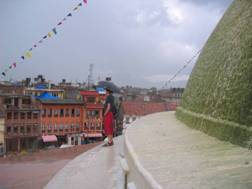
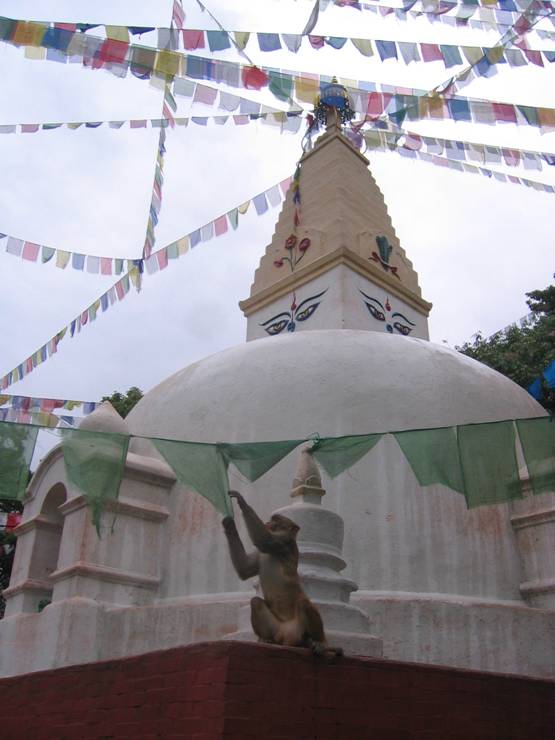
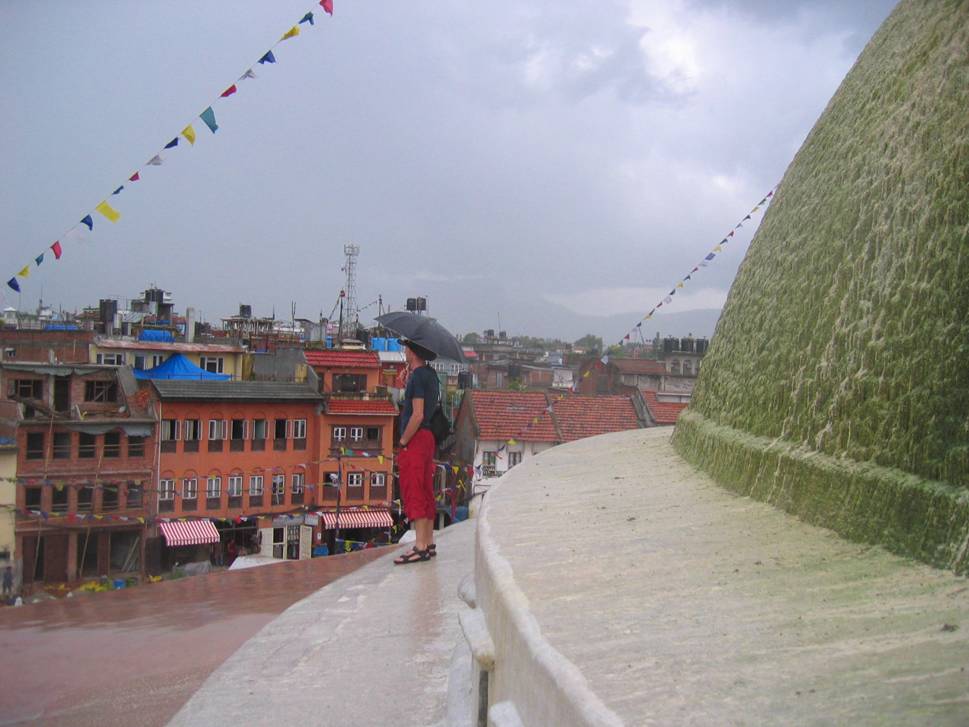
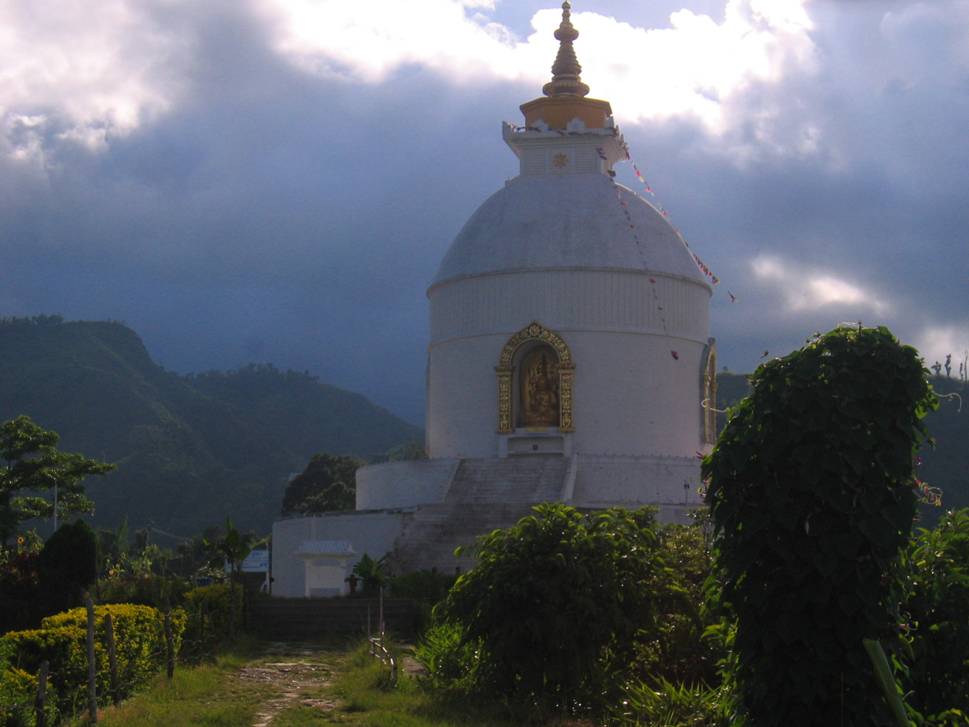
Giant stupa. in Kathmandu.


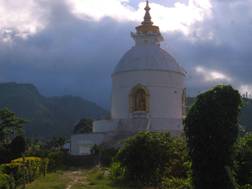


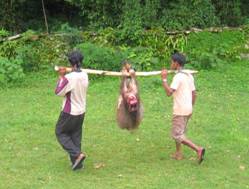

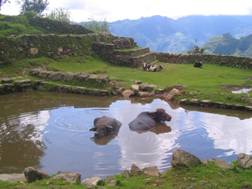


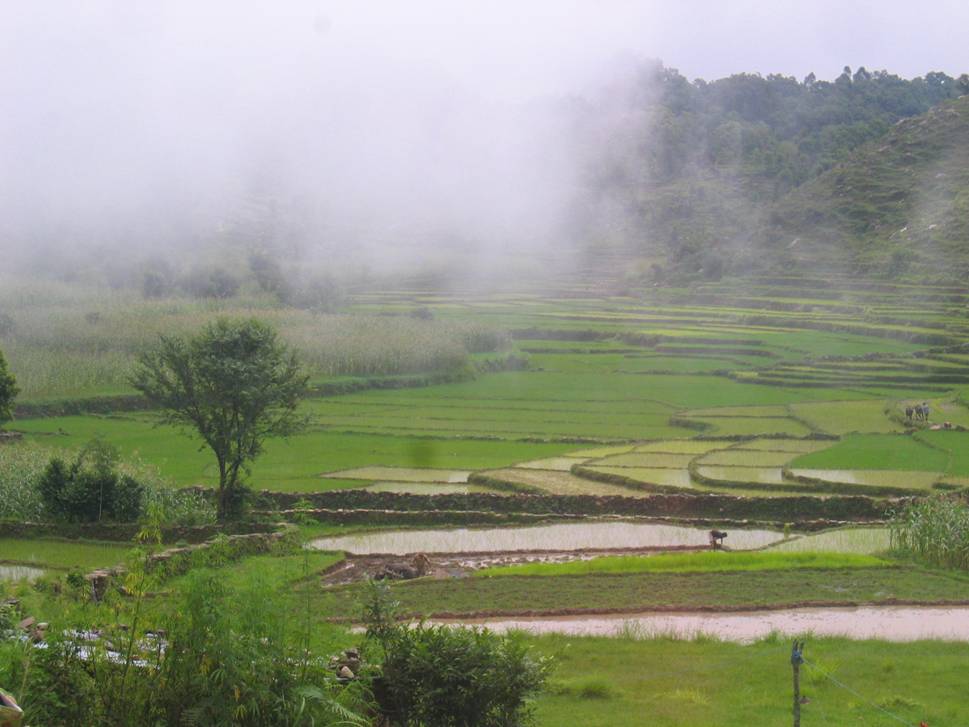
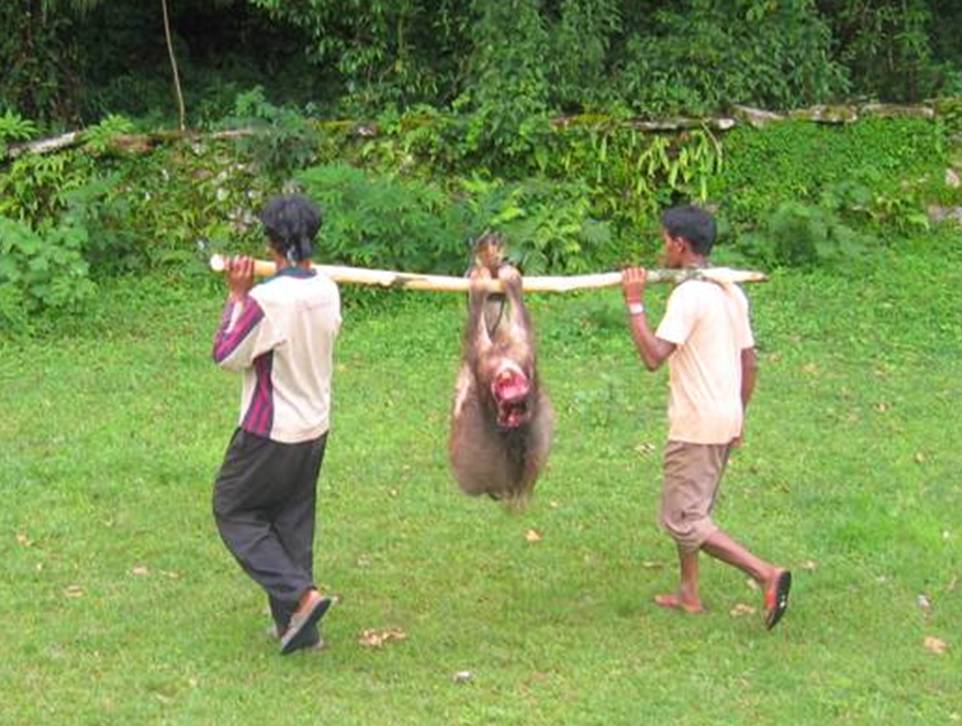
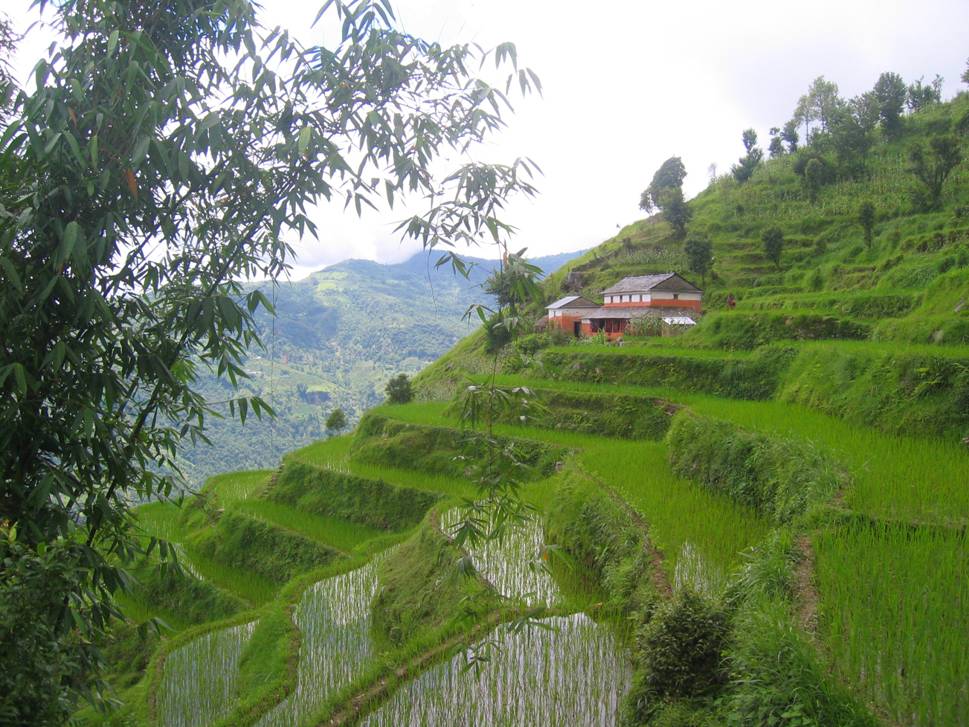
Pokhara trekking. Nepal is famous for its treking, especially the Annapurna circuit near Pokhara, but in the rainy season it is far too hot and wet. However, I climbed a mountain near Pokhara, wich was tough enough: the guide was way too slow, the weather was way too hot, and the leaches were way too agressive.

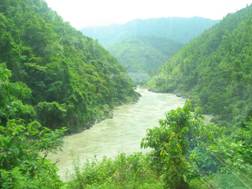

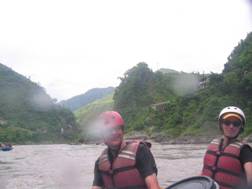
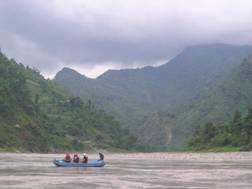


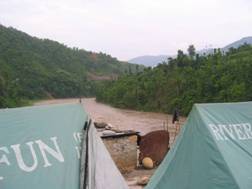


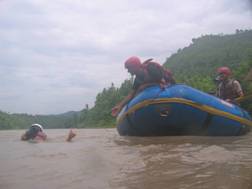
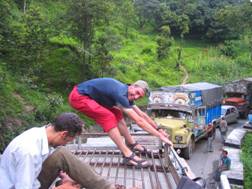

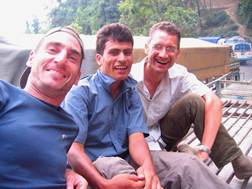

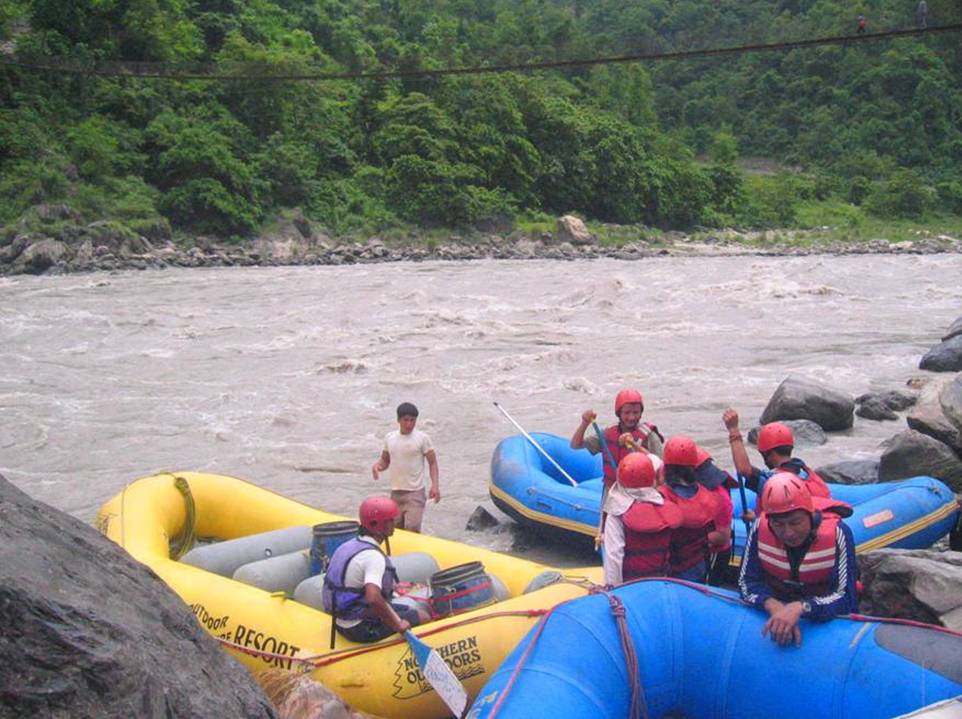
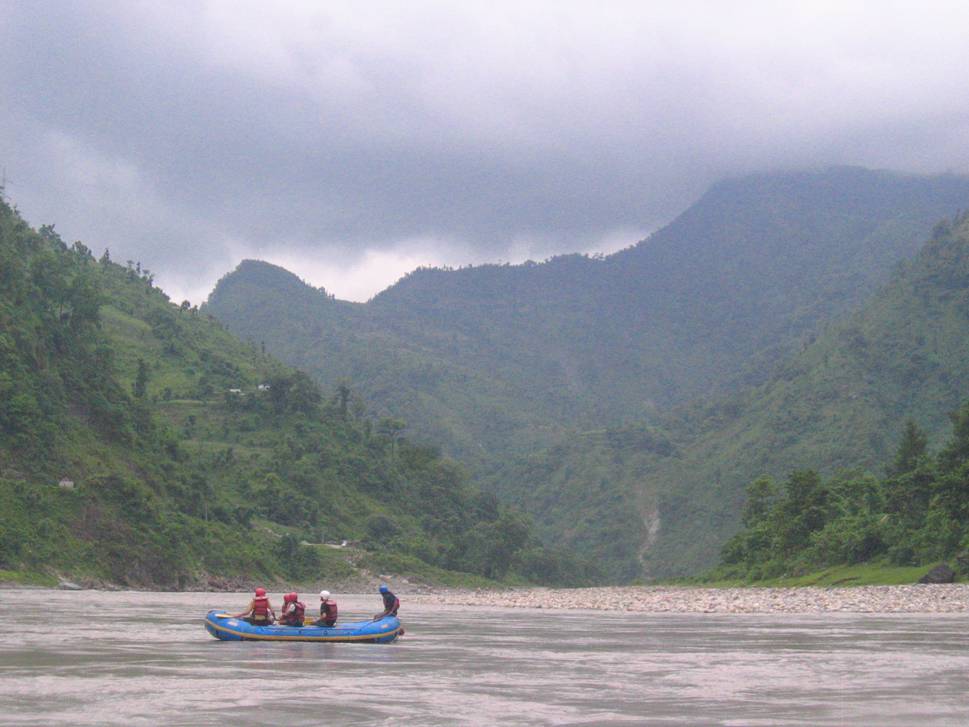
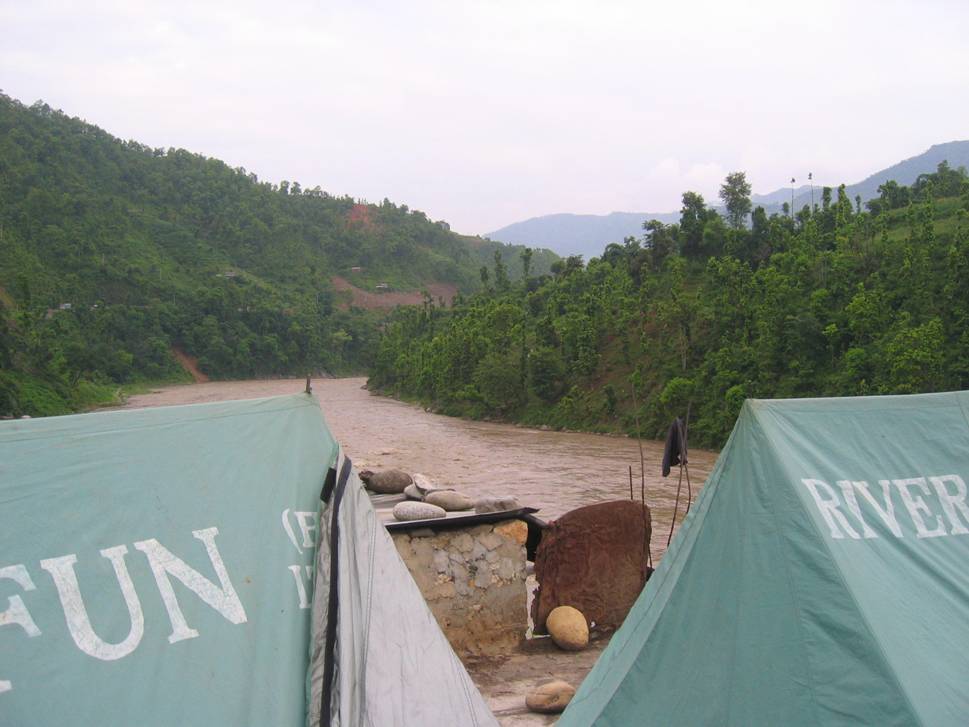
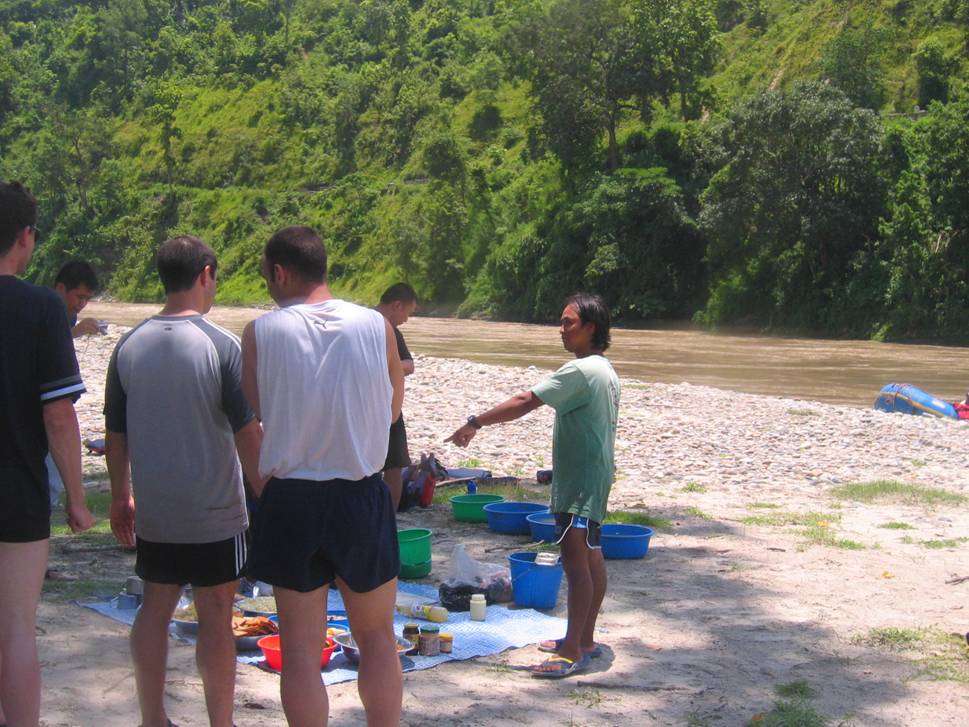
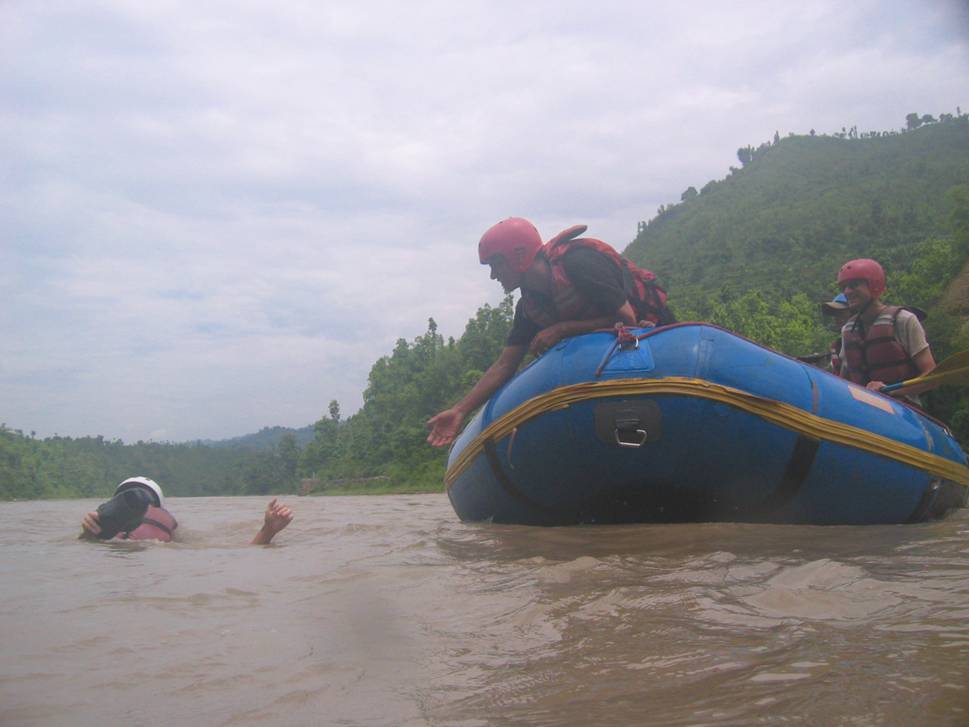
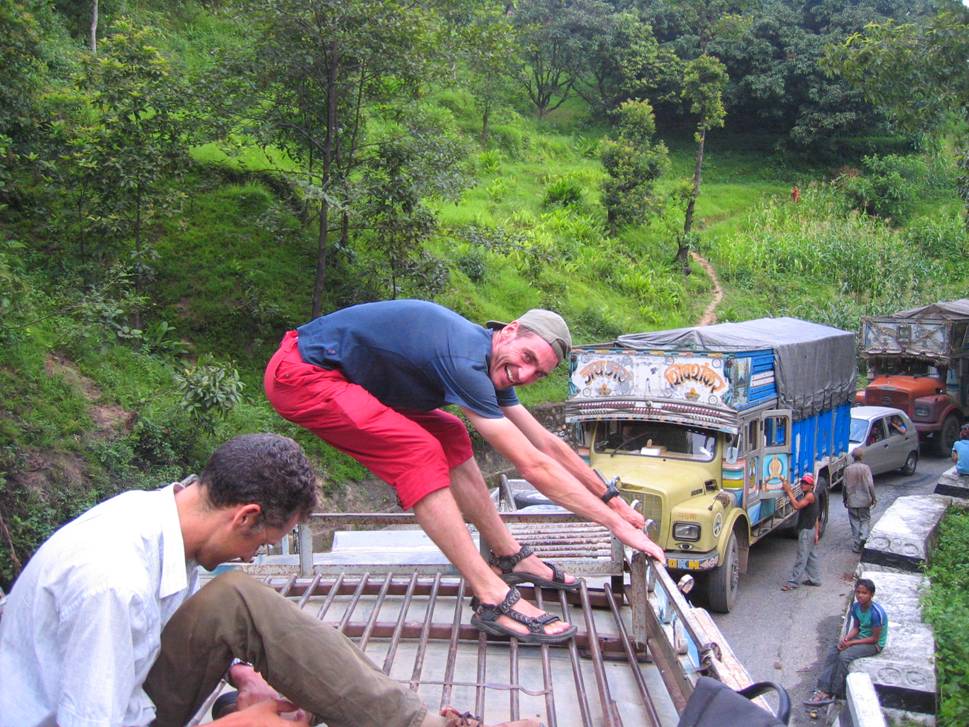
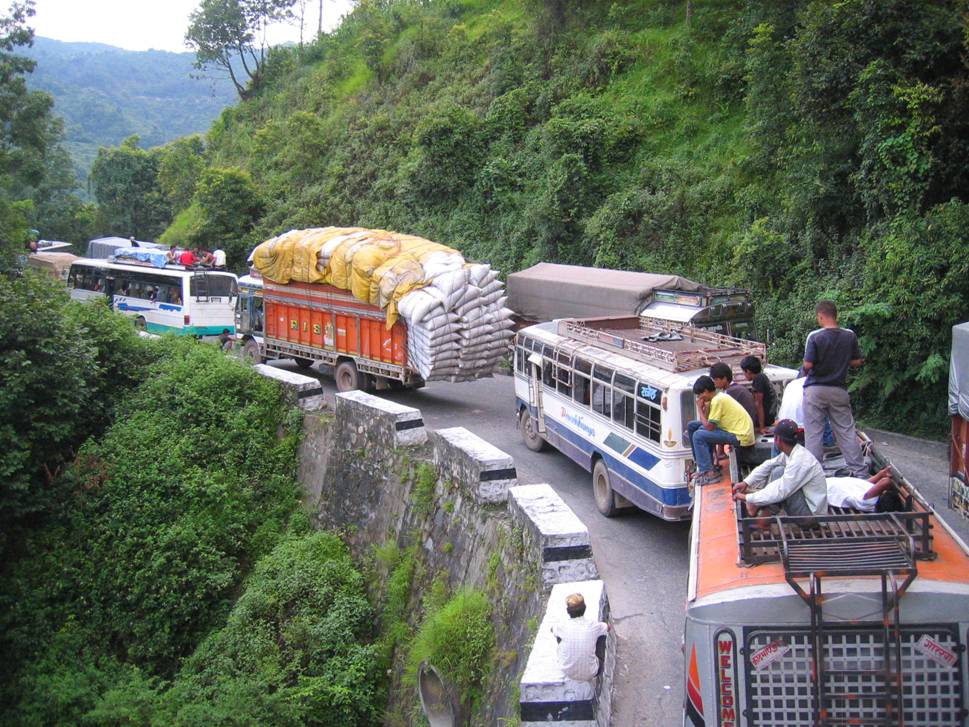
Rafting. Besides trekking, other typical Nepalese outdoor activities include (see pictures):
- early morning bus surfing: watch out for the overhead power lines for decapitulation and/or electrocutation;
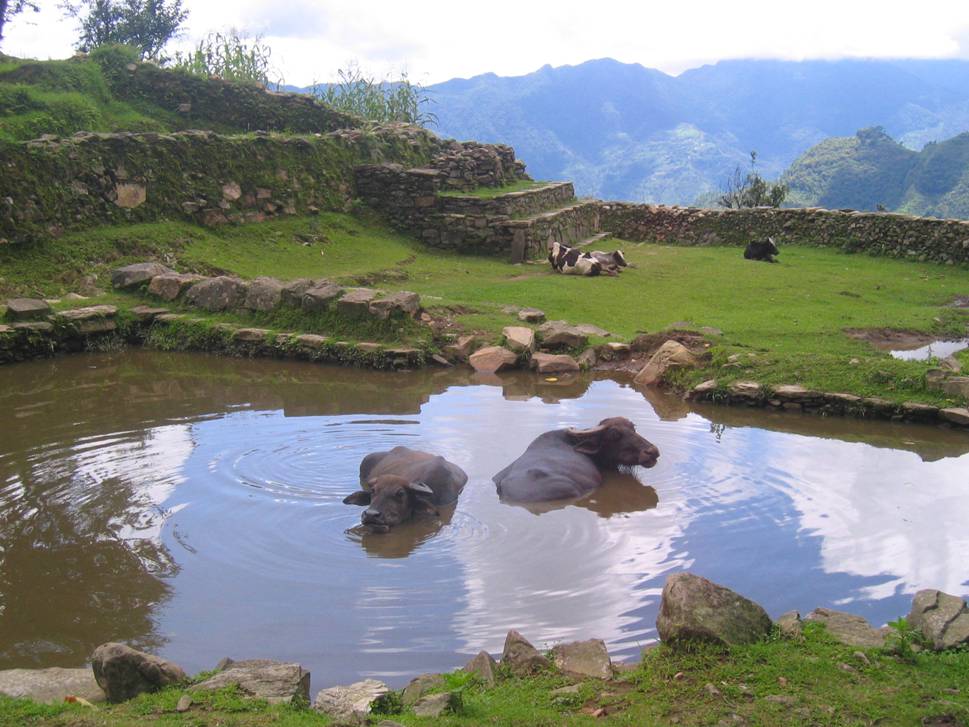
- brown water rafting: try to avoid the floating dead cowes;
- evening truck surfing: extra difficult at dawn, and extra dangerous because you sit on top of a hundred gas bottles;
- hard core camping; sleeping on concrete in a tent on a roof of a house next to the highway;
- easy bus surfing in a traffic jam.
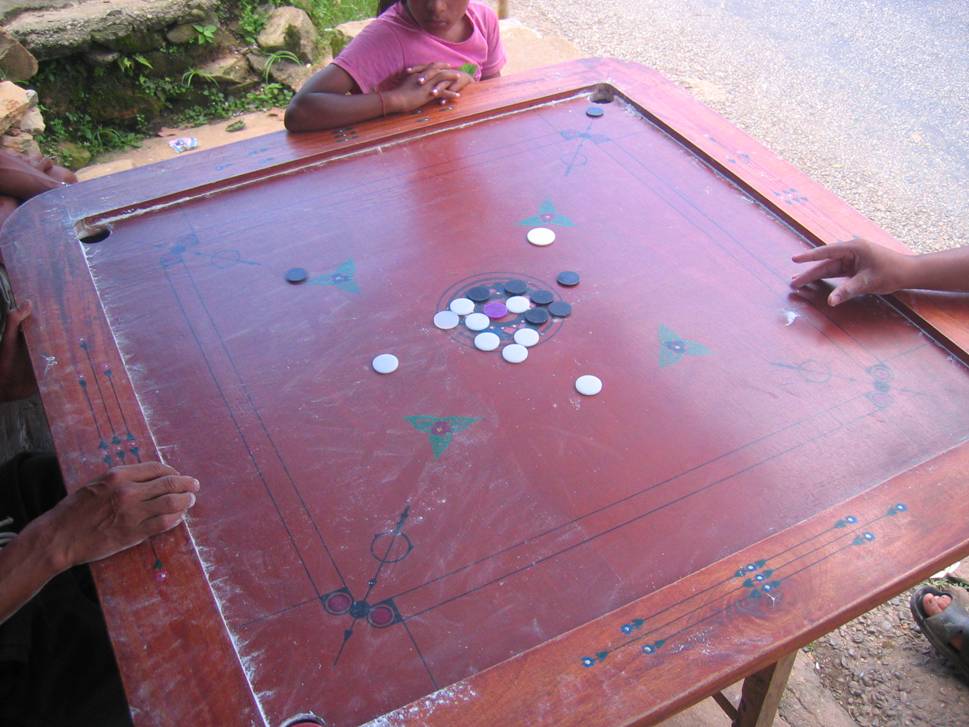
The last picture shows a bunch of relaxed guys playing cards on top of another bus, while they are passing a truck in a uphill curve with zero visibility. Nepal is very very relaxed...


Overland to India. If it weren't for the rainy season, I would have definitely spent a lot more time in Nepal doing some mountina climbing and trekking, and visiting National Parks with rhino's etc. Instead, I took the bus out of the mountains into the flatlands to got to India.
July 2-6: Kathmandu; 7,8: Pokhara; 9: riverside Suetli; 10, 11: Kathmandu
India (July-Aug 2007)
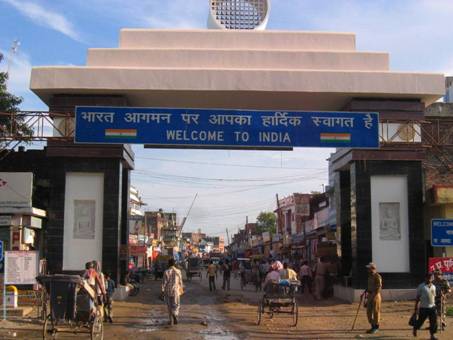
India, my final destination? I saved the best for last. At the beginning of my trip around the world, I roughly planned to spent about two years in total, and I wanted to make it at least to India. Well, here I am, after (netto) two years and one month, I finally reached my goal, I made it!
After India, anything would be optional, like Africa, the Middle-East and Europe. Lately, I have had several ideas to finish my trip: to buy a motorcycle and ride through India, to buy a horse and gallop through Mongolia, to bus home via Pakistan-Iran-Turkey, or to sail to Africa and bicycle thorugh it. I still haven't decided yet, we'll see, but it is going to be a quicky because my treasurer is starting to sweat...


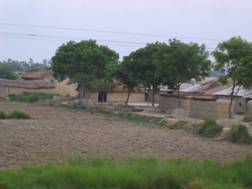
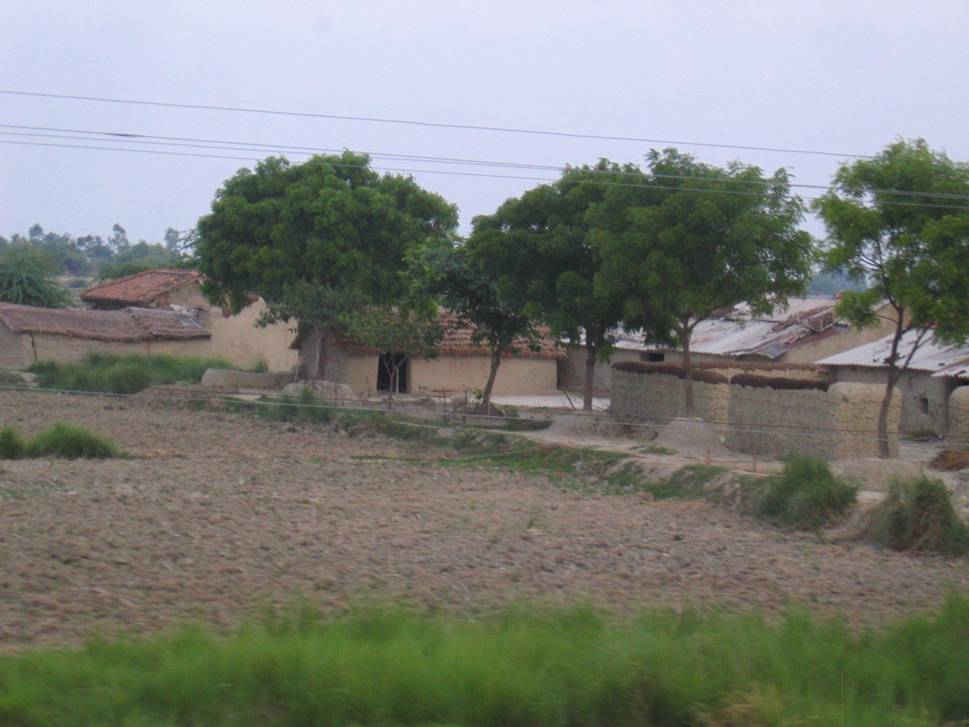
Through the north. I went with bus and train through the vast open plains of North India to the city of Varanasi.


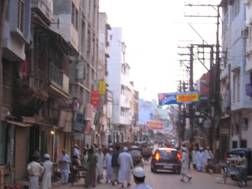

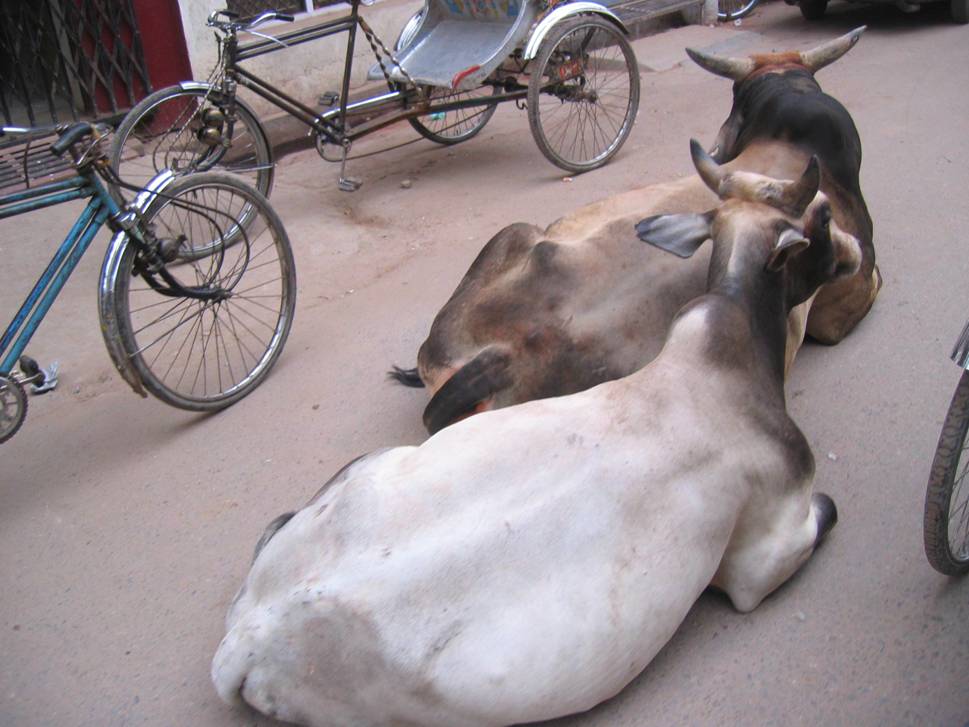
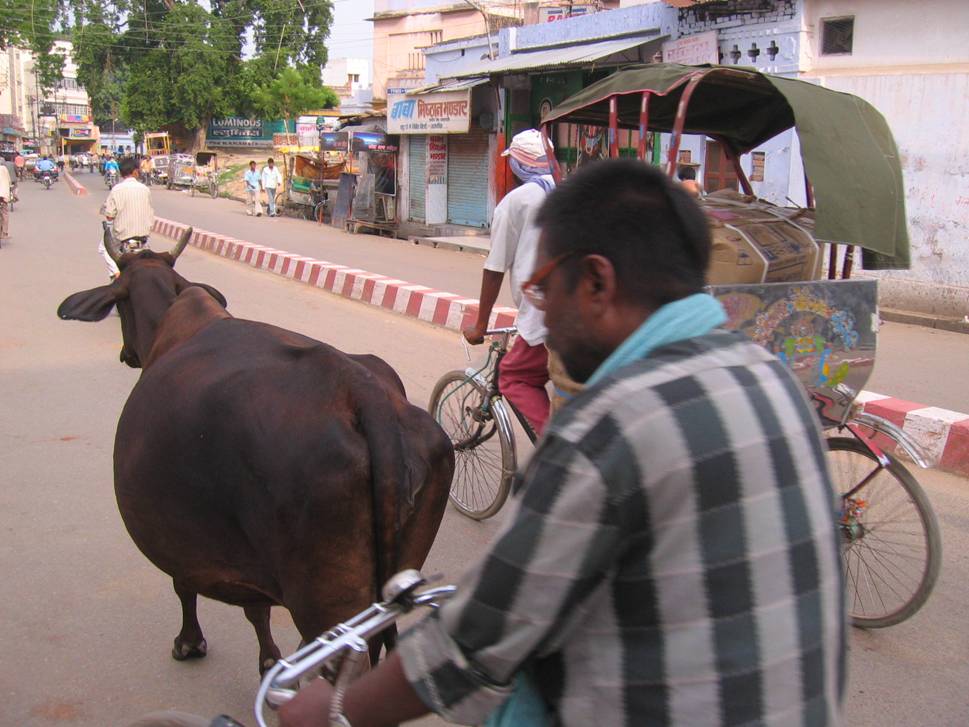
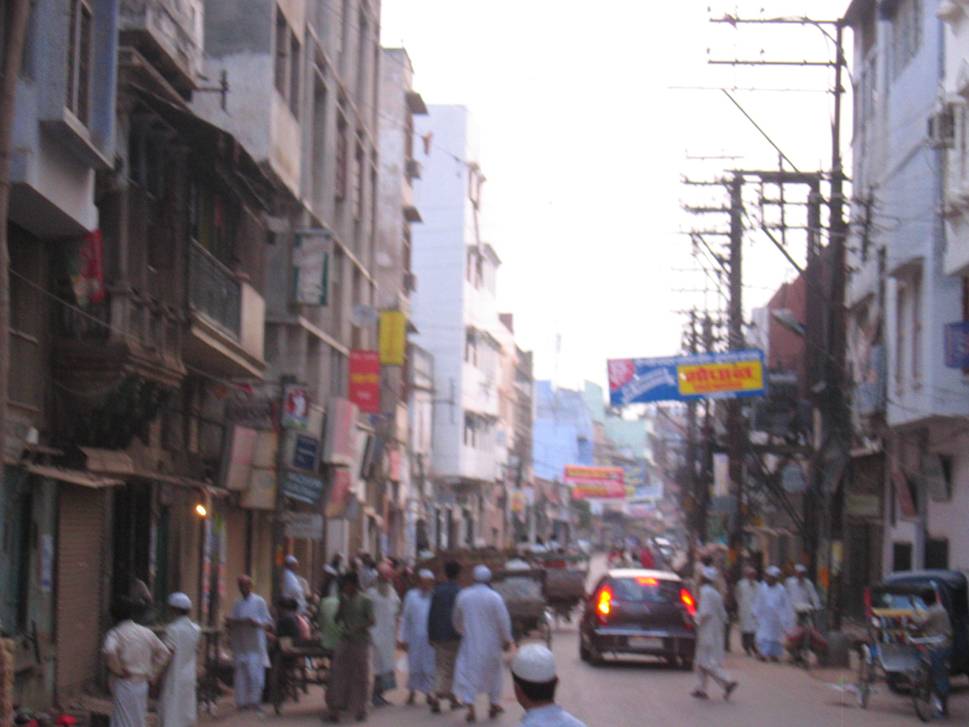
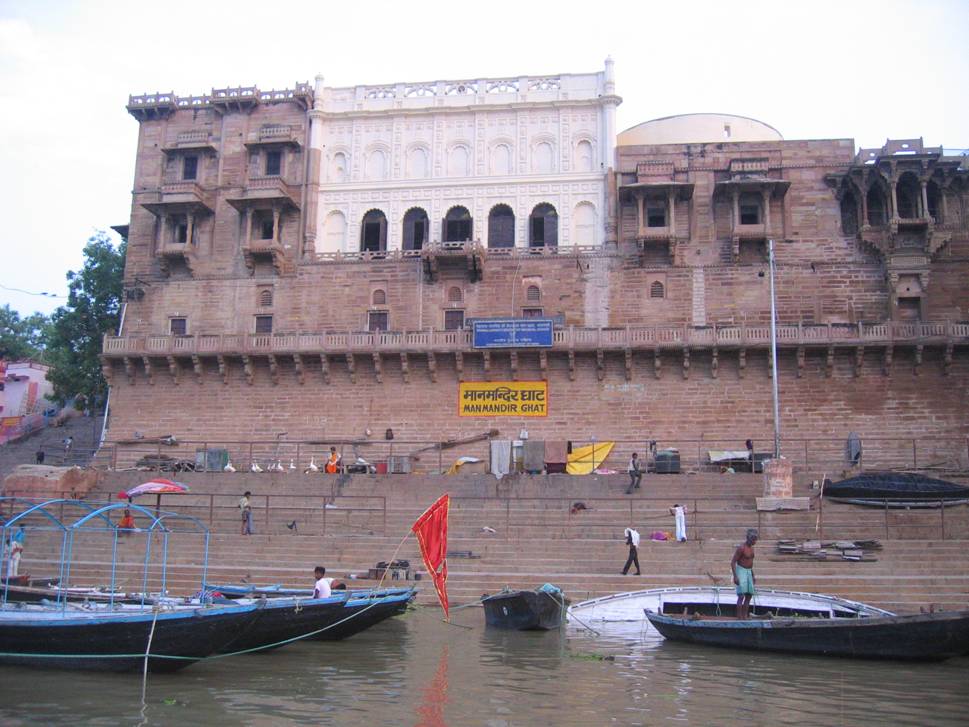
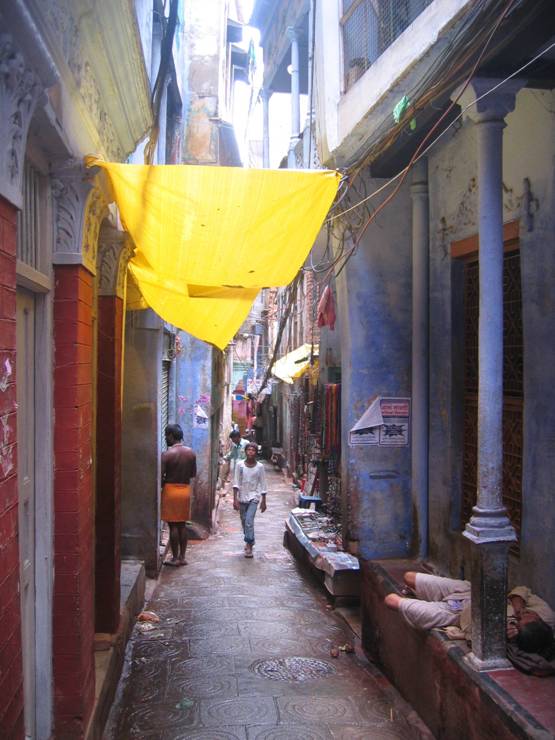
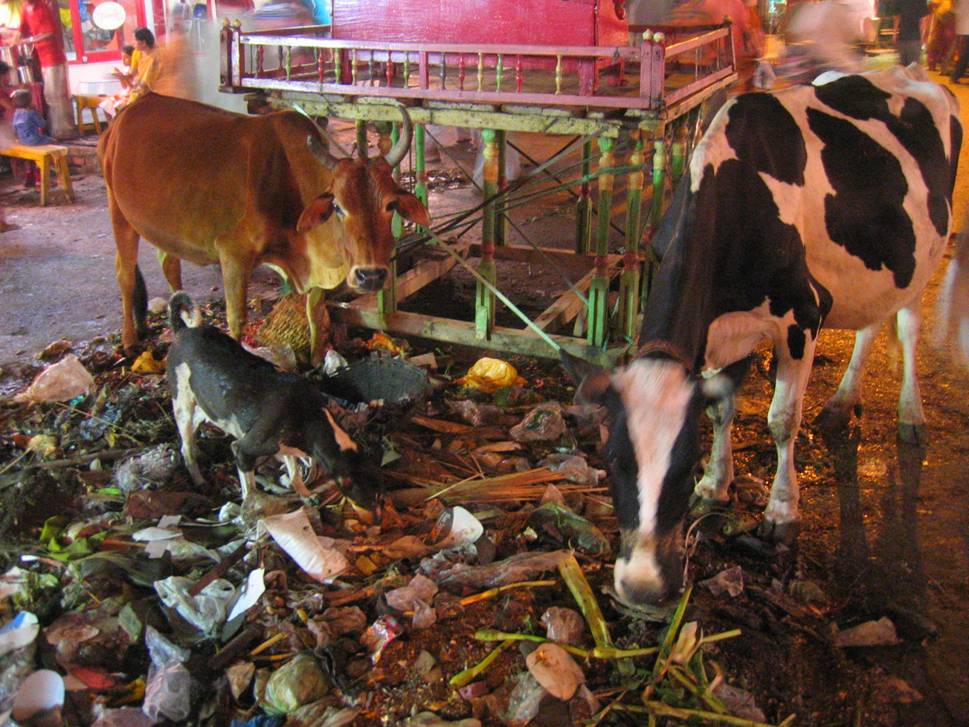
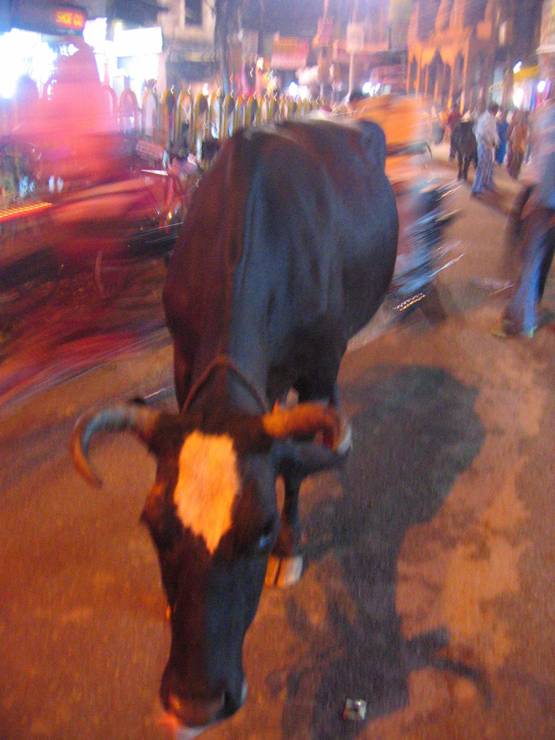
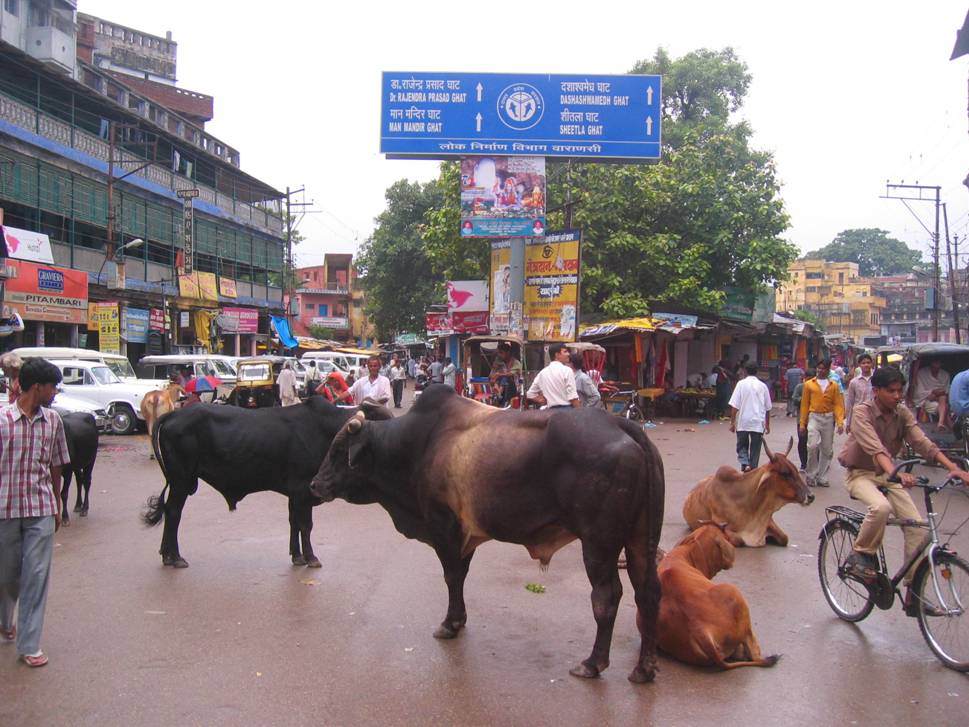
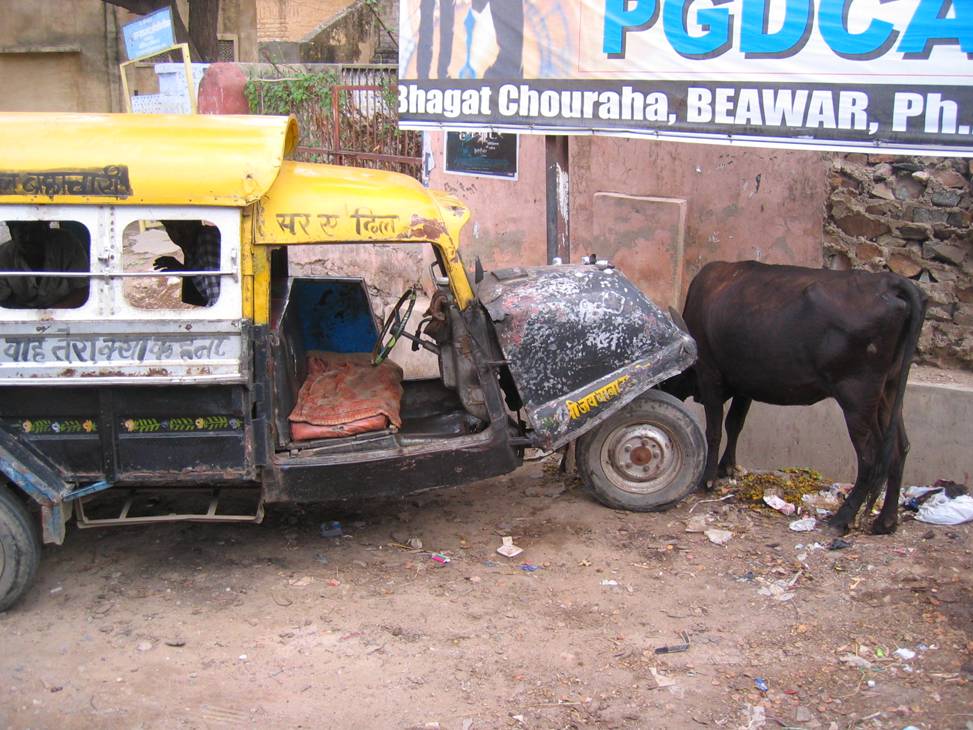
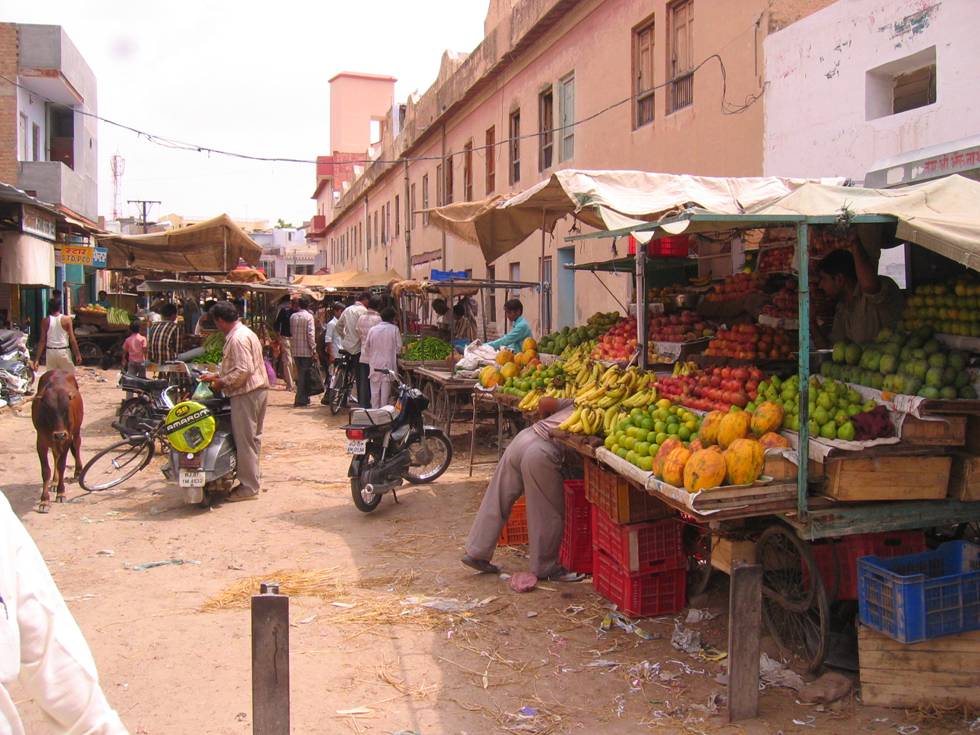
The holy city of Varanasi. They say that you either like India or hate it, and as soon as I crossed the border (see big picture above), I thought I was gonna like it. WHAT A MESS! I have heard the stories about India a zillion times, but only when you are here in person you will understand. Your eyes and ears and nose will get overloaded. Everywhere are people in the streets, just sitting or sleeping or eating or pissing or selling or whatever, and everywhere on the streets are rikshaws who make an incredible traffic jam and an unbearable noise with their bells, and everywhere are pigs and goats and donkeys and buffalos and of course the holy cows sleeping or walking through the streets like zombies, eating the garbage and shitting all over the place. Very interesting, but WHAT AN UNBELIEVABLE MESS!


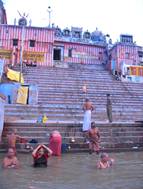
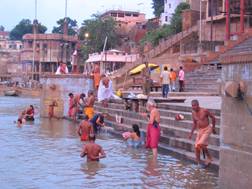

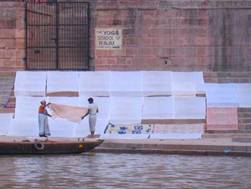
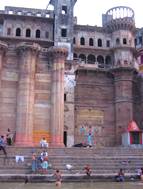
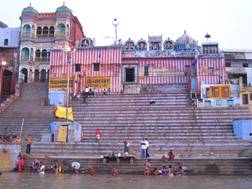
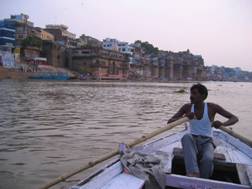

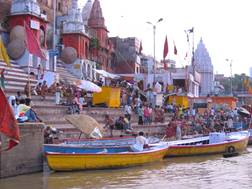


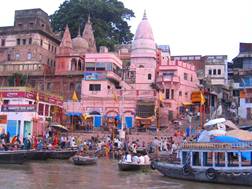
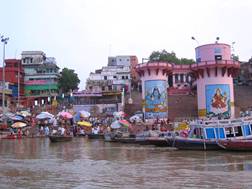

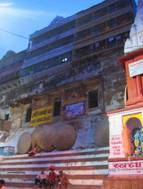
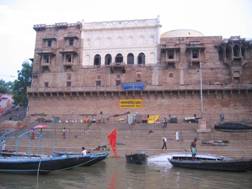


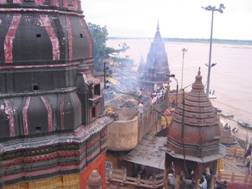


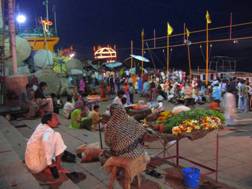


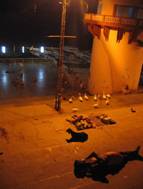
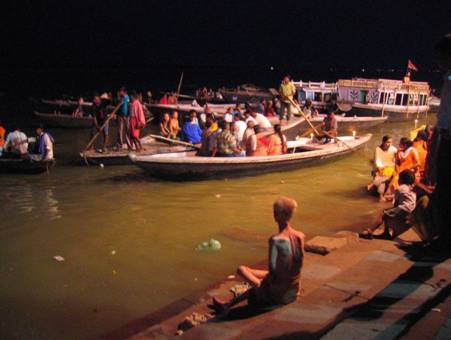
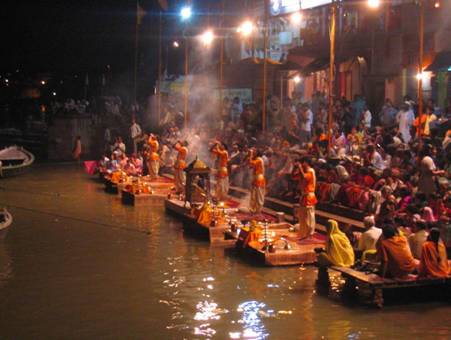
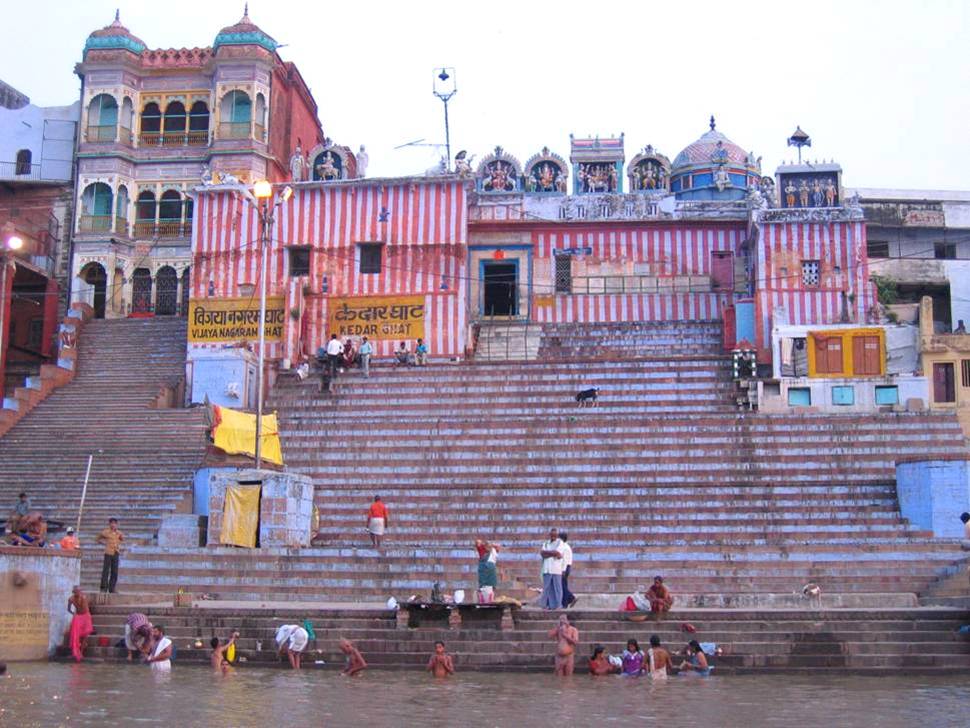
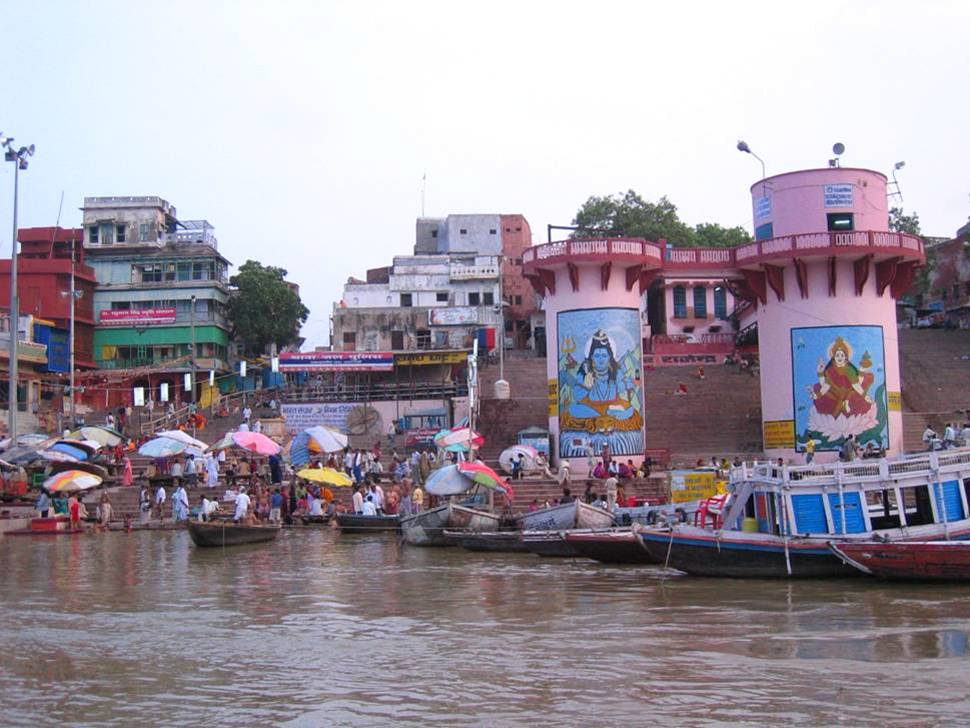
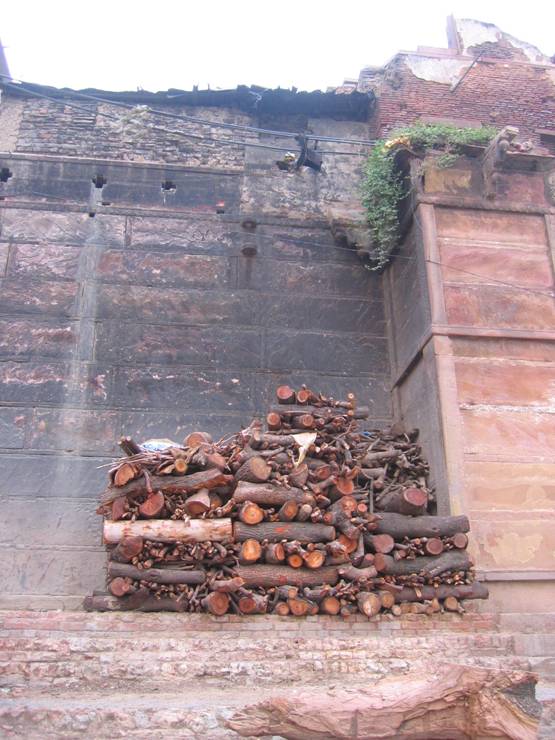
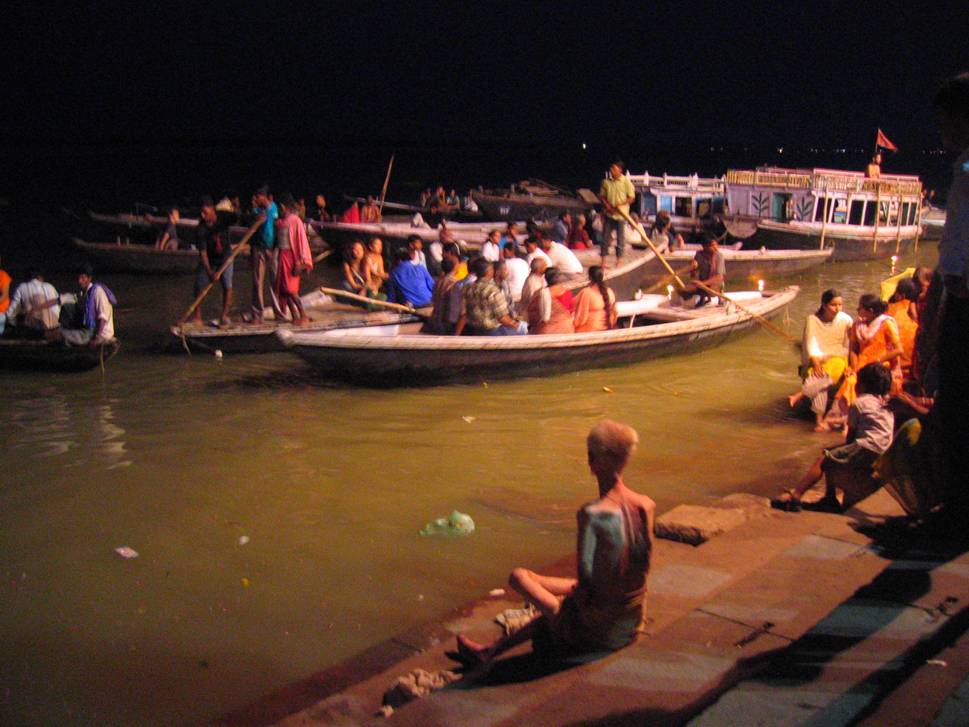
The holy Ganges river. I just finished reading The god delusion from Richard Dawkins, and yes: people do strange things when they strongly believe in something. Especially in India: they go hungry while the holy cows just run around; they bathe in one of the most polluted rivers on earth; they wash clothes and play cricket only meters away from the public cremation of bodies. Some people can not be cremated (pregnant women, persons bitten by a snake or suffering smallpox, etc), so they are tied to a stone and dumped in the middle of the river.
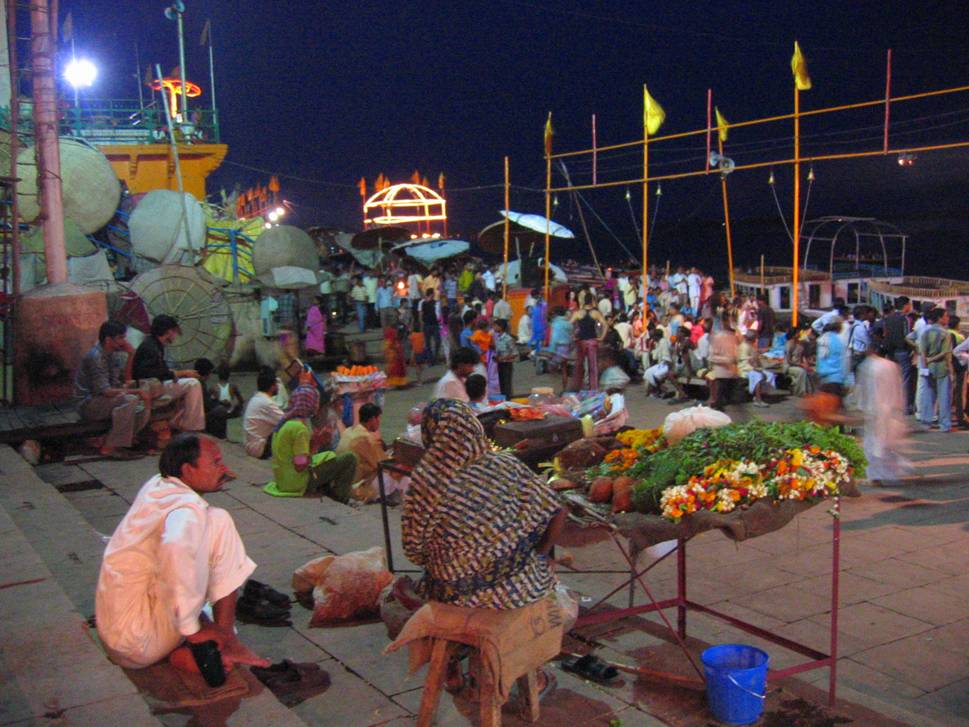
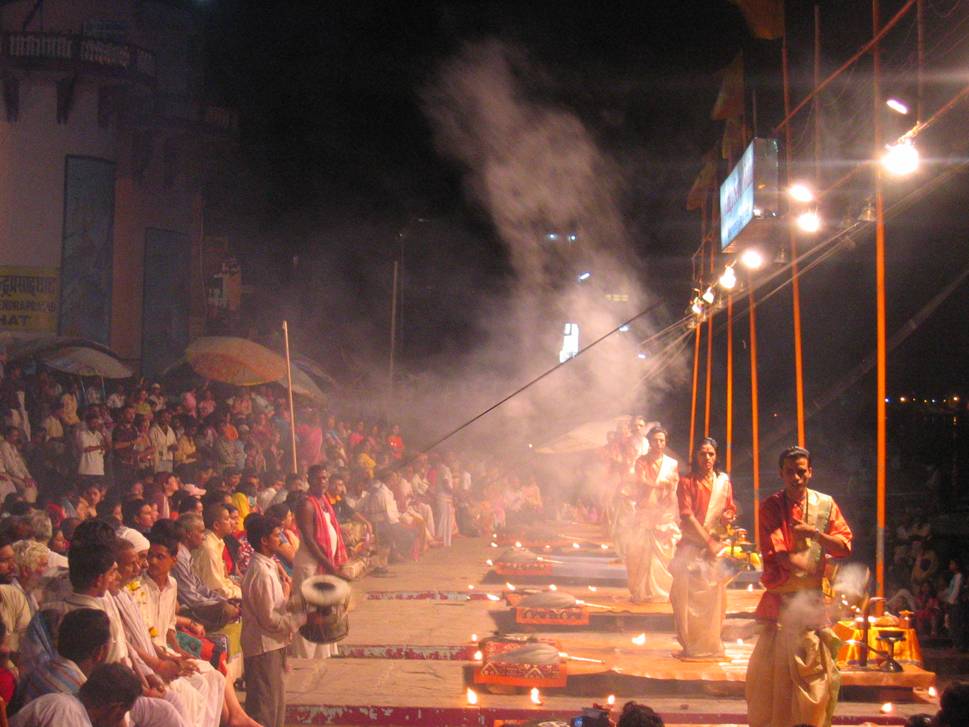
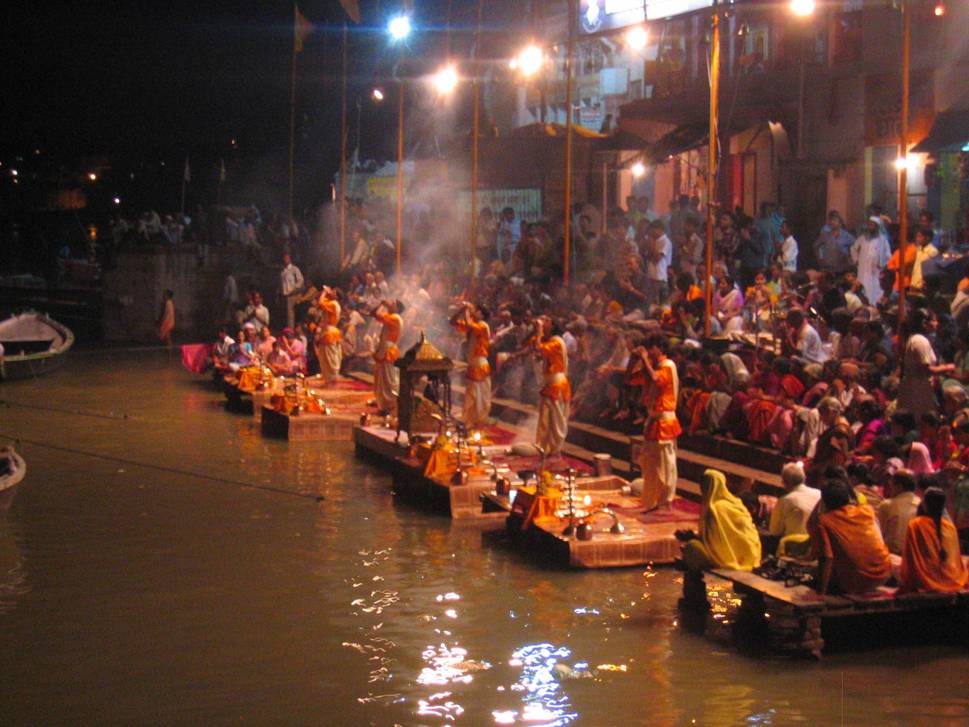
Allthough very strange, religion is also beautiful to watch, every evening on the riverside there are some good reli-shows with impressive music and performances.


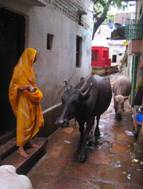
More holy cowes. and other livestock...
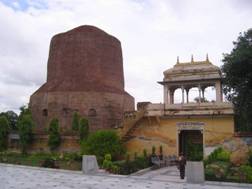
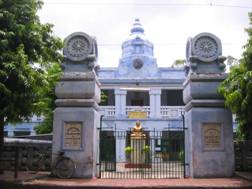
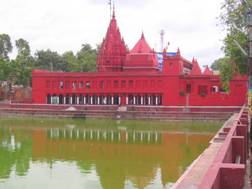


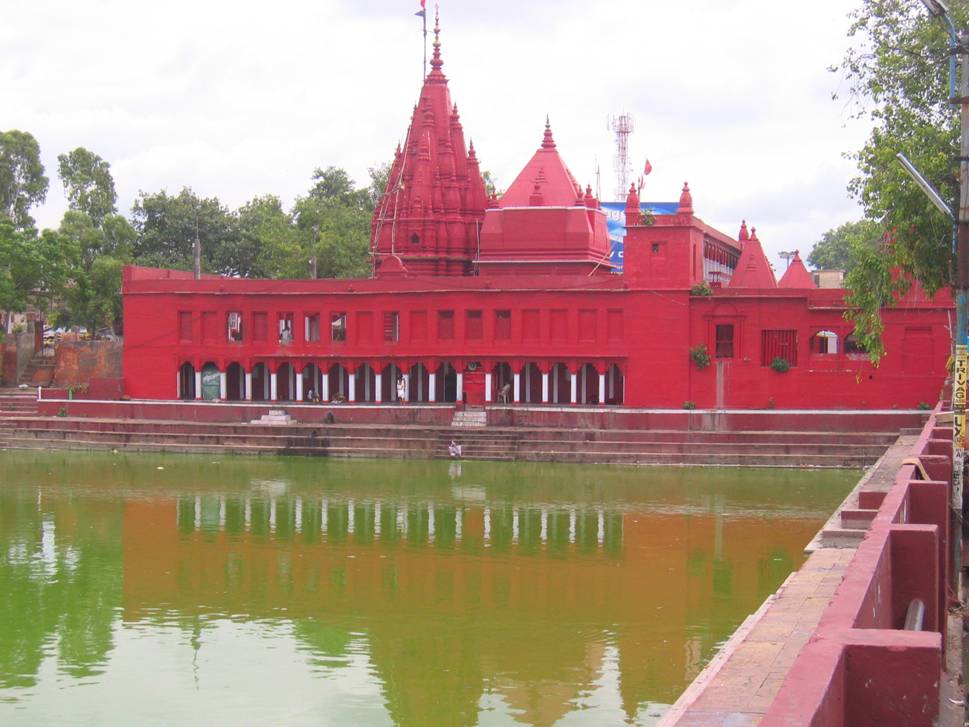
Varanasi Temples.
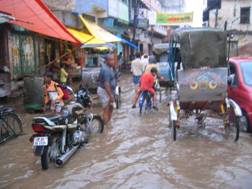
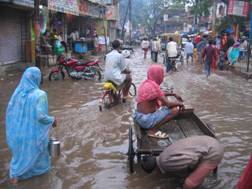

Rainy Season. I was very lucky to experience the first heavy rain of the monsoon season, which makes the usual mess even a lot bigger, in the evening I had to wade home through kneedeep 'water'.




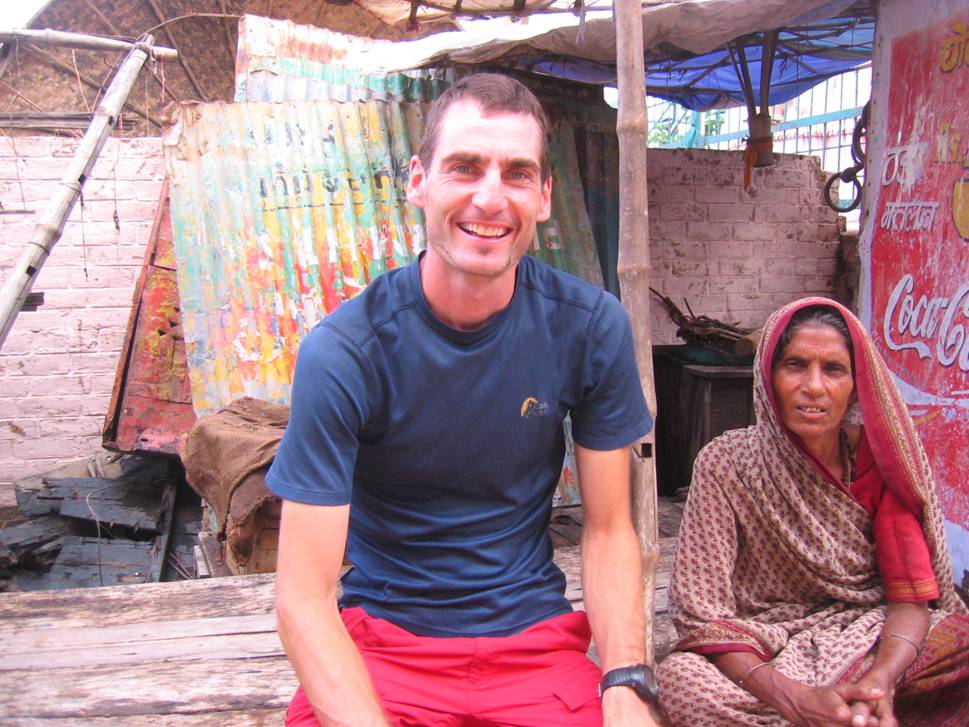
Indian hospitality. During the evening downpour a man shared a rikshaw with me and invited me to his home, I find Indian people very spontaneous, hospitable and open-minded, ten times more fun than Chinese.
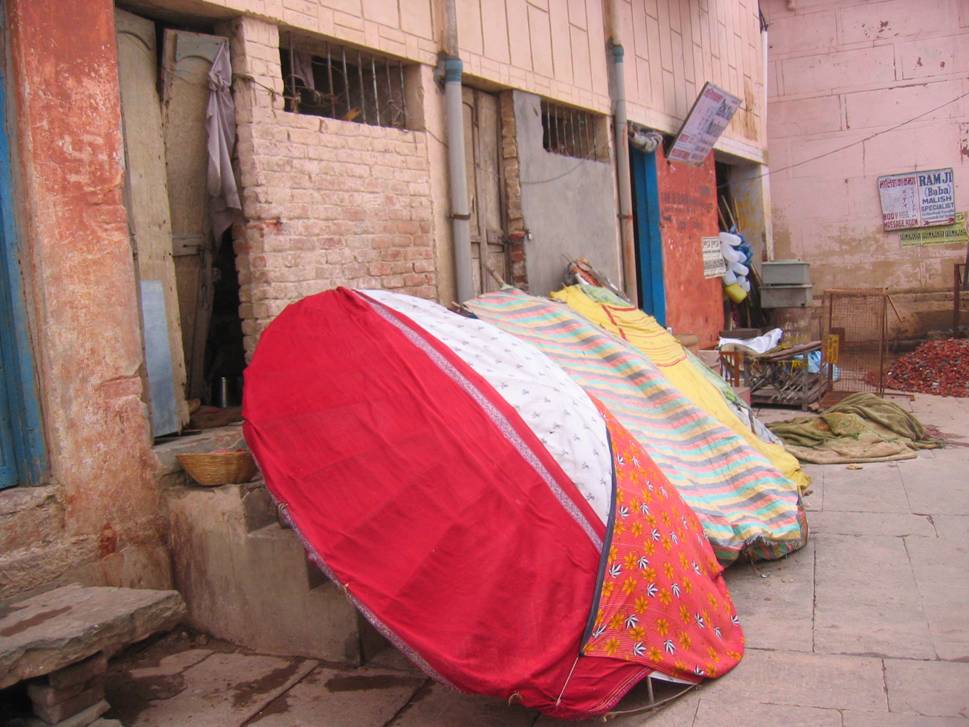
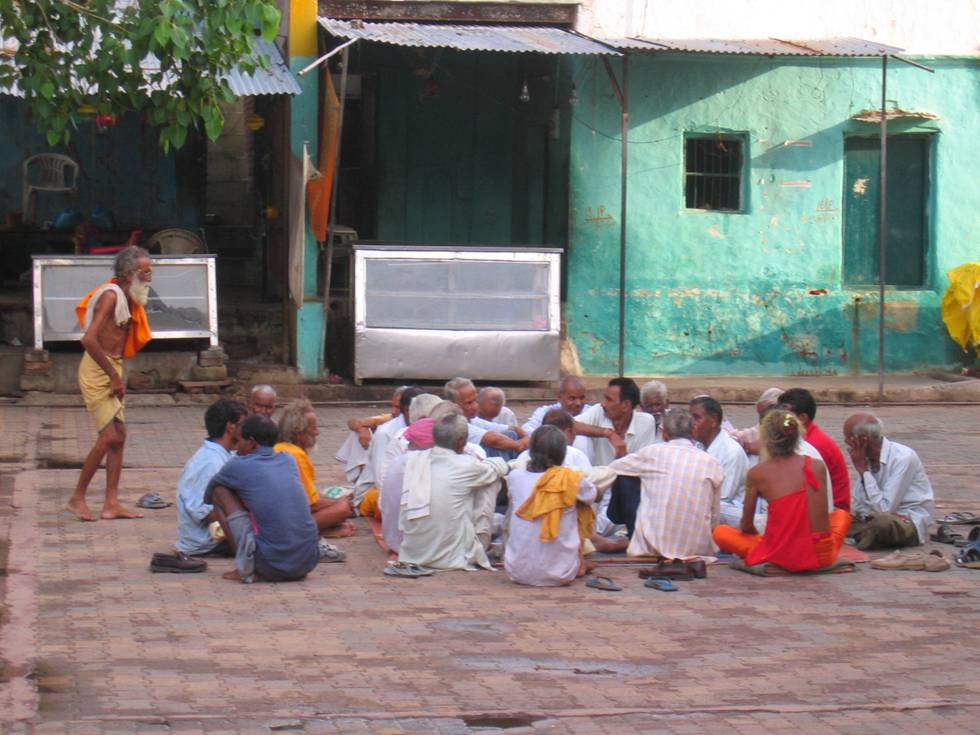
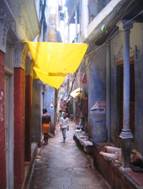
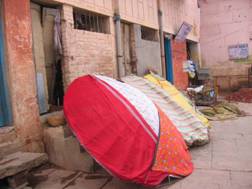
Another time on the riverside I met Rinki, a little girl selling little floatable flower candles for good karma. When we met again the next day she gave me two candles for free because it was a bad day for business anyway she said. Later she even invited me to her home, which appeared to be not much more than a big 'umbrella' on the street (middle pictures), were she lived with her mother and brother. It is just heartbraking to see all the poor living in the streets, lots of them not having more than the clothes they wear.


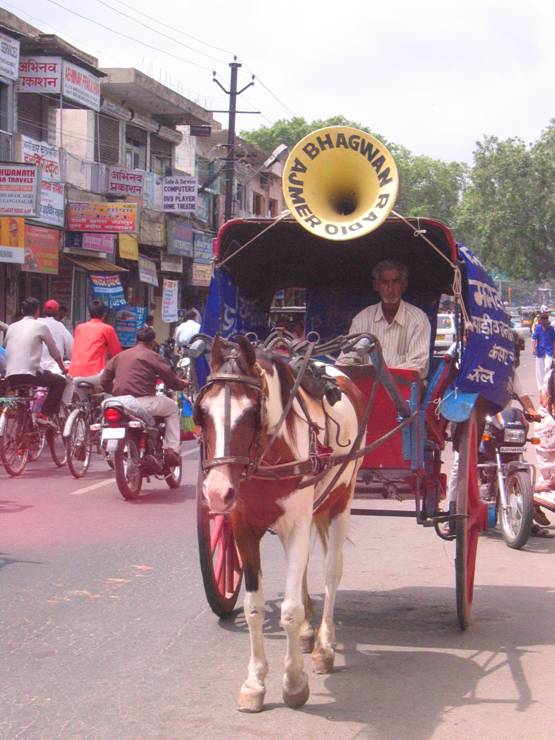
Rikshaws. India is the first country I visit where you have to wear earplugs during daytime. It is not only the electric horns of motors and cars or the very load pneumatic horns of the trucks, but esepcially the continuous ringing of the rikshaw bells, who are operated by the spokes of the wheel (to prevent RSI on your thumb), leading to a sound comparable with the tram bells back home.
While Indians are notorious for hassling tourists and trying to squeeze out an extra ruppee, rikshaw drivers are even worse, here is a few tricks of them:
- If you don't agree on a price beforehand, they will ask up to a tenfold afterwards.
- They ask for more money afterwards even if you agreed on the price beforehand.
- They say your destination is multi kilometers away while it is just around the corner.
- When you are with two persons, they agree on a price, and afterwards they will say it was for one person only.
- Long before you arrive in a city centre with a bus, they jump in the bus and say this is the city centre, hoping you'll get out and have to take a long rikshaw ride.
- After a lot of yes yes you hop on, and only 20 meters furhter they have to stop again to ask others to translate or to explain where your destination is.
- Halfway they give up and want to you to switch to another rickshaw (and pay again).
and heaps of other tricks.
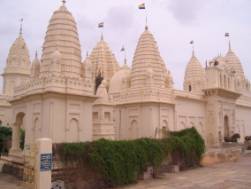

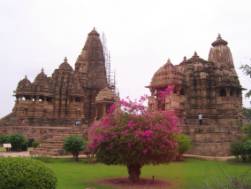
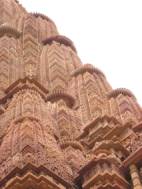


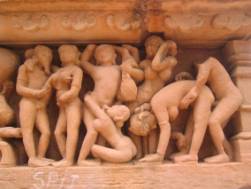


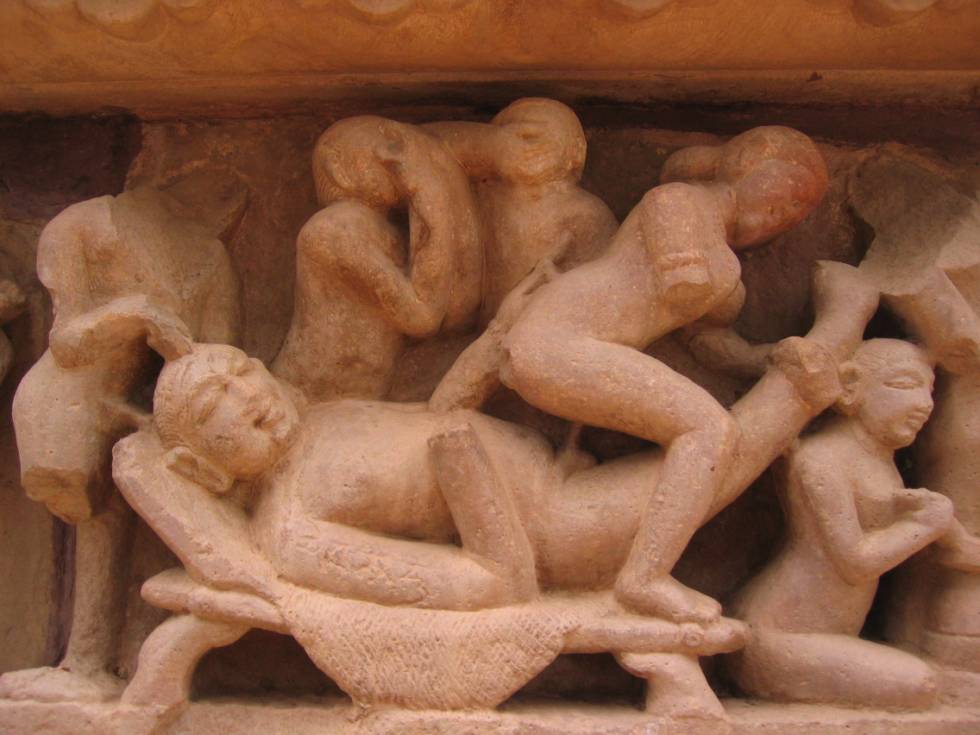
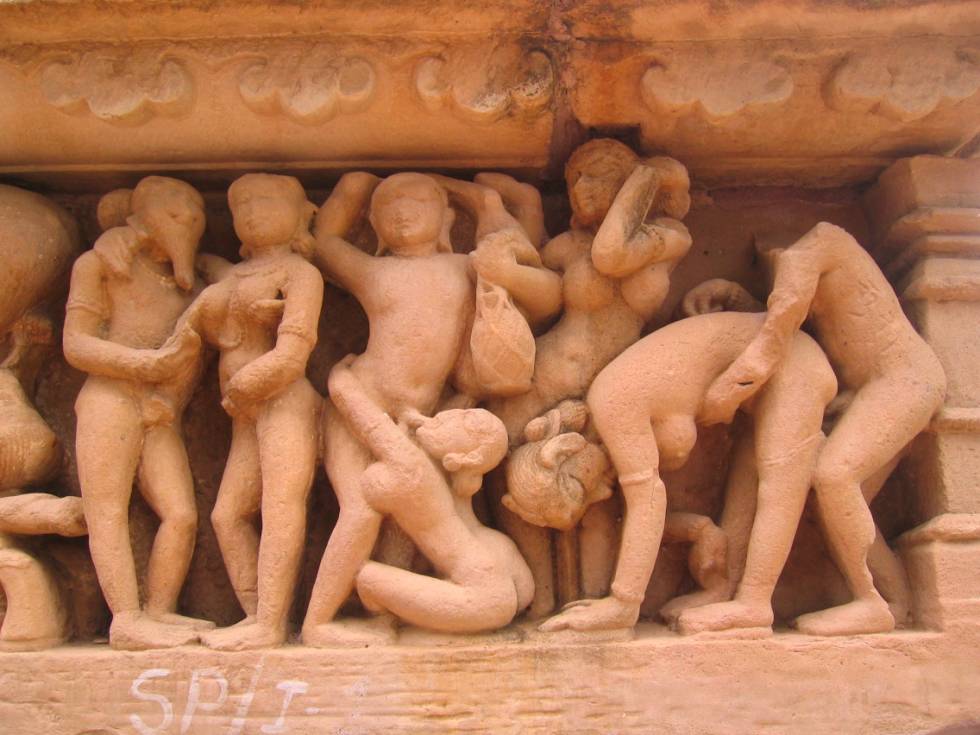
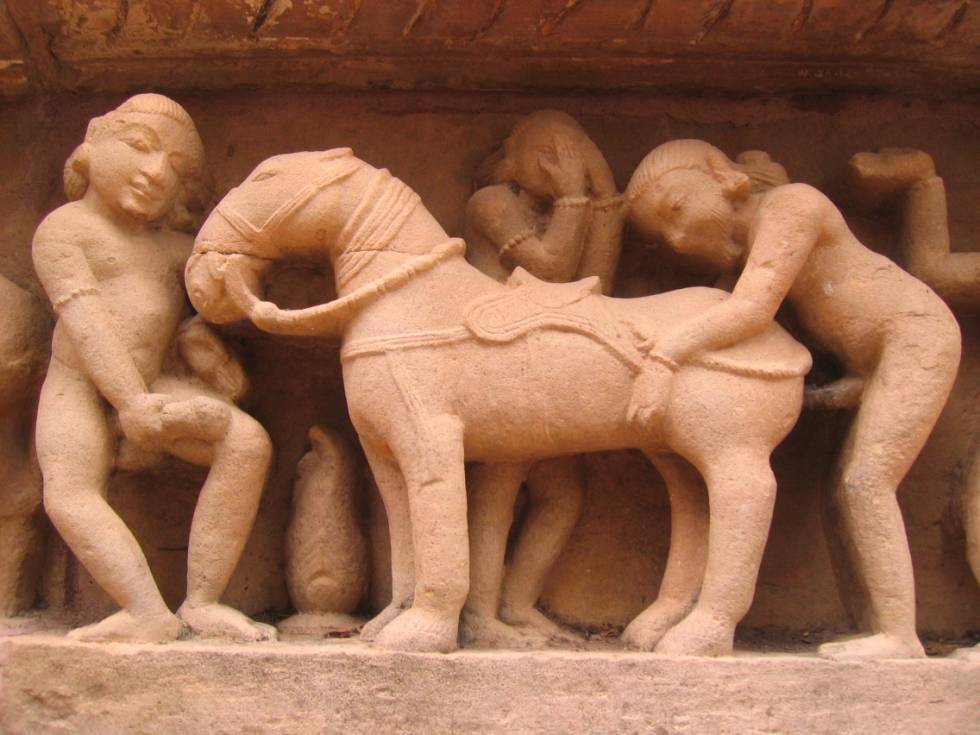
Kajuraho temples. The world famous erotic sculptures of the Kajuraho temples are very inspirational indeed, it's like a Kama Sutra in 3D, haha.
When the moghuls arrived in India, they destroyed most of the ancient temples with erotic sculptures, but these ones survived fortunately because they were simply in the middle of nowhere.


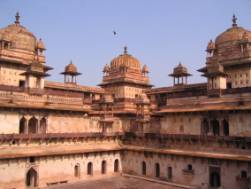
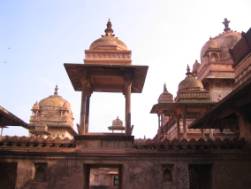

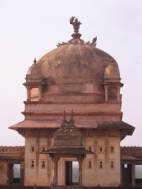

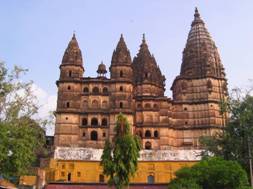
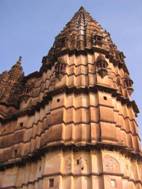
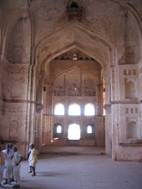


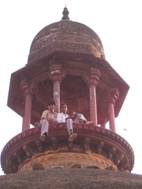
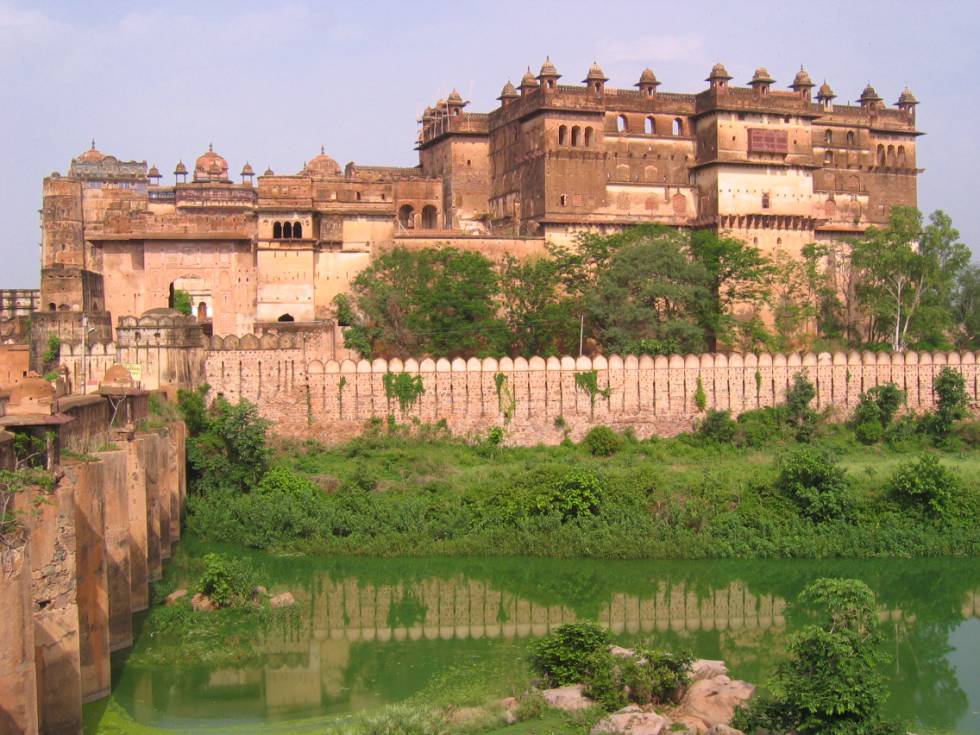
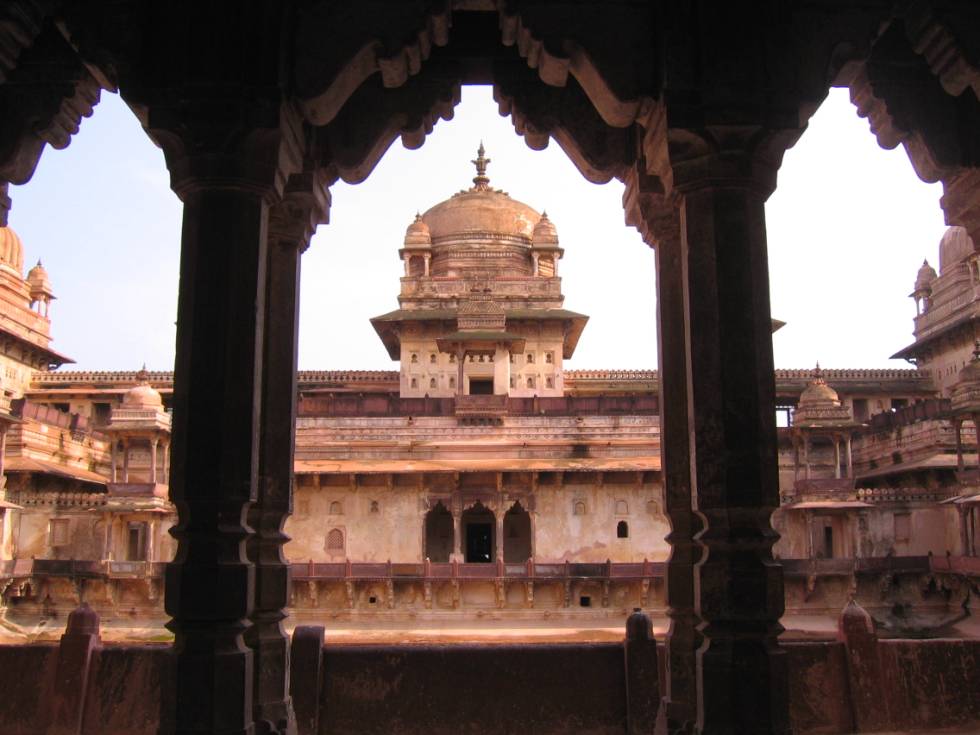
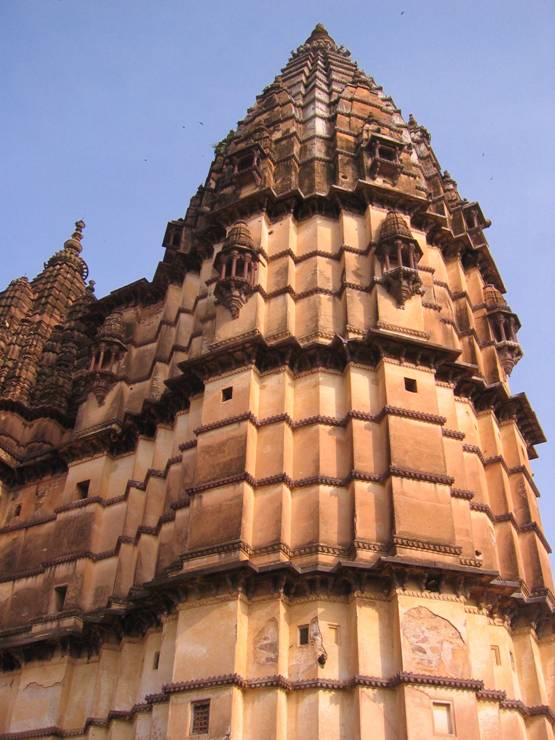
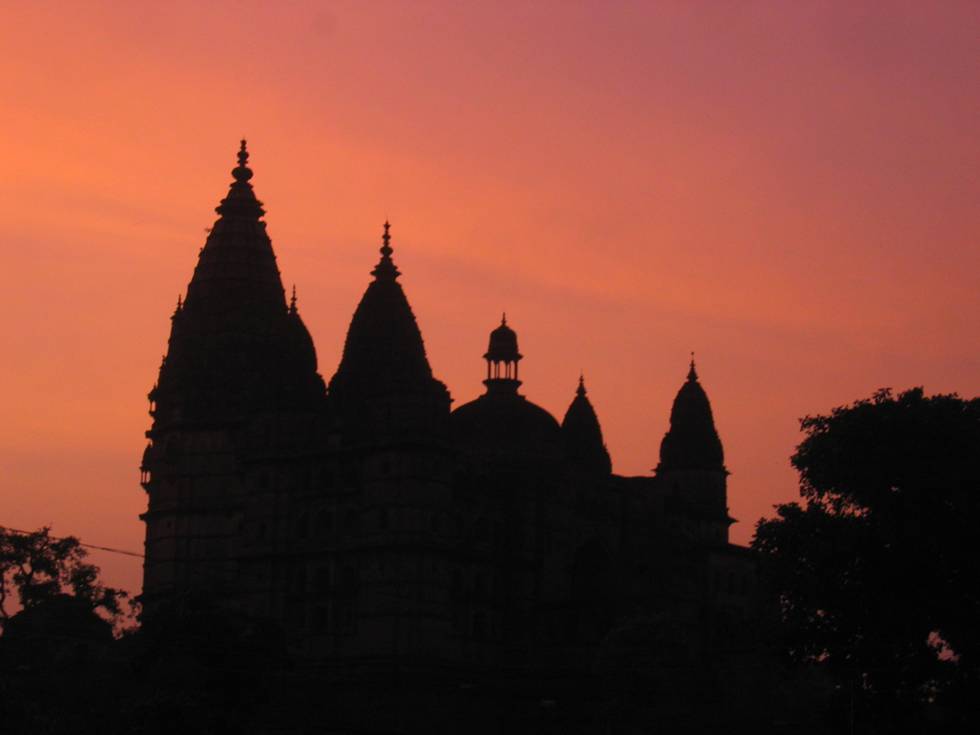
Orchha. A little village with more forts and temples than inhabitants.
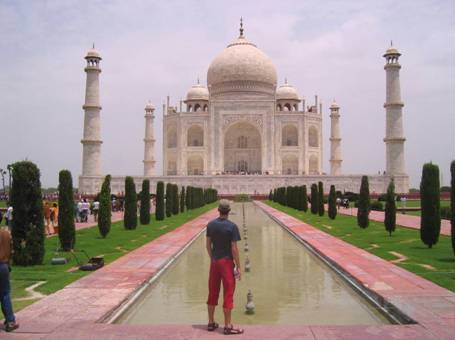
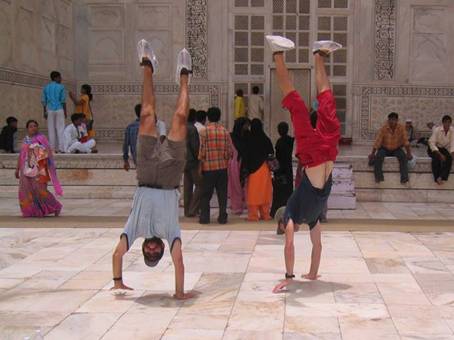

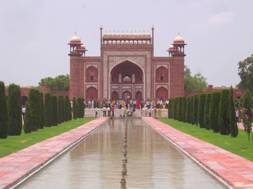
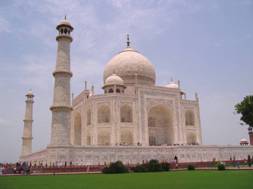
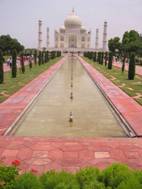


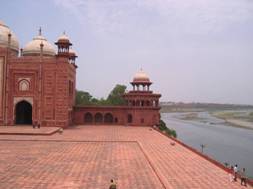
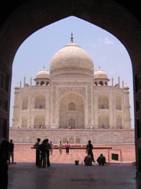
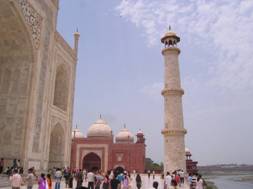
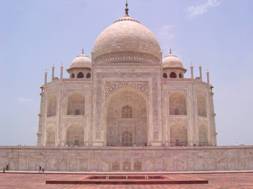


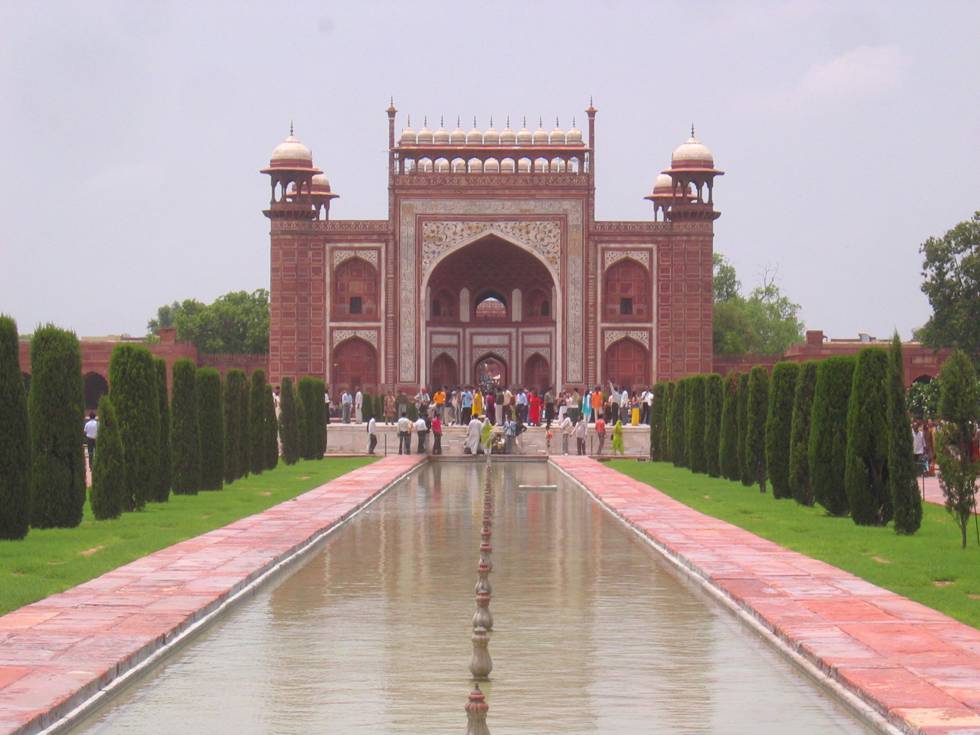
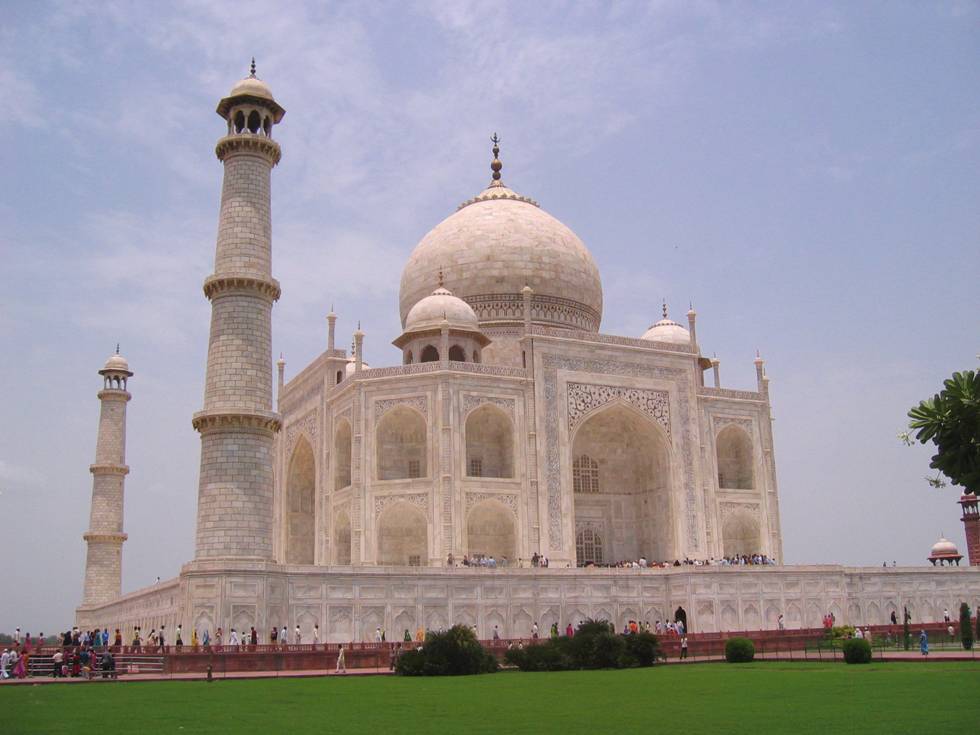
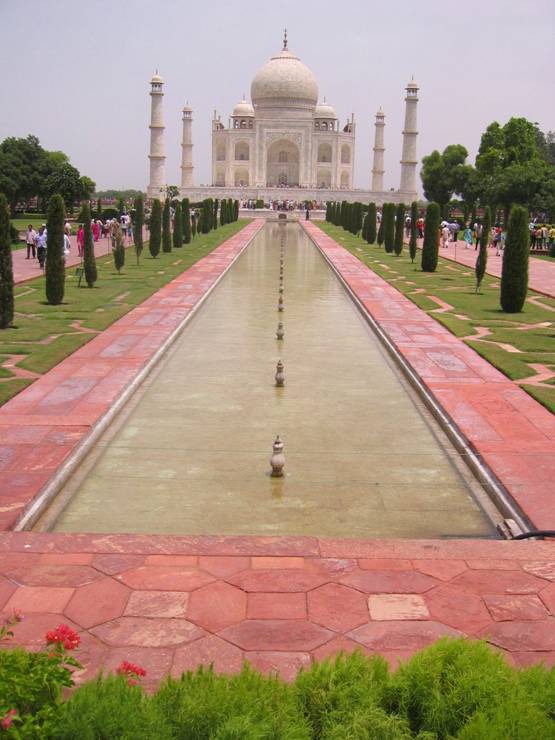
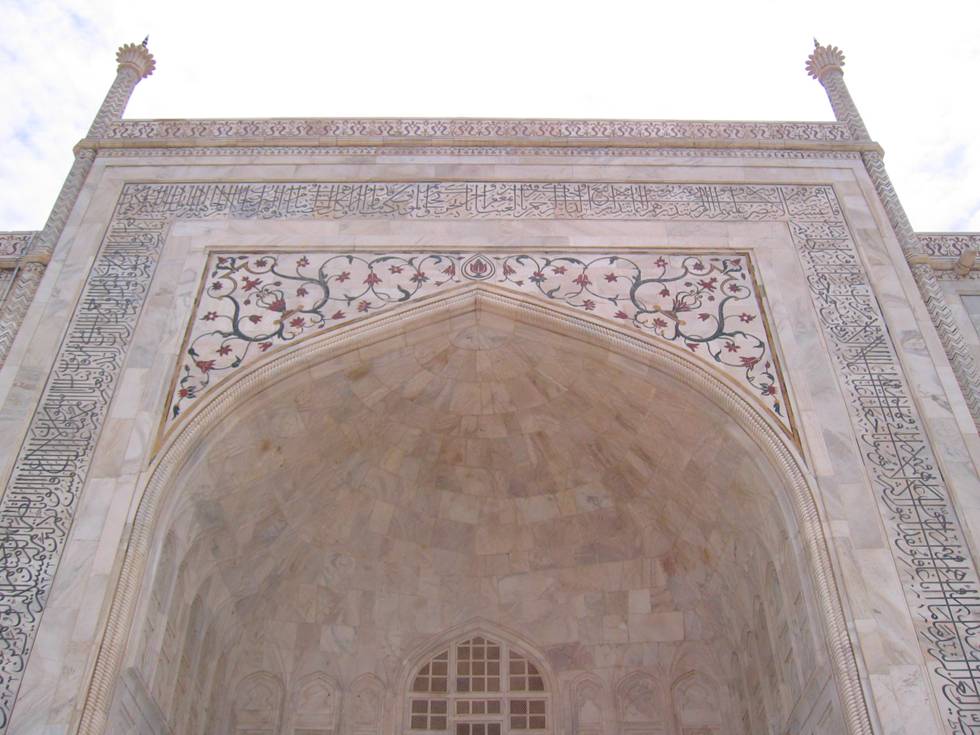
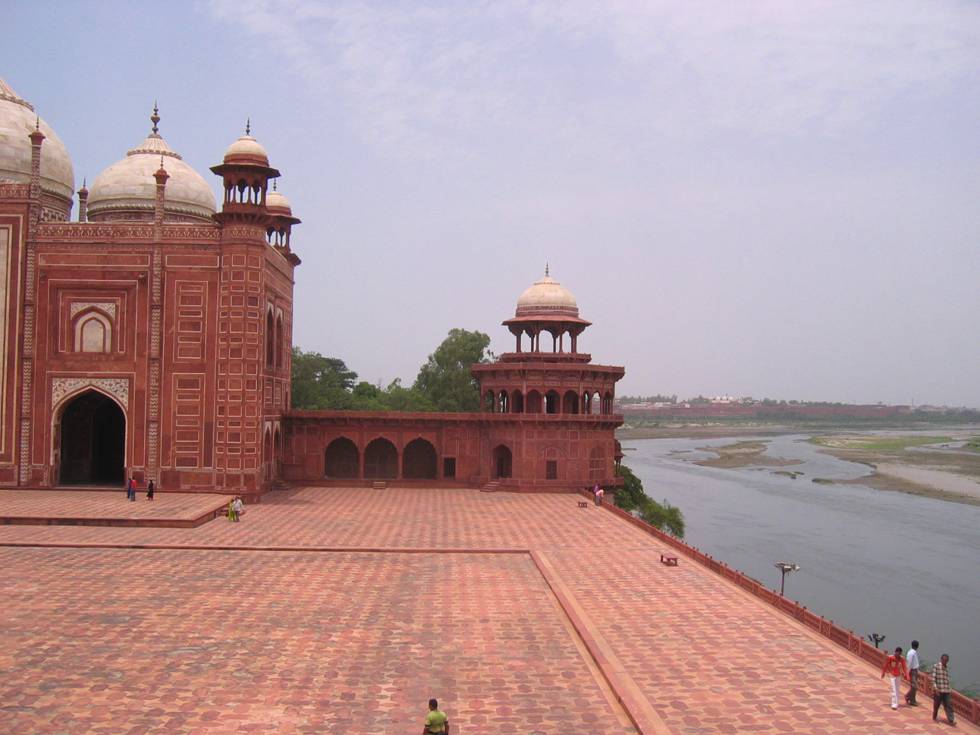
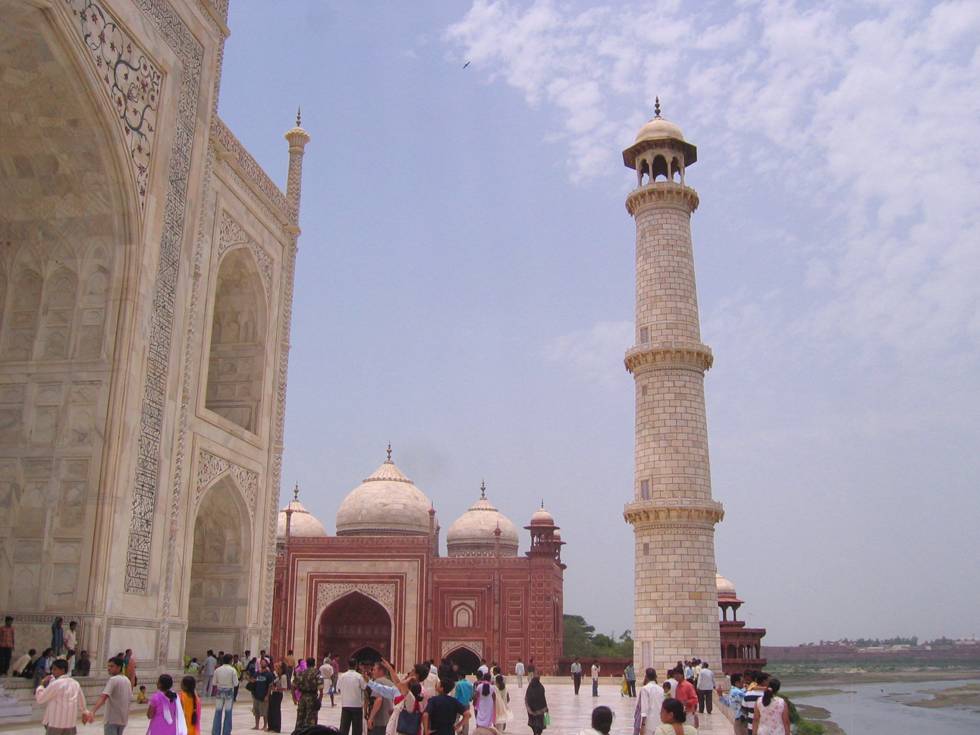
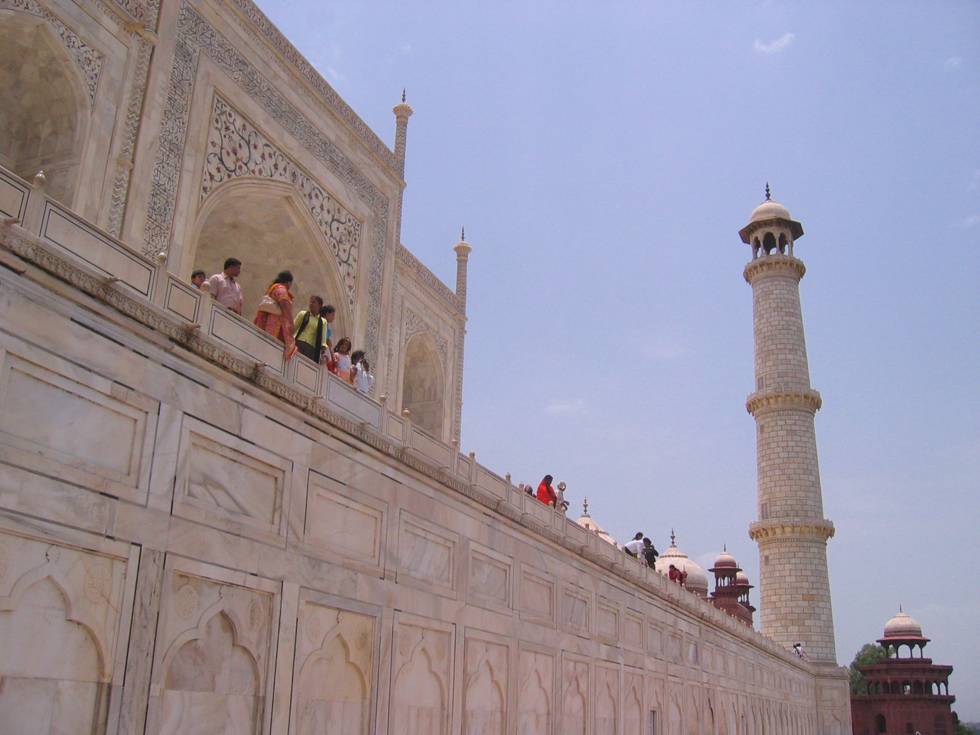
Taj Mahal, Agra. The largest monument of love on earth. A teardrop on the face of eternity. It looks like a mosque but it is actually a mausoleum to commemorate his second wife who died giving birth to their fourteenth (!) child.
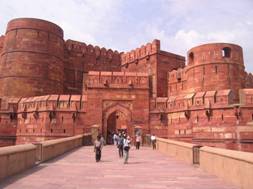
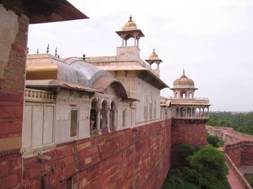


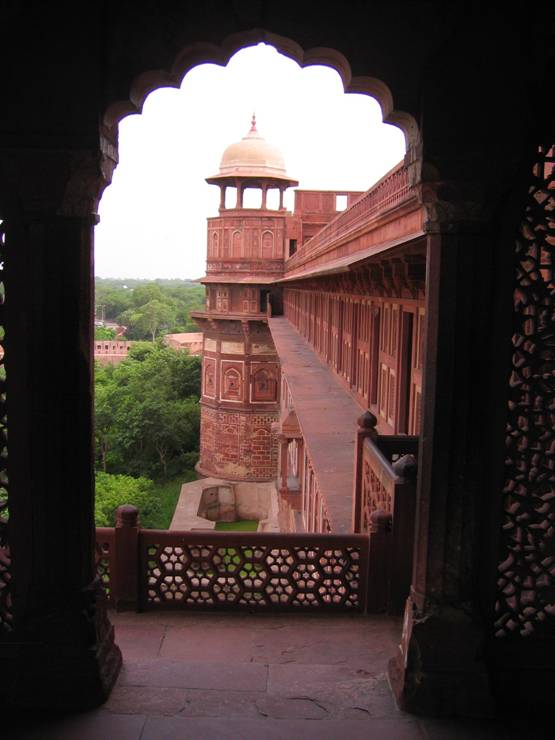
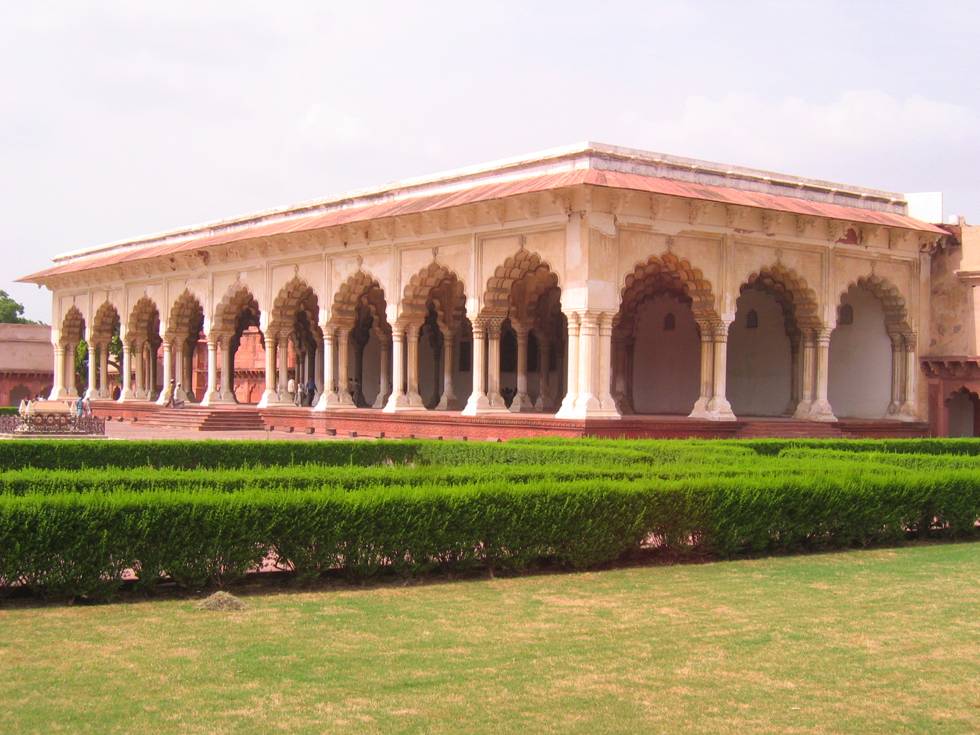
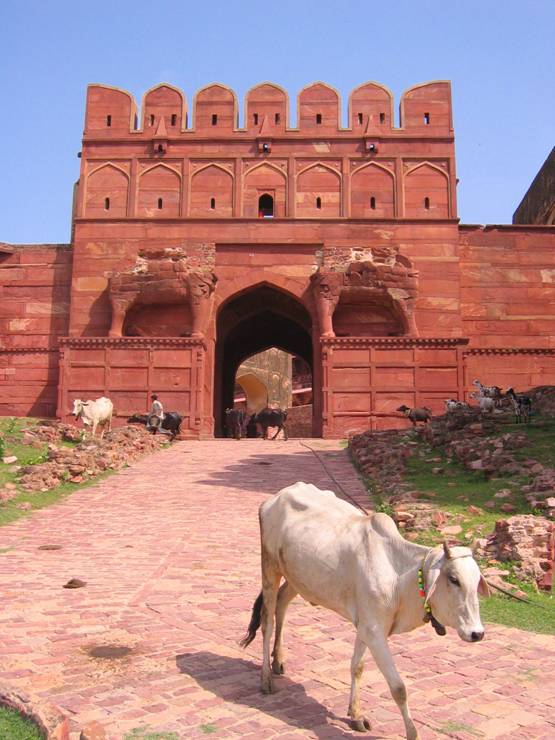
Agra Fort.


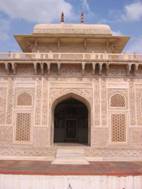
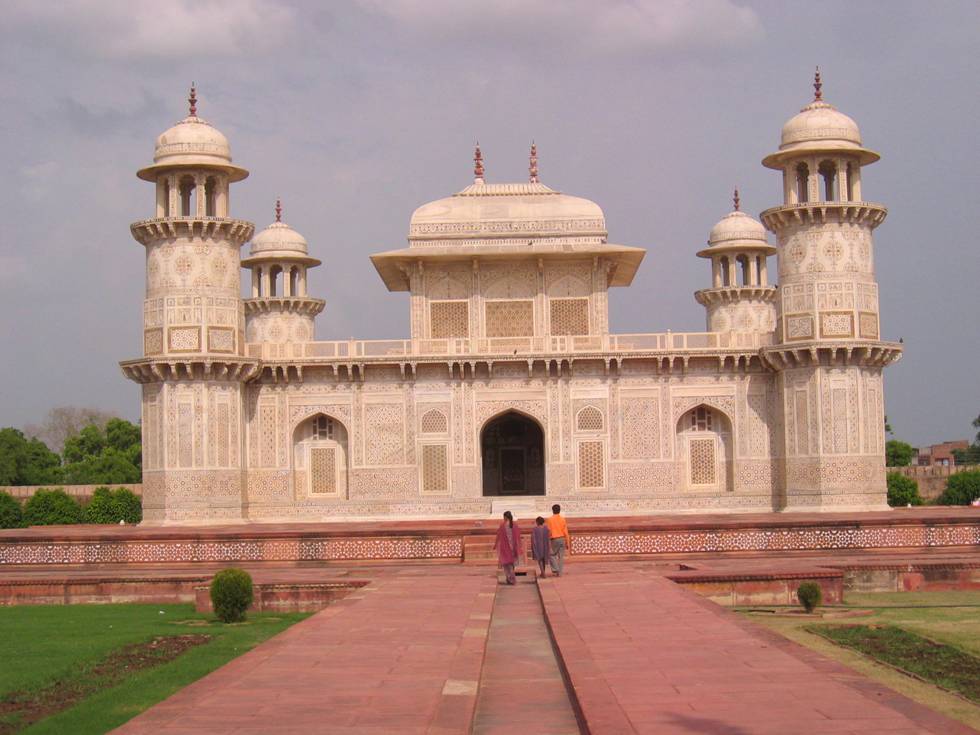
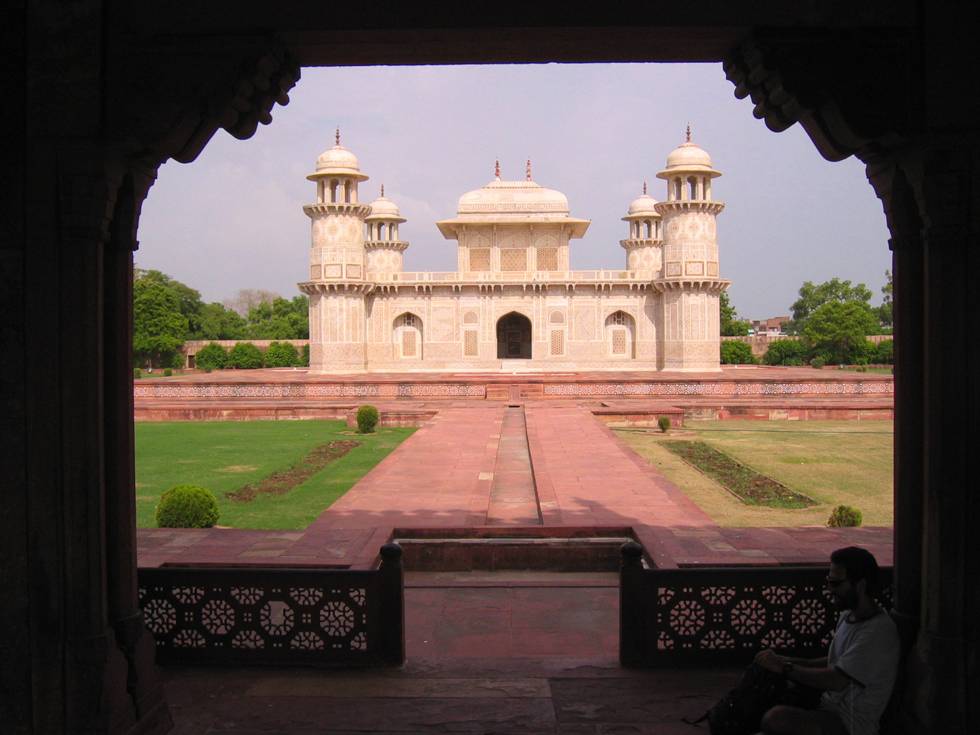
Baby Taj Mahal, Agra.


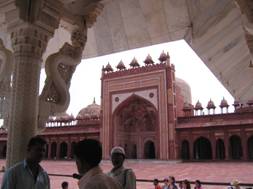

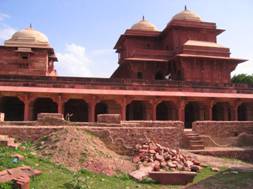

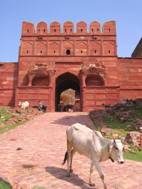
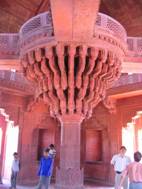


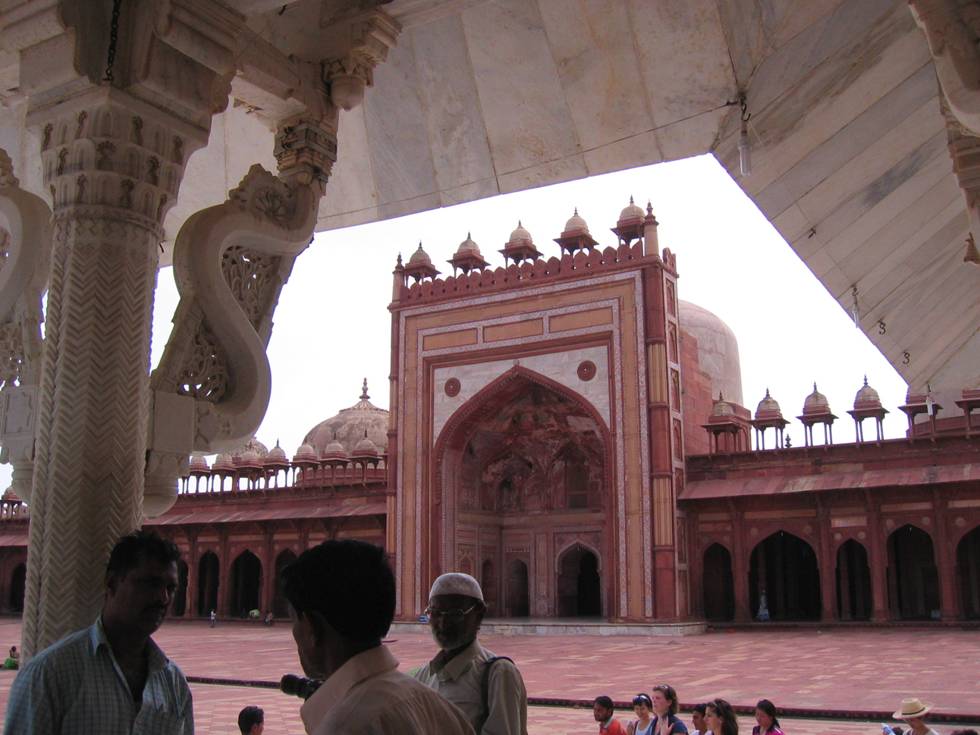
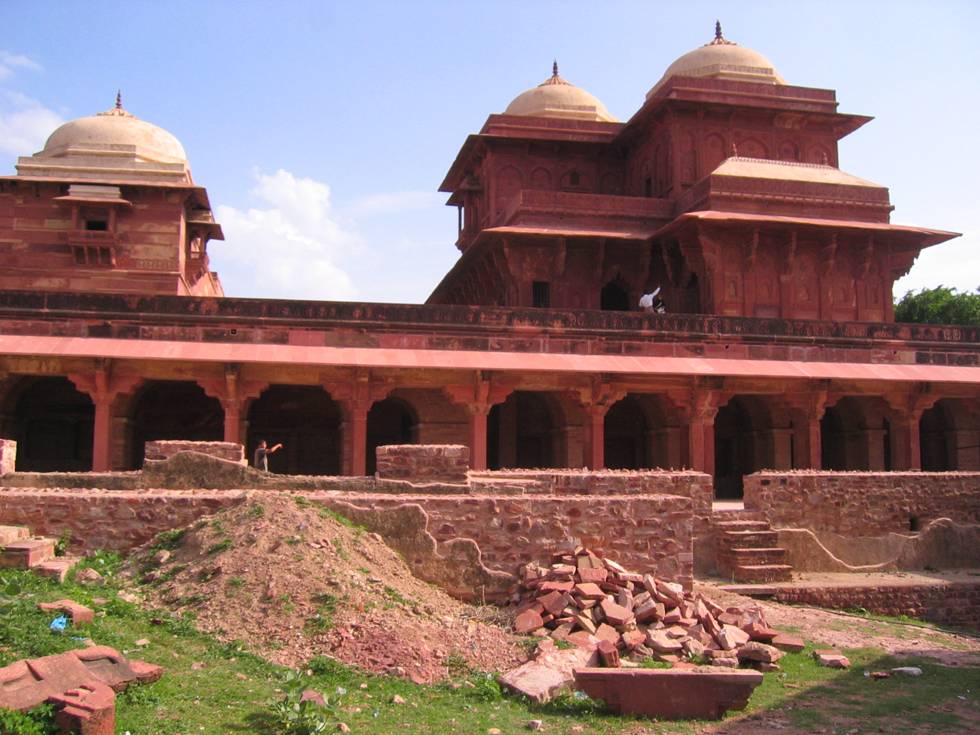
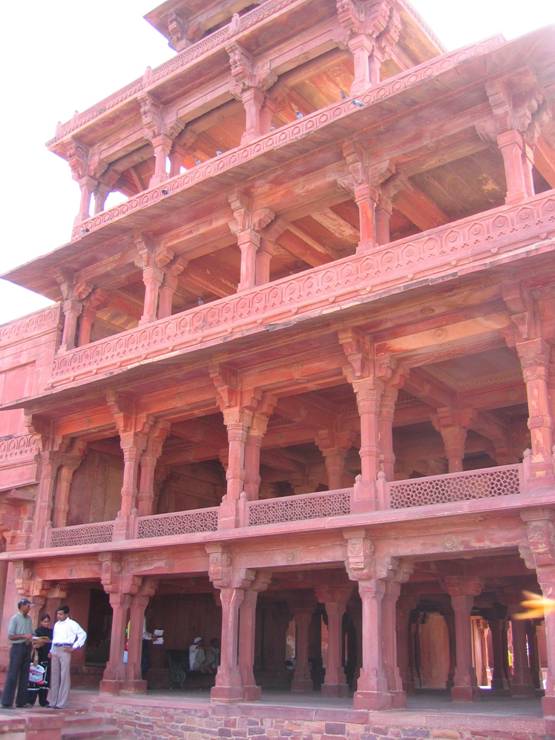
Fatehpur Sikri. An abondened city of empty palaces, mosques and other buildings.

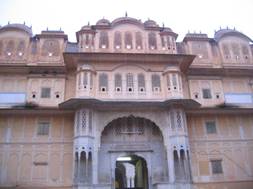


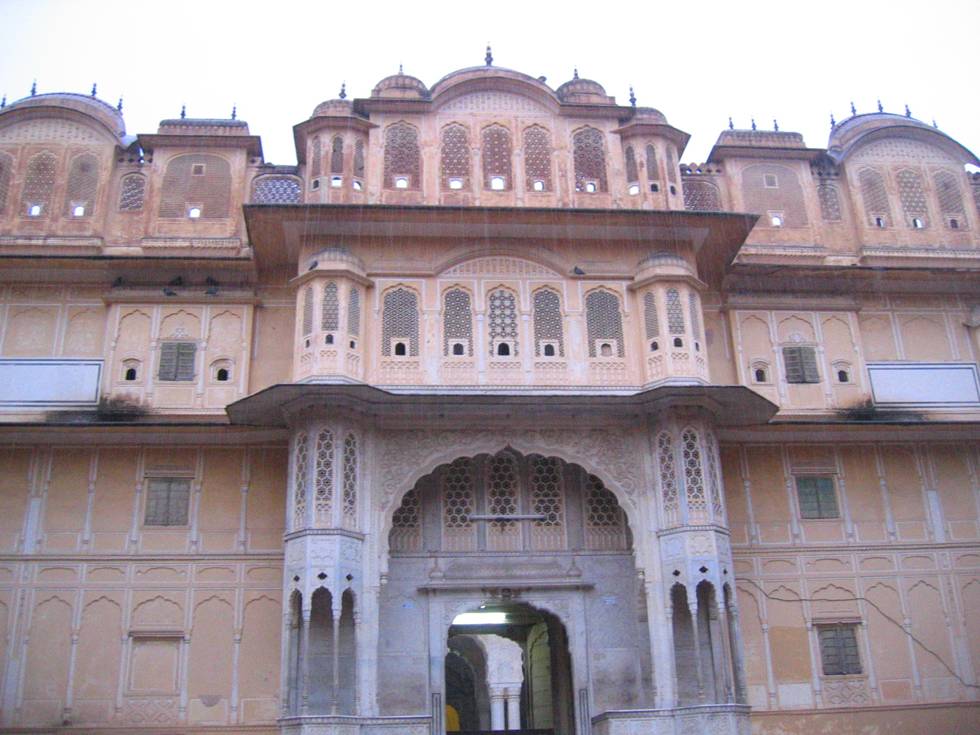
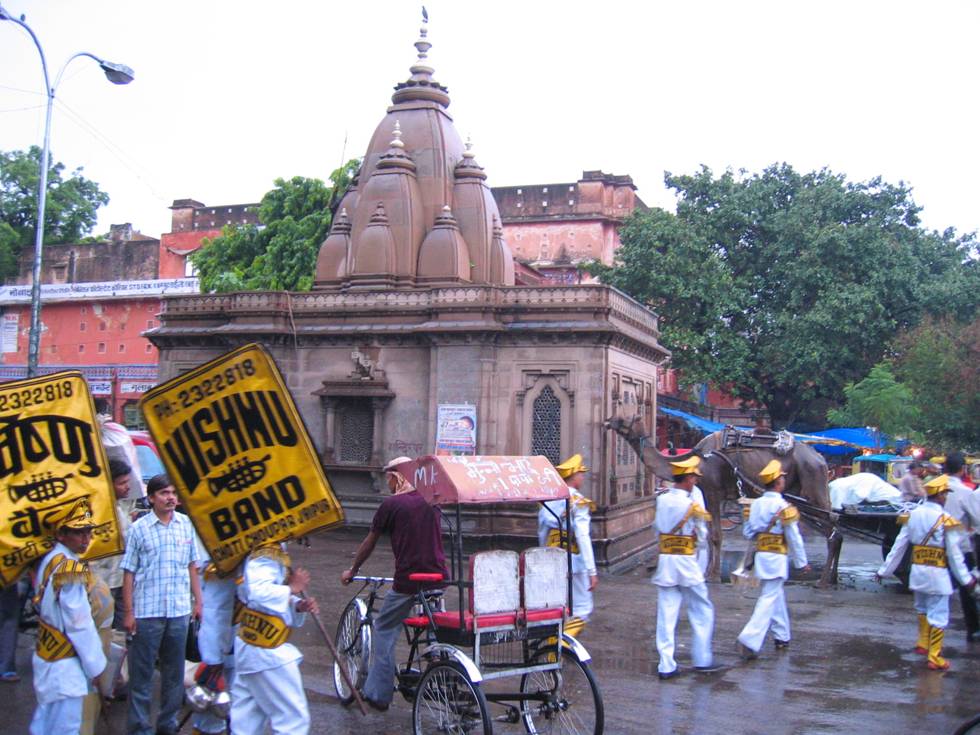
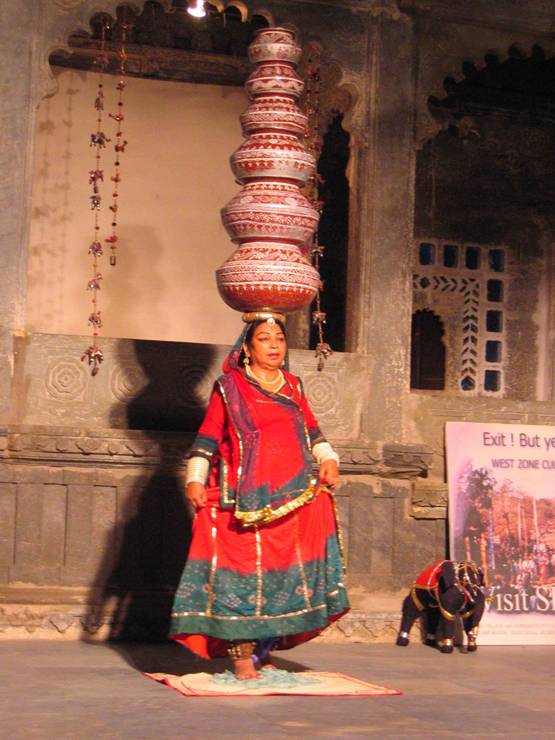
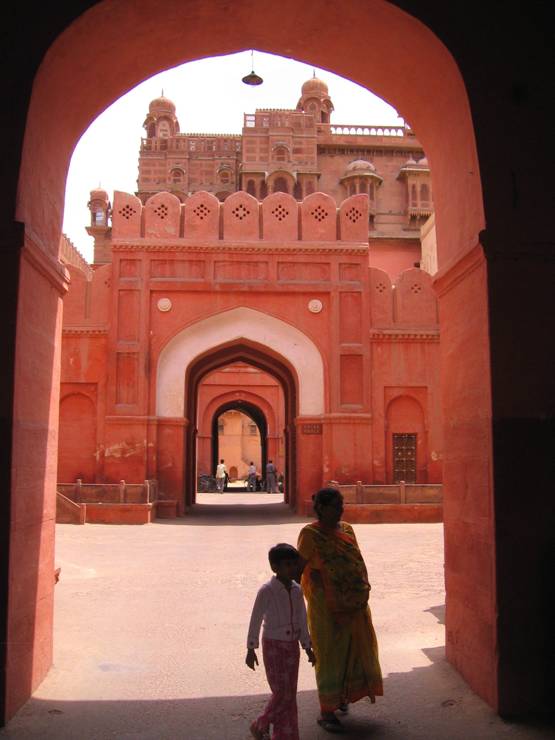
Jaipur, the pink city. Capital of Rajasthan, the state in which I will spent most of my time in India, famous for its coloured cities, its Rajputs (kings), forts, palaces, camels etc.


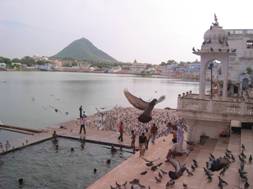


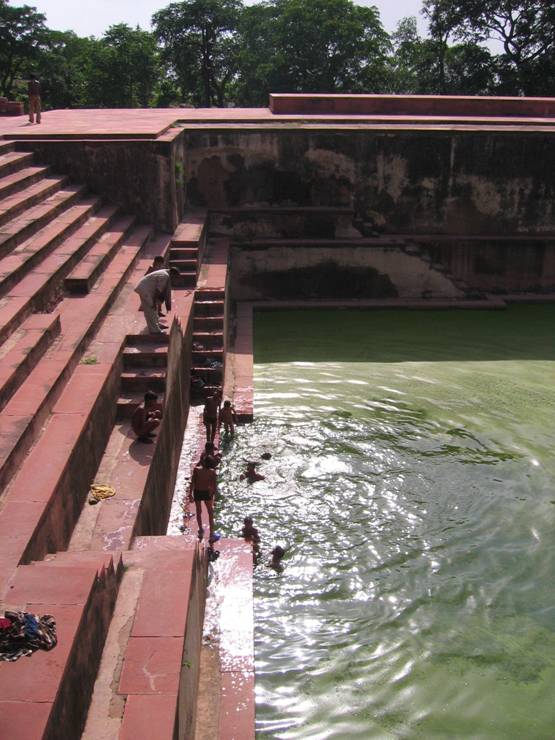
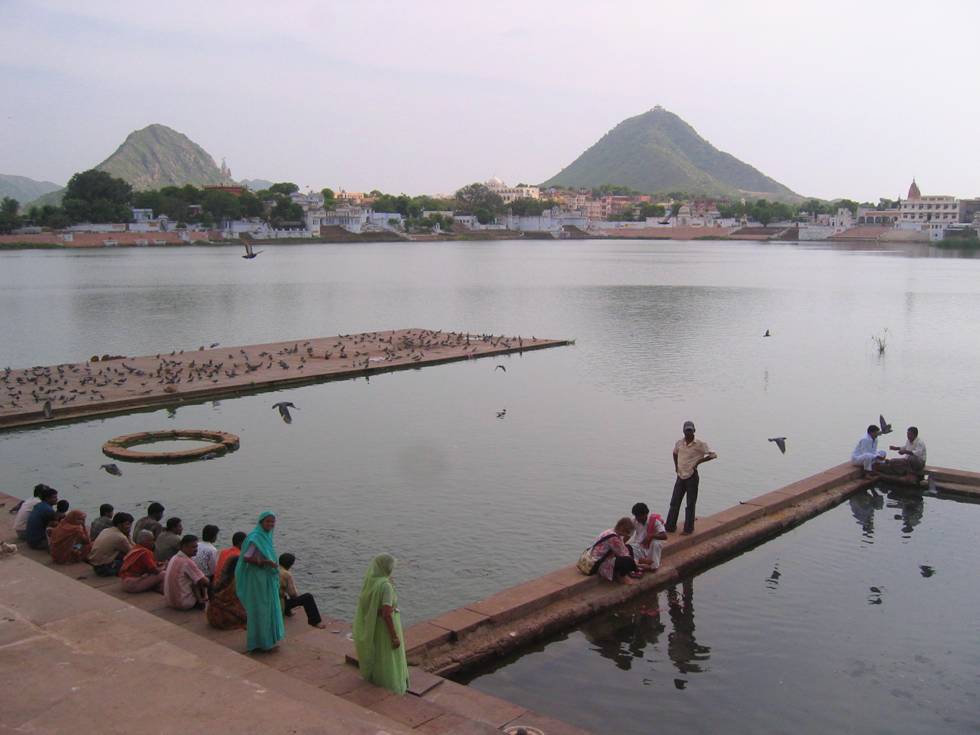
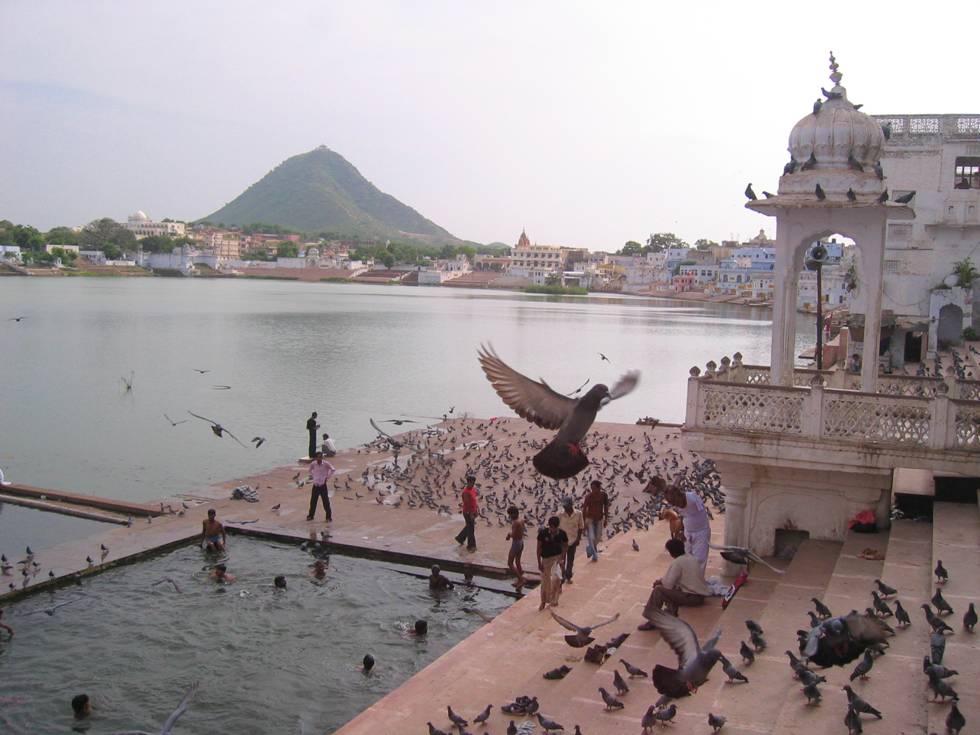
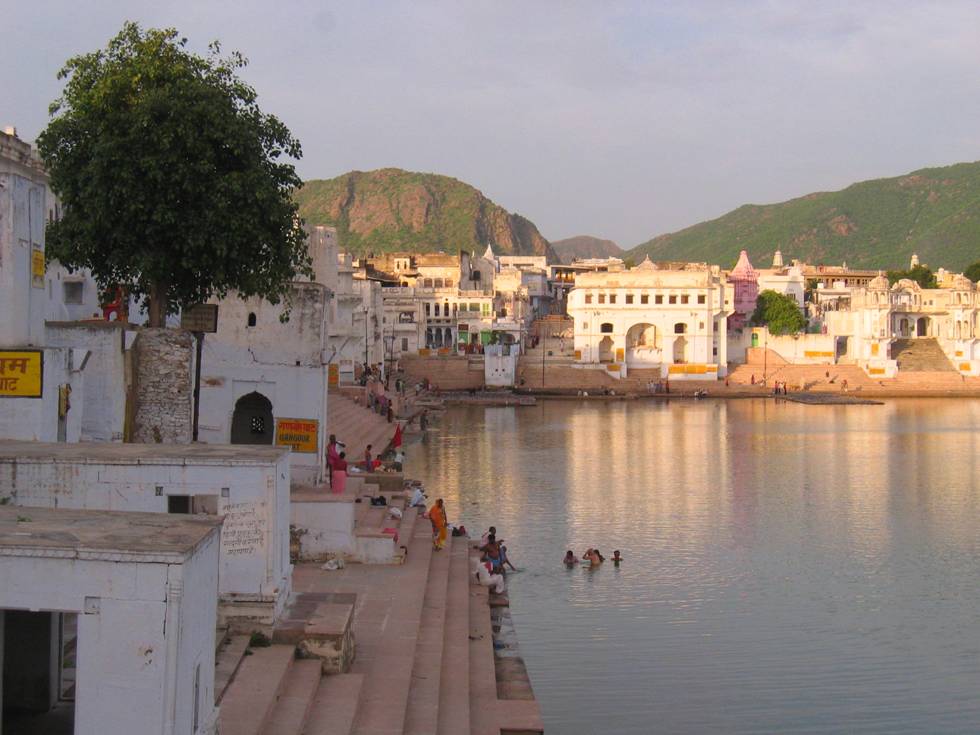
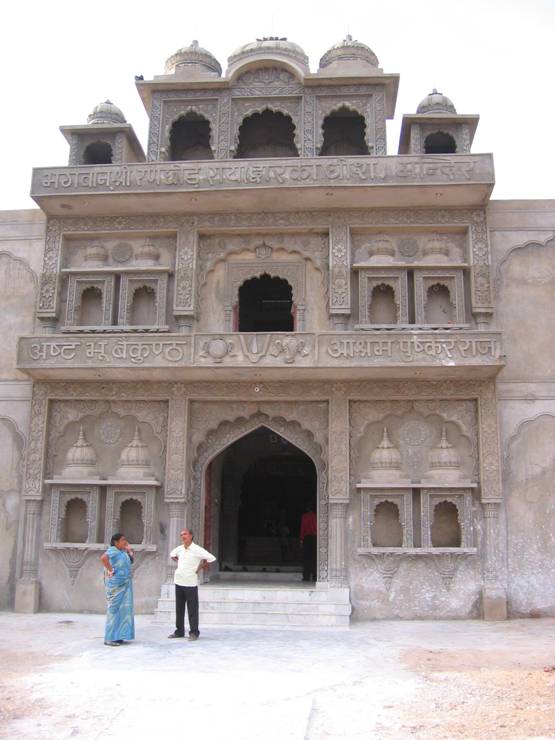
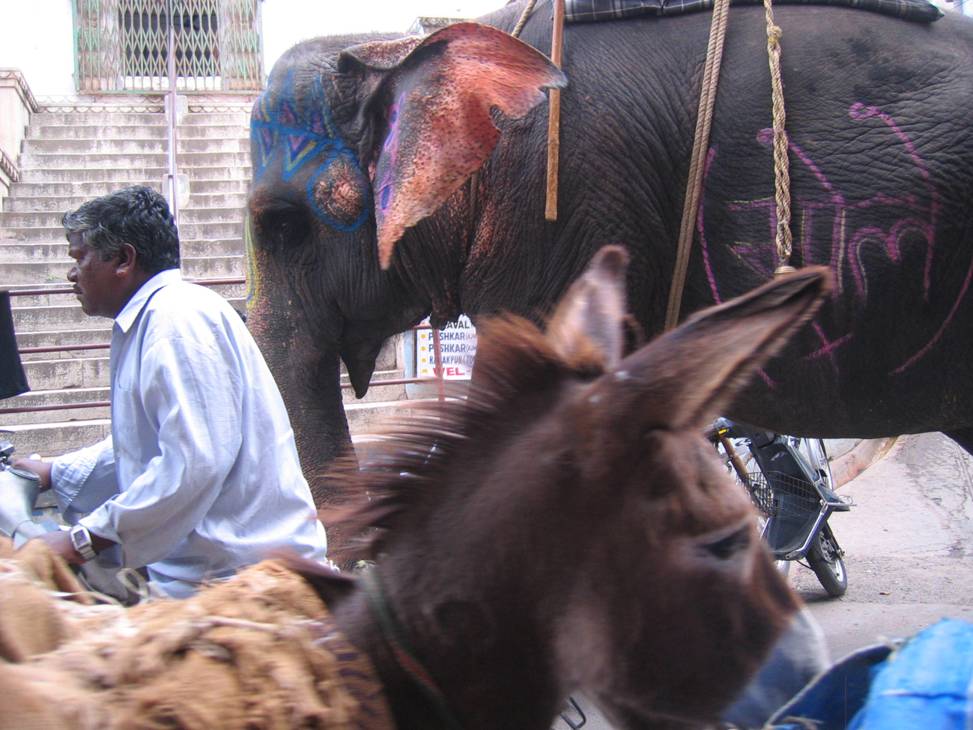
Pushkar. Surrounded by hills, a pilgrimage village with a holy lake, numerous temples and superfast lengmur monkeys.
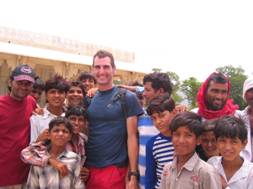

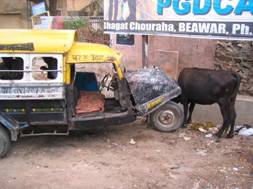

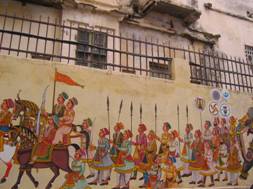


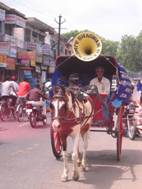


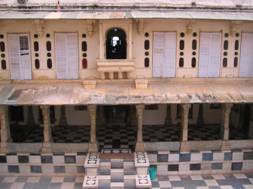
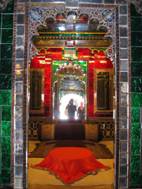

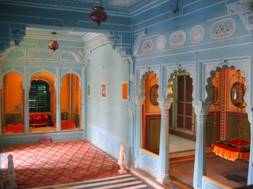


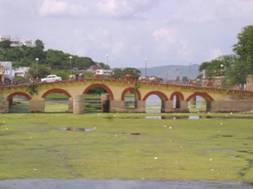


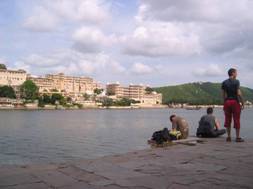

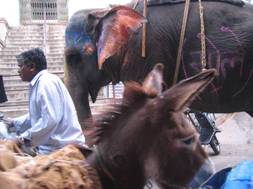
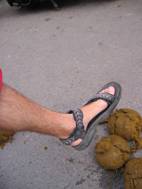


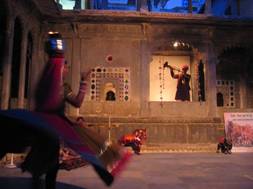
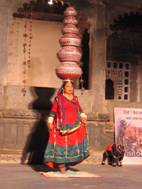
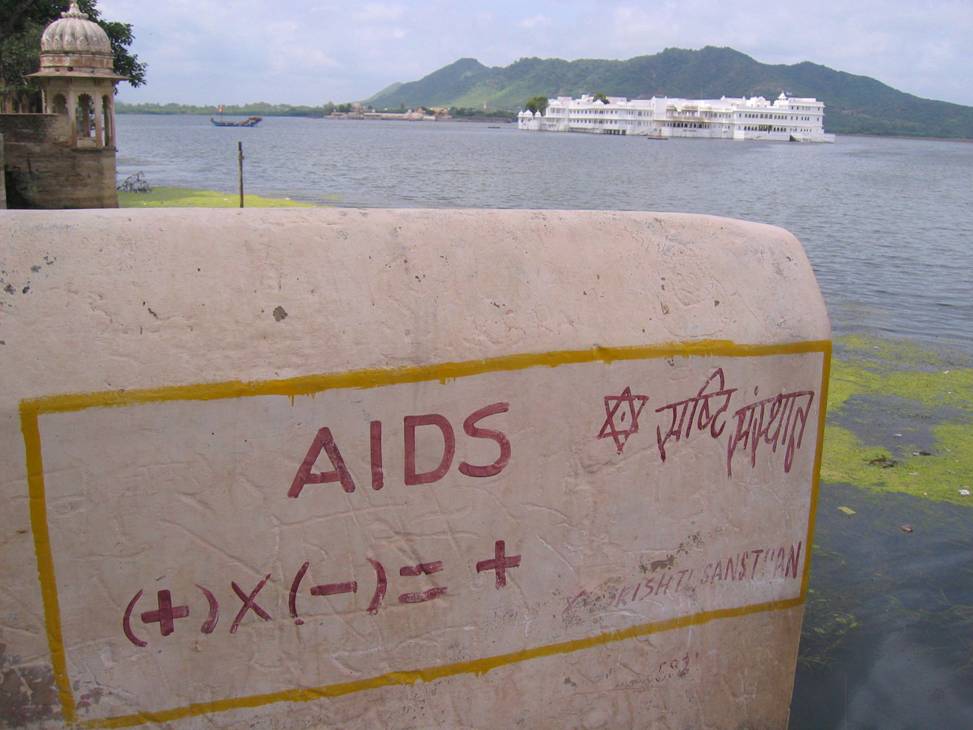
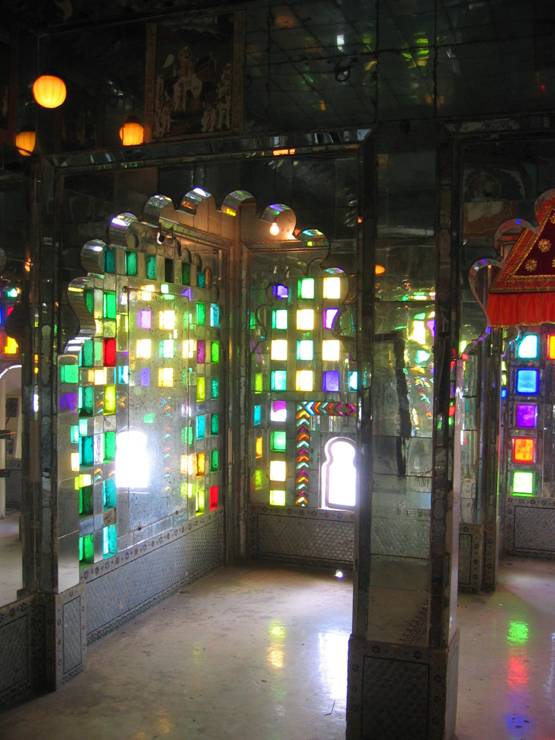
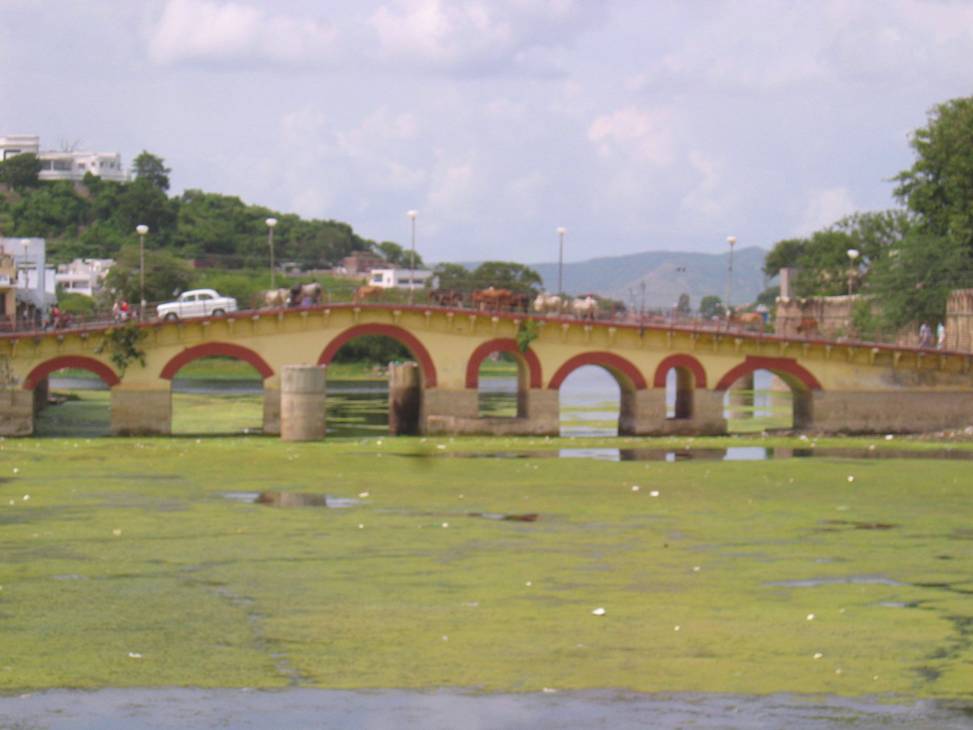
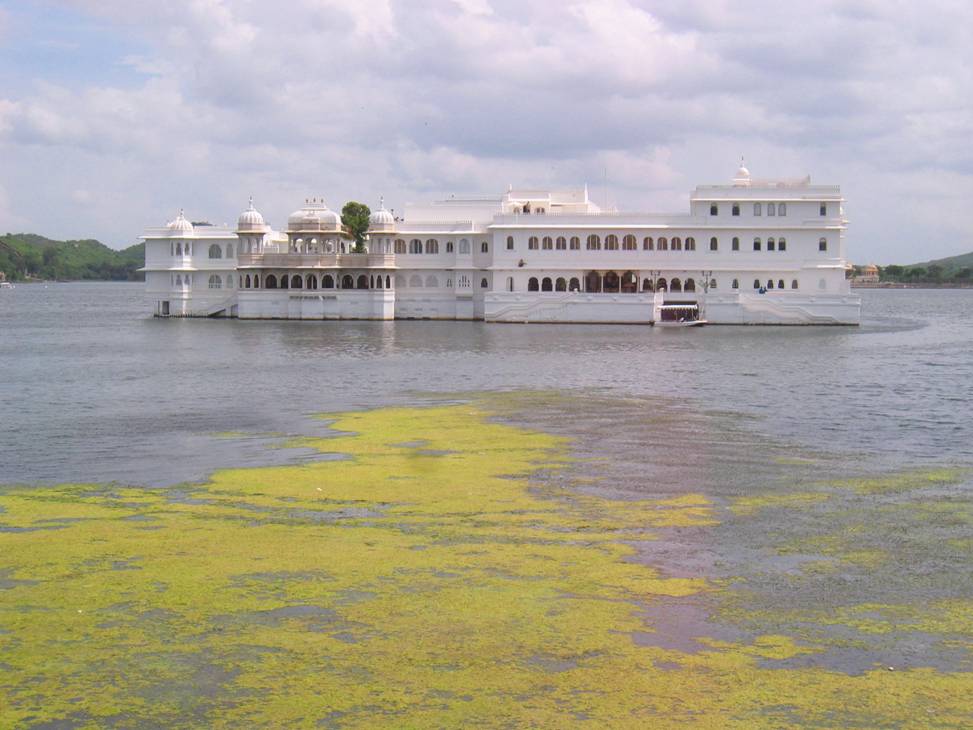
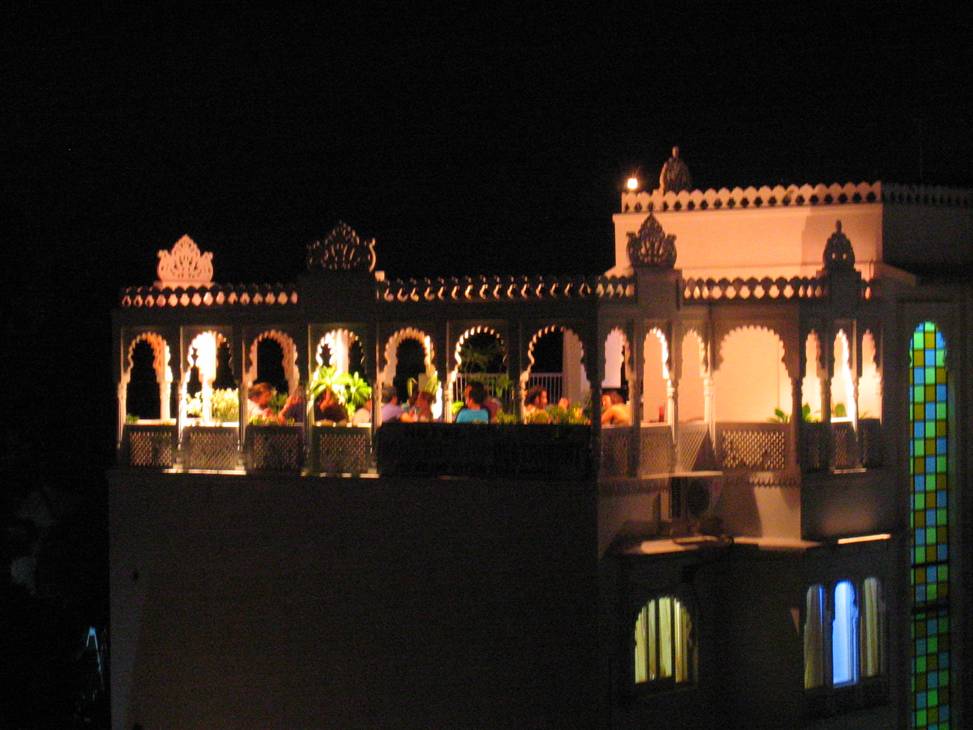
Udaipur, the white city. It once staged the Jmaes Bond movie 'Octopussy', with beautiful palaces around the lake and even a few in it.


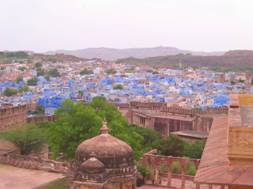
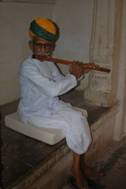
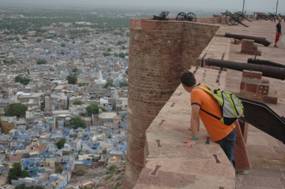

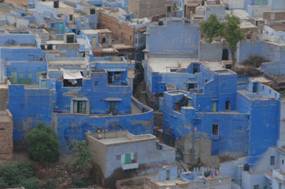


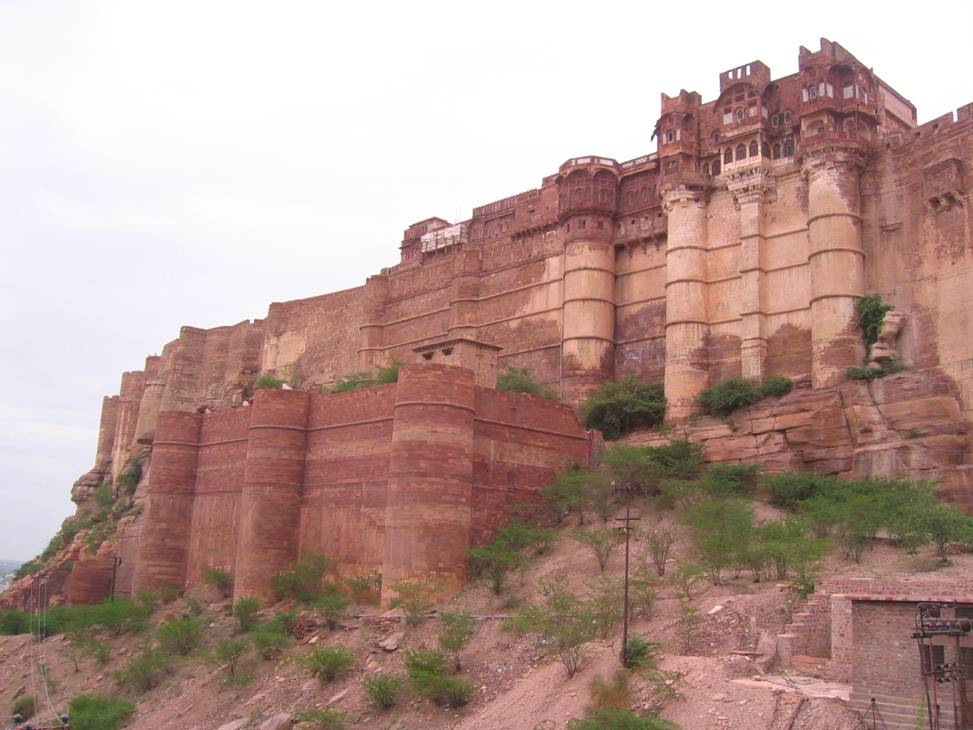
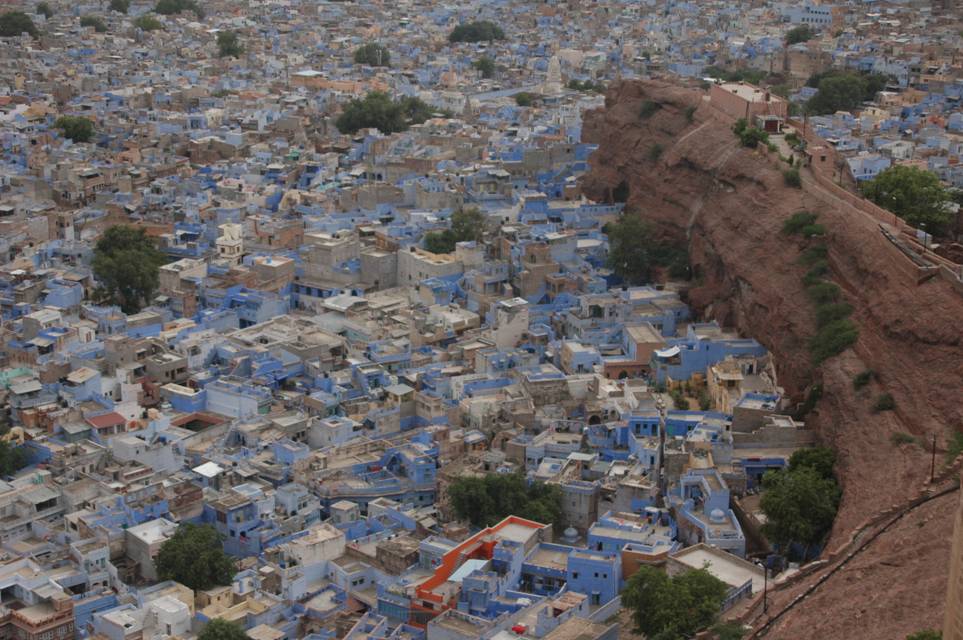
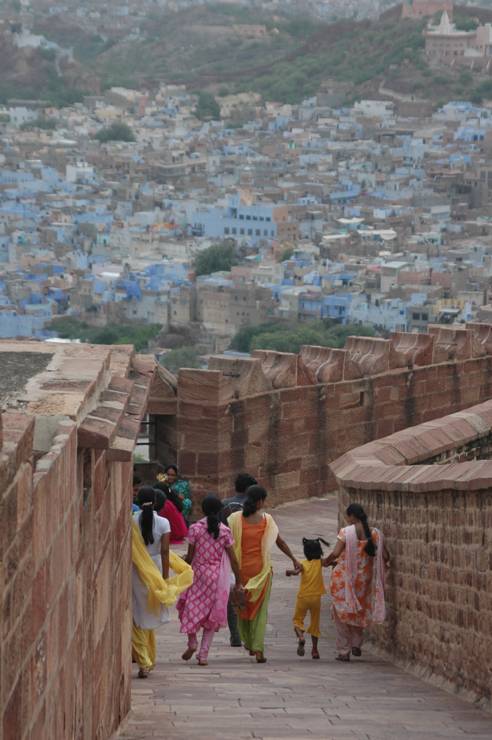
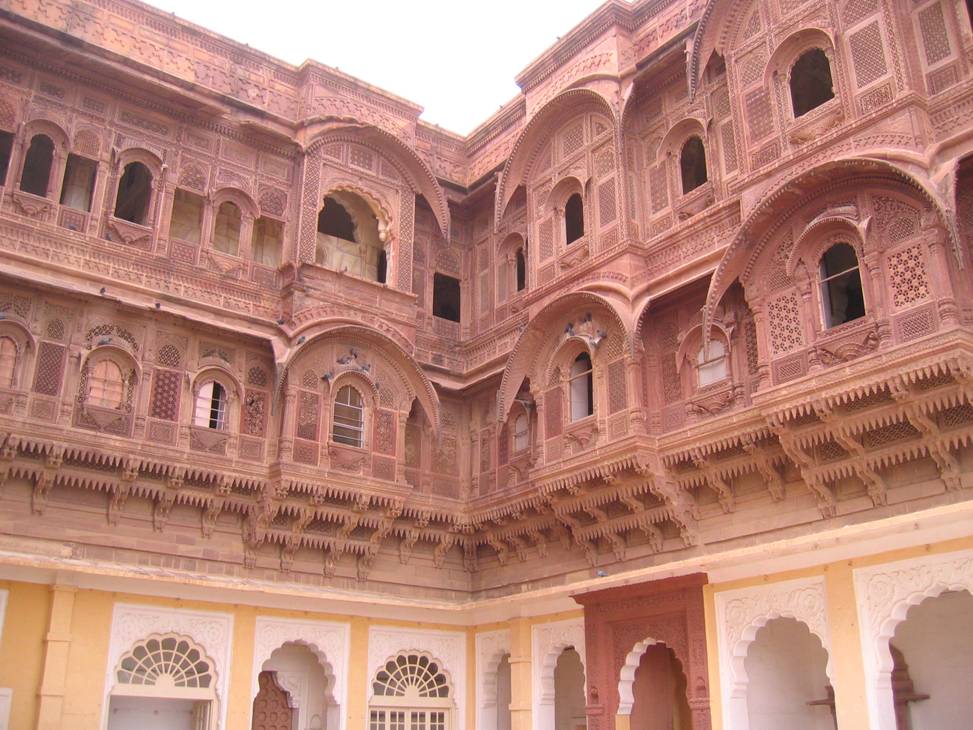
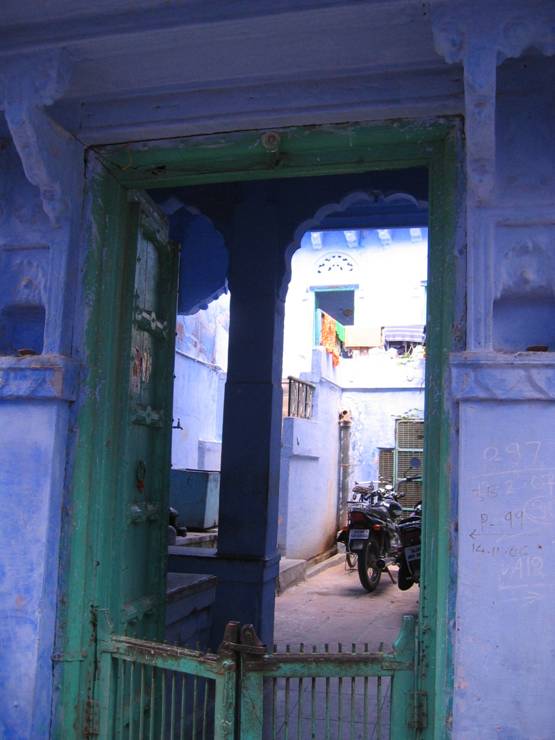
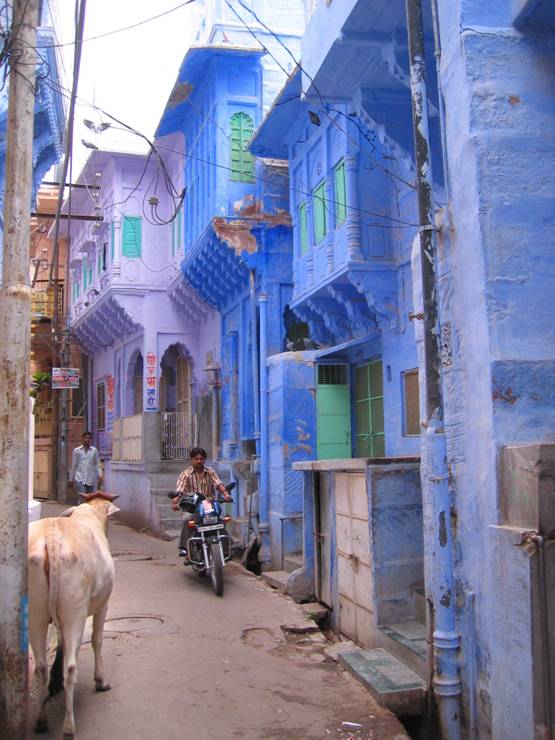
Jodhpur, the blue city. Imagine a huge fortress on top of a hill, surrounded by a city of blue houses, an amazing sight!


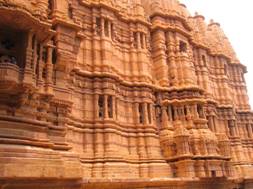


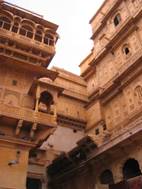

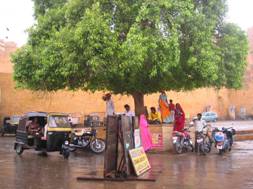

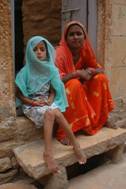
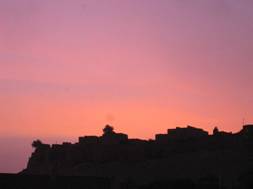


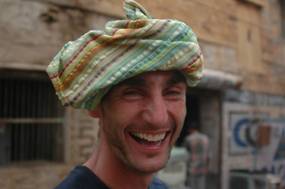

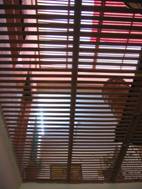


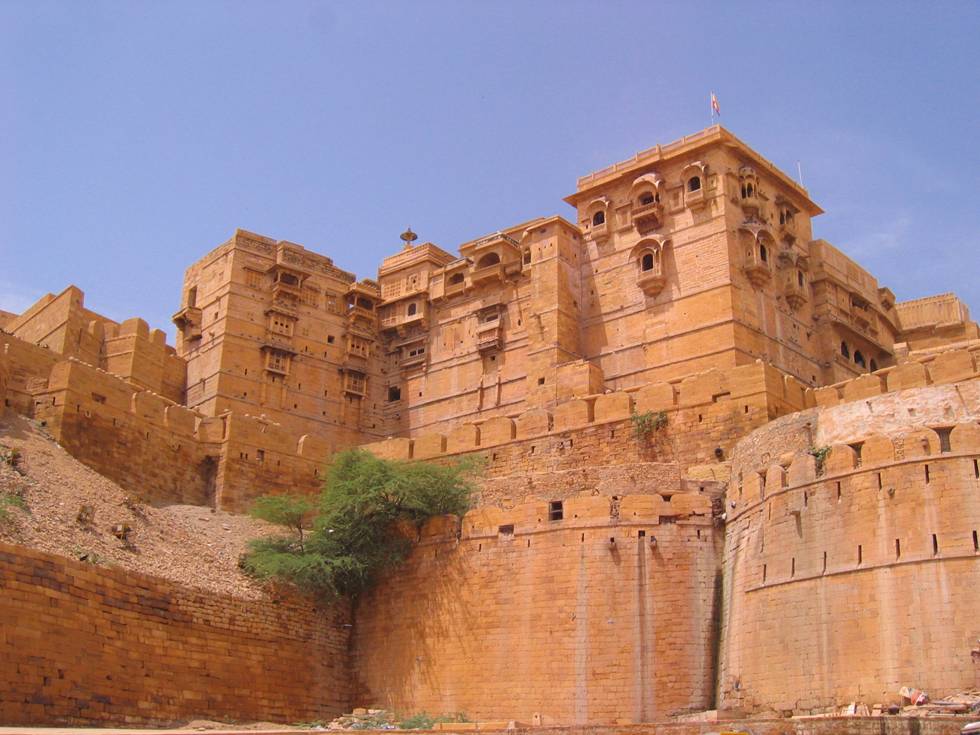
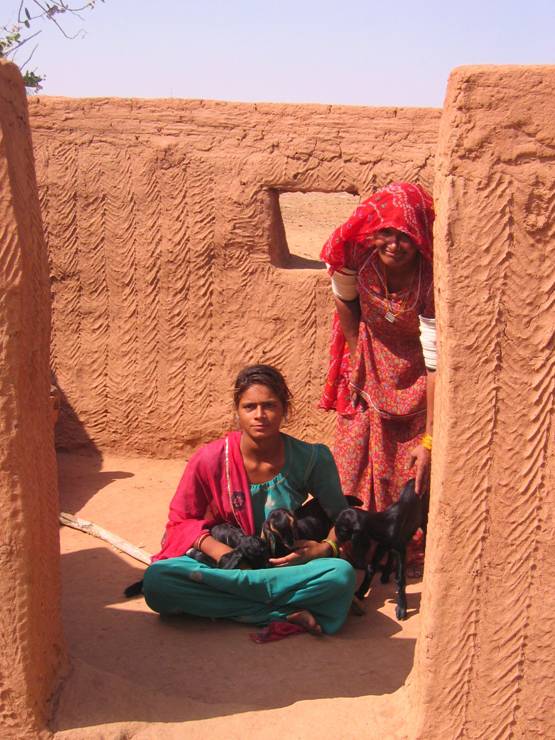
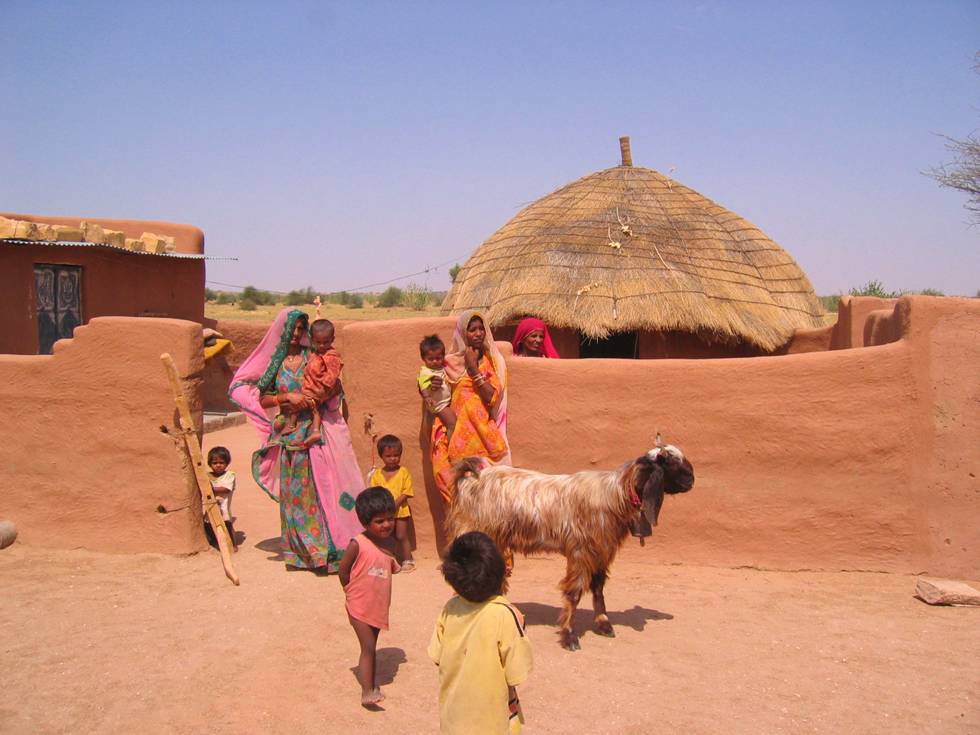
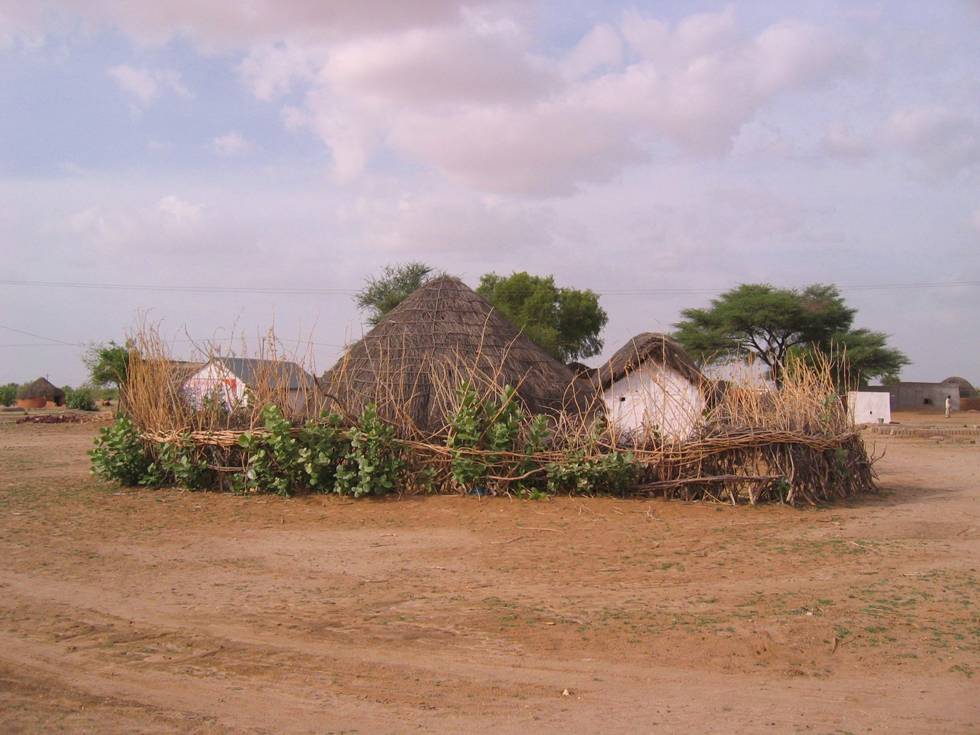
Jaisalmer, the golden city. Jaisalmer lies near the border of Pakistan in the middle of the desert on the old land routes for the caravans of spices and silk, and is completely made of sandstone. On top of the hill is the old fortified city which is still inhabited.
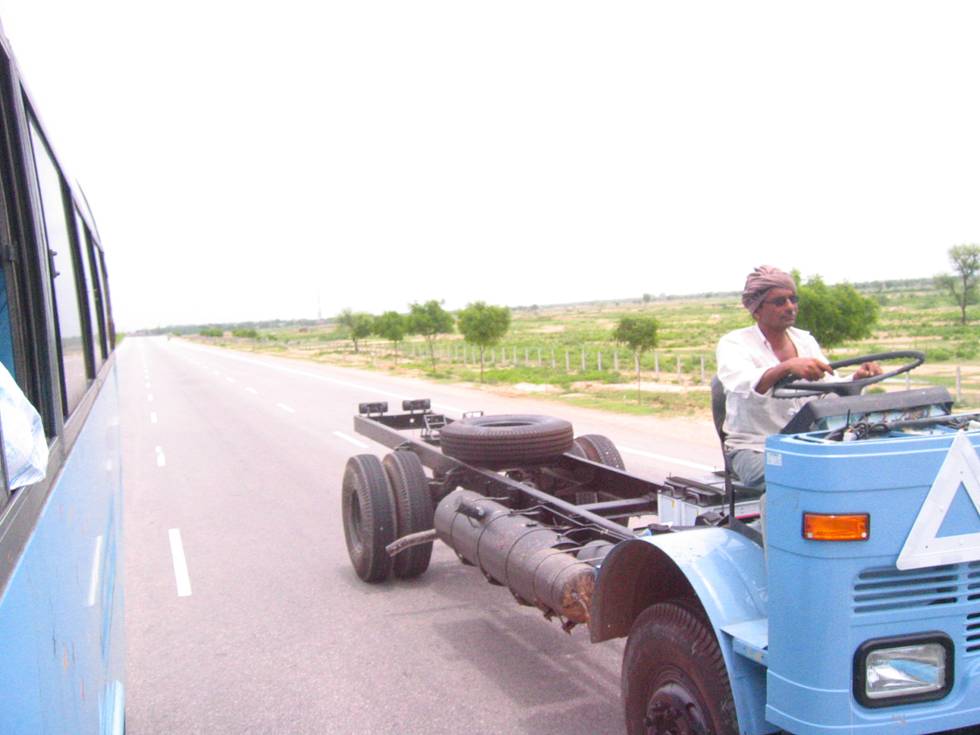
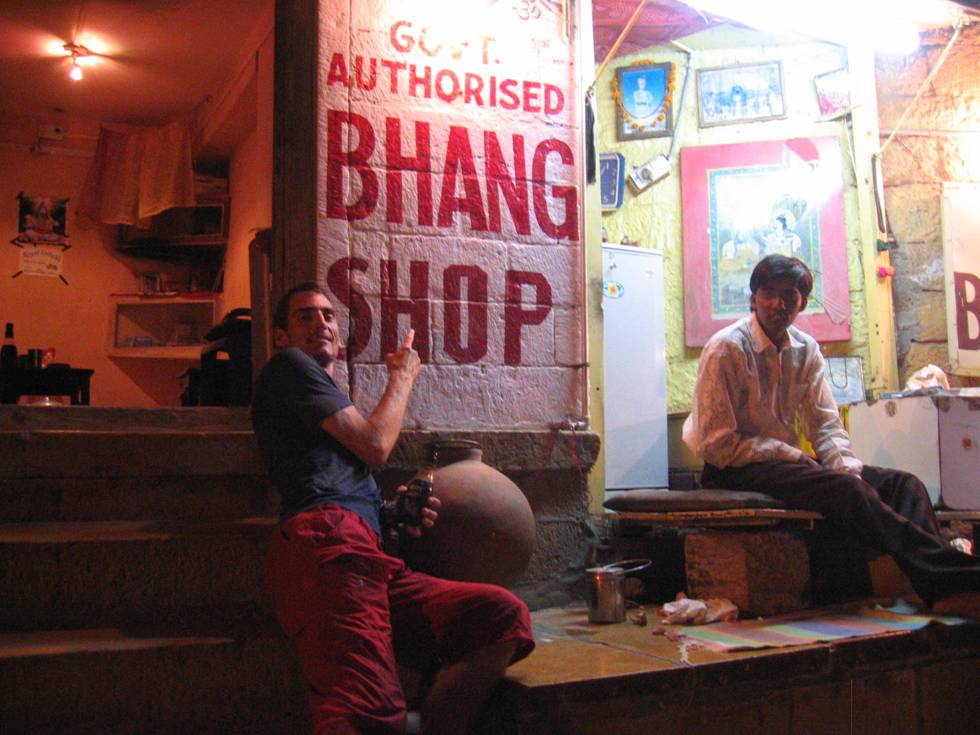
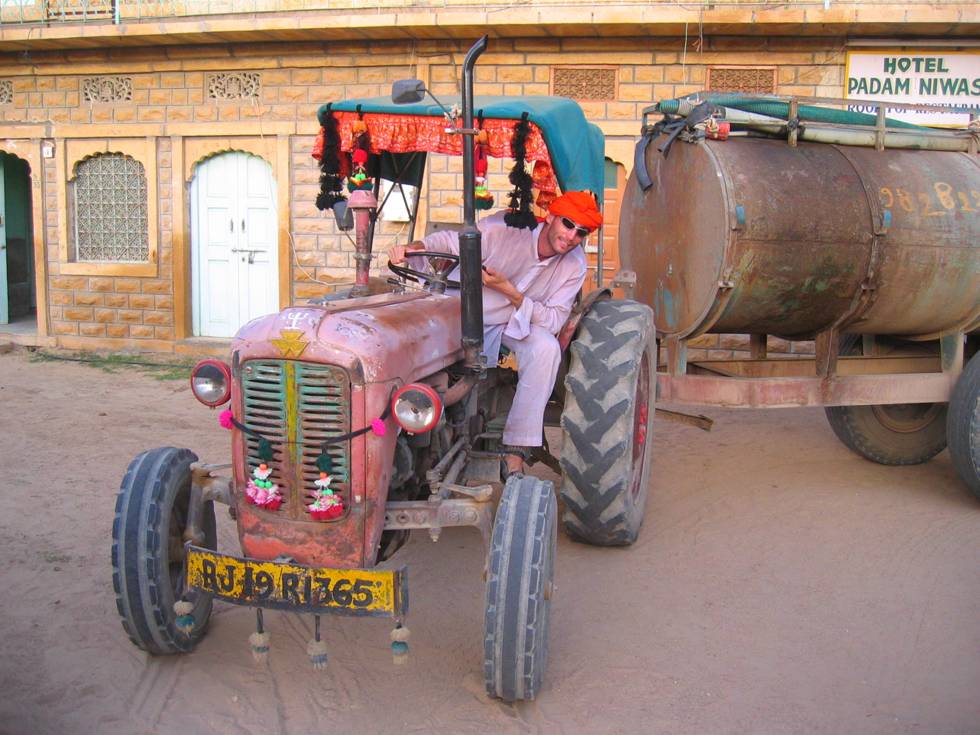
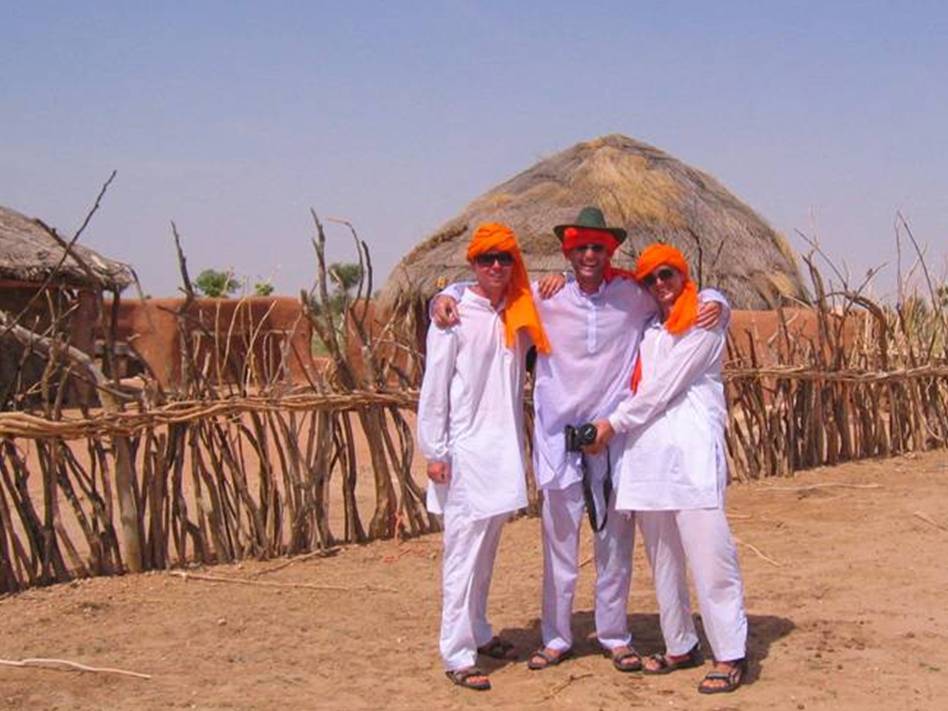
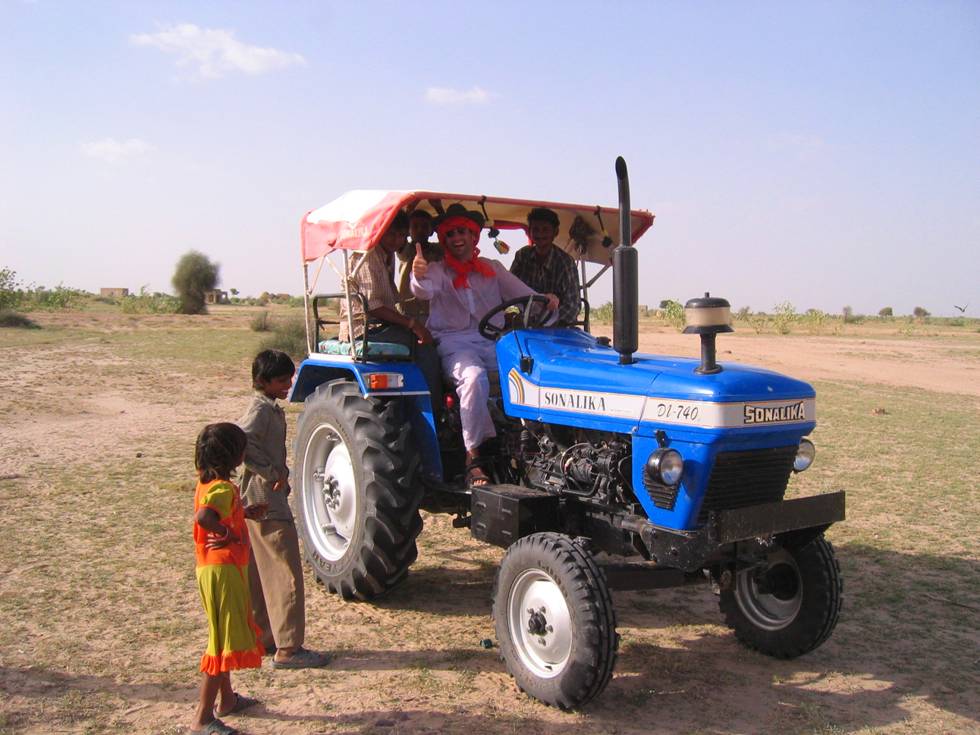
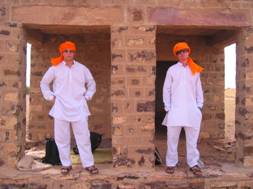
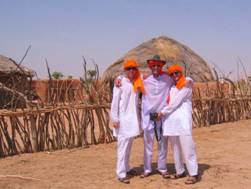
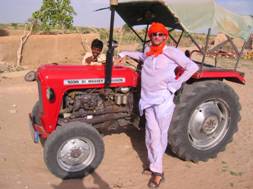
The two guys on the picture are Litlle A. and Toxic Luke, a lumberjacker and a playboy from Slovenia, pretending to be a doctor (probably a drug dealer) and a lawyer (probably an ex-convict) in spe. In Jaisalmer, these fine two gentlemen arranged a very entertaining ride on my favourite tractor.


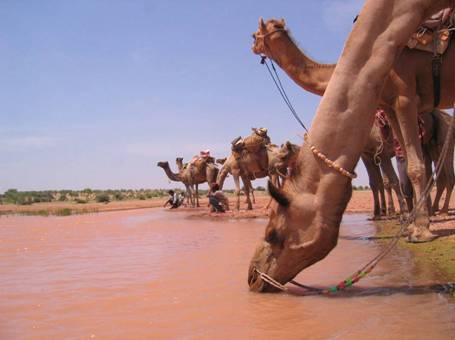


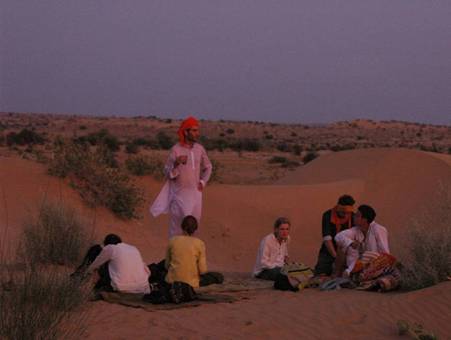


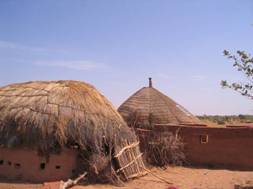
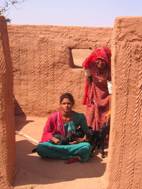






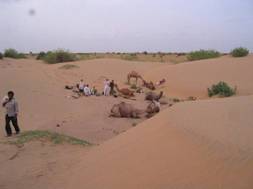
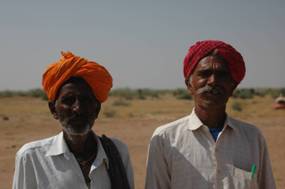


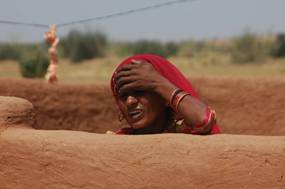


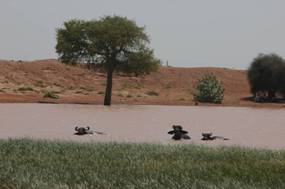


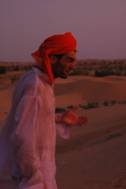
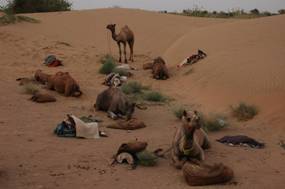


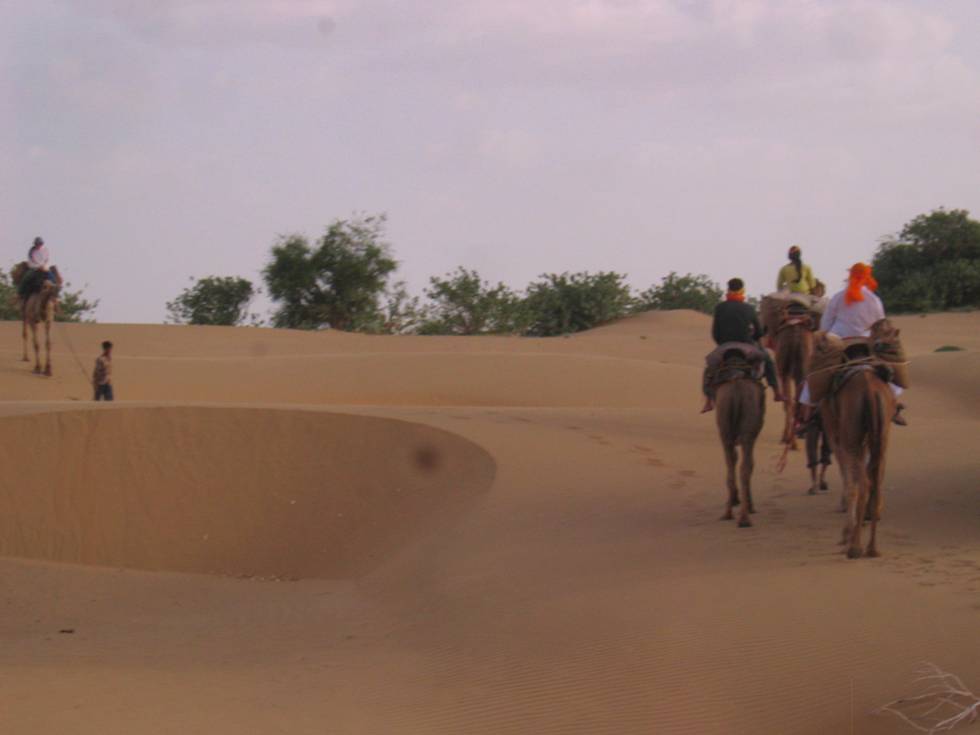
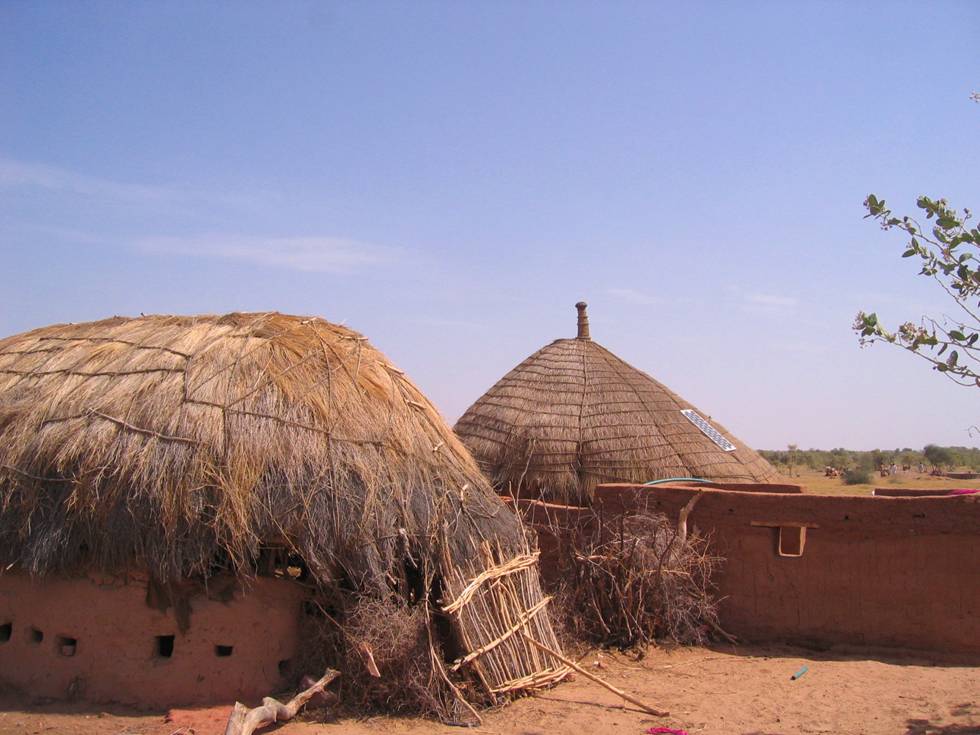
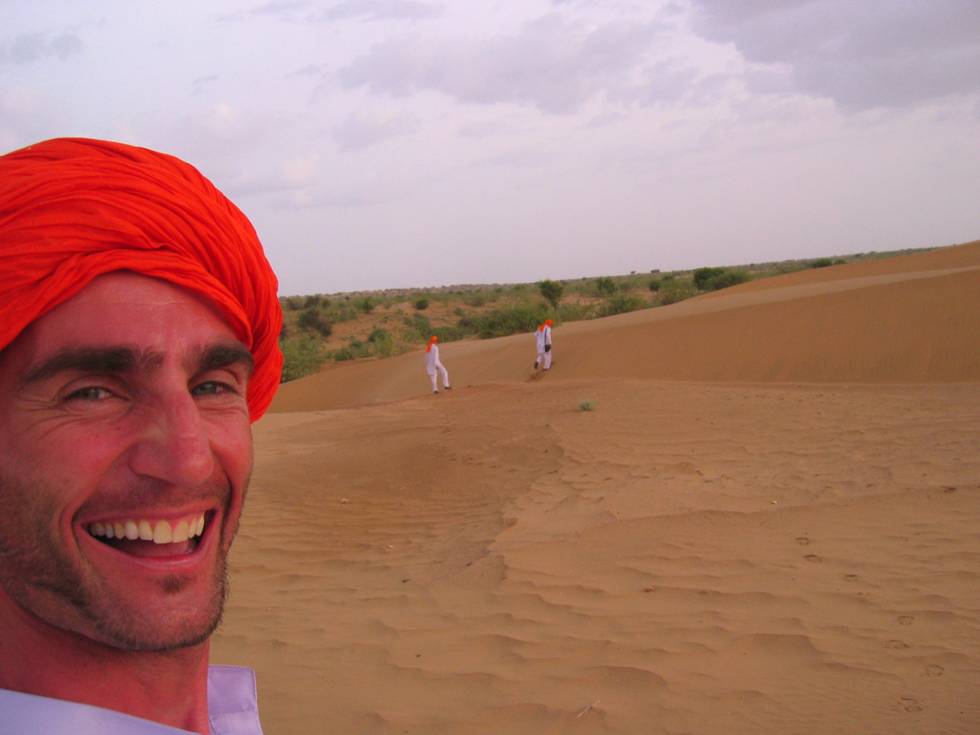
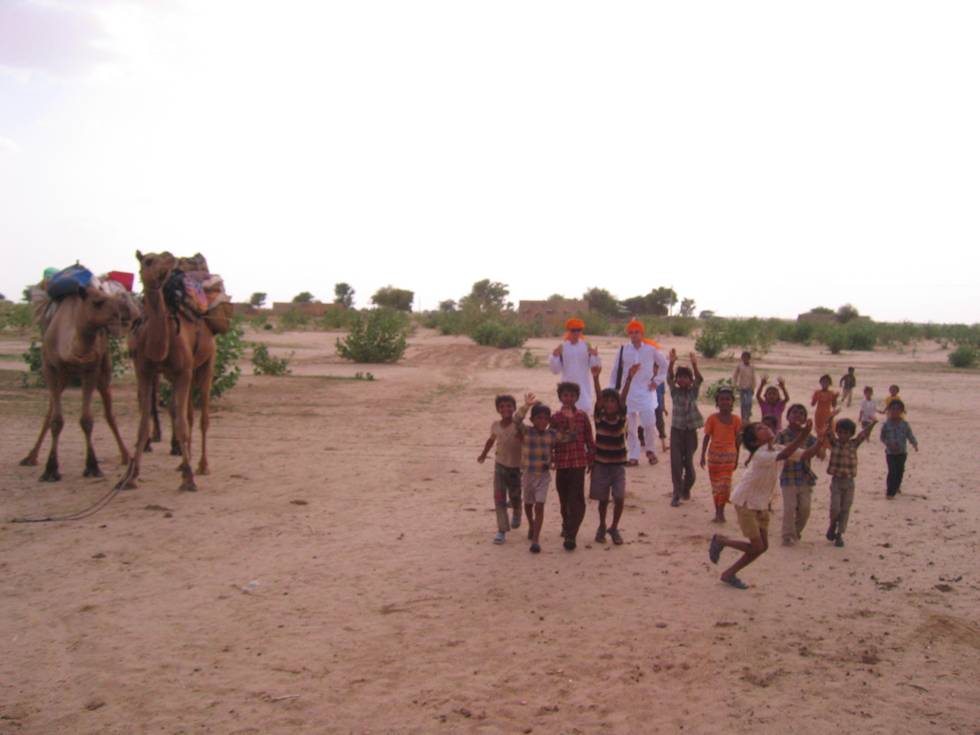
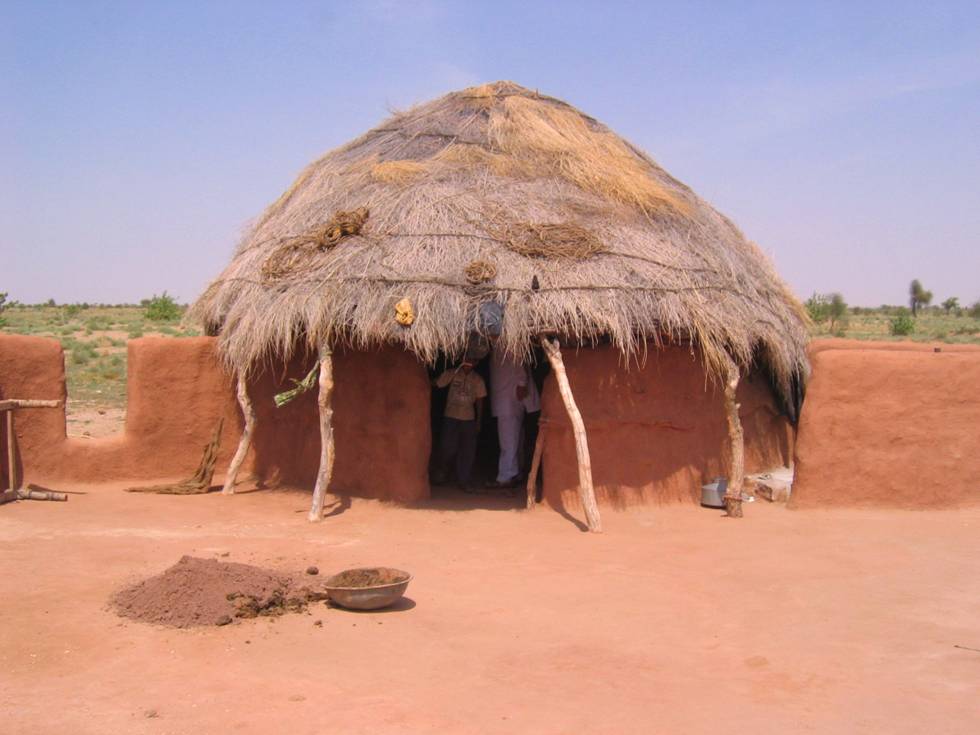
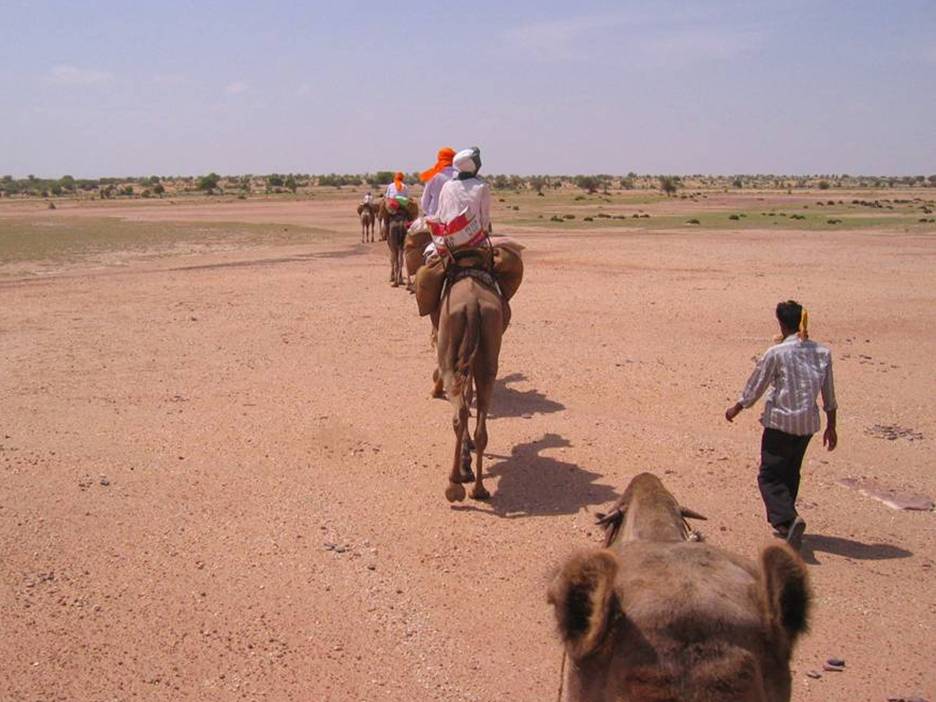
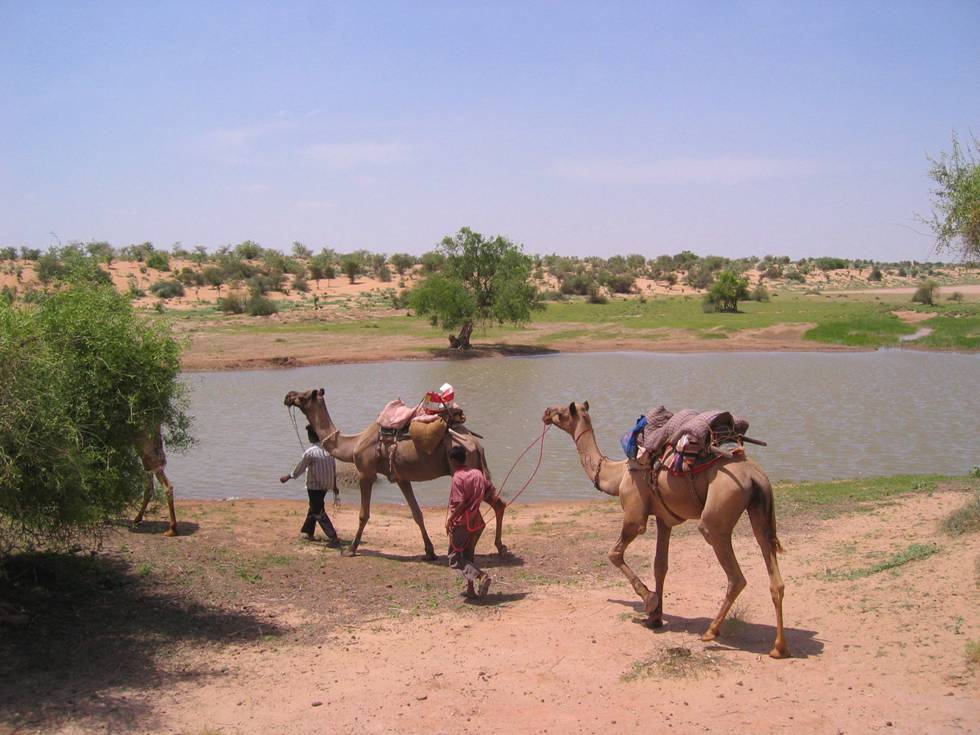
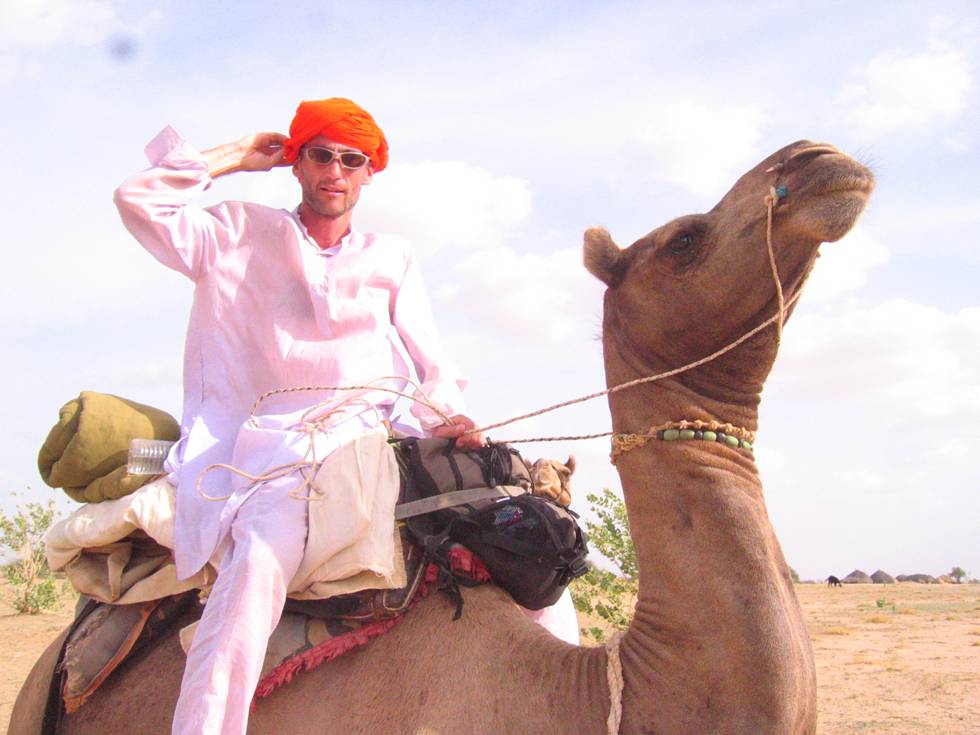
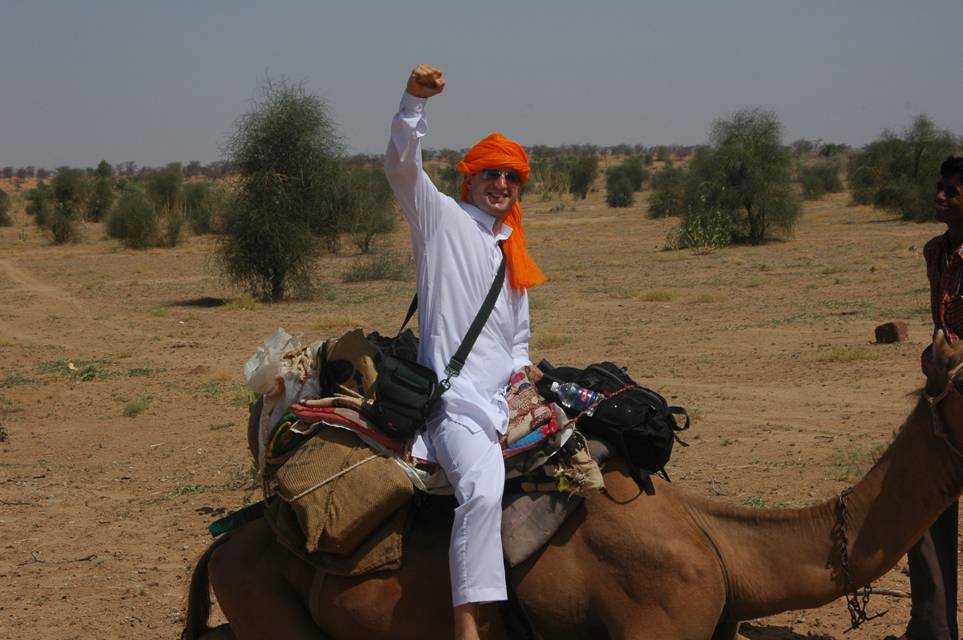
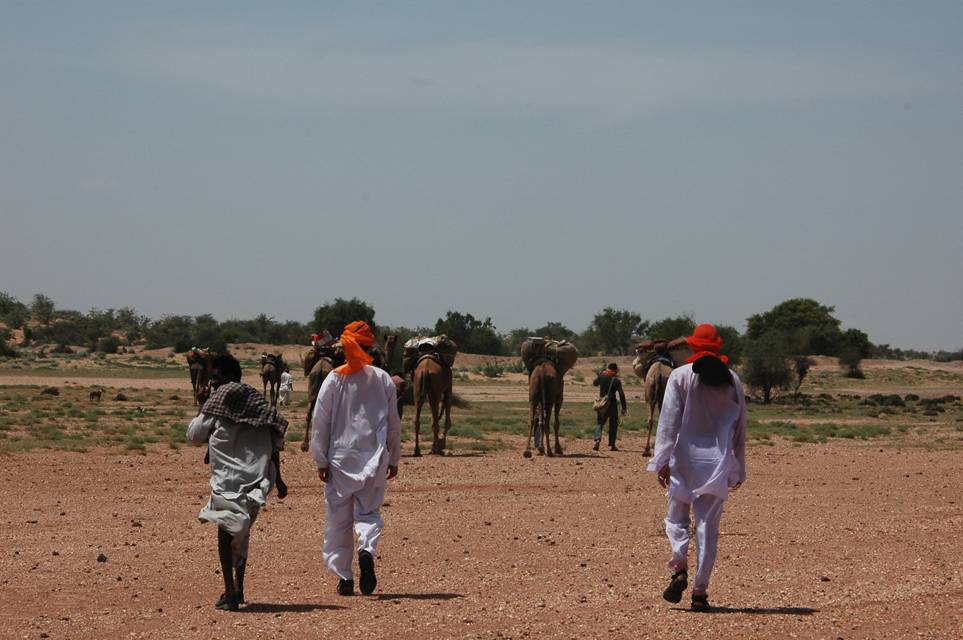
camel safari in Tar desert. Together with Little A. and Toxic Luke, we took am unforgettable four day camel safari through the Tar desert, one of my highlights in India. Riding a camel is definitely not as easy as a horse.
The camel first has to kneel down before you can mount, you sit about a meter higher than on a horse, there are no stirrups to put your legs in, the steering ropes are crossed not to blind the camel but this makes steerig quite difficult, and worst of all the camels are very stubborn animals.
Especially when you are cantering or galloping it feels like you're on top of a cruise missile with some serious software bugs, haha.
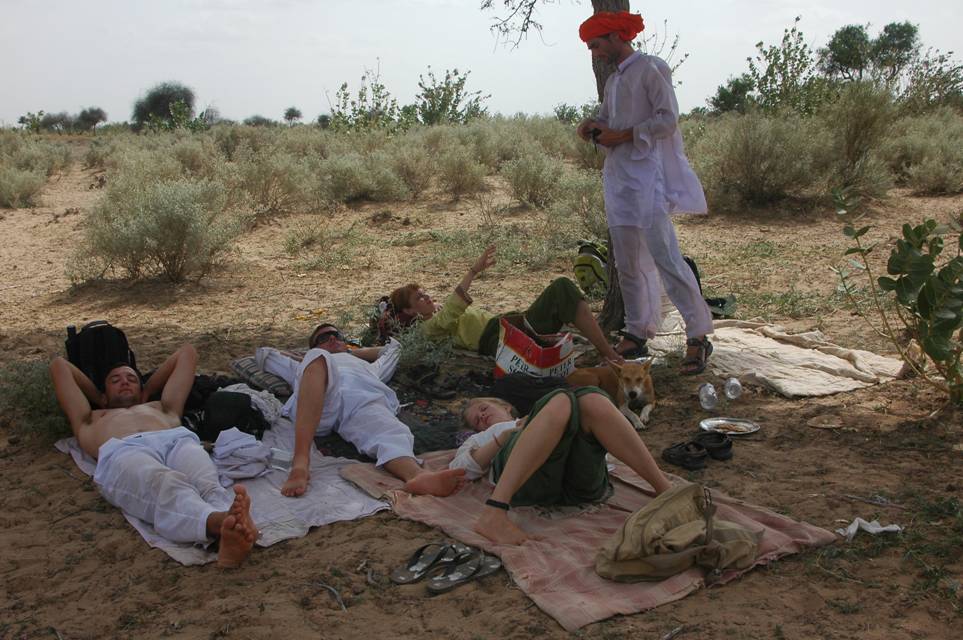
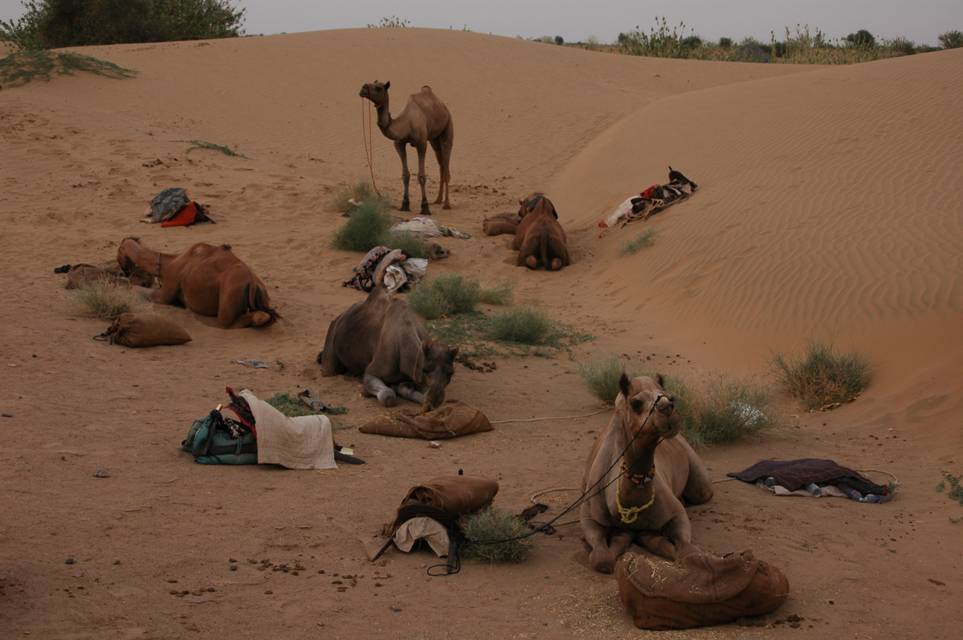
At night you sleep in the sand dunes under the stars, in the smell of the camels and with dung beetles and scorpions running around, and in the morning you wake up with sand between your teeth and everywhere in your clothes.
After one day we got company from Johny the Surfer and three Cheese Factory Queens from Switzerland, the best, and from that time our camel driver Shambabba and his mates were obsessed with teaching the girls how to make 'chapatti's'.
Therefor a song from the Swissies for Shambabba and all the other lonely camel drivers out there in the Tar desert:
Alle Maenner sind Schweine,
trau ihnen nicht, mein Kind.
Sie wollen nur das Eine,
weil Maenner nun so sind.
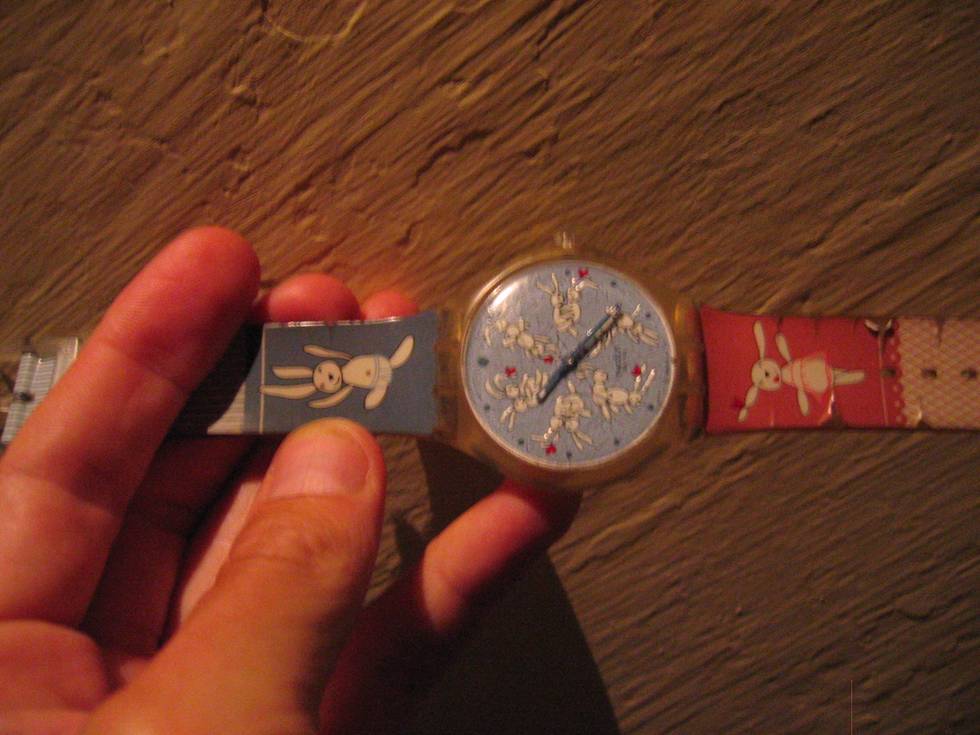
And what else did we do in the desert? Not much: ride the camel, have of a lot of breaks in the shade, show my respect to the desert farmer by drinking opium out of his hand, cool down at wells or in a lake, smack a scorpion, have a tractor ride, and (last picture) play with the naughtiest watch I have ever seen.

3.3 MB MOVIE: india camelride.avi


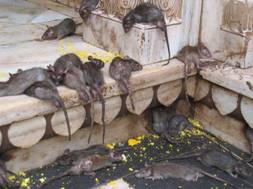

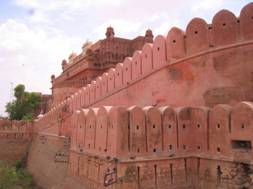


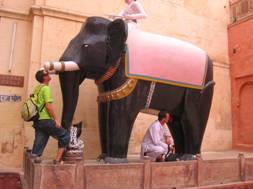

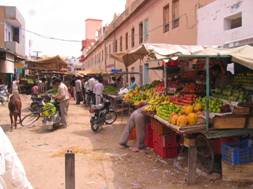
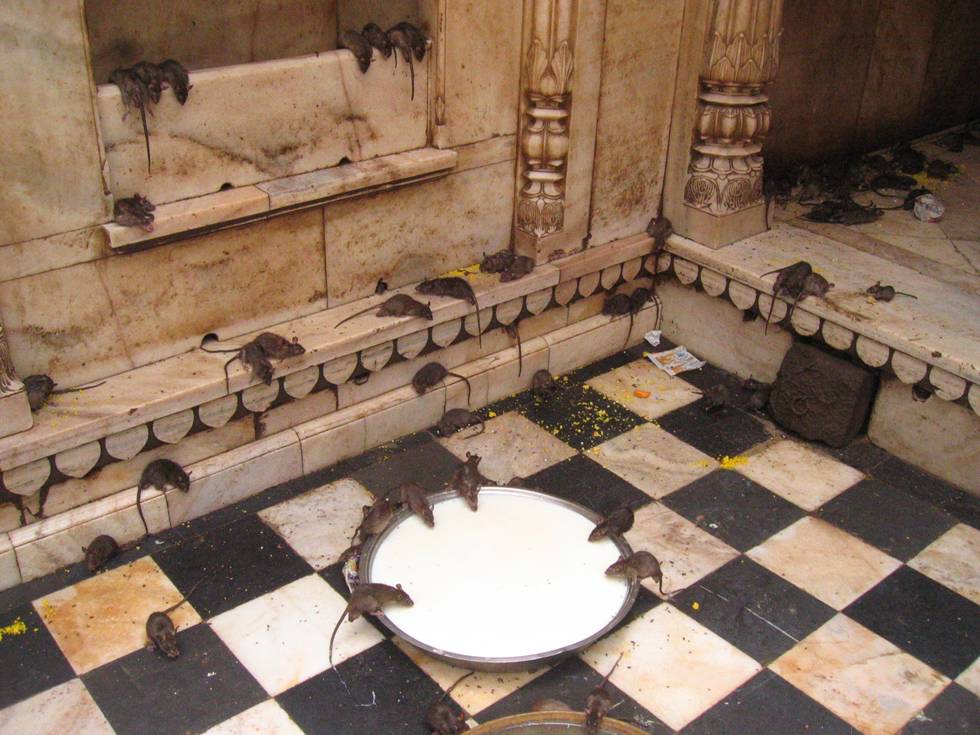
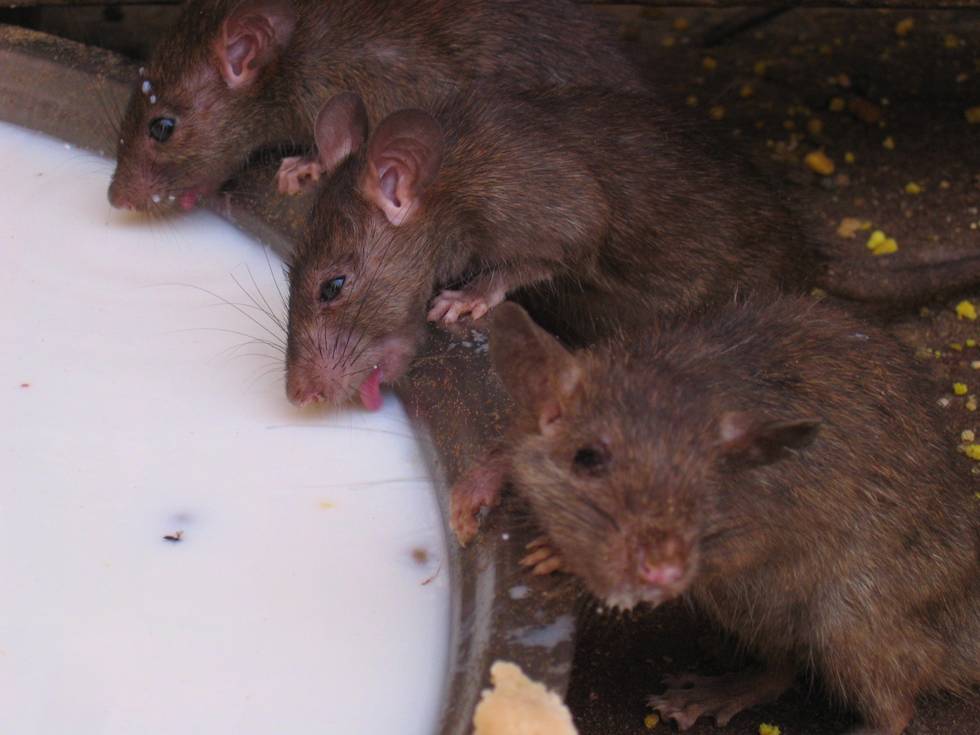
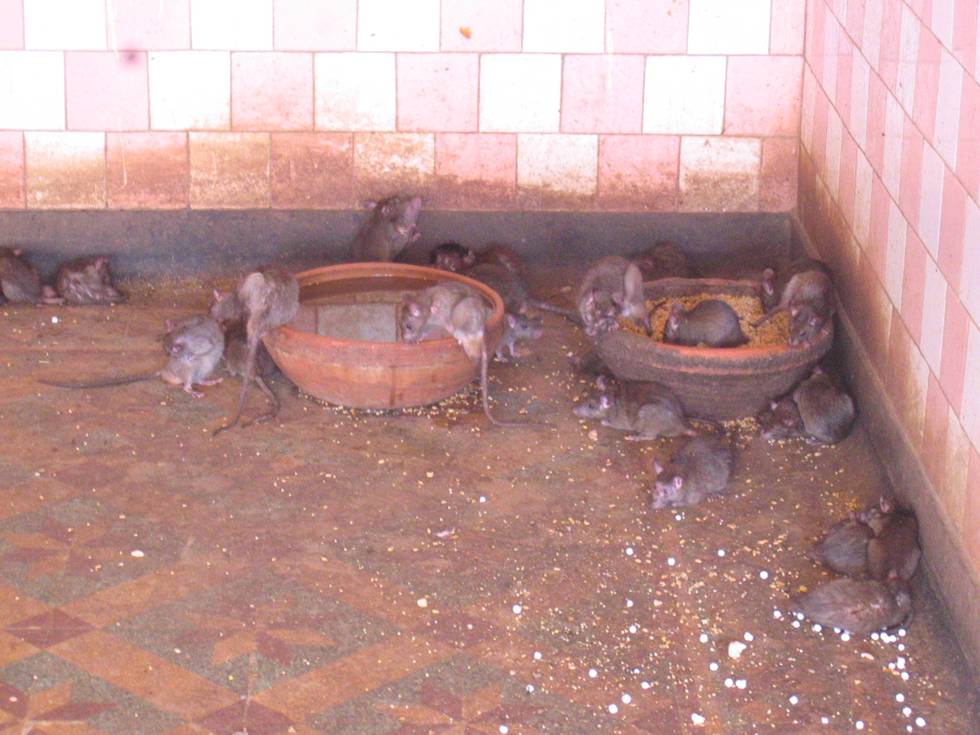
Bikaner and rat temple. Religion makes people do crazy things, especially in India. Nearby the desert town of Bikaner is a rat temple. Yes, a rat temple. They worship rats. Indeed. No joke.


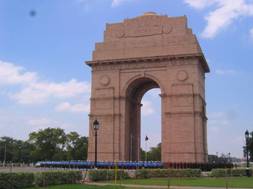


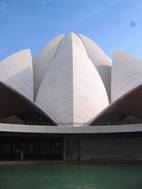


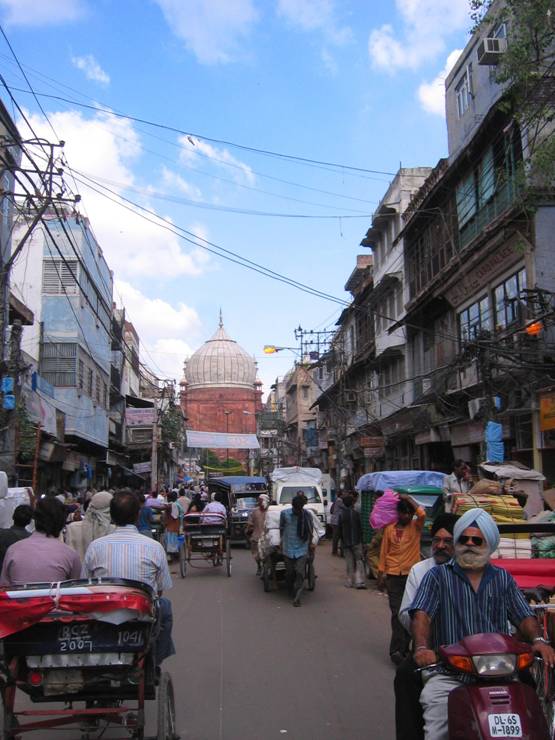
Delhi. Why is everyone nagging about Delhi, that it would be a dirty noisy uninteresting city? Maybe it is because if they fly into India it is their first meeting with India, haha. A friend of mine arrived some weeks ago and after a few days she couldn't handle it any more and flew straight out again, haha. To me it is an Indian city like the others, with lots of things to see.


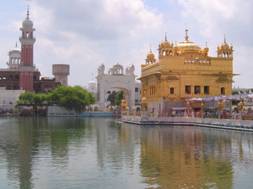


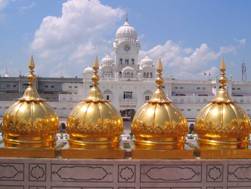

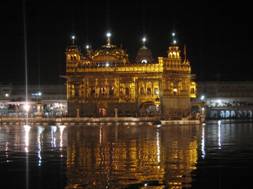


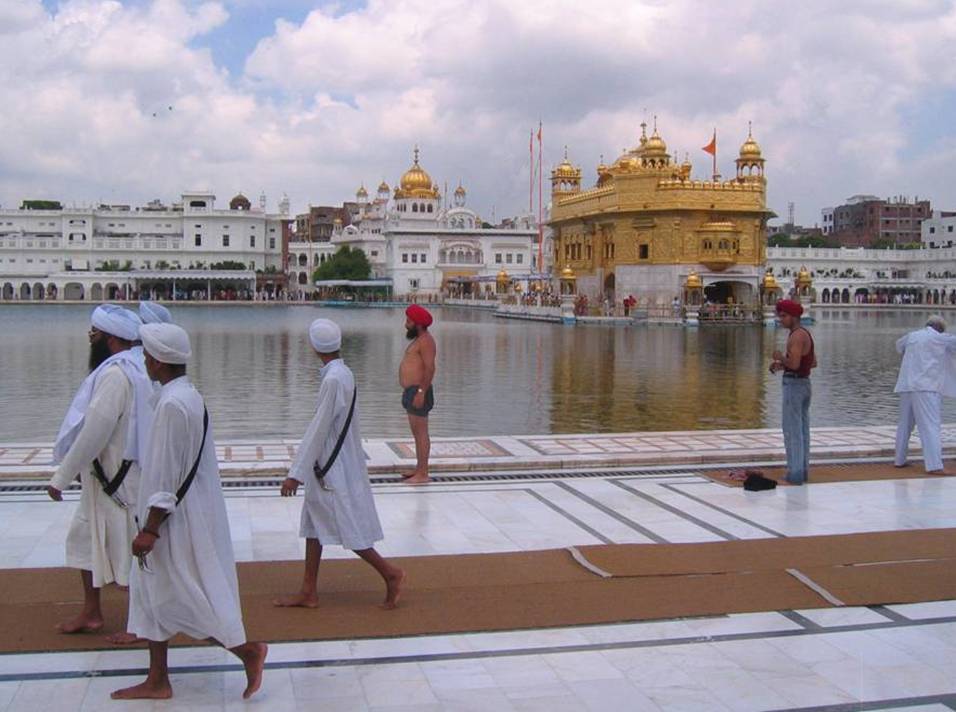
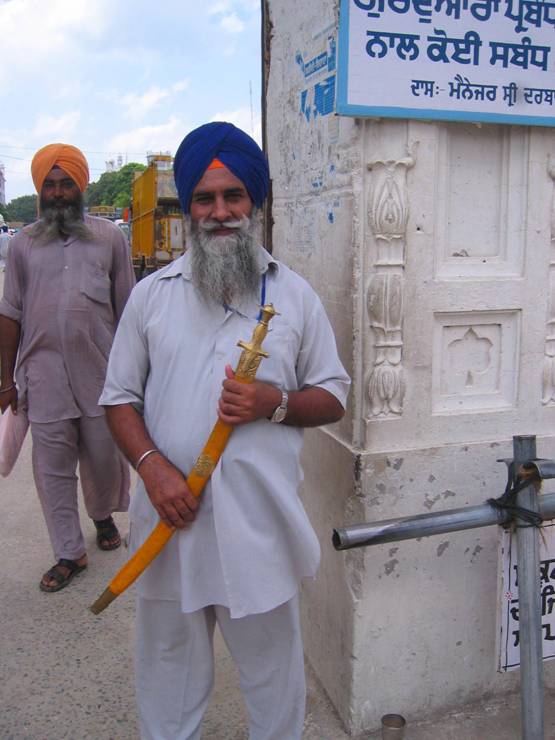
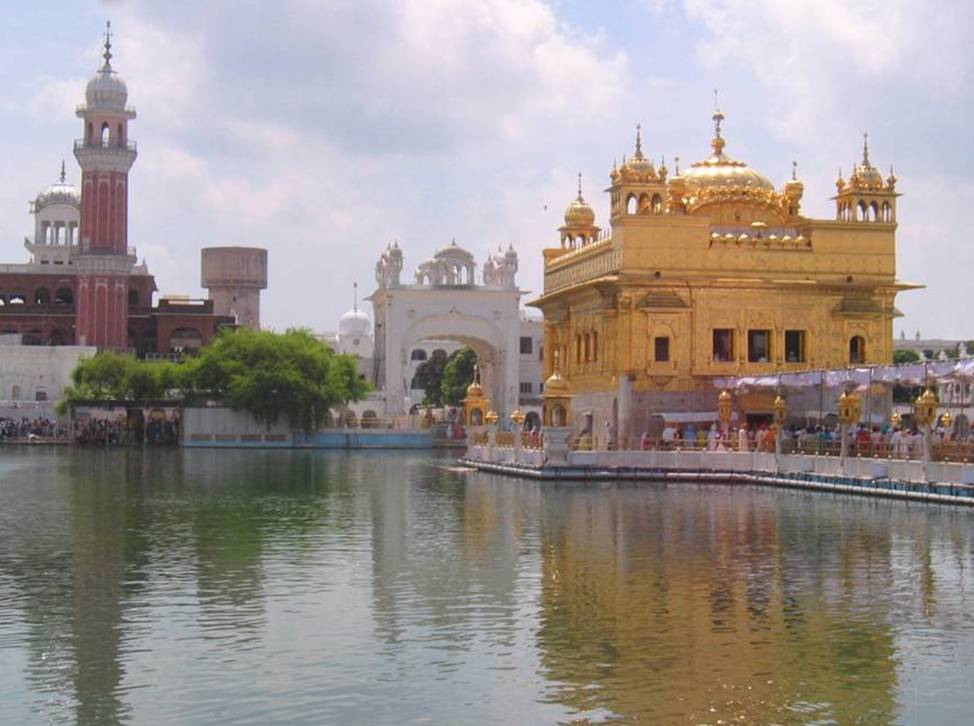
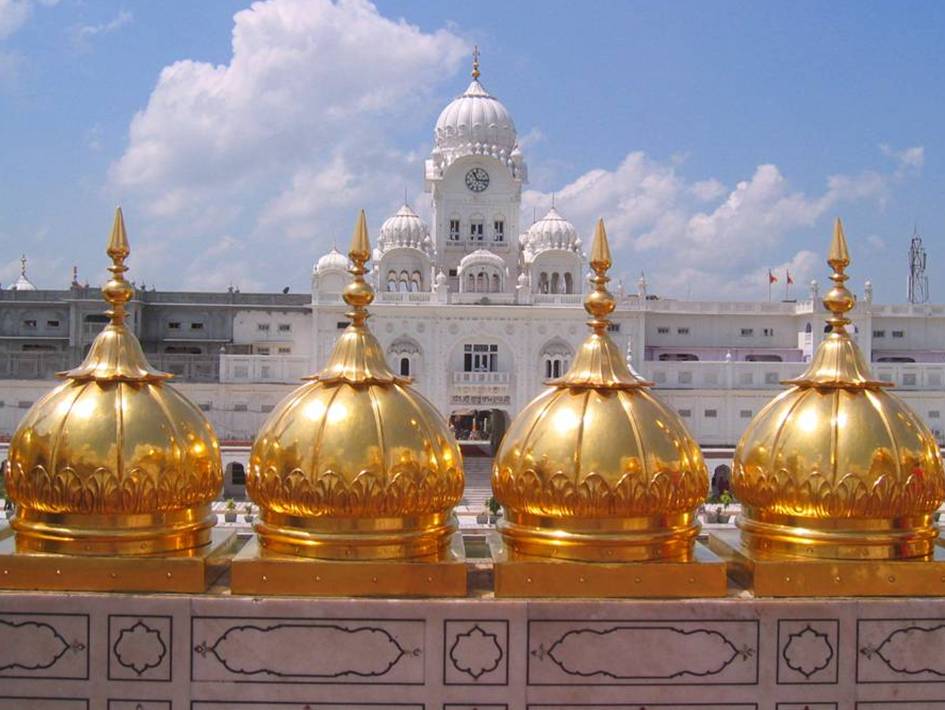
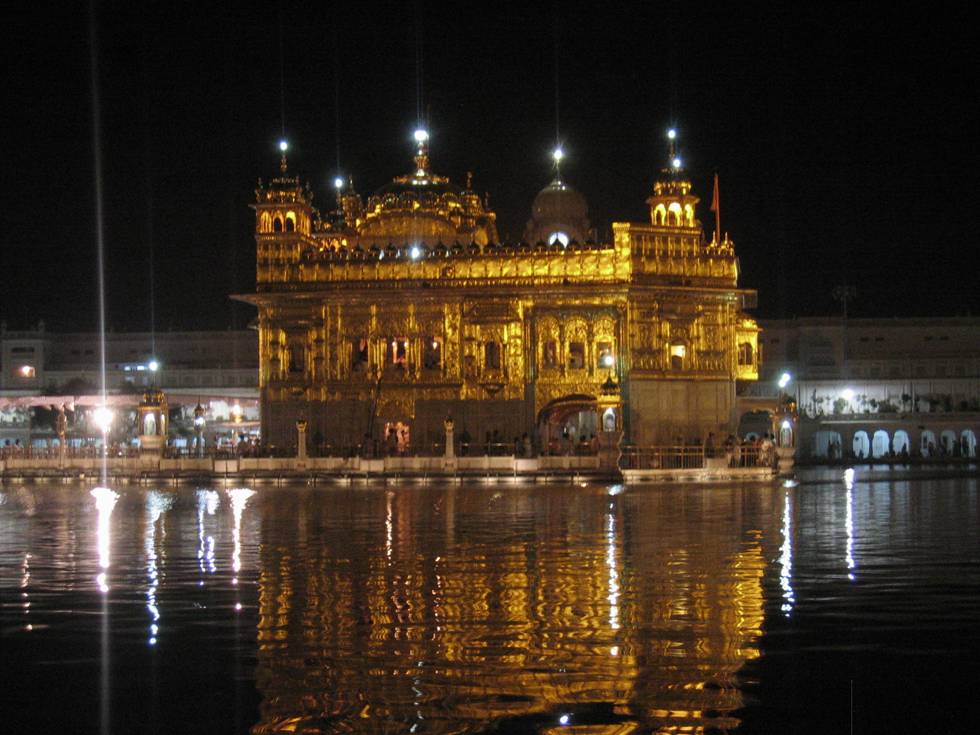
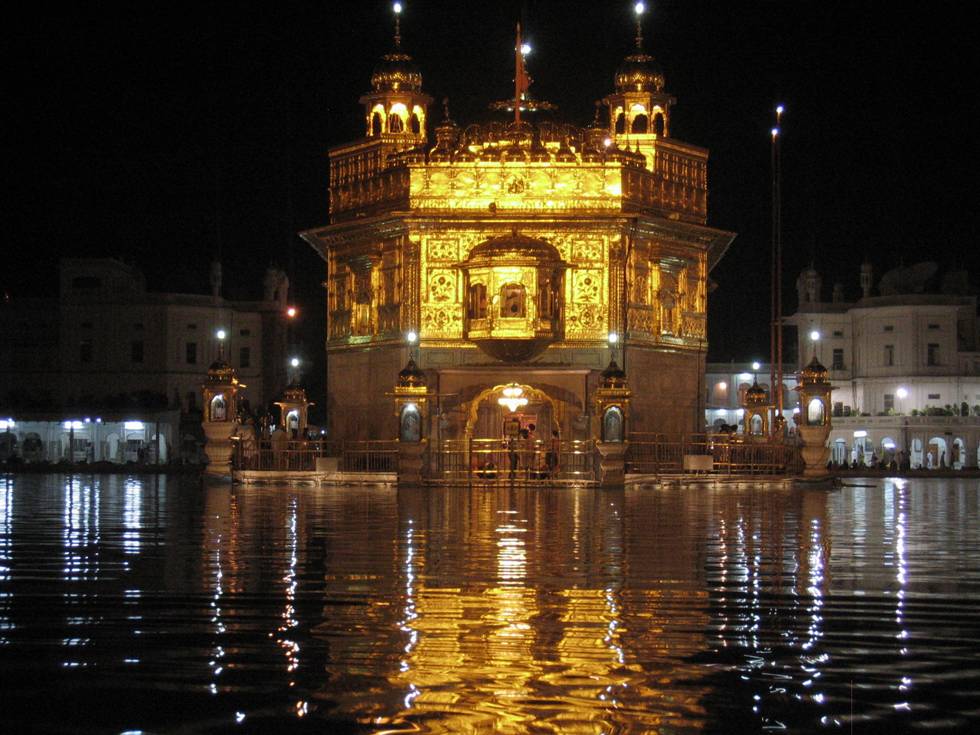
Amritsar. In the state of Punjab near the border with Pakistan lies Amritsar, famous for the Golden Temple of the Sikhs. The Sikh religion originated in the 16th century when the first Sikh guru did not fancy the intolerance of the Muslims and the cast system and idolship of the Hindu's. Although some Sikhs might look mideval with their spears and swords an axes, they are actually very gentle compared to Hindu's, friendly and relaxed, they appear cleaner, they don't hassle, and they are very hospitable: all pilgrims to the Golden Temple (including me) are offered free accomodation and food. Douze points pour les Sikhs.

Atari border crossing. Near Amritsar is the border crossing to Pakistan, where every day at sunset the border police on both sides lower the flags and close the gates with a lot of military bravour to impress eachother. It is a real show with thousands of spectators on both sides on stages clapping to the music and shouting nationalistic slogans.
I planned to cross the border here myself, but there is no space anymore for visa's for Pakistan and Iran in my passport since it is completely full ! Waiting for a new passport an visa's would take to long, so I decided to back to Delhi and fly home. Too bad for Pakistan and Iran, but biseds the visa's I would have had extremely hot weather, and this leaves me more time and money for the last part of my trip: Africa.


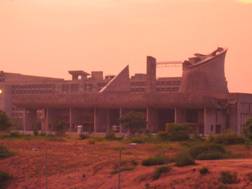

Chandigarh. On the way back to Delhi I visited Chandigarh, a very un-Indian city: the streets are lined with trees in stead of cows, in stead of beggars there are lots of ATM's, in stead of garbage heaps are lots of parks. The whole city was designed in the 50's by the famous French architect Le Corbusier with lots of green and concrete.

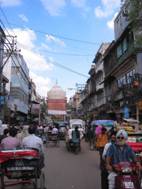
Back in Delhi. Buying some souvenirs and hopping on the plane back home, after a full year of Asia. India was surely one of the best!
July 12: Gorakpur; 13-16: Varanasi; 17-19: Kajuraho; 20: Orchha; 21: Agra; 22: Fatehpur Sikri; 23: Jaipur; 24,25: Pushkar
26: Udaipur; 27: Jodhpur; 28,29: Jaisalmer; 30,31: Tar desert;
Aug 1,2: Tar Desert; 3: Jaisalmer; 5: Bikaner; 6,7,8: Delhi; 9: Amritsar; 10: Chandigarh; 11,12: Delhi
top of page
Africa
homepage