homepage
Maybe the biggest advantage of travelling is that you have enough time to read books and contemplate them. On request, my favourites:
Top 10 non-fiction books




Other recommendable non-fiction books








Fiction



Top 10 non-fiction
This is not a naieve self-help book about happiness, but its about the relatively new science of happiness: defining it, measuring it, comparing countries, defining the most important factors, and recommendations not only for persons but also for societies. Including not only psychology but also economics, sociology, politics and a lot of statitistics.
While investigating happiness scientifically, this psychology professor termed the state of mind which makes you feel good and termed it "flow", and can best be described by doing activities which require some energy to invest, demand most of your capabilites and give immediate feedback, such as: sporting, reading, talking with friends and of course mating. Most non-flow activity is watching TV.
Brilliant young Brit writes in a refreshing way about everyday life questions from a philosophical point of view, very amusing and practical. Also available in Dutch.
In fact, his other books are worth reading as well, especially "the romantic movement" and "the consolations of philosophy":





An Argentinian journalist thoroughly investigates who really rules the world, and describes the links between the oil industries, weapon industries, the Bushes and their family fortune, the CIA, drug trade, the brotherhood of skull and bones, the press agencies, etc. An eye opener in who really rules the world. Yet only available in Spanish.
One of the may biographies of Ernesto "Che" Guevara. The most impressive life of a doctor who made two adventurous journeys through Latin-America, joined the Cuban revolution as a soldier and eventually became a minister, and tried to spread his revolutionary ideas acros the world. The most inspiring example of self-determination and guts.
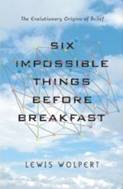
About science, physics, philosophy, psychology, evoltion, faith, and many other subjects. You can find some interesting quotes from the book below.
Here are some interesting quotes form the book, each from a different writer:
"Evolution is a team sport. As Darwin's later, lesser knwon but more important works contend, survival of the fittest is a law that applies not as much to individuals as to groups. Likewise, most great leaps forward in human civilization, from the formation of clans to the building of cities, have been feats of collaboratieve effort. Increased survival rates are as much a happy side effect of good collaboration as its purpose.
"If we could stop thinking of 'meaning' and 'purpose' as artifacts of some divine creative act and see them instead as the yield of our own creative future, they become goals, intentions, and processes very much in reach rather than the shadows of childlike, superstitious mythology."
"I believe, but cannot prove, that reality exists independent of its human and social constructions. Science as a method, and naturalism as a philosophy, together form the best tool we have for understanding that reality. Because science is cumulative, building on itself in progressive fashion, we can achieve an ever greater understanding of reality. Our knowledge of nature remains provisional because we can never know if we have final Truth. Because science is a human activity and nature is complex and dynamic, fuzzy logic and fractional probabilities best describe both nature and our approximate understanding of it.
There is no such thing as the paranormal and the supernatural; there is only the normal and the natural and mysteries we have yet to explain.[]
1. There is no God, intelligent designer, or anything resembling the divinity as proferred by the world's religions.[]
2. The universe is ultimately determined, but we have free will.[]
3. Morality is the natural outcome of evolutionary and historical forces, not divine command.
The moral feelings of doing the right thing (such as virtuousness) or doing the wrong thing (such as guilt) were generated by nature as part of human evolution. Although cultures differ on waht they define as right or wrong, the moral feelings of doing the right of wrong thing are universal to all humans. Human universals are pervasive and powerfull and include at their core the fact that we are by nature moral and immoral, good and evil, altruistic and selfish, virtuous and nonvirtuous. Induviduals and groups vary in the ex[erssion of such universal traits, but everuone has them. Most people, most of the time, in most circumstances, are good and do the right thing, for themselves and for others. But some people, some of the time, in some circumstances, are bad and do the wrong thing for themselves and for others.
As a consequence, moral principles are provissionally true, where they apply to most people, in most cultures, in most circumstances, most of the time. At some point in the last 10.00 years, religions began to codify moral precepts into moral codes and political states began to codify moral precepts into legal codes."
"I can't prove it, but I'm pretty sure that people gain a selective advantage from believing in things they can't prove. Those who are occasionaly consumed by false beliefs do better in life than those who insist on evidens before they believe and act. Those who are occassionally swept away by emotions do better than those who calculate every move. These advantages have, I believe, shaped mental capacities for intense emotion and passionate beliefs, because they give a selective advantage in certain situations.
I'm not advocating irrationality or extreme emotionality. Many, perhaps even most, of the problems plaguing individuals and groups arise form actions based on passion. The Greek initiators and Enlightenment implementers recognized, correctly, that the world would be better off if reason displaced superstition and raw emotion. I have no interest in returning to that road; fundamentalism, for example, remains a severe threat to civilization. I am arguing, however, that if we want to understand these tendencies, we need to stop dismissing them as defects and start considering how they came to exist.
I arrived at this belief from studying game theory and evolutionary biology while also seeing psychiatric patients. [].
People who lack passions suffer several disadvantages. When social life results in situations that can be mapped onto game theory, regular predictable behavior is seen to be a strategy inferior to allocating actions randomly among the options.[]It's harder to explain the disadvantages suffered by people who lack a capacity of faith.[].Yhe optimum for modern life seems to me to be located closer to the rational side of the median, but there are advantages and disadvantages at every point of along the spectrum. Making human life better requires us to understand these capacities, and to do that, we must seek their origins and functions."
"It is important to have faith, but not necessarily in God. Faith is important far beyond the realm of religion: having faith in oneself, in other people, in the existence of truth and justice. There is a continuum of faith, from the basic everyday trust in others to the grand devotion to divine entities.
Recent advantages in behavorial sciences, such as experimental economics and game theory, demonstrate that having faith is a common human attitude toward the world. Faith is viral in human interactions; it is no coincidence that the anchoring of behavior in risky trust is emphasized in systems of thought as diverse as Soeren Kierkegaard's existensialist Christianity and modern theories of bargaining behavior in economic interactions. Both stress the importance of inner, subjective conviction as the basis for action, the feeling of an inner glow. You might say that modern behavorial science is rediscovering the importance of faith- something that has been known to religions for a long time. I would argue that his rediscovery shows us that the very act of having faith can be decoupled from a belief in divine entities."
"There is a mental (cognitive and emotional) process, common to science and religion, of suspending belief in what you see and take for obvious fact. Humans have a mental compulsion - perhaps a by-product of the evolution of a hypersensitive reasoning device to serve our passions - to situate and understand the present state of mundane affairs within an indefinitely extandable and overarching system of relations between hitherto unconnected ellements."
"Religious experience and practice is generated and structured by a few emotions that evolved for other reasosn, particularly awe, moral elevation, disgust, and attachment-relaed emotions.[]But hostility towards religion is an obstacle to progress in psychology. Most human beings live in a world of magic, miracles, saints, and constant commerce with divinity."
"Belief is a content-independent process. Which is to say that beliefs about God - to the degree that they really are believed - are the same as beliefs about numbers, penguins, tofu, or anything else.[]The neural processes governing the final acceptance of a statement as "true" rely on more fundamental, reward-related circuitry in our frontal lobes - probably the same regions that judge the pleasantness of tastes and odors.[] Once the neurolgy of belief becomes clear and it stands revealed as an all-purpose emotion arising in a wide variety of contexts (often without warrant), religious faith will be exposed for what it is: a humble species of terrestrial credulity.[] Apart from removing the principal reason we have found to kill one another, a revolution in our thinking about religious belief would clear the way for new approaches to ethics and spiritual experience. Ethics and spirituality lie at the very heart of what is good about being human, but our thinking on both fro
nts has been shackled to the prepostorous for millenia. Understanding belief at the level of the brain may hold the key to new insights into the nature of our minds, to new rules of discourse, and to new frontiers of human cooperation."
"Because the general principles of taste are uniform in human nature, the value of some works of art might be essentially eternal.[]The epochal survivors of art are more than just popular. The majority of works of popular art today are not inevitably shallow or worthless, but tend to be easily replaceable.[] Against the idea of permanent aesthetic values is cultural relativism, which is taught as the default orthodoxy in manu university departments.[] Finally it is beginning to look as though emperical psychology is equipped to address the universality of art.[] This makes the creation of a great artist as permanent an achievement as the discovery of a great scientist."
"I believe, first, that all people have the same fundamental concepts, values, concerns, and commitments, despite our diverse languages, religions, social practices, and expressed beliefs.[]
Second, one of our shared core systems centers on a notion that is false - the notion that members of different human groups differ profoundly in their concepts and values. This notion leads us to interpret the superficial differences between people as signs of deeper differences.
Third, the most striking feature of human cognition stems not from our core knowledge systems but from our ability to rise above them. Humans can discover that their core conceptions are false and replace them with trueer ones.[]
Fourth, if the cognitive sciences are given sufficient time, the claim of a common human nature eventually will be supported by evidence as strong and convincing as the evidens that the earth is round. As human are bathed in this evidence, we will overcome our misconceptions of human differences."
"Neuroscientists will never have enough understanding of the neural code, the secret language of the brain, to read people's thoughts without thier consent."
" I believe we are writing software the wrong way.[] Software is the bottleneck on the high-tech horn of plenty.[]The software represents complexity far greater than that of the problem itself.[] The amazing thing is that today it is the source code - i.e. the encrypted problem - that software engineering focuses on."
"The preschooler's acquisition of a structured language is so important for all the rest of her higher intellectual function. Besides syntax, intellect includes structured stuff such as multistage contingent planning, chains of logic, games with arbitrary rules, and our passion for discovering 'how things hang together'. [] Tuning up sentence structure might make a child better able to perform non-language tasks that also need some structuring.'.
"THe human brain is the most cmplex entity in the world."
"Today's children are unintended victims of economic and technological progress.[] Even as the average IQ of American kids has steadily increased over hte last century, the past decades have seen a major drop in their basic social and emotional skills.[] They spend more time than ever in human history alone, staring at a video monitor. [] The prefrontal-limbic neural circuitry crucial to the acquisition of social and emotional abilities is the last part of the human brain to become anatomically mature, a development tasl not completed until the mid-twenties. During that window of time, the life abilities of a child become set, as neurons come online and are interconnected for better or worse."
"We're living lnger and thinking shorter.[] Business focus on short-term results; politicians focus on elections; school systems focus on test reults; most of us focus on the weather rather than on the climate. Everyone knows about the big problems, but their behavior focuses on the here and now."
"Most ideas taught in economics will be proved false someday."
"There is a severe overestimation of knowledge in almost all of social science (economics, sociology, political science) and the humanities, everything that depends on the non-experimental analysis of data."
"Important steps in evolution are robust. Multicellularity evolved at least ten times. There are several independent origins of eusociality. There were a number of lineages leading from primates to humans. If our ancestors had not evolved language, somebody else would have. Cooperation and language define humanity. Every special trait of humans is a derivative of language."
"I am convinced that quantum mechanics is not a final theory.[] Fundamental physics must be discrete, and its description must be in terms of algebra and combinatorics."
"I believe that we humans, who know so much about cosmology and immunology, lack a framework for thinking about why and how humans cooperate. I believe that part of the reason is an old story we tell ourselves about the world: Business and nations succeed by competing well; biology is a war in which only the fit survive; politics is about winning; markets grow solely from self-interest. Still rooted in the Zeitgeist of Adam's Smith's and Charles Darwin eras, the scientific, social, economic and political stories of the pat century have overwhelmingly emphasized the role of competition as a driver of evolution, progress, commerce, and society.
I believe that the outlines of a new narrative are becoming visible - a story in which cooperative arrangements, interdependencies, and collective action play a more prominent part, while that of (the essential but not all-powerful) competition and survival of the fittest shrinks just a bit."
"I have always felt, but cannot prove it, that Zen is wrong. Then is right. Everything is not about the now, as in "the here and now", "living for the moment", and so on. On the contrary: I believe that everything is about the "before then" and the "back then". It is about the anticipation of the moment and the memory of the moemnt, but not the moment. In German, there is a beautifull word for it: Vorfreuede.[]Make plans and take pictures."
"The 'rotten-to-the-core' assumption about human nature aspoused so widely in the social sciences an the humanities is wrong. This premise has its origins in the religious dogma of the original sin and was dragged into the secular twentieth century by Freud and reinforced by two world wars, the Great Depression, the cold war, and genocides too numerous to list. The premise holds that virtue, nobility, meaning, and positive human motivation generally are reducible to, parasitic upon, or compensations for what is generally authentic about human nature: selfishness, greed, indifference, corruption, and savagery.[]
In Spite of its widespread acceptance in the religious and academic world, there is not a shred of evidence, not an iota of data, compelling us to believe the idea that nobility and virtue are somehow derived from negative motivation. On the contrary, I believe that evolution has favored both positive and negative traits; manu niches have selected for morality, cooperation, altruism, and goodness, just as many have selected for murder, theft, self-seeking, and terrorism. More plausible than the rotten-to-the-core theory of human nature is a dual aspect theory: that the strengths and the virtues are just as basic to human nature as the negative traits are, and that negative motivation and emotion have been selected for in evolution. Evolution, after all, works through thwo processes: zero-sum-game survival struggles lubricated by negative emotion - anxiety, anger and sadness - on the one hand, and sexual selection on the other, a positive-sum game process that has favored vir
tue and is lubricated by positive emotion. These two overarching systems sit side by side in our central nervous system, ready to be activated (on the one hand) by privation an thwarthing, or (on the other) by abundance abd the prospect of growth and success."
"I tend to trust ancient beliefs about good and bad, the sacred and the profane, the meaningful and the worthless - not because they are amenable to proof but becasue they have been selected over time adn in different situations and therefore might be worthy of belief.
As to the future, I will follow the cautious weather forecaster who announces, "Tomorrow will be a beautiful day, inless it rains.' I can see all sorts of potentially wonderful developments in human consciousness, global solidarity, knowledge, and ethics. However, ther are about as many trends operating toward opposite outcomes: a coarsening of taste; a reduction to least common denominators; a polarization of property, power, and faith. I hope we will have the time and opportunity to understand which policies lead to which outcomes, and then that we will have the motivation and the courage to implement the more desireable alternatives."
From the same editor:

"The next fifty years: science in the first half of the 21st century" by John Brockman 2003. Today's leading scientists predict the near future. Also available in Dutch.
"What Is Your Dangerous Idea?: today's leading thinkers on the unthinkable" by John Brockman 2007. Today's leading thinkers about their dangerous ideas. Not as good as "what you believe in..." but certainly worth reading. Also available in Dutch.
Women marry thinking that men will change. Men marry thinking that women will not change. Both are wrong.
All about the human mating process, especially the differences between the sexes in attracting and retaining a partner. A must-read before any engagement, ha ha.
A superb overview of the history of the natural sciences. Great stories about great discoveries by great scientists, an how nature works. Very accesible for laymen.
A very sceptical book about foreign aid, which explains why most of the 2.3 trillion (!) postcolonial foreign aid is waisted money, because most of it is spilt on bureacracy or bad implemented projects.
Good intentions (with bad implementation) often make things even worse! The West is still messing around with their ex-colonies as bad as during the colonial era.
When I was bicycling in California in July 2004, at the very bottom of the Yosemite valley, I met two nice families on the park camping. One family was very big and very religious, and invited me to dinner, and we talked about their religious belief. The other family was a very friendly childless couple, however, the guy was very materialistic, he was very happy with his SUV and his electric moped, and he praised the US for its opportunities to make money; his wife kept making jokes about his neverending desires to keep on buying big boys' toys.
The contrast and symbolism couldn't have been more striking when I climbed the whole day with my bicycle up to the top of the mountains at an altitude of 3km, where at the campings entrance I met a boy who invited me to their lot. He introduced me to his father who fed me the leftover barbecue sausages. The guy was an old and wise hippy, about to camp out in the wild for a week with just a small backpack and both his sons; he must have had a very young wife regarding their ages. Standing in the dark beside a smoking barbecue, still in my biking clothes, he started telling me stories about Mexico, his dear memories about falling in love with a beautiful Mexican girl and all the complications that came along. How little did I know at that time that very similar adventures were about to take place in my own life shortly after, ha ha. But, and now I will finally come to my point, he also told me about his experiences with the famous Mexican hallucinogenic mushrooms, and he recommended me to read a book about it. Two years later, at the other end of the world in a Singaporean bookstore, I finally found the book: "The doors of perception" by Aldous Huxley. And impressive it is, it instantly became one of my all-time favourites, together with its sequel "Heaven and hell". My regards to the old hippy.
Foreword by J.G. Ballard:
If Brave new world is Aldous Huxley's greatest novel, then The doors of perception is his most important work of non-fiction, and I suspect that together they will outlast everything else written by him during his lnog and restless life. Brave new world's unsettling picture of a scientifically engineered utopia, with its recreational drugs an test-tube babies, its "feelie" cinemas that anticipate virtual reality, now seems a shrewder guess at hte future thatn George Orwell's vision of Stailinist terror in Nineteen eighty-four.
Yet The doors of perception may prove to be even more prophetic than Brave new world. All his life Huxley was driven by a need ot understand the mystery of human consciousness, a quest that led him from Christian mysticism to the religions of the Far East and the pseudo-religions of California. Unusually for a literary intellectual, of his days or ours, Huxley was intensely interested in science, and much of his original work lies in the border zone between religion, art and science.
The door so perception sit sin the centre of this magnetic ground. Huxley was fascinated by early research in the neurosciences, and in particular by the role of neurotransmitters in our brains and the way in which these chemical messengers control our view or ourselves and the world around us. Despite the wonders of human consiousness, Huxley believed that our brains have been trained during the evolutionary millenia to screen out all those perceptions that do not directly aid us in our day to day struggle for existence. We have gained security and survival, but in the process have sacrified our sense of wonder.
The dismantling of these screens and the revelation of the richer world beyond them has long been the task of art and religious mysticism ,but Huxley suspected that modern pharmacology posessed evenb stronger weapons in its armoury of psycho-active drugs. In The doors of perception he describes an afternoon in Los Angeles in 1953 when he first ingested mescalin, the active principle of the sacred cactus known to the Mexicans as peyotl, and saw the gates of a new world open before him.
From the start he realised that his insights were not into himself and his modest peronal history, but into the universe around him. Over the years there have been endless accounts of mescalin and LSD trips, but none van match Huxley's description of the hallucinatory realm that expanded before his eyes. The shutters around his mind at last fell away, revealing the wonders of existence to his self-centred and earthbound mind.
In The doors of perception and its sequel, Heaven and hell, Huxley speculates that human beings will alway need some sort of chemical aid to free themselves from the inherited limitations of their own nervous systems. Fifty years after this mescalin trip beside a Hollywood garden , when we have flown to the moon and girdled our planet with an entertainment culture more suffocating than anything visualised in Brave new world, we may be rigth to think that the expedition Huxley undertook into his own brain is hte last yourney waiting for all of us, whether by chemical means or through some less hazardous door, the inward passage to our truer and richer selves.
A quote from Appendix II from "Heaven and Hell", by Aldous Huxley:
A similar conclusion will be reached by those whose philosophy is unduly 'spiritual'. God, they will insist, is a spirit and is to be worshipped in spirit. Therefore an experinece which is chenimcally contioned cannot be ab experience of the divine. But, in one way or another, all our experiences are chemically conditioned, and if we imagine that some of them are purely 'spiritual', purely 'intellectual', purely 'aesthetic', it is merely because we have never troubled to investigate the internal chemical environment at hte moment of their occurence. Furthermore, it is a matter of historical record that most contemplatives worked systematically to modify their body chemistry, with a view to creating the internal conditions favourable to spiritual insight. When they were not starving themselves into low blood sugar and a vitamin deficiency, or beating themselve into toxication by histamine, adrenalin and decomposed protein, they were cultivating insomnia and praying for long periods in uncomfortable positions, in order to create the psycho-physical symptoms of stress. In the intervals they sang interminable psalms, thus increasing the amount of carbon dioxide in the lungs and the blood-stream, or, if they were Orientals, they did breathing exercises to accomlish the same purpose. Today we know how to lower the efficiency of the cerebral reducing valve by direct chemical action, and without the risk of inflicting serious damage on the psycho-physical organism. For an aspiring mystic to revert, in the present state oif knowledge, to prolonged fasteing and violent self-flagellation would be as senseless as it would be for an aspiring cook to behave like Charles Lamb's Chinaman, who burned down the house in order to roast a pig. Knowing as he does (or at least as he can know, if he so desires) what are the chemical conditions of transcendental experience, the aspiring mystic should turn for technical help tp the specialists - in pharmacology, in biochemistry, in physiology and neurology, in psychology and psychiatry and parapsychology. And on their part, of course, the specialsits (if any of them aspire to be genuine men of science and complete human beings) should turn, out of their respective pigeon-holes, to the artist, the sibyl, the visionary, the mystic - all those, in a word, who have had experience of the Other World and who know, in their different ways, what to do with that experience.
Other recommendable non-fiction books
The evolution of human societies; why European (and Chinese) society came to be so dominant over the rest of the world.
Another book of the same writer:

About the collapse of societies who did not take care of their environment by deforestation, erosion, etc.
The famous book about globalisation: when you buy new Nikies for a hundred bucks, a sweat shop worker won't even see a single buck of it.
We live in the age of corporatism, and this book explains all about the evil side of corporations.
An entertaining collection of stories about intuitive decision making, and its balance with rational decision making.
Another book of the same writer:

About social epidemics: why and how an idea, trend or social behavior crosses a threshold, tips, and spreads like wildfire. About acquaintances, sneakers, diseases, Sesame Street, crime, suicide and smoking.
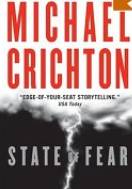
About an environmental protection organization who goes way out of line to convince the public about the danger of global heating and climate change. The book is in between fiction and non-fiction, it is a thriller but loaded with actual facts about climate change, and states that there is yet hardly any evidence for human influence on global heating.
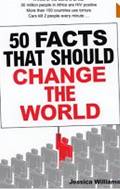
Facts about what is really going on in the world and what should change.
1. The average Japanese woman can expect to live to be 84. The average Botswanan will reach just 39.
2. A third of the world's obese people live in the developing world.
3. The US and Britain have the highest teen pregnancy rates in the developed world.
4. China has 44 million missing women.
5. Brazil has more Avon ladies than memebers of its armed services.
6. 81% of the world's executions in 2002 took place in just three countries: China, Iran and the USA.
7. British supermakrets know more about their customers that the British governement does.
8. Every cow in the European Union is subsidised by $2.50 per day. That's more than what 75% of Africans have to live on.
9. In more than 70 countries, same sex- relationships are illegal. In nine countries, the penalty is death.
10. One in five of the world's people lives on less than $1 a day.
11. More than 12,000 women are killed each year in Russia as a result of domestic violence.
12. In 2003, 15 millions Americans has some form of plastic surgery.
13. Landmines kill or maim at least one person every hour.
14. Ther are 44 million child labourers in India.
15. People in industrialised countries eat between six and seven kilogrmas of food additives per year.
16. The golfer Tiger Woods is the world's highest-paid sportsman. He earns $78 million a year - or $148 every second.
17. Seven million American women and 1 million men suffer from an eating siorder.
18. Nearly half of British fifteen year olds have tried illegal drugs and nearly a quarter are regular sigarette smokers.
19. There are 67,000 people employed in the lobbying industry in Washington DC - 125 for each selected member of Congress.
20. Cars killl two people every minute.
21. Since 1977, there have been more than 90,000 acts of violence and disruption at abortion clinics in North America.
22. More people can identify the golden arches of McDonalds than the Christian cross.
23. In Kenya, bribery payments make up a third of the average household budget.
24. The world's trade in illegal drugs is estimated to be worth around $400 billion - about the same as the world's legal pharmaceutical industry.
25. A third of Americans believe aliens hav elanded on earth.
26. More than 150 countries use torture.
27. Every day, on in five of the world's populatin - some 800 million people - go hungry.
28. Black men born in the USA today stand a 1 in 3 chance of going to jail.
29. A third of the world's population is at war.
30. THe world's oil reserves could be exhausted by 2040.
31. 82% of the world's smokers live in developing countries.
32. More than 70% of the world's population have never heard a dial tone.
33. A quarter of the world's armed conflicts of recent years have involved a struggle for natural resources.
34. Some 30 million people in Africa are HIV-positive.
35. Ten languages die out every year.
36. More people die each year from suicide than in all the world's armed conflicts.
37. Every week, an average of 88 children are expelled from American schools for bringing a gun to class.
38. There are at least 300,000 prosoners of conscience in the world.
39. Two million girls and women are subjected to female genital mutilation each year.
40. THer are 300,000 child soldiers fighting in conflicts around the world.
41. Nearly 26 million people voted in the 2001 British Gneral Election. More than 32 million votes were cast in the first season of Pop Idol.
42. America spends $10 billion on pornography every year - the same amount it spends on foreign aid.
43. In 2003, the US spent $396 billion on its military. This is 33 times the combined military spedning of the seven 'rogue states'.
44. There are 27 million slaves in the world today.
45. Americans discard 2.5 million oplastic bottles every hour. That's enough bottles to reach all the way to the moon every three weeks.
46. The eaverage urban Briton is caught on camera up to 300 times a day.
47. Some 120,000 women and girls are traficked into Western Europe every year.
48. A kiwi fruit flown from New Zealand to Britain emits five times its own weight in greenhouse gases.
49. The US owes the Untied Nations more than $1 billion in unpaid dues.
50. Children living in poverty are three times more likely to suffer a mental illness than children from wealthy families.
An elaborate overview which clearly explains the common beginnings of the monotheisms and how the doctrines of the religions are constantly being reshaped by the institutions.
An exploration of the parallels between modern physics and eastern mysticism. I don't believe in the suggested parallels, but the book is an intersting exercise to stretch your mind from the hard science of quantum physics all the way to eastern philosophies and religions.
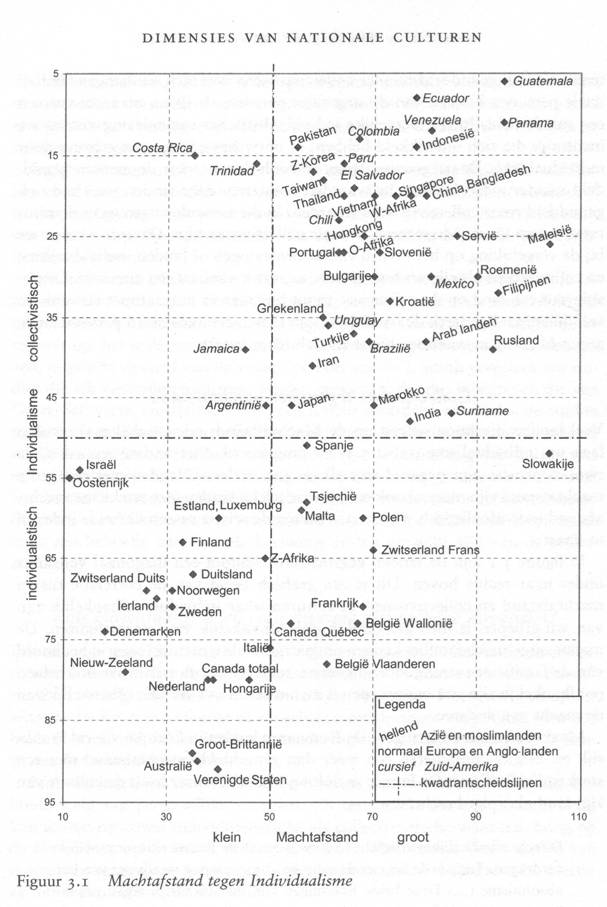
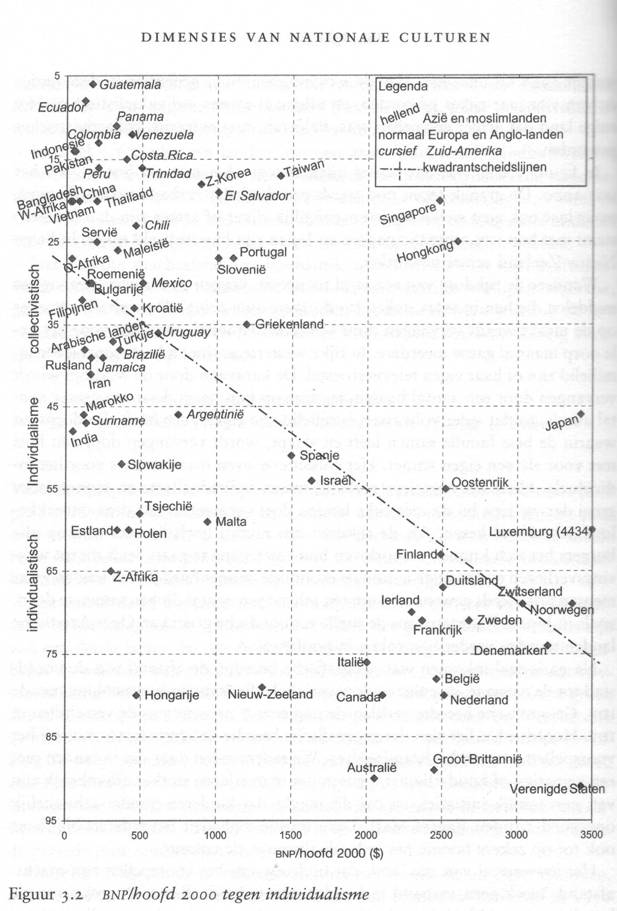
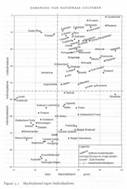
About cultural differences. Original in Dutch, but also translated into 17 other languages (in English as "Culture's consequences"). It perfectly shows that we Dutchies look most like Scandinavians and are rather extreme, ha ha.
The cultures a typified with just a few characteristics:
- individualistic or collectivistic
- feminine or masculine
- short power distance or large
- accepting insecurity or avoiding it
- long term focus or short



Evolution gave us causal belief to make tools and understand our environment, unfortunately this causal belief also makes humans believe al kinds of phenomena for which there is hardly any evidence, such as religions, paranormality, and lots of alternative therapies. Brilliant book, easy to read for non-scientists.
The basic idea of this book is that if all rich countries would give as much as Holland on foreign aid (no joke), extreme poverty would be over in a decade.
A good intention but very unrealistic and naieve, therefor you better read The white man's burden .
However, the book is a lot more than that, it describes not only a lot of macro-economics but also history and culture of development countries, examples are Bolivia, Bangladesh, India, China and sub-saharan Afrika. It will probably take away a lot of questions and prejudices you had about poor countries.
The first blow to religious belief came about 500 years ago when Keppler and Galileo demonstrated that the earth is revolving around the sun and not the other way around.
The second and heaviest blow came in 1859 with the discovery of evolutional processes by Darwin in "The origin of species".
Today almost all scientist are non-believers, and there is an inverse correlation between intelligence and religious belief.
However, the majority of people still believe in a personal god and lots of superstitious stuff, because people are brought up that way and they have a natural dentency to believe, especially what they want to believe.
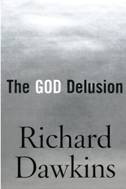
Richard Dawkins explains why there almost certainly is no god, and why we don't need religion.
We don't need religion to explain how the world was created, because we have evolution.
We don't need religion to explain how the world works, because we have science.
We don't need religion for morality, because evolution already gave us a feeling of good and bad and the will to cooperate; "Do not do to others what you would not want them to do to you".
We don't need religion to appreciate the world (we have a beautiful nature by itself). and we don't need it for a purpose in life (we have humanism).
Religion is even dangerous, it is a major cause of war, it makes people intolerable to pothers with a different religion or races or sexual tendency, and it often puts women on a second place.
Brilliant book, but harsh to read for religious people. Some quotes of the book:
- Strange is our situation here on Earth. Each of us comes for a short visit, not knowing why, yet sometimes seeming to divine a purpose. From the standpoint of daily life, however, there is one thing we do know: that man is here for the sake of other men, above all for those upon whose smiles and well-being our own happiness depends. (Albert Einstein)
- I don't try to imagine a personal God; it suffices to stand in awe at the structure of the world, insofar as it allows our inadequate senses to appreciate it. (Albert Einstein)
- The immense majority of intellectually emminent men disbelieve in Christian religion, but they conceal the fact in public, because they are afraid of losing their incomes. (Bertrand Russell)
- The priests of the different religious sects... dread the advance of science as witches do the approach of daylight, and scowl on the fatal harbinger announcing the subdivision of the duperies on which they live. (Thomas Jefferson)
- To an evolutionary psychologist, the universal extravagance of religious rituals, with their costs in time, resources, pain and privation, should suggest as vividly as a mandrill's bottom that religion may be addaptive. (Mark Kohn)
- Politics has slain its thousands, but religion has slain its tens of thousands. (Sean O'Casey)
In the middle ages the Middle Eastern muslim society was well advanced and more enlightend than that of the Christian Europe. After that, they started lagging behind and were never able to catch up, and lately theire development is even lagging behind societies such as the Asians. What went wrong?
Naom Chomsky is USA's most known critic of its foreign policy. IN this book he treats the current and history of agressive and unilateral foreign policy of the USA in the Middle-East, Latin-America etc. under the disguise of "promoting democracy around the world", and explains the lack of democracy at home.
Fiction
A brilliant and hillarious novel about three modern London families with different cultures.
Also very good:

A 'thriller' Written from the viewpoint of an autistic kid, very very funny and good.
A original story about a guy who dies and goes to heaven, where he meets again with five important people of his life.
top of page
homepage